 EN



Mitsubishi reported approximately 5,500 pre-orders for the new Pajero in Japan before sales begin on 17 December 2026. The familiar name now sits on a different construction: a ladder frame, solid rear axle, 2.4-litre diesel and eight-speed automatic. Here is what changed from the previous SUV and what the first demand figure actually means.
Four dates explain the order figures
The new Pajero had its world premiere on 2 September 2026. October reports on demand therefore concern a vehicle already revealed, not a first unveiling.
Japan began accepting pre-orders on 1 October 2026.
By 28 October the total had reached approximately 5,500.
On 29 October Mitsubishi released the figure and announced the sales date.
The Pajero is due to go on sale at Japanese dealers on 17 December 2026.
What the 5,500 figure tells us
These are pre-orders, not 5,500 vehicles delivered to customers. The release gives no information about fulfilled orders or later cancellations. The number indicates interest during the ordering period; it does not establish actual deliveries.
Mitsubishi says orders have already exceeded its sales plan for fiscal 2026, which runs from April 2026 to March 2027, not the calendar year.
The major change is in the structure and rear suspension
The third and fourth Pajero generations used a monocoque body with an integrated frame and independent suspension at all four wheels. The new model has a ladder frame and a solid rear axle. Independent double wishbones remain at the front, with a new five-link suspension at the rear.
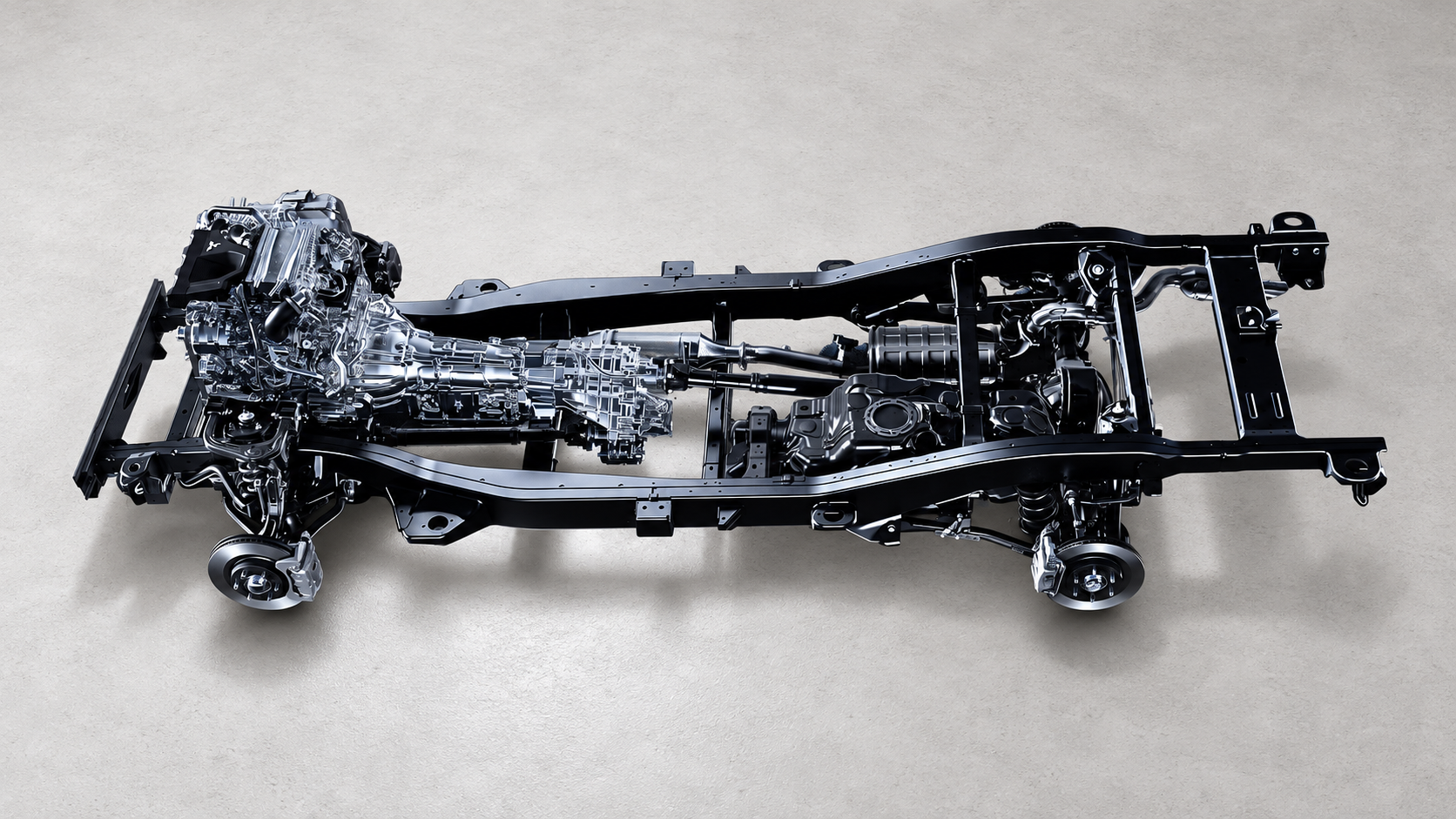
That is a substantial change in construction. With independent suspension, rear wheels can move separately relative to the body; a solid axle connects them with a common beam. That difference alone does not prove the new Pajero is more comfortable or better off-road: tuning, suspension travel and tyres also matter.
Mitsubishi says frame rigidity has increased through high-strength steel and changes to sections and crossmembers. Reinforced body mounts are intended to reduce vibration over uneven surfaces. These are claimed engineering measures, not results of a comparative test between generations.
2.4-litre diesel and eight gears: key figures
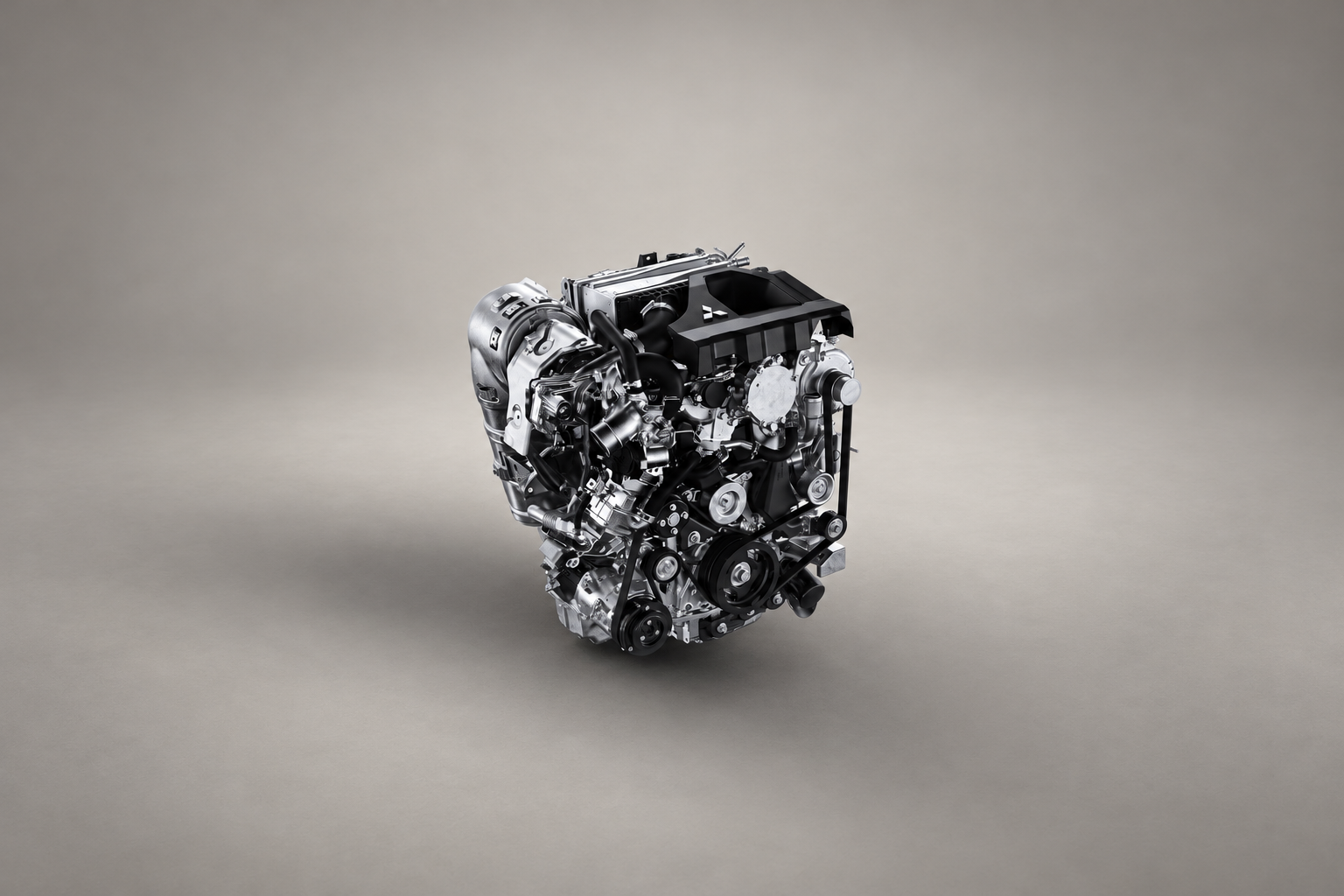
The Japanese version has a four-cylinder turbodiesel producing 150 kW, about 204 metric horsepower. Its maximum 480 Nm is available from 1,750 to 2,500 rpm. It is paired with an eight-speed automatic transmission with a sport mode.
New Pajero specifications according to Mitsubishi | |
|---|---|
Parameter | Claimed value |
Engine | 2.4-litre four-cylinder turbodiesel |
Power | 150 kW at 3,500 rpm |
Torque | 480 Nm at 1,750–2,500 rpm |
Transmission | Eight-speed automatic |
Length and width | 4,920 and 1,925 mm |
Height in Japan | 1,910 mm on Super Exceed and Exceed; 1,900 mm on GSR and GLS |
Wheelbase | 2,870 mm |
Ground clearance | 230 mm on the version with 20-inch wheels |
Approach / breakover / departure | 30.4° / 22.6° / 25.8° on the version with 20-inch wheels |
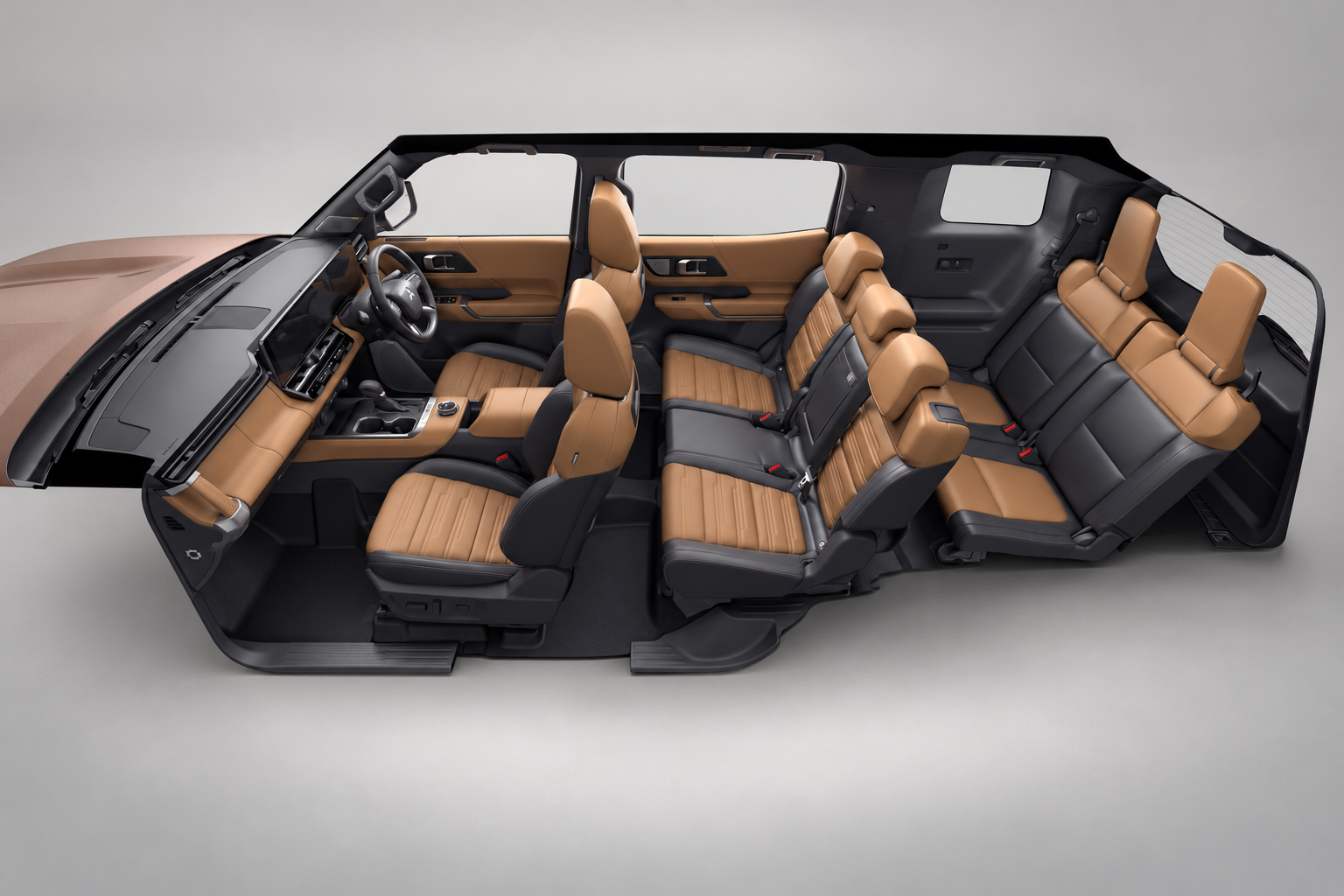
Seats | Seven in three rows |
Dimensions, equipment and individual specifications vary by market and trim. Mitsubishi specifies 470 Nm for some configurations. The engine figures here refer to Japan; ground clearance and angles cannot automatically be applied to every version.
Super Select: the four selector positions
In its technical description of the Japanese Pajero, Mitsubishi lists four Super Select 4WD-II transmission modes:
2H: rear-wheel drive.
4H: full-time four-wheel drive.
4HLc: four-wheel drive with the centre differential locked.
4LLc: four-wheel drive with the centre differential locked and low range.
4H and 4HLc are different modes. In 4H the centre differential permits a difference in front and rear axle speeds; in 4HLc it is locked. The distinction matters when choosing a mode for the surface: the locked setting is not a substitute for normal four-wheel drive on every road.
Why are there both four and seven modes?
The four Super Select positions determine the transmission configuration. Separately, seven drive modes are provided: Normal, Eco, Gravel, Snow, Mud, Sand and Rock. These adapt vehicle control to conditions. Selecting Snow or Mud does not itself engage low range; that requires 4LLc.
S-AWC combines vehicle dynamics controls. These include AYC, which acts on the front brakes to manage torque distribution between the wheels, ASTC stability and traction control, and ABS.
Seven seats and the return of Multi Meter
The second row slides 150 mm longitudinally and folds for access to the rear. This lets occupants redistribute space between the second and third rows. However, seven seats alone do not establish how comfortable an adult will be in the back.
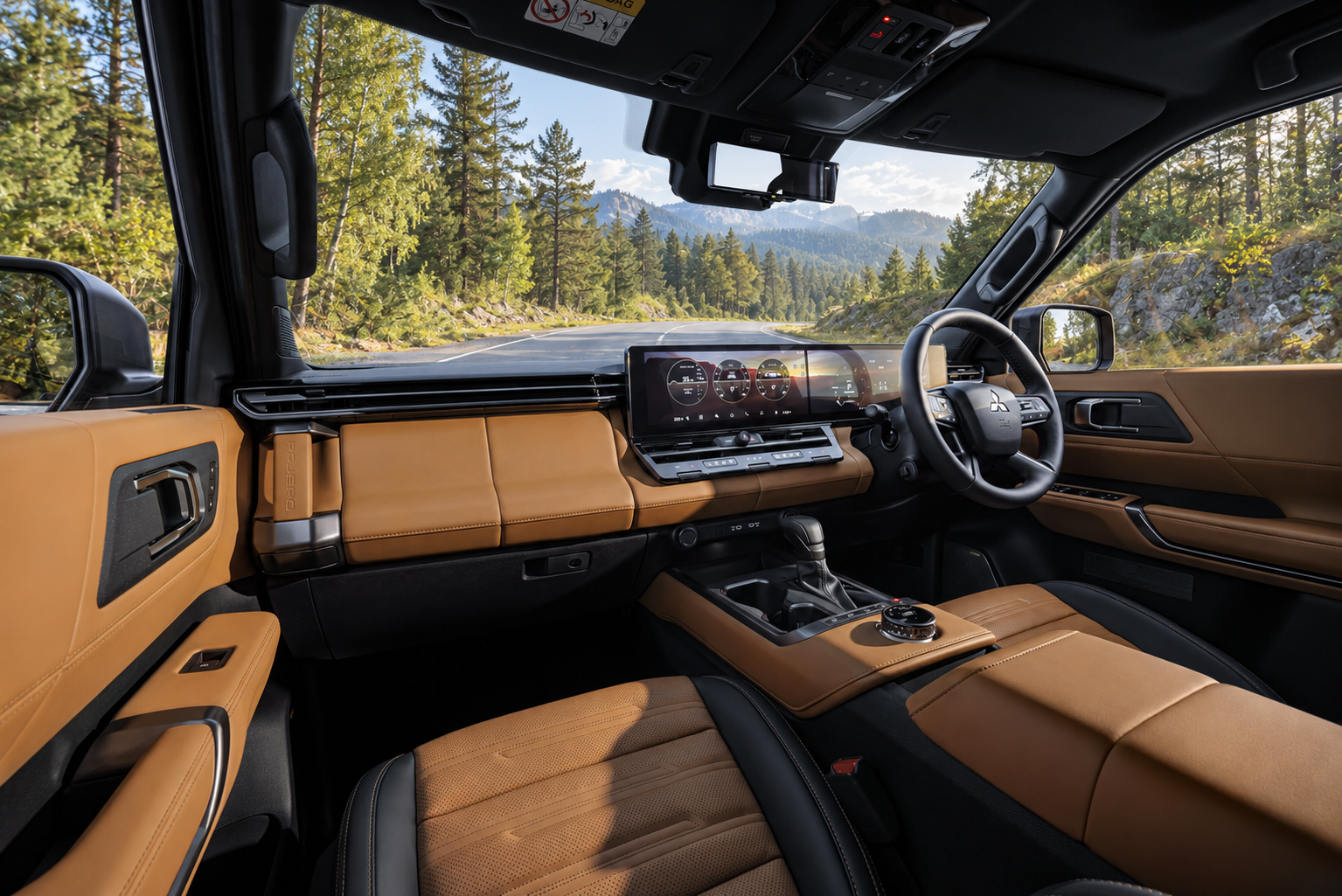
The auxiliary instrument display familiar to owners of earlier Pajeros returns in digital form. Multi Meter shows altitude, compass direction, temperature and body angles. A camera view also shows the area beneath the front of the vehicle, helping reveal ground hidden by the bonnet. Mitsubishi says this view can appear automatically in 4HLc and 4LLc.
Japanese prices and plans for other markets
The Japanese price list dated 29 October 2026 names four trims: GLS costs ¥6,193,000; GSR ¥6,765,000; Exceed ¥6,930,000; and Super Exceed ¥7,950,800. Prices include Japan's 10% consumption tax; registration, insurance and other specified expenses are additional.
These are Japanese prices. They do not represent the cost after export, transport and import formalities elsewhere. Japanese Super Exceed and Exceed models have 20-inch wheels, while GSR and GLS use 18-inch wheels: trim differences extend beyond interior finishes.
The new Pajero is built in Thailand. In September Mitsubishi announced plans to roll it out gradually to around 100 markets from fiscal 2027, including ASEAN, Latin America and the Middle East. European timing and prices are not stated in the official material reviewed. Outside Japan, two questions remain separate: whether the model will reach a market and which specification it will receive.