 EN


Frequently asked questions
The manufacturer claims up to 250 km in the combined WLTP cycle, while the French specification sheet for the Spring Expression electric 80 listed 245 km when the article was prepared. The exact figure depends on the version and should be checked against its homologation data.
No. The standard onboard charger supports 6.6 kW AC. Support for 11 kW AC and 50 kW DC is included in a separate fast-charging package, so the equipment list must be checked.
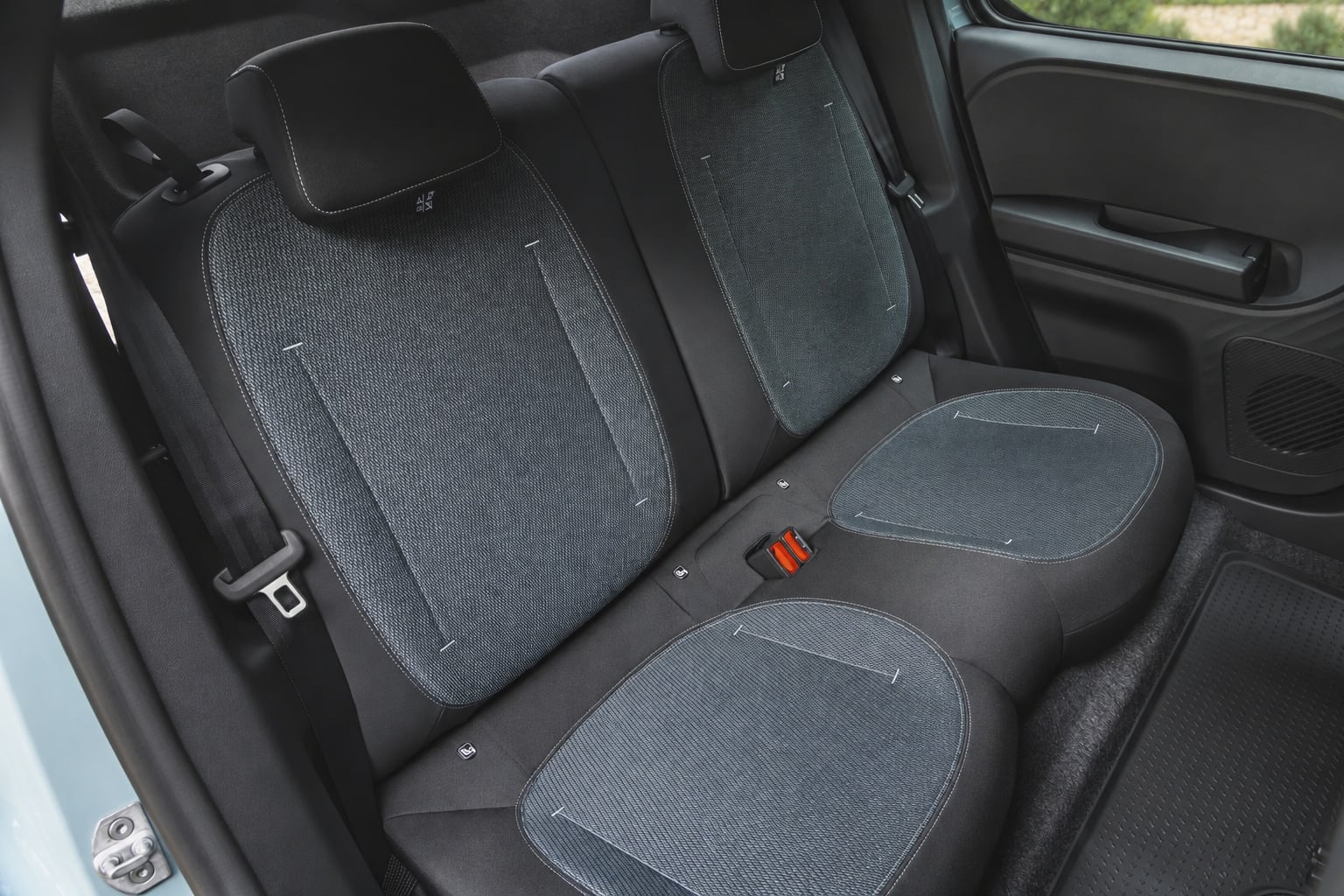
The Spring has four seats. Its five doors do not mean that it can carry five people.
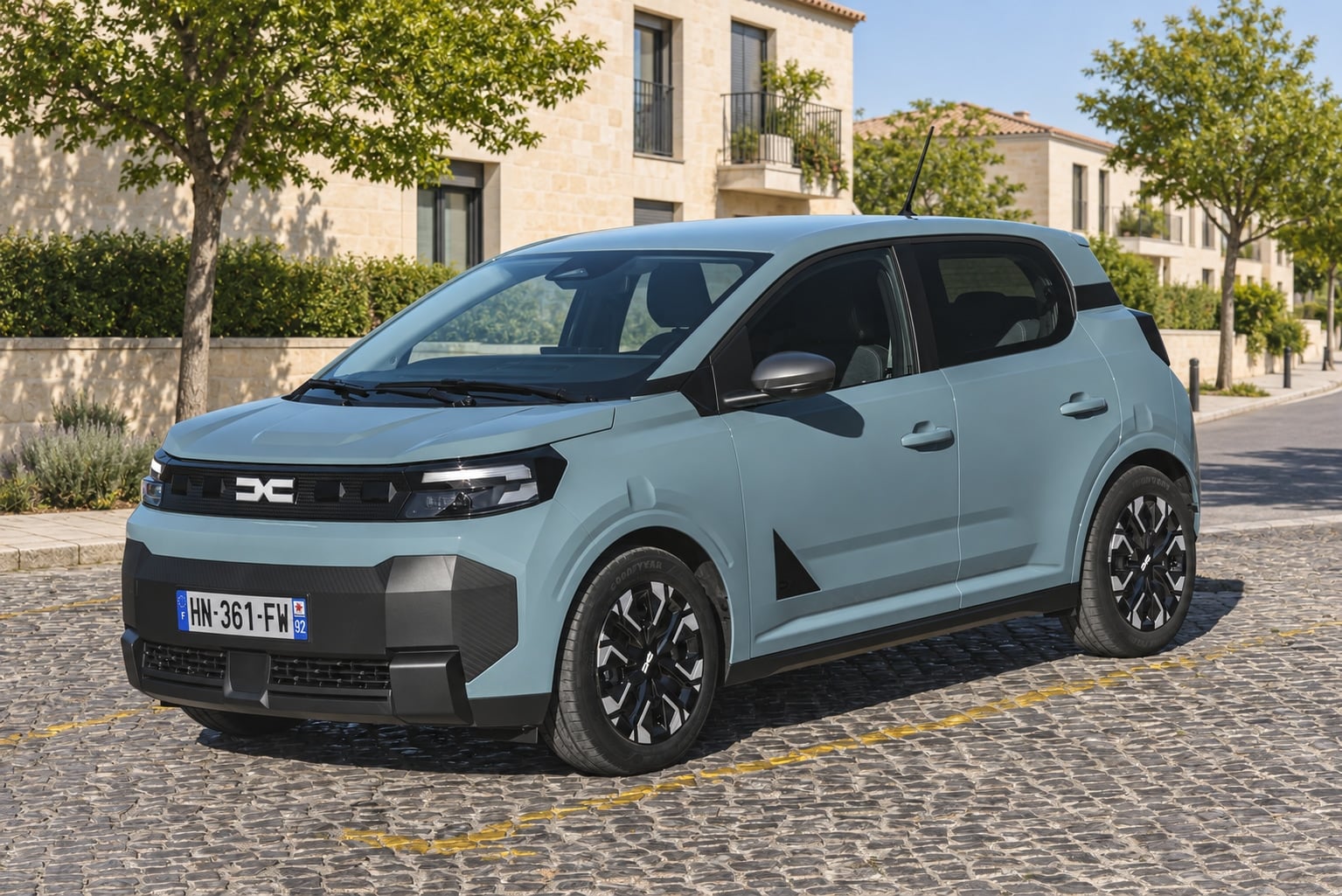
The second-generation Dacia Spring has gained a new platform, a wider body and European production. It still needs to be chosen around a specific route: its claimed range reaches 250 km WLTP, while fast-charging capability depends on the equipment fitted. Materials published on 13 November and journalists’ first drives help clarify what has changed for the driver.
What has changed beyond the styling
The official Dacia press kit lists the RG-EV small platform and assembly at the plant in Novo Mesto, Slovenia. The new Spring is 18 cm wider than its predecessor. This matters when assessing the cabin: during a test drive, check the seating position with a passenger beside you, the ease of adjustment and access to the rear seats.
In initial tests published on 13 November, Autocar rated the car’s stability positively in rainy and windy conditions, while Automarket described a calmer delivery of power and noted limitations when accelerating at higher speeds. These are journalists’ impressions from specific drives, not the results of comparative testing across all versions.
One powertrain and four seats
The new powertrain develops 60 kW — listed by Dacia as 80 hp — and 175 Nm. Acceleration from 0 to 100 km/h takes 12.1 seconds, while top speed is 130 km/h. The battery uses lithium iron phosphate chemistry, or LFP, and has a usable capacity of 27.5 kWh.
For buyers, it is more useful to compare the equipment they need than to look for the most powerful version. In the French range, Expression and Journey use the same motor and battery. However, the Spring is designed for four people: five doors do not mean five seats. For a family that regularly needs to carry five people, this limitation settles the question before screens and charging equipment are even compared.
Up to 250 km WLTP: why the specific version matters
The manufacturer’s general claim is up to 250 km in the combined WLTP cycle. However, the official French specification sheet for the Spring Expression electric 80 listed 245 km when this article was prepared. Therefore, 250 km is the highest claimed figure for the range, not a specification that applies to every car in an advertisement. When choosing a car, check the equipment level and its homologation data.
The official figure also does not describe a specific winter journey. The US government resource FuelEconomy.gov explains how cold weather and cabin heating affect electric-vehicle energy consumption. This is general information, not a winter test of the new Spring; applying the percentages shown there directly to this model would be incorrect.
It is better to plan regular routes with a margin before the next available charger. If daily journeys are noticeably shorter than the official range and the car can be plugged in overnight, the main priority is the convenience of home charging. For regular long-distance trips, the location of suitable charging stations becomes more important.
Charging: what the additional package provides
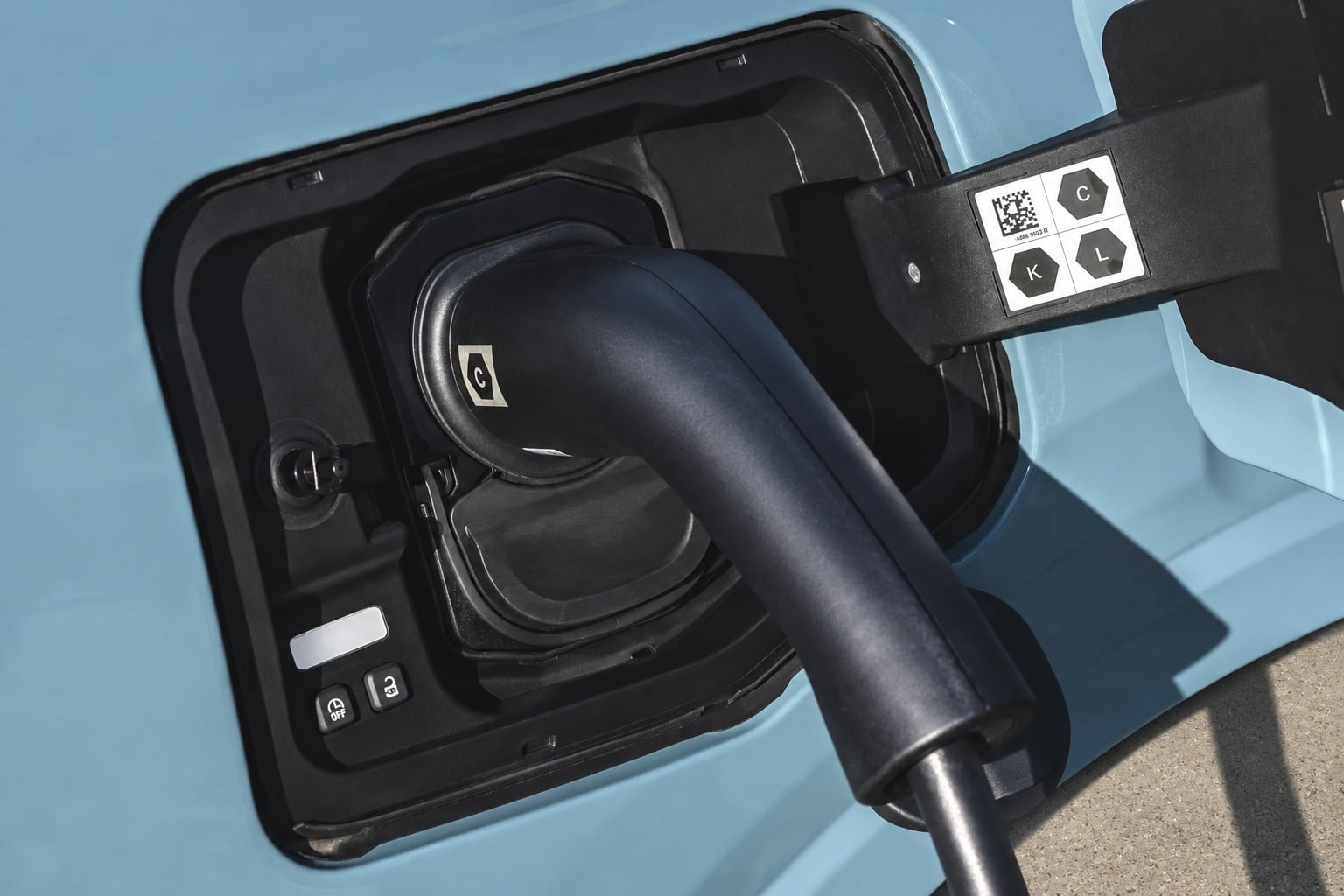
The standard onboard charger supports AC charging at 6.6 kW. A separate fast-charging package includes 11 kW AC and 50 kW DC charging. The presence of a charging port or the words “electric vehicle” in an advertisement do not confirm support for 50 kW DC charging: the equipment list must be checked separately.
Connection | Vehicle equipment | Claimed 15–80% time |
|---|---|---|
Standard household socket | Standard AC charging | 9 hours |
Heavy-duty socket | Standard AC charging | 5 hours 40 minutes |
7 kW home charger | 6.6 kW AC onboard charger | 2 hours 55 minutes |
Three-phase 11 kW AC charger or 22 kW AC point | Package with 11 kW AC | 1 hour 55 minutes |
Suitable DC charger | Package with 50 kW DC | 28 minutes |
The manufacturer gives all table values for the same interval — from 15 to 80%. They do not describe charging from zero to a full battery. Connecting to a 22 kW AC charger also does not turn an 11 kW onboard charger into a more powerful unit: in the Dacia scenario described, the car accepts up to 11 kW.
For trips involving stops at DC chargers, compare not only the vehicle price but also the cost of the required package. For overnight home charging, it is more useful to compare the available parking time with the capabilities of the specific connection.
Expression and Journey: what the extra cost covers
In the French equipment list, Expression already includes manual air conditioning, rear parking sensors and Media Control with a smartphone holder. Journey adds a rear-view camera, keyless entry and Media Nav Live with a 10.1-inch screen. This is a guide to the French range: equipment for cars in another market must be checked against the local price list.
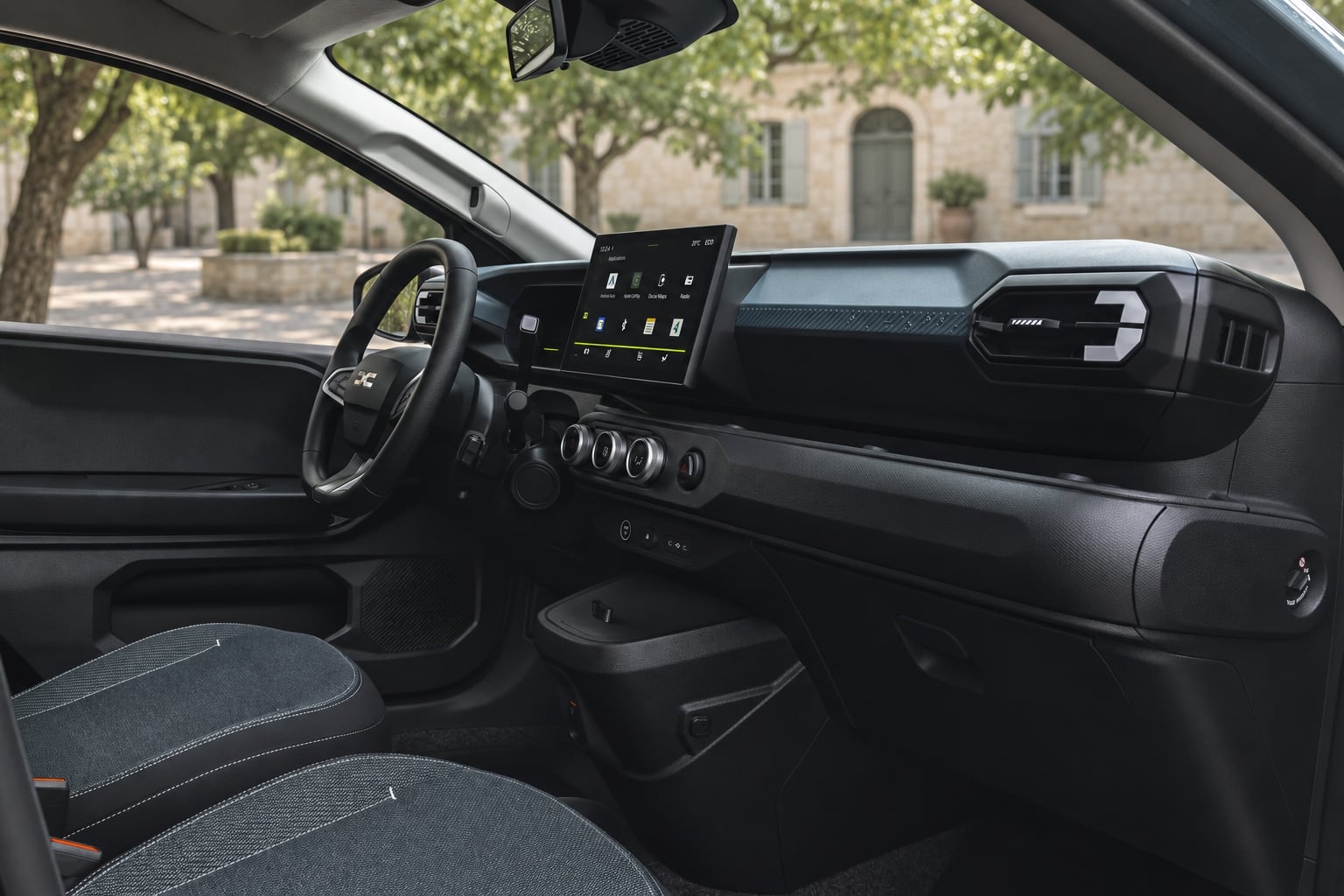
The difference is primarily about everyday convenience. If a smartphone is sufficient for navigation, a separate large screen may not be essential. If the car is often parked in a tight courtyard, assess the camera in person: check its view, the image in darkness and how well it works together with the mirrors.
Boot space: what is behind the maximum volume
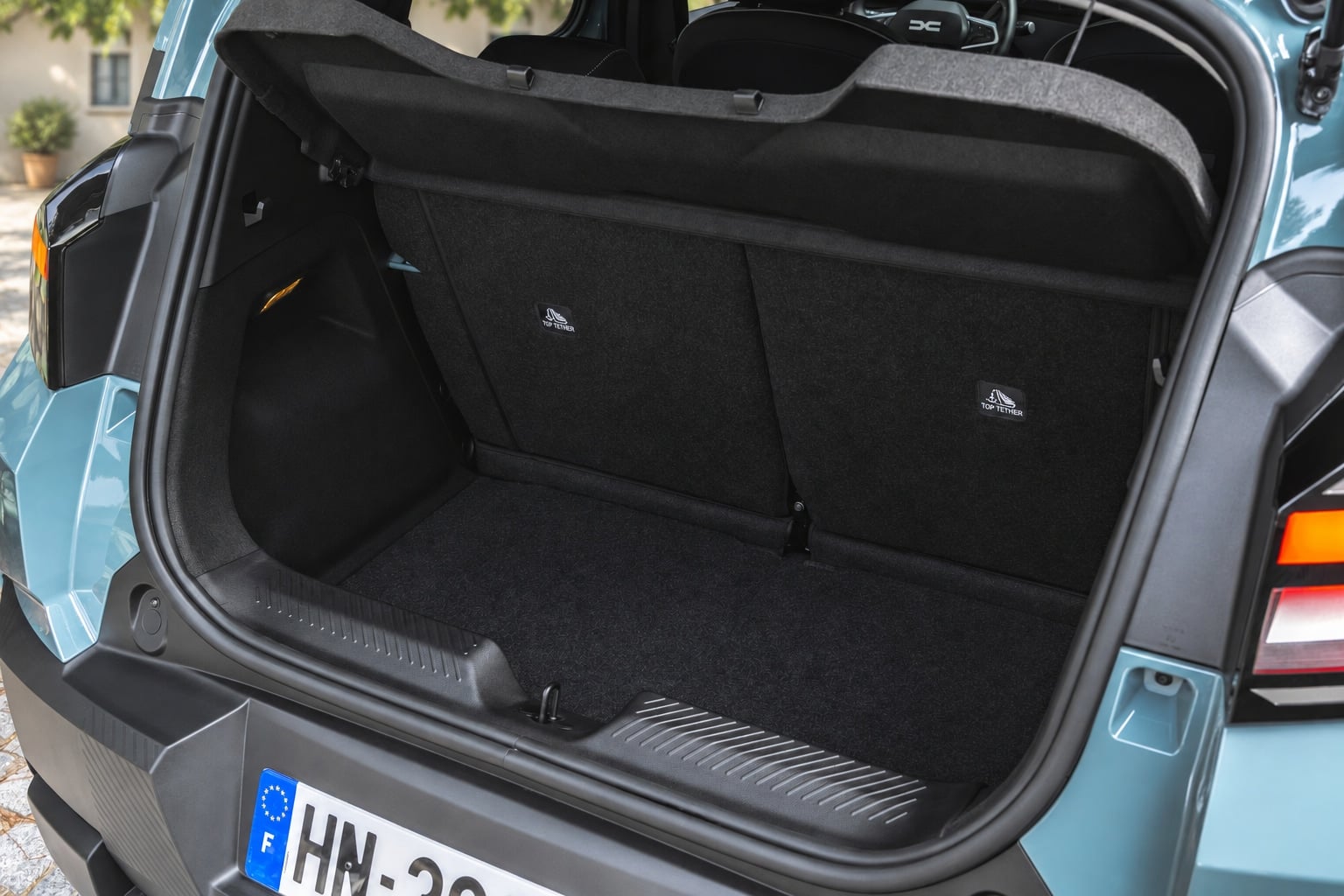
The French Dacia release claims up to 337 litres with the rear seats raised — without the luggage-cover shelf and with a tyre repair kit. With the seats folded, capacity reaches 1283 litres. An 18-litre front compartment is offered separately.
The measurement conditions matter here: the maximum figure without the shelf does not show how much can fit beneath it. Before buying, try your own pushchair or suitcases and check whether the charging cable can be reached when the main boot is already full.
What to check before buying the new Spring
The French release announcing the opening of orders on 8 September positioned Expression below €18,000 and the full range below €20,000 before government incentives. This is a reference for a specific market and date, not a single price for all countries. The final offer should be compared with the charging package, other options and discount conditions taken into account.
Make sure the offer concerns the second generation: the specifications of earlier Spring models cannot be transferred to the new car.
Check AC and DC charging support and whether the required charging equipment is included.
Confirm the range of the exact version selected, then compare it with your own routes.
Check the four seats, cabin comfort and whether your usual luggage fits.
The key choice for a Spring buyer is the right equipment and accessible charging. The identical motor and battery make version comparisons easier, but a price that excludes the charging package you need does not yet show what the car will cost for your journeys.