 EN


Frequently asked questions
Trailhunter adds an Old Man Emu suspension, extra underbody protection, front recovery hooks, Michelin LTX Trail tires in size 265/70 R18, a locking rear differential, Multi-Terrain Select, and Crawl Control.
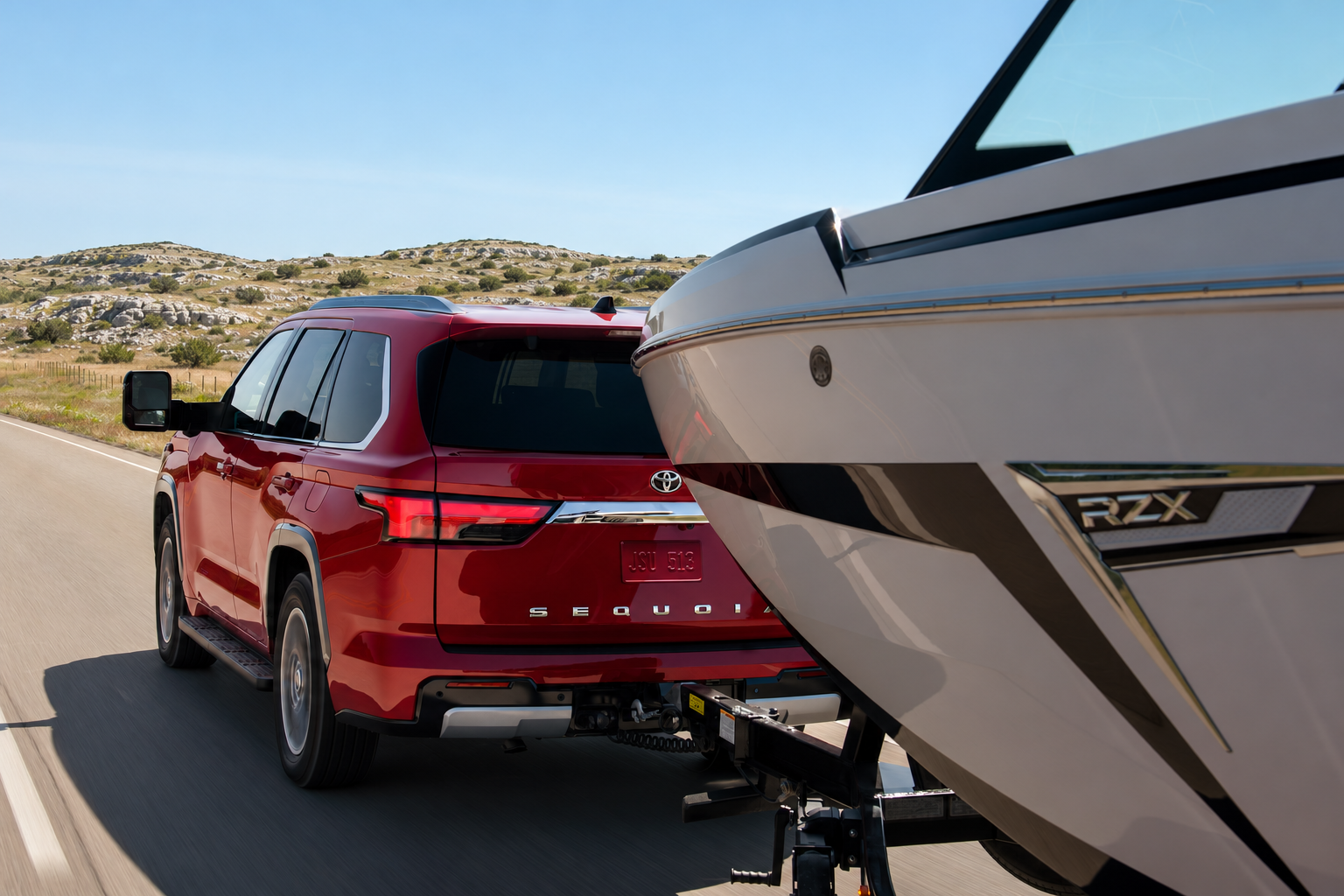
Its towing functions include Automated Trailer Detection, Trailer Blind Spot Monitor, Trailer Lane Trace Assist, and Trailer Backup Guide. They can identify trailer dimensions, extend blind-spot monitoring, assist with lane positioning, and provide guidance during reversing.
Toyota lists towing of up to 9,120 pounds, approximately 4,137 kg. This is the maximum figure for the lineup, so the rating for a specific vehicle and configuration must be checked separately.
The 2027 Toyota Sequoia gains additional capability for off-road travel and towing. The Trailhunter package adds to the SR5 equipment list, the TRD Pro receives adjustable FOX QS3 dampers, and electronic assistants account for trailer dimensions when monitoring blind spots and help with reversing maneuvers.
On July 23, 2026, Toyota announced updates to the Sequoia, detailing the Trailhunter equipment and TRD Pro changes. In November, the company added information about towing and onboard systems. The following features apply to North American versions of the SUV.
Trailhunter vs. TRD Pro: The Difference Starts with the Suspension
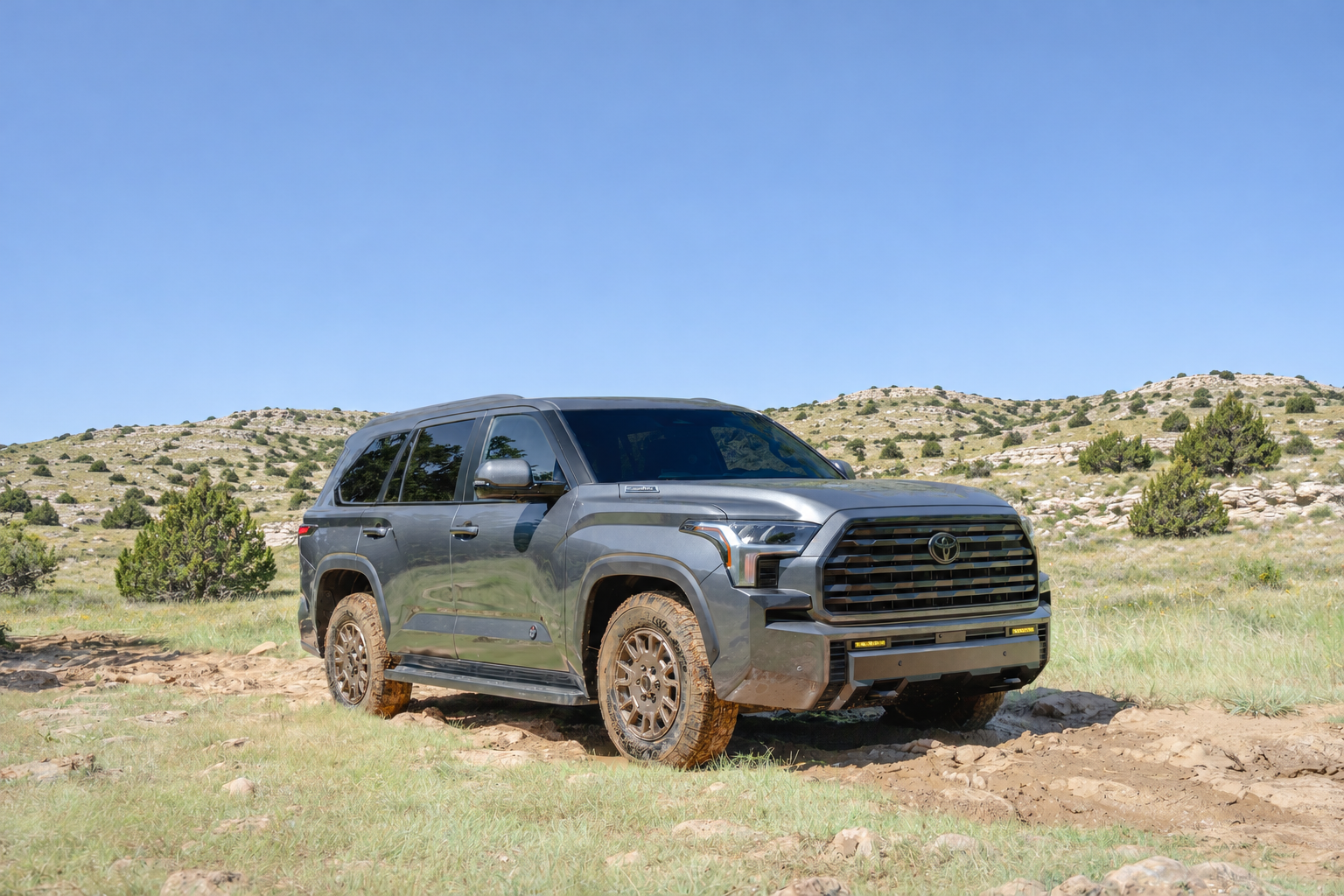
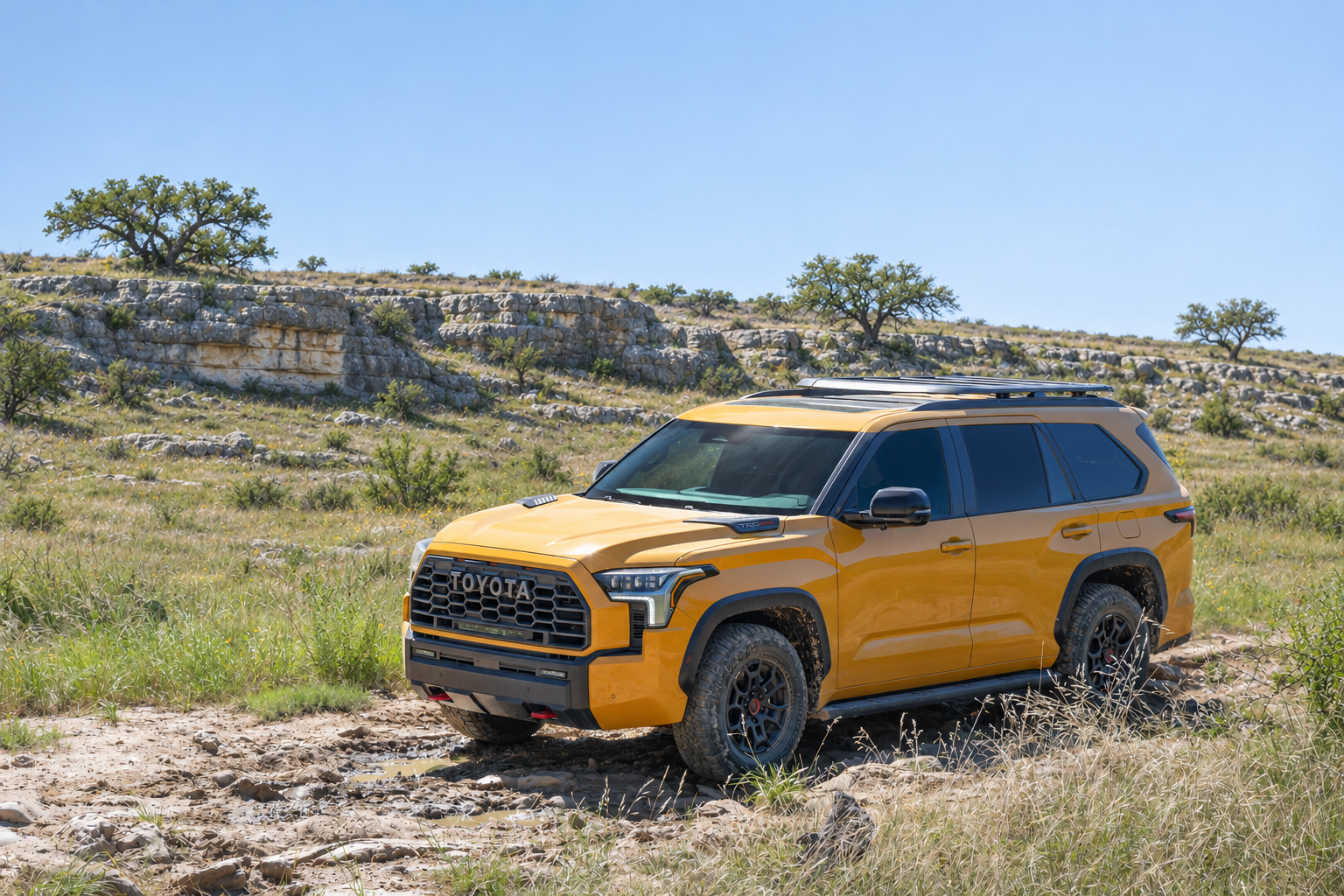
Trailhunter is a factory package based on the SR5. It includes an Old Man Emu suspension, additional underbody protection, front recovery hooks, and Michelin LTX Trail tires in size 265/70 R18. Equipment also includes a locking rear differential, Multi-Terrain Select for choosing modes for different surfaces, and Crawl Control.
Key differences between Trailhunter and the updated TRD Pro
Comparison | SR5 with Trailhunter package | TRD Pro |
|---|---|---|
Configuration | Additional package for the SR5 | Separate version in the lineup |
Suspension | Old Man Emu | Adjustable FOX QS3 dampers tuned for the Sequoia |
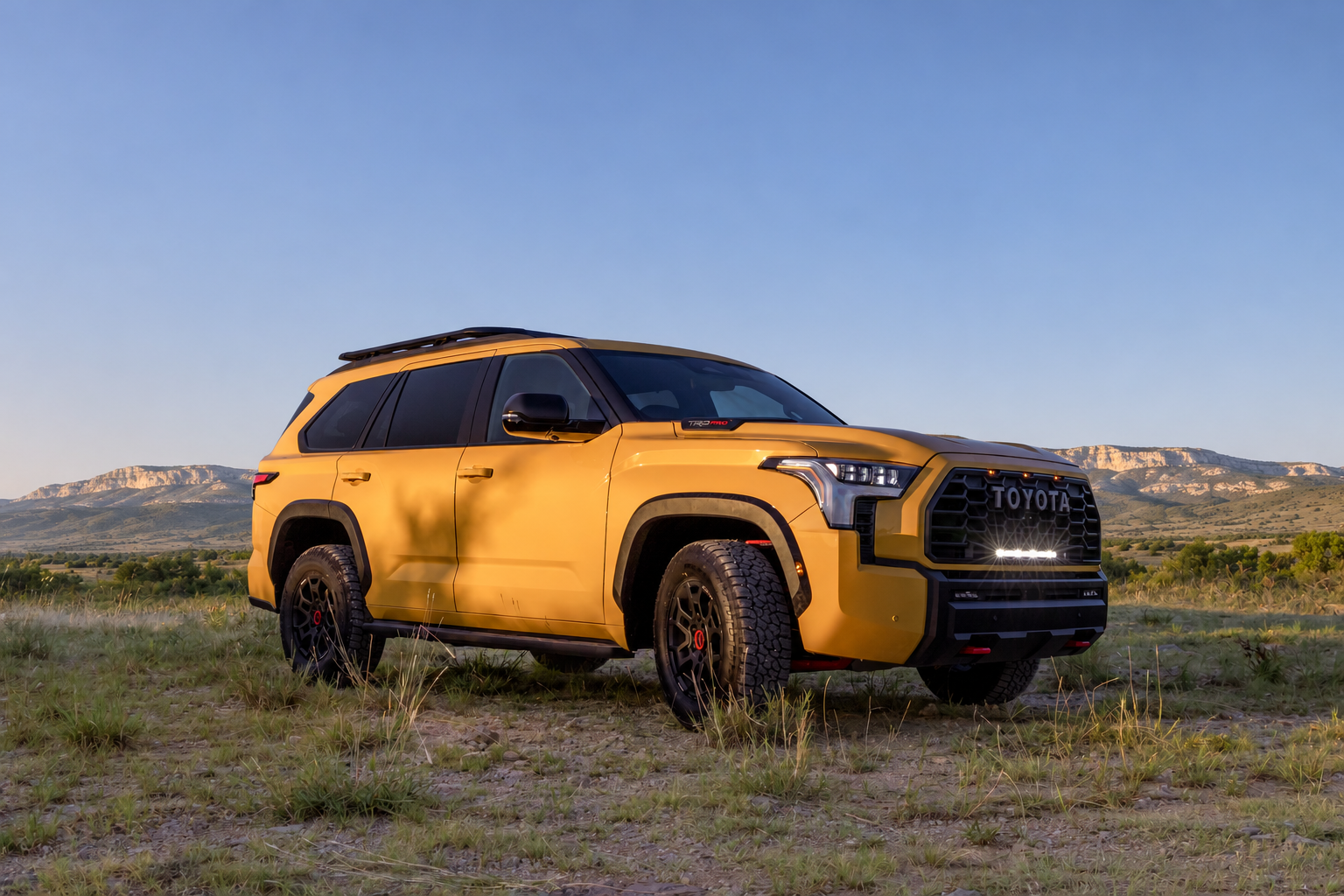
Exterior differences | Bronze-colored wheels and Trailhunter badges | Red recovery hooks; Honeycomb color available |
The Trailhunter equipment is aimed at specific tasks. The locking rear differential helps maintain traction when grip is limited, while Crawl Control automatically manages the throttle and brakes over difficult terrain. This lets the driver focus on choosing a line.
The main technical focus of the TRD Pro is adjustable damping. According to Toyota, the FOX QS3 dampers are designed for different conditions, including rocky terrain and faster driving across desert surfaces. The cited releases do not include comparative comfort measurements for the two versions.
How to Compare These Versions When Buying
Start with the suspension and the full equipment list for the specific vehicle. Trailhunter provides an off-road package based on the SR5. The TRD Pro has a different suspension with adjustable settings. Badges alone are not enough to determine which version is better suited to your route.
Four Assistants That Account for the Trailer
A Toyota Canada release dated November 5, 2026 describes four towing functions. They operate at different stages of a journey:
Automated Trailer Detection uses the rear radars and camera to recognize a trailer and determine its physical dimensions. The data appears in the Trailer Garage menu, which has been moved from the instrument panel to the multimedia display.
Trailer Blind Spot Monitor expands the monitored area according to the trailer’s length and the space alongside it. This helps account for the added length of the vehicle and trailer when changing lanes.
Trailer Lane Trace Assist makes steering corrections to help keep the vehicle centered in its lane. Toyota also claims that it compensates for some effects of uneven roads and wind; the function operates under certain conditions.
Trailer Backup Guide adds dynamic on-screen guidelines, a slider interface, and partially automated steering during maneuvers. The system also helps identify the risk of trailer sway or jackknifing.
The driver remains responsible for controlling the maneuver. These functions help interpret the surroundings and manage the vehicle’s path, but their availability and operating conditions must be checked for the selected Sequoia configuration.
What Trailer Weight Rating Does Toyota List?
The current U.S. 2027 Sequoia page lists towing capacity of up to 9,120 pounds, or approximately 4,137 kg. The Canadian release also gives a maximum of 4,137 kg. The i-FORCE MAX powertrain combines a 3.4-liter twin-turbocharged gasoline V6 with an electric motor. Total output is 437 hp under U.S. specifications, with approximately 790 N·m of torque.
How to Read the “Up to 4,137 kg” Figure
This is the maximum figure for the lineup, not a universal rating for every configuration. The vehicle you plan to buy has its own specific limits. The presence of Trailhunter or a towing assistant by itself does not confirm the permitted weight of your trailer.
What Has Changed for Passengers
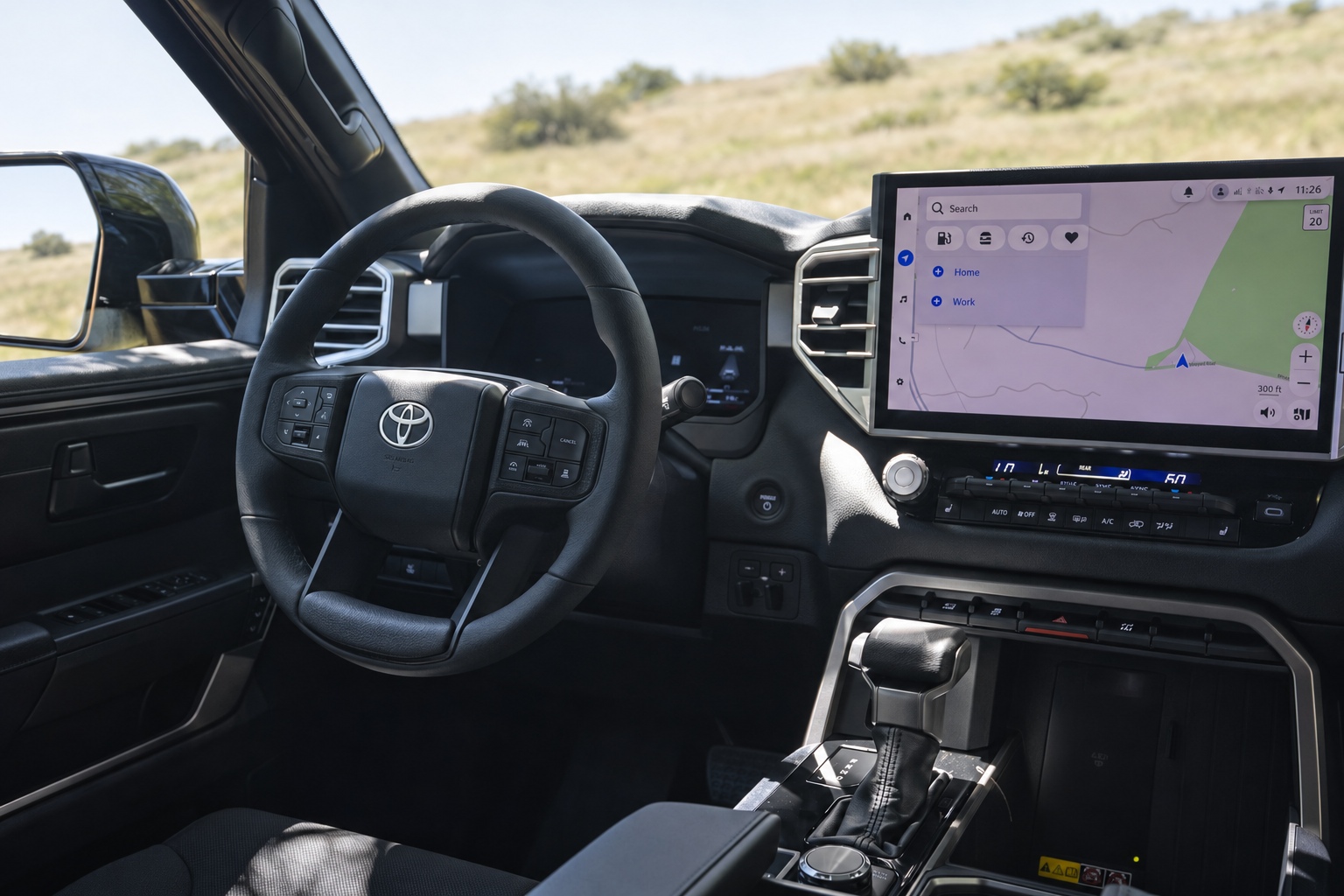
Across the North American lineup, a 14-inch multimedia display and a 12.3-inch digital instrument cluster are now standard. The built-in Drive Recorder uses the vehicle’s exterior cameras and, when activated, records 20-second clips either at the driver’s command or when system-defined events occur.
Another update is Advanced Rear Seat Reminder. Under certain conditions, a millimeter-wave radar hidden in the roof can detect movement in the second and third rows after the vehicle is switched off and the driver exits. Visual and audible signals provide the warning. Sending notifications to a phone requires an active Safety Connect subscription and a 5G connection.
What to Check on the Sequoia You Choose
Actual equipment: whether the Trailhunter package is installed or the vehicle only has similar exterior features.
The trailer weight rating for that specific configuration, along with the towing assistants and equipment you need.
The operating conditions for connected services in the country where the vehicle will be used: some functions depend on a subscription and mobile network coverage.