 EN


Frequently asked questions
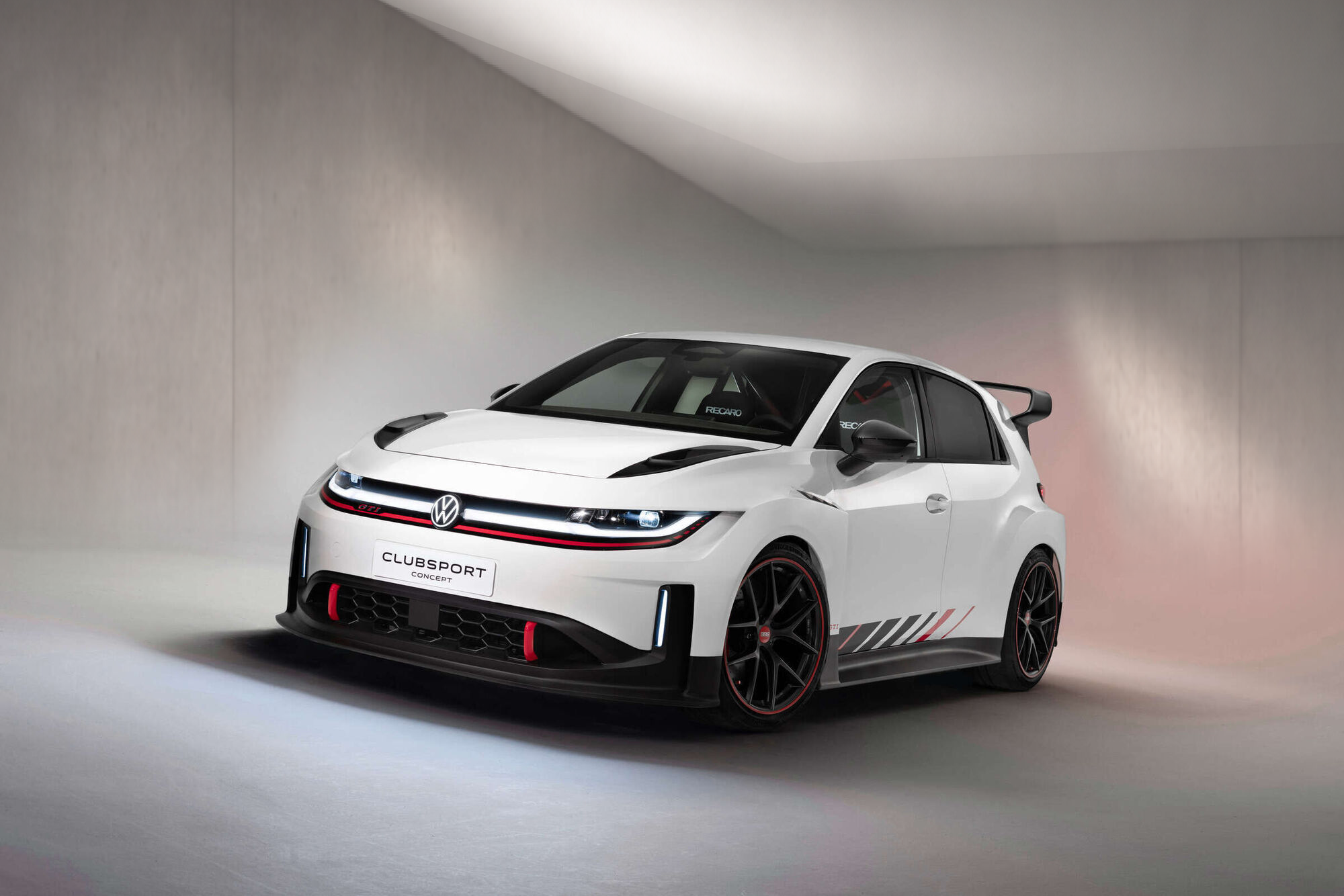
The front-wheel-drive ID. Polo GTI Clubsport produces 270 kW, or 367 hp, and 550 Nm of torque. Volkswagen claims a 0–100 km/h time of 4.7 seconds with Launch Control.
The Clubsport uses the larger APP550 motor at the front, a revised cooling system, track-tuned suspension and differential settings, ceramic brakes, wider bodywork and a track-focused two-seat interior. The production GTI has 226 hp, a 6.8-second 0–100 km/h time and a starting price of €39,995 in Germany.
The concept uses a 52 kWh NMC battery and can briefly deliver up to 290 kW to the drive system. Its maximum DC charging power is 105 kW, while Volkswagen has not stated a WLTP range for the Clubsport.
The track-focused Volkswagen ID. Polo GTI Clubsport has front-wheel drive, 367 hp and a claimed 0–100 km/h time of 4.7 seconds. The production electric GTI, already available to order in Germany, produces 226 hp and reaches 100 km/h in 6.8 seconds. Both cars are based on the MEB+ platform, but fitting the larger motor required engineers to rework the front end, revise battery cooling and retune the chassis.
Volkswagen revealed the specifications on November 20 to mark the GTI’s 50th anniversary. The Clubsport is presented as a one-off track concept. The factory announcement gives no price or production plans so far. The production GTI already has adaptive dampers and an electronically controlled front differential lock. Volkswagen retained these solutions for the concept but changed their settings.
Production ID. Polo GTI and Clubsport: the numbers
Specifications stated by Volkswagen
Parameter | ID. Polo GTI | ID. Polo GTI Clubsport Concept |
|---|---|---|
Drive | Front-wheel drive | Front-wheel drive |
Motor output | 166 kW (226 hp) | 270 kW (367 hp) |
Torque | 290 Nm | 550 Nm |
0–100 km/h | 6.8 s | 4.7 s with Launch Control |
Top speed | 190 km/h | 240 km/h |
Usable battery capacity | 52 kWh | 52 kWh |
DC fast-charging power | 105 kW | 105 kW |
WLTP range | Up to 431 km | Not stated |
Side doors | Four | Two |
Status | Production model, from €39,995 in Germany | Track concept |
How a motor from rear-wheel-drive Volkswagens was fitted at the front
The production GTI uses the APP290 electric drive unit. For the Clubsport, Volkswagen selected the APP550, designed for the rear axle of larger models such as the ID.7 and ID. Tiguan. In the small Polo, it was installed at the front and paired with an electronically controlled differential lock. Output increased by 104 kW and 260 Nm. All that drive force is still sent to the front wheels.
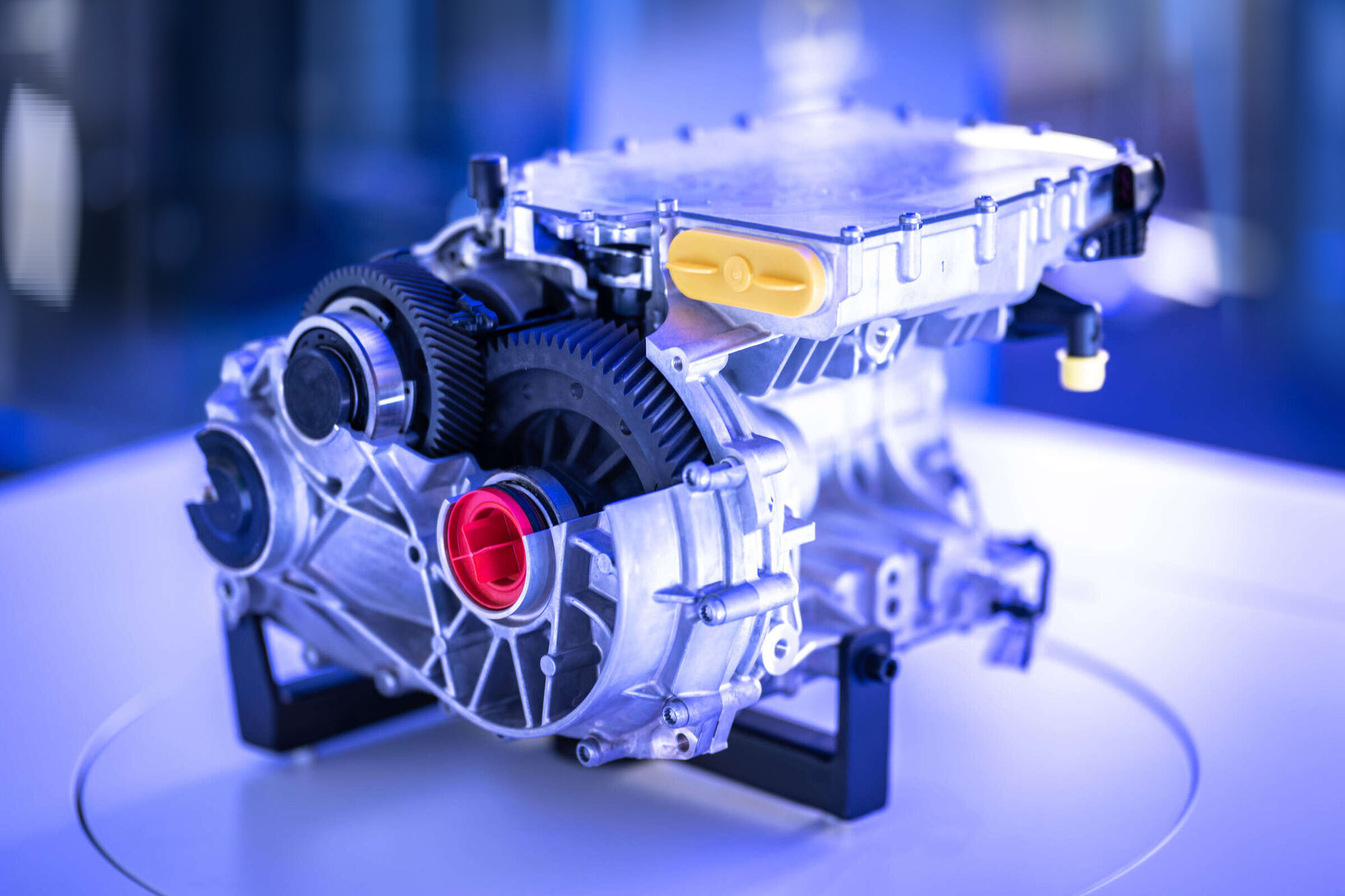
The Volkswagen technical dossier shows why replacing the motor required so much work. On the APP550, the drive output point from the reduction gear is 55.5 mm higher and 5 mm farther back. Its position determines the location of the entire unit and how it connects to the surrounding components. Engineers designed a new subframe, revised the mounts and stabilizer bar, moved the air-conditioning compressor and relocated the cooling-system pump. The wiring and lines also had to be routed around the new layout.
When launching from a standstill and accelerating out of a corner, the key question is how much torque the tires can transfer to the road. In the Clubsport, electronics vary the differential-locking force through a multi-plate clutch. If one front wheel becomes unloaded, the system helps make use of the other tire’s grip. The production GTI also comes with a controlled differential lock. Volkswagen changed its settings for the concept’s track use.
Why the concept needs different cooling despite having the same 52 kWh
The starting point was the production lithium-ion battery with NMC cells based on nickel, manganese and cobalt. Its usable capacity remains 52 kWh. For the Clubsport, Volkswagen widened the usable state-of-charge range, which is restricted in the road car to protect the battery, and installed a higher-capacity heat exchanger. The battery and drive-control systems were also adapted for high-rpm motor operation.
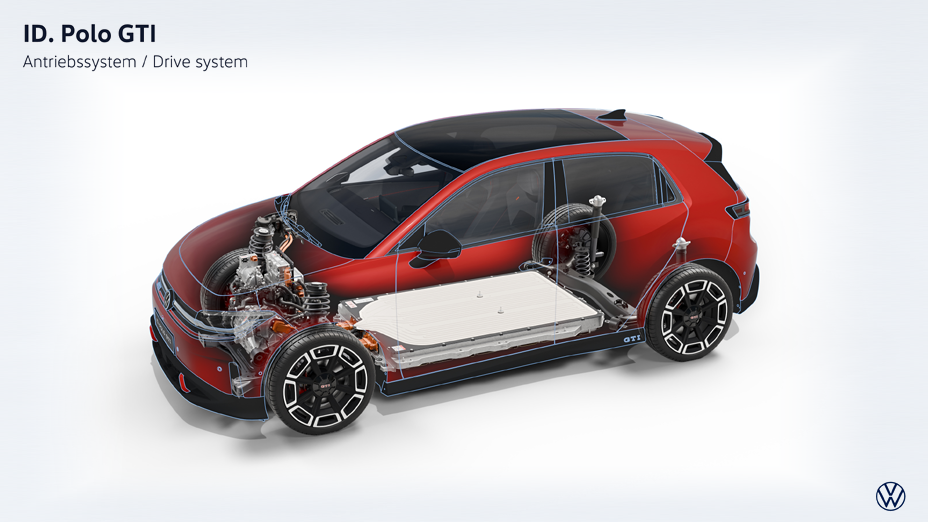
The concept’s battery can briefly deliver up to 290 kW to the drive system. Its maximum charging input from a fast-charging station is 105 kW, the same as in the production GTI. Volkswagen has not stated how long a track session can last on one charge. The 0–100 km/h figure demonstrates the car’s capability during a single launch; the length of a session depends on how long the battery and motor can withstand repeated loads.
What Volkswagen changed in the suspension, brakes and body
Both cars use the same suspension layout: MacPherson struts at the front and a torsion beam at the rear. The Clubsport sits 15 mm lower than the production GTI. It has a wider track, different camber angles and a reduced maximum steering angle for the front wheels to accommodate wider tires and wheels. The adaptive DCC dampers remain, but they were tuned for track use. The system adjusts damping force at each wheel according to the surface and driving mode.
The production GTI uses a one-box braking system and disc brakes on both axles. Volkswagen kept the overall layout in the Clubsport but fitted ceramic discs for track driving. During repeated high-speed braking, the discs must dissipate heat again and again. Volkswagen has not yet published test results or a lap time, so the brakes’ endurance cannot be assessed from the announcement alone.
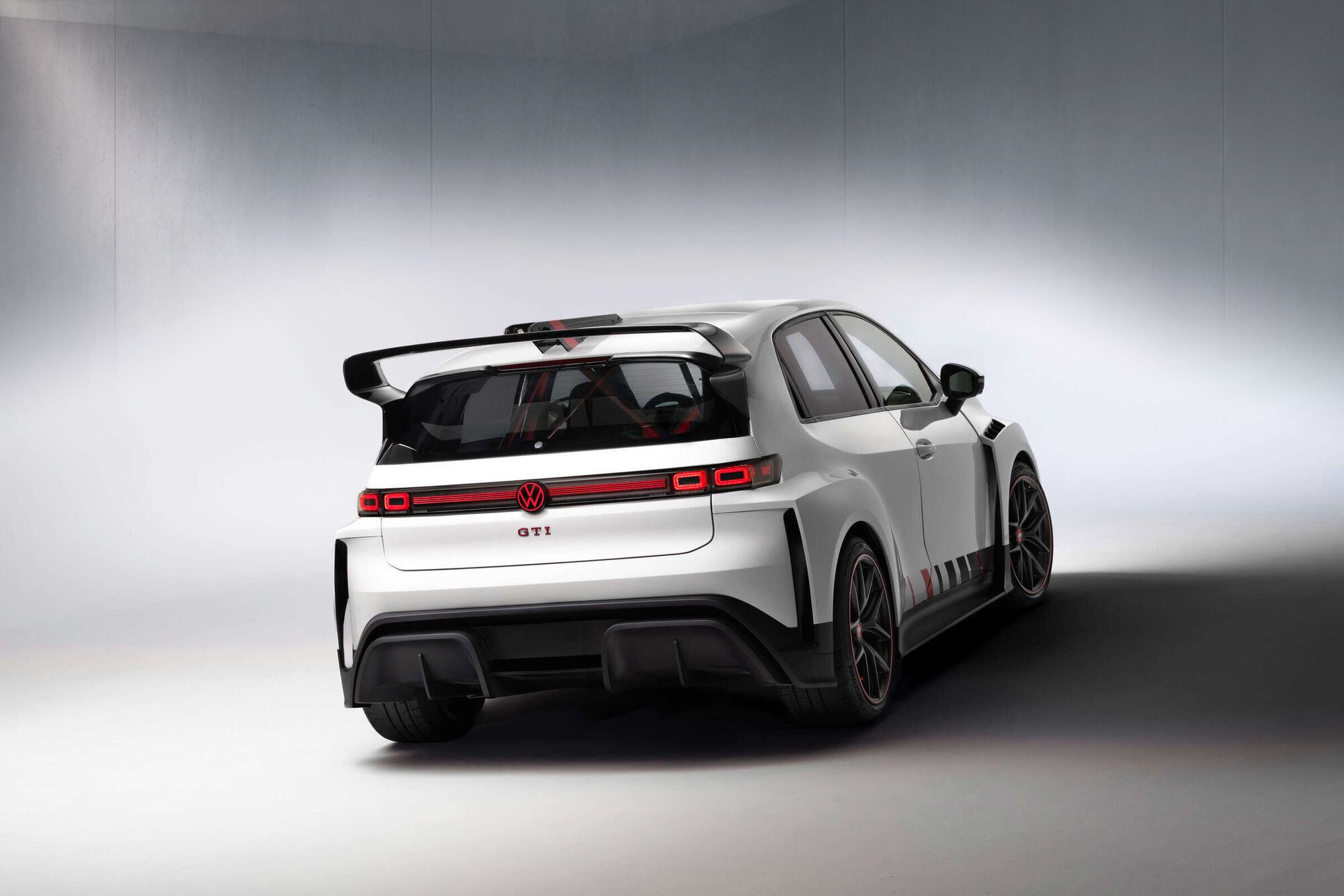
The widened arches increase the body’s width by 100 mm. A splitter generates front downforce, while a diffuser and rear wing work at the back. The wing and the center section of the roof are made from carbon fiber to reduce weight. The cabin was also reworked for track sessions. It has two Recaro bucket seats with five-point harnesses and a safety bar behind them. The rear seats were removed, and there is no central multimedia system. Volkswagen retained the rear-window line but replaced the rear doors with fixed side panels. This gave the designers room for wider rear fenders without a seam where an opening door would meet the body.
What buyers get with the production ID. Polo GTI
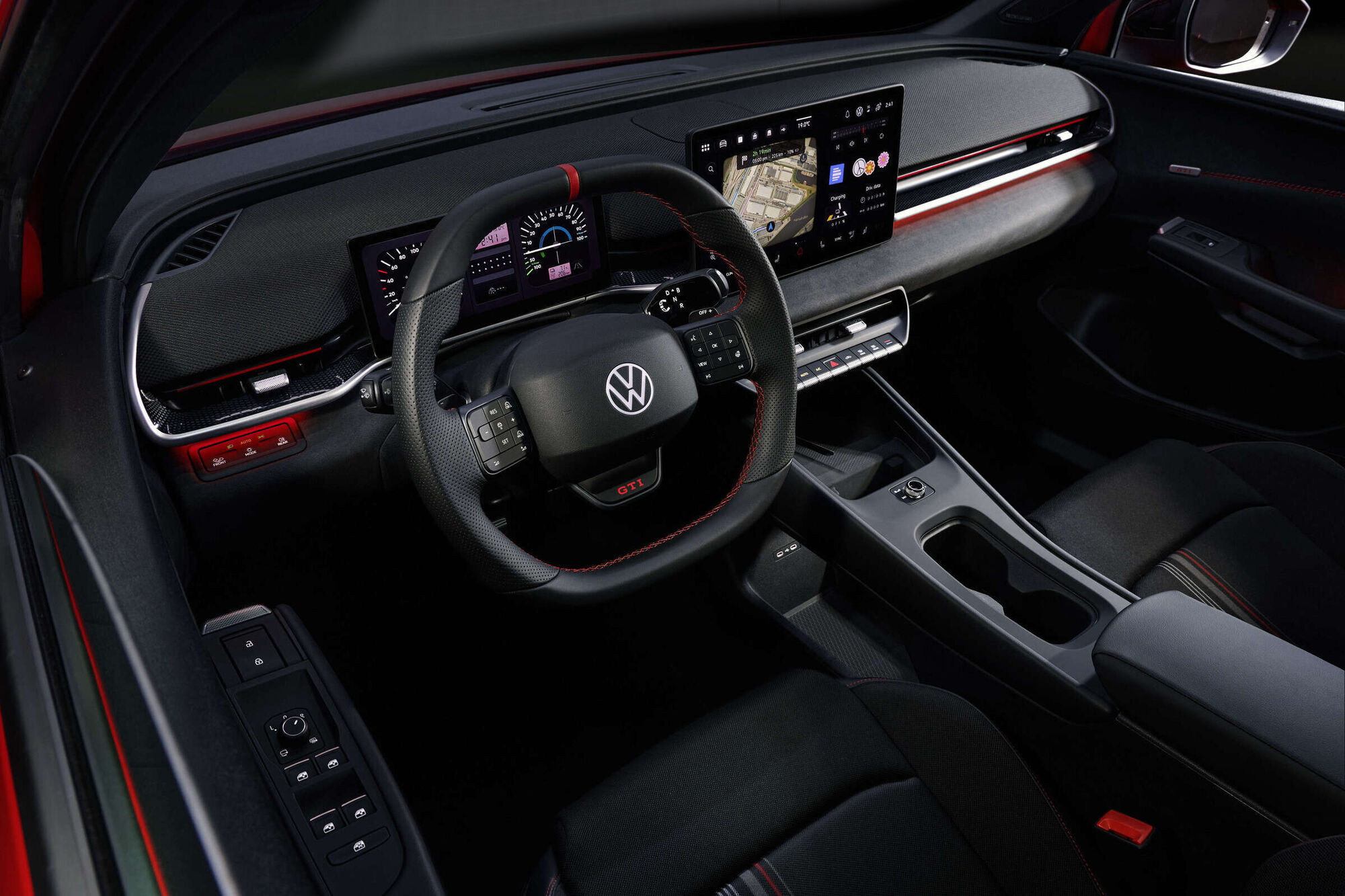
According to Volkswagen’s pre-order announcement, the starting price in Germany is €39,995. Standard equipment includes adaptive DCC sports suspension, a controlled differential lock, progressive steering and 19-inch wheels. The GTI button on the steering wheel changes the drive, steering and suspension settings. Launch Control can be activated in this mode, and the instrument panel switches to sports graphics. Comfort mode is available for everyday driving. During a test drive, you can take the same stretch of road in both modes and compare throttle response and suspension behavior over uneven surfaces.
The cabin has a separate row of buttons for the main climate functions and steering-wheel paddles for adjusting regenerative braking. The 12.9-inch central display runs the multimedia system and navigation, which plans charging stops. The luggage compartment holds 441 l with the rear seatbacks raised and up to 1,240 l with them folded. For owners who carry bicycles, Volkswagen offers a removable tow bar with a permitted vertical load of 75 kg—which, according to the manufacturer, is enough for a rack carrying two electric bicycles.
Range and charging
Volkswagen quotes up to 431 km of WLTP range for the production GTI. This is a combined-cycle figure, so long-distance trips also depend on cruising speed, weather, tires and vehicle load. According to Volkswagen, the car can charge from 10% to 80% at a fast-charging station in around 24 minutes under optimal conditions. AC home charging is supported at up to 11 kW. If the car usually remains at home overnight, the available power of your own charging point and your daily mileage matter more for convenience than the peak 105 kW available on the road.
When will the Clubsport be shown?
The concept’s world premiere is scheduled for the Essen Motor Show. According to the organizer’s schedule, the preview day will take place on November 27, with the main show running from November 28 to December 6. Volkswagen’s presentation is listed for November 27 from 12:00 to 12:30 local time.