 EN


Frequently asked questions
The engineers optimized battery and motor preparation, changed the rear-wing angle, increased suspension rebound damping and adjusted tire pressure to improve stability at high speed.
The car used GitiSport e.GTR2 Pro tires, developed jointly with Yangwang and reinforced with aramid fiber. Their construction is designed to reduce deformation at extremely high rotational speeds.
Guinness World Records confirmed the highest-speed records for a production car and a production electric car in a single-direction run, at 503.17 km/h.
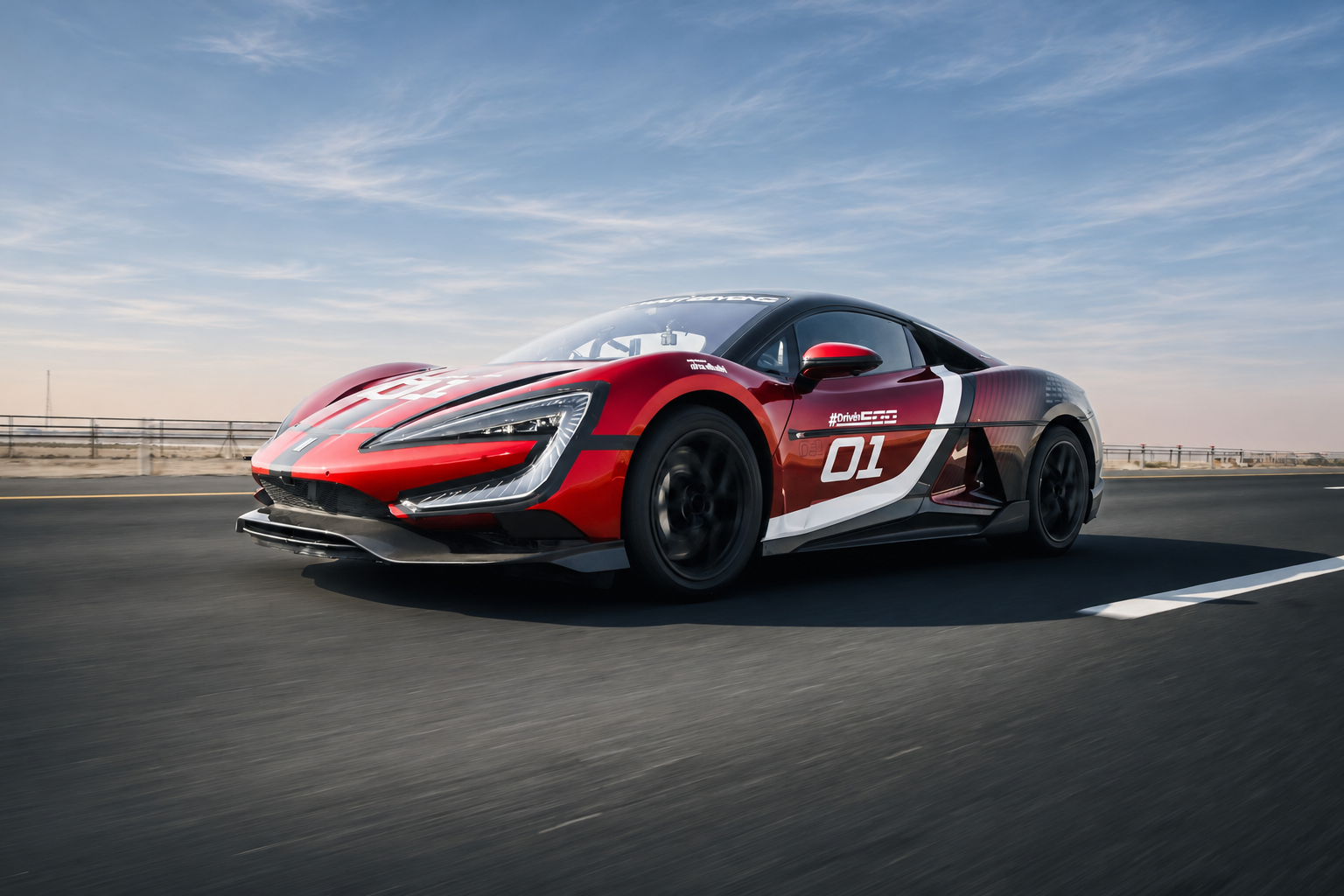
On November 1, 2026, the electric hypercar Yangwang U9 Xtreme, driven by Mark Bassing, reached 503.17 km/h on a closed section of the E11 highway in Abu Dhabi. Behind that figure was special tire preparation, revised suspension and rear-wing settings, and a detailed inspection of the road surface—even for individual metal wires left on the asphalt.
What changed between the October 31 and November 1 runs
On October 31, 2026, the team completed two runs and reached 490 km/h. Overnight, the engineers refined the setup and preparation procedures. A BYD release dated November 6 lists four areas of work.
What was adjusted | What was changed or refined |
|---|---|
Battery and motor preparation | The procedures were optimized so that each run began with the powertrain at the required temperature. |
Rear wing | The angle was changed to increase downforce on the rear axle. |
Software suspension settings | Rebound damping was increased to account for minor bumps on sections of the road. |
Tire pressure | It was adjusted to improve stability at high speed. |
Two more runs took place on November 1. The first confirmed that the car was behaving better, while the second produced 503.17 km/h. The manufacturer did not publish the exact temperatures, tire pressures or rear-wing angle.
Why the asphalt was checked again after sweeping
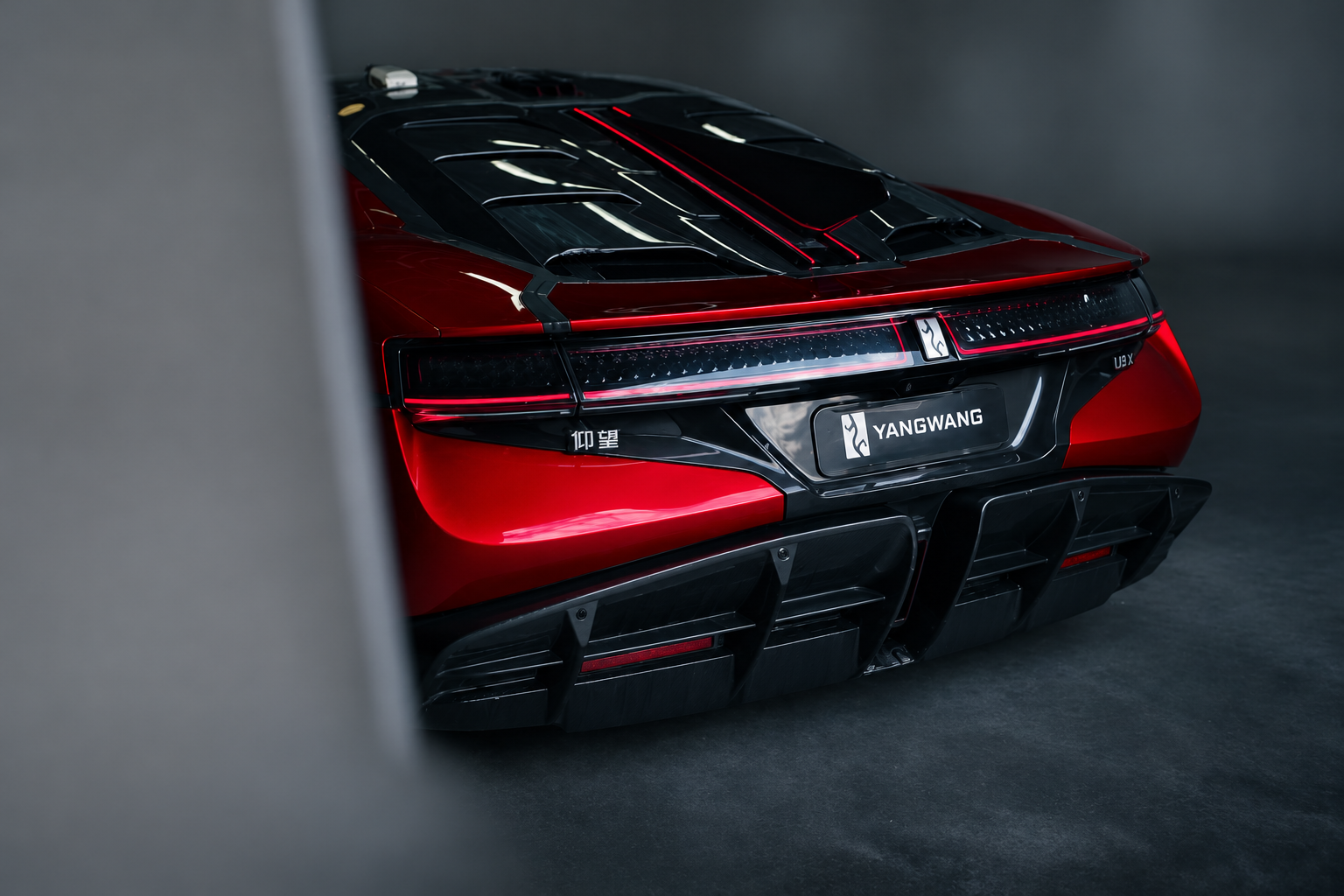
The attempt required a 10-kilometer section of road to be closed, with the longest straight measuring seven kilometers. Before the runs, the surface was swept and then inspected meter by meter: metal wires from the sweeping brushes could have remained on the asphalt and posed a risk to the tires.
Almost 140 meters per second
503.17 km/h is approximately 139.77 meters per second. At a constant speed of 503.17 km/h, covering one kilometer would take about 7.15 seconds. This is a calculation based on the recorded top speed, not the time needed to cover a kilometer during the record run: the car accelerated and then braked. That scale helps illustrate the demands placed on the road surface.
What technology the Xtreme version already had
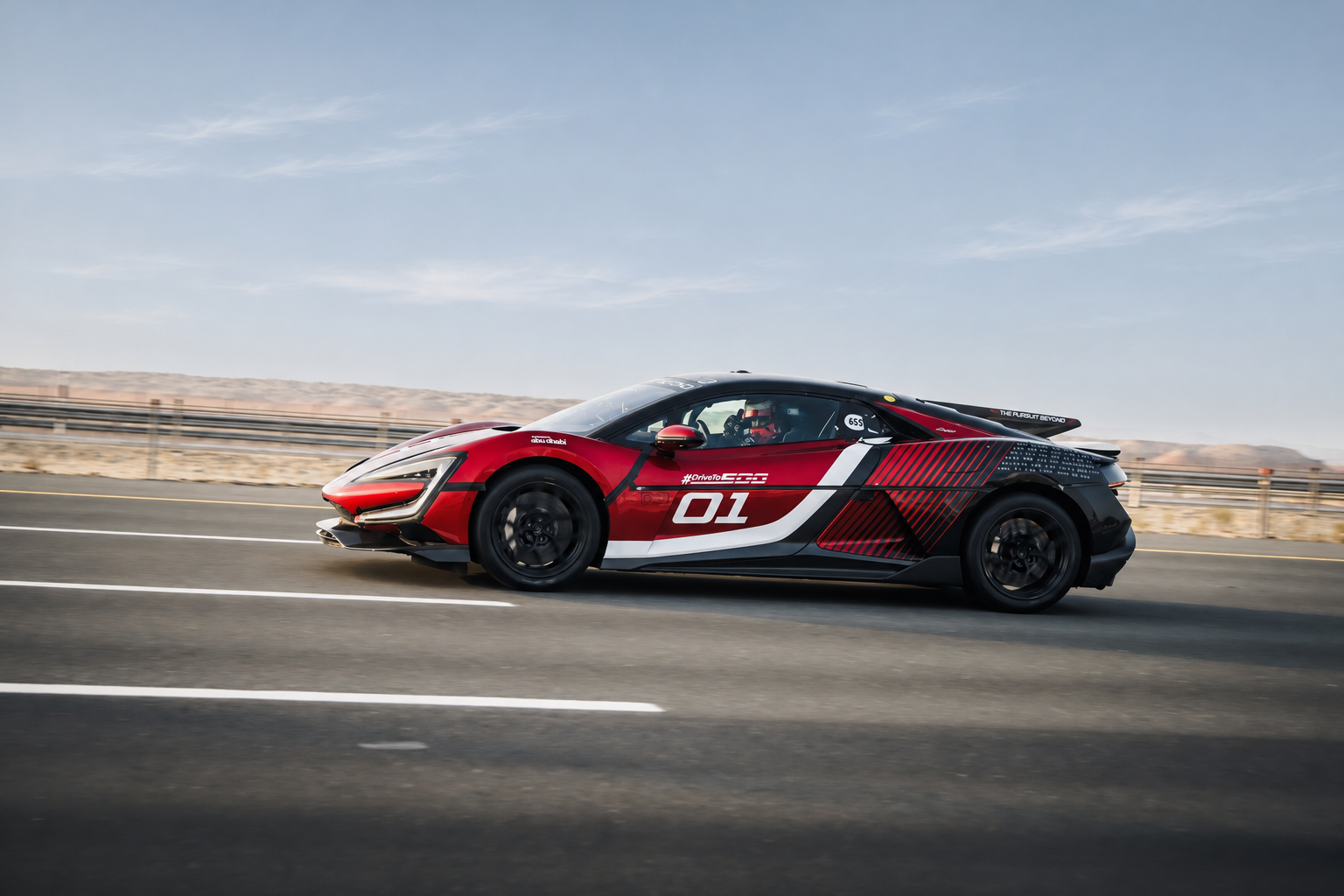
These adjustments complemented the technical foundation of the U9 Xtreme, which had been presented earlier. A BYD announcement dated September 20, 2025, described four electric motors capable of spinning at up to 30,000 rpm, total output of more than 3000 hp and a 1200 V electrical architecture instead of the standard U9's 800 V system.
The Xtreme version also received a Blade lithium iron phosphate battery with a claimed 30C discharge rate, track-focused semi-slick tires and special settings for the DiSus-X body control system. The changes made before the November attempt should therefore be viewed as final tuning of an already developed car for a specific road.
What a 30C discharge rate means
The designation describes the battery's ability to deliver current relative to its capacity. In theory, a continuous 30C discharge would mean using the full charge in two minutes: 60 minutes divided by 30. For a hypercar, this is a measure of the battery's power delivery under high load. The duration of an actual run depends on the driving mode, temperature and available charge.
The tires were developed alongside the car
The attempt used GitiSport e.GTR2 Pro tires. In a Giti Tire announcement dated November 6, 2026, the manufacturer describes aramid-fiber reinforcement and an Anti-Standing Wave Structure designed to combat tire deformation at extremely high rotational speeds.
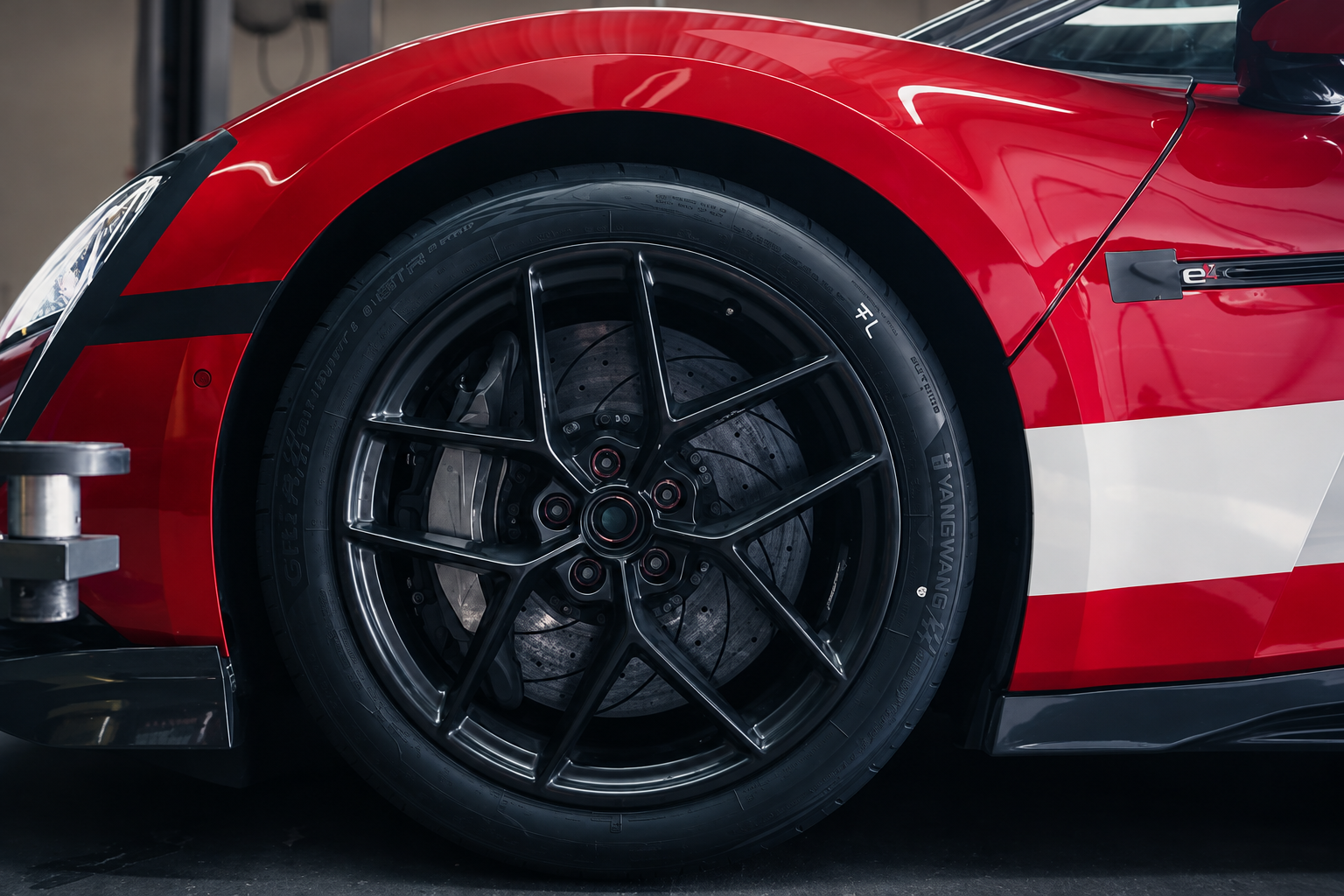
According to Giti, development with Yangwang took more than three years. The construction was tested on a rig at 500 km/h, and the tires were further adapted to highway conditions for the Abu Dhabi attempt. The engineers accounted for changes in aerodynamics, the car's behavior and the driver's feedback. The outcome also depended on how well the tire retained its shape and contact with the road surface.
Which record was actually set
Guinness World Records confirms two achievements: the highest speed achieved by a production car and by a production electric car in a single-direction run. The record entry lists November 1, 2026, the E11 highway, driver Mark Bassing and a result of 503.17 km/h.
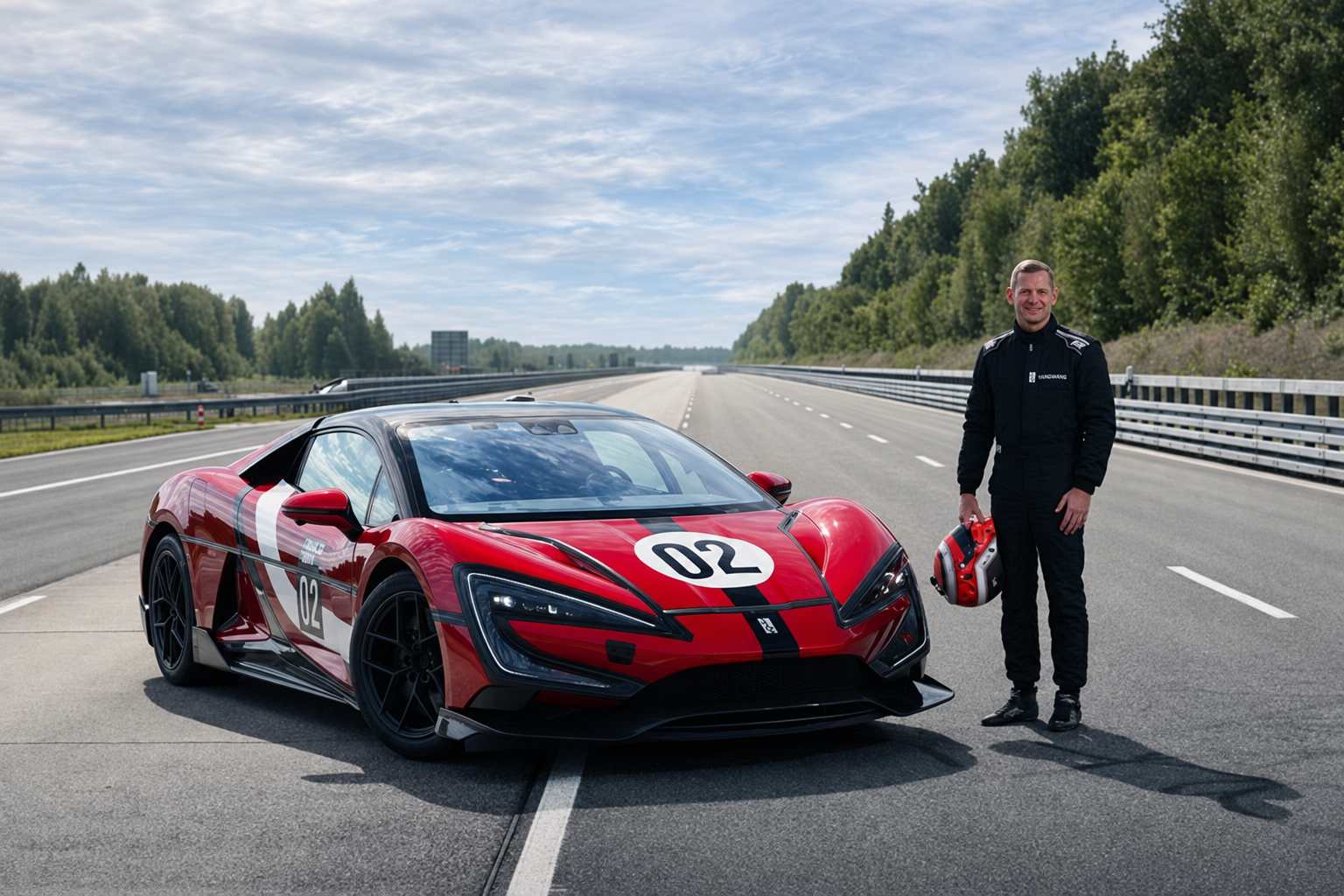
The speed was verified using the onboard speedometer and a calibrated VBOX system. An FIA representative reviewed the data and provided written confirmation to Guinness. The organization also explains that this category differs from records whose rules require runs in opposite directions. When comparing the top speeds of different cars, the measurement method must therefore be checked as well.
The word “production” also needs some context here: BYD announced that no more than 30 U9 Xtreme examples would be built. It is a limited-production version, and its specifications and record should not be attributed to the regular Yangwang U9.