 EN
EN

Frequently asked questions
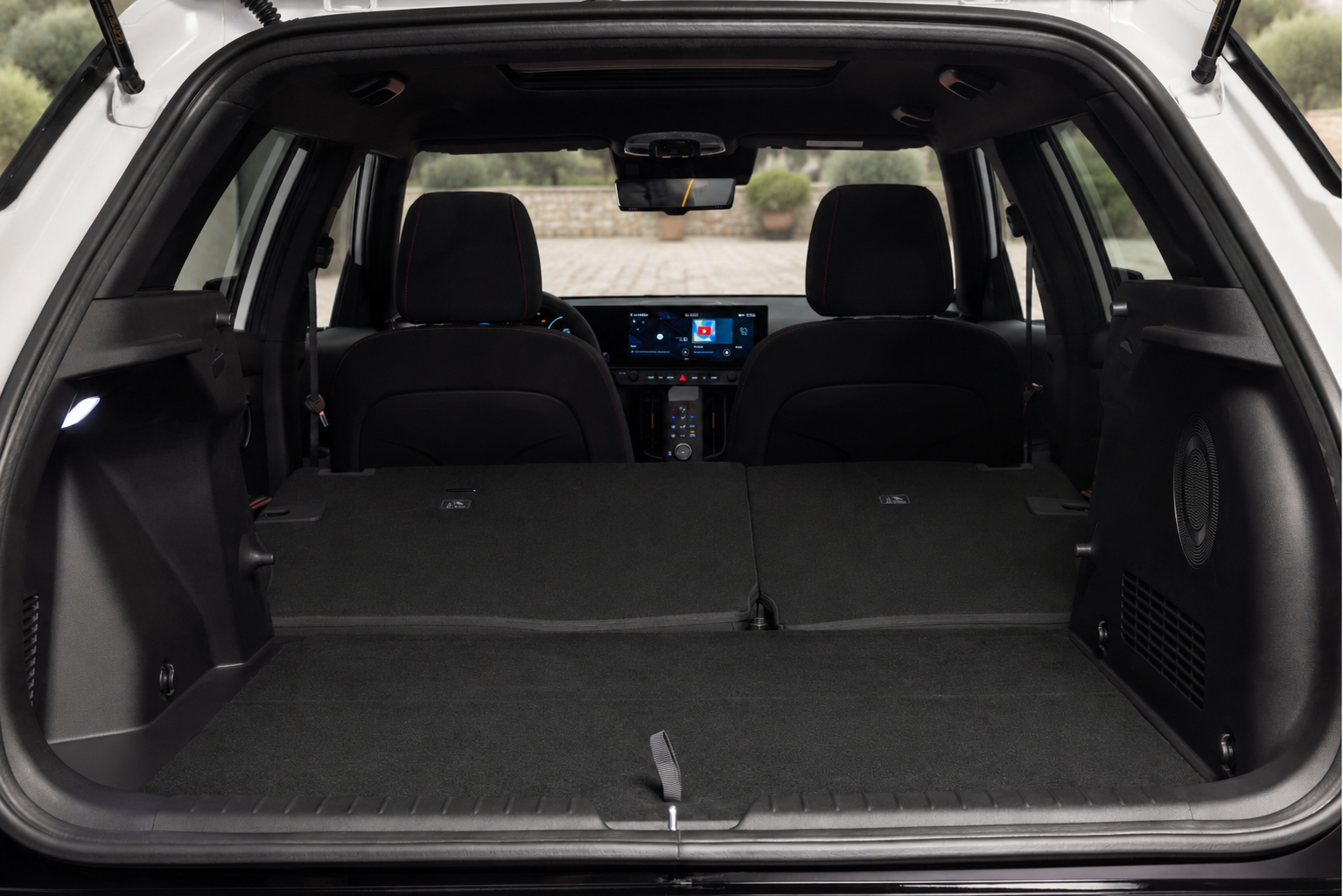
The new Bayon is 65 mm longer, 35 mm wider and has a wheelbase that is 20 mm longer. Its claimed boot capacity in the petrol version is 440 l, compared with 411 l for the 2021 model.
The 1.6 HEV is expected to combine a petrol engine, an electric motor and a six-speed dual-clutch transmission, with a preliminary combined output of 138 hp. It is scheduled to arrive in 2027, although the exact sales date and final specifications have not been announced.
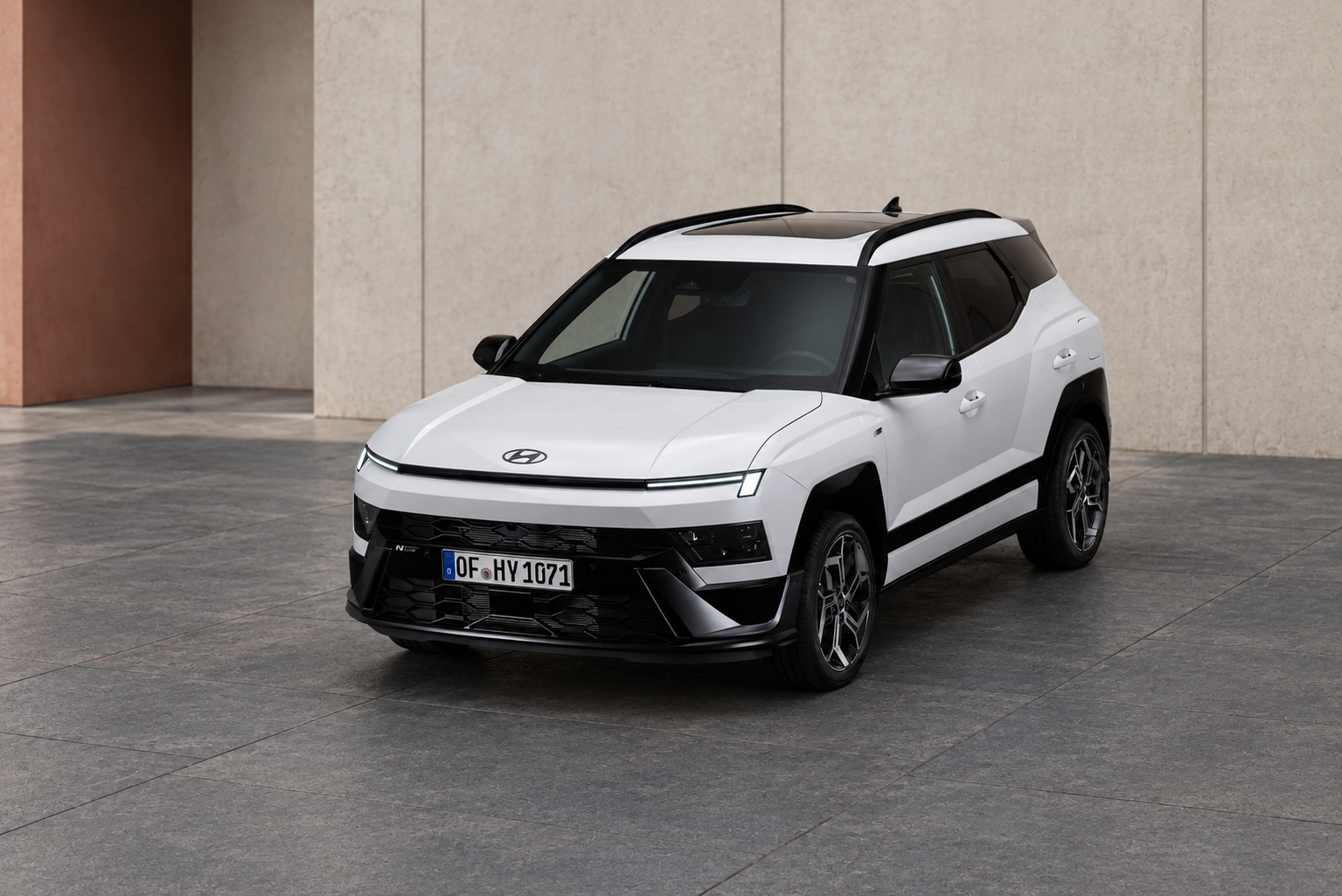
On October 12, 2026, Hyundai unveiled the new-generation Bayon at the Paris Motor Show. The crossover has gained more space in the rear row, additional comfort features and a new range of powertrains. The petrol versions will arrive first, while a full hybrid will join them in 2027. The manufacturer published further details in the official description of the new Bayon.
The body has grown, but the Bayon remains compact
The new generation is clearly different from its predecessor, with angular shapes and pronounced wheel arches. This change has a specific purpose: speaking to Autocar, Hyundai's European design chief Eduardo Ramirez explained that the previous Bayon looked too similar to the five-door i20. The brand is now working to create a clearer visual distinction between the two models.
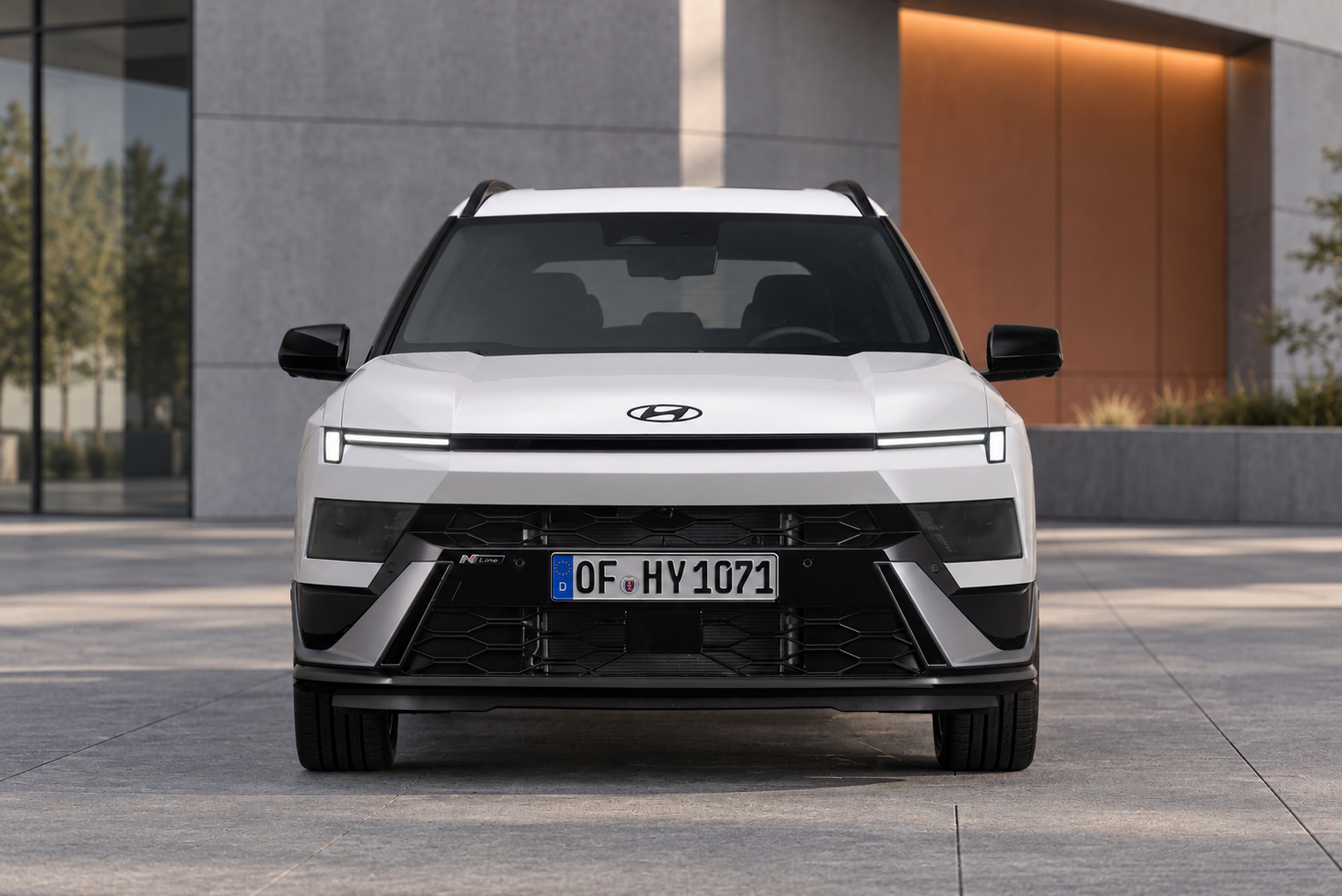
The new Bayon is 4245 mm long, 1810 mm wide and has a 2600 mm wheelbase. For comparison, the first Bayon, introduced on March 2, 2021, measured 4180 mm in length, 1775 mm in width and had a 2580 mm wheelbase. The original figures are available in Hyundai's materials on the first generation.
Parameter | 2021 Bayon | New generation | Difference |
|---|---|---|---|
Length | 4180 mm | 4245 mm | +65 mm |
Width | 1775 mm | 1810 mm | +35 mm |
Wheelbase | 2580 mm | 2600 mm | +20 mm |
Claimed boot capacity | 411 l | 440 l, petrol version | +29 l |
The wheelbase has increased by just two centimetres. That means rear-seat comfort cannot be judged from body dimensions alone: seat shape, backrest position and the space beneath the front seats also matter.
What rear-seat passengers will get
Hyundai claims there is more rear legroom. The rear seats have adjustable backrest angles, while the centre armrest includes cupholders. Depending on the trim level, heated rear seats and dedicated air vents for the second row are available.
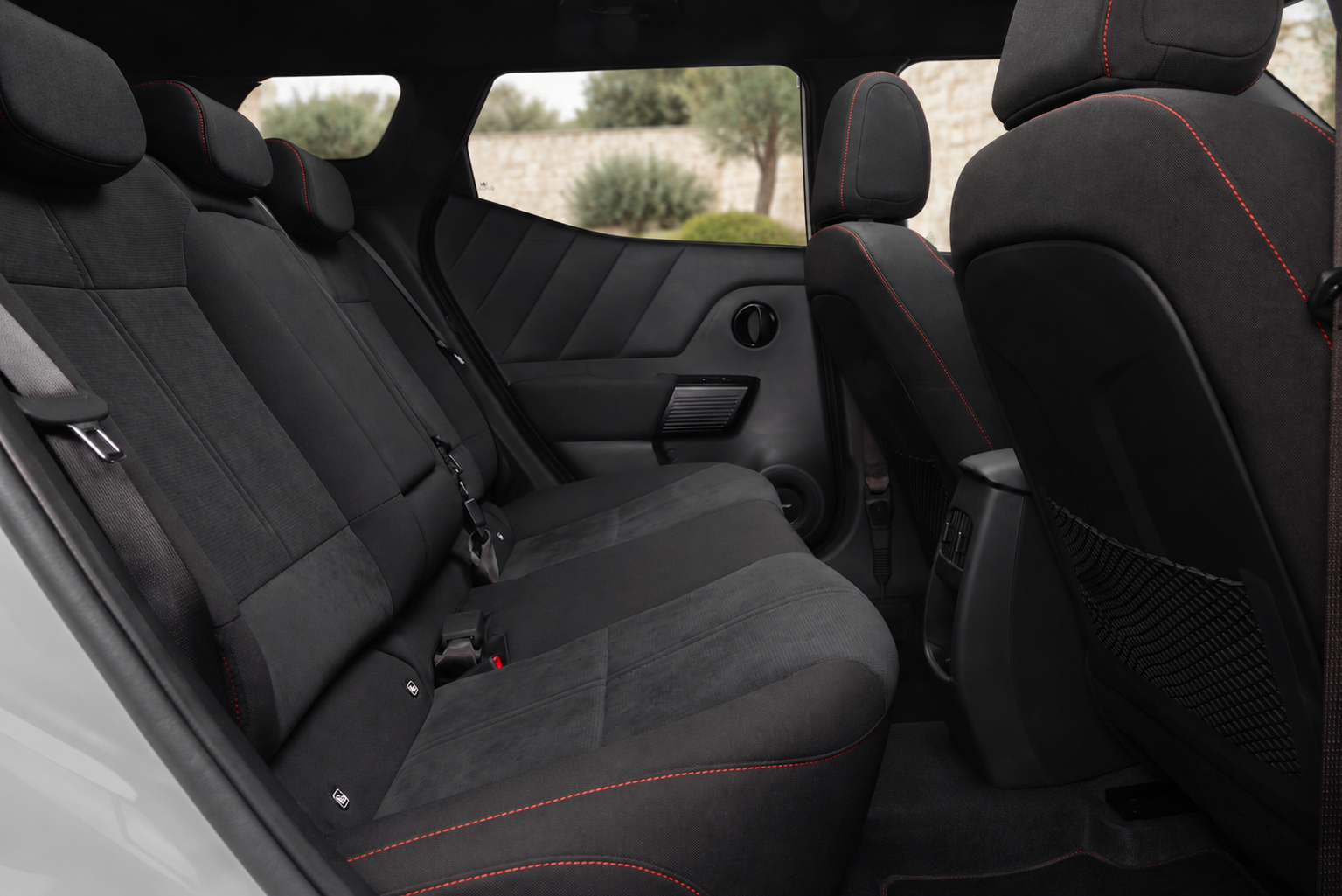
Up front, the equipment list includes heated and ventilated seats, adjustable driver's lumbar support and height adjustment for both front seats. Dual-zone climate control and an opening panoramic sunroof are also available. The list of available features does not mean that all of them will be included as standard: equipment will depend on the version and market.
How to check the rear seats in five minutes
When viewing the car, first adjust the driver's seat to your preferred position, then sit in the back. Check whether your feet fit beneath the front seat and whether the seating remains comfortable with different backrest angles. If you use a child seat, bring your own for the check: the car's exterior dimensions alone are not enough to assess the fit.
Boot space: the hybrid will have less room
Hyundai's technical table lists 440 l for the petrol Bayon and 397 l for the hybrid. The difference is 43 l. This reveals one of the compromises to consider when choosing a powertrain, although the vehicle's final specifications are still awaiting approval.
How to interpret the 440-litre figure
The claimed 440 l applies to the petrol version. It cannot be carried over to the future hybrid. If you regularly carry a pushchair, folding bicycle or large suitcase, check how it fits in the specific version you are considering: a litre figure does not describe the shape of the opening or how easy the boot is to load.
Screens, phone connectivity and parking assistance
The cabin offers two 12.3-inch screens integrated into a curved panel. Wireless Apple CarPlay and Android Auto, wireless smartphone charging and Hyundai Digital Key 2 are available. A compatible device can be used to unlock and start the car.
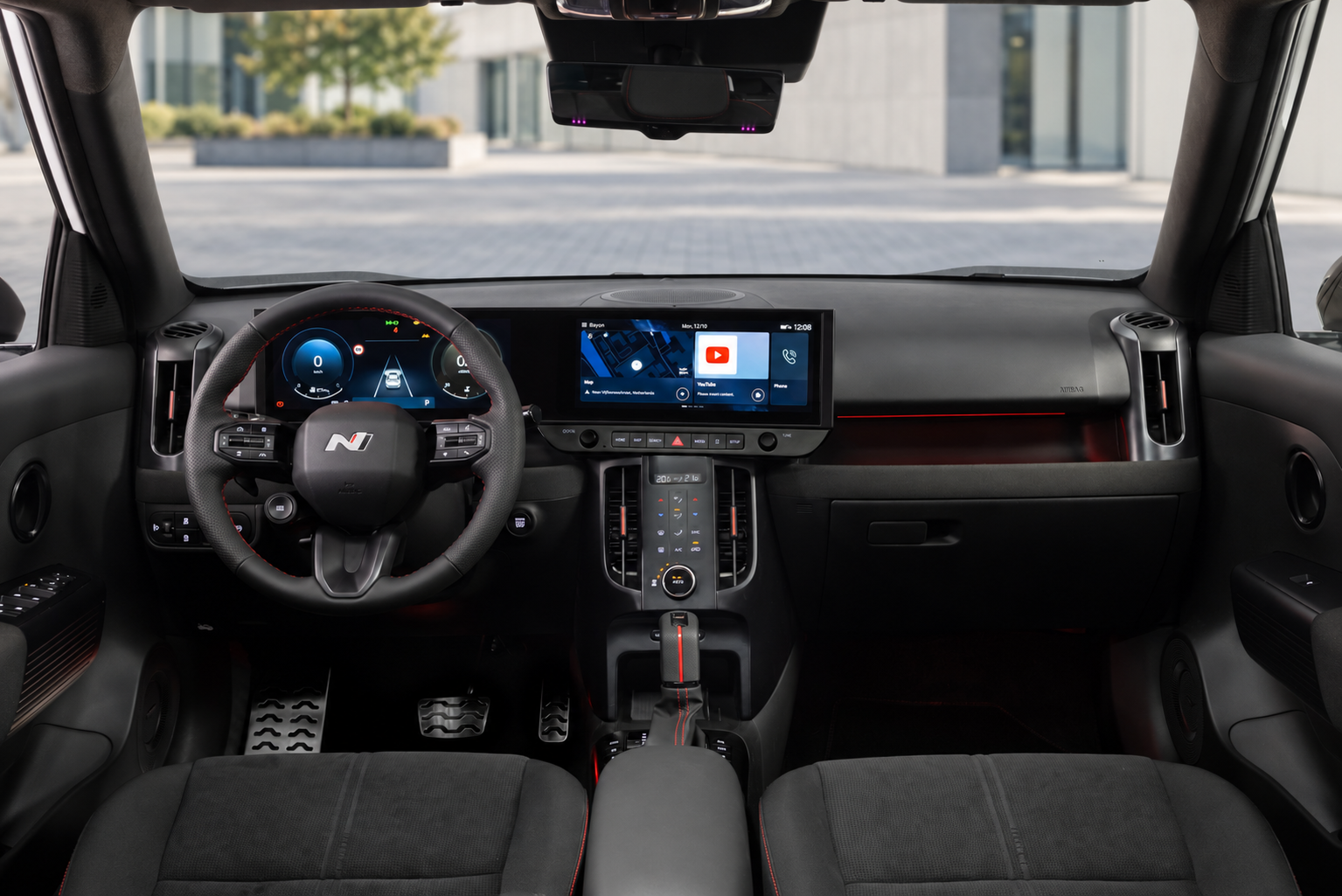
For manoeuvring, Hyundai offers a surround-view camera system and a blind-spot view monitor. The driver-assistance package also includes rear cross-traffic warning and rear collision avoidance. Check the equipment list for the specific vehicle to confirm whether these features are fitted.
When will the hybrid arrive, and what is known about it?
At launch, the Bayon will be offered with a 1.0 T-GDI petrol engine producing either 90 or 115 hp, paired with a six-speed manual gearbox or a seven-speed dual-clutch transmission. Drive is sent to the front wheels.
The future 1.6 HEV is expected to combine a petrol engine, electric motor and six-speed dual-clutch transmission. Its preliminary combined output is 138 hp. The system will feature adaptive regenerative braking, with the level selected using steering-wheel paddles.
The hybrid is scheduled to arrive in 2027, as confirmed by the official UK Bayon page. The exact sales start date has not yet been announced. As of October 13, 2026, prices and final fuel-consumption and performance figures for the hybrid version had also not been published.
Is it worth waiting for the HEV?
It is not yet possible to compare the running costs of the two versions: that calculation requires the hybrid's price and confirmed fuel-consumption figures. The practical choice is already clear, however: the petrol Bayon will offer a larger boot, while the HEV will bring a different type of powertrain. It makes sense to assess the premium once the local price list and final specifications are available.