 EN
EN

Frequently asked questions
The HC25 is a one-off roadster created through Ferrari’s Special Projects program for a single client. It is based on the Ferrari F8 Spider but has a completely redesigned exterior and bespoke interior details.
It uses a non-hybrid 3.9-liter twin-turbo V8 with 710 hp, 568 lb-ft of torque, rear-wheel drive and a 7-speed dual-clutch transmission. Ferrari lists 0–100 km/h in 2.9 seconds and a top speed of 340 km/h.
Its price has not been officially disclosed.
Ferrari reveals a unique V8 roadster for one very special client
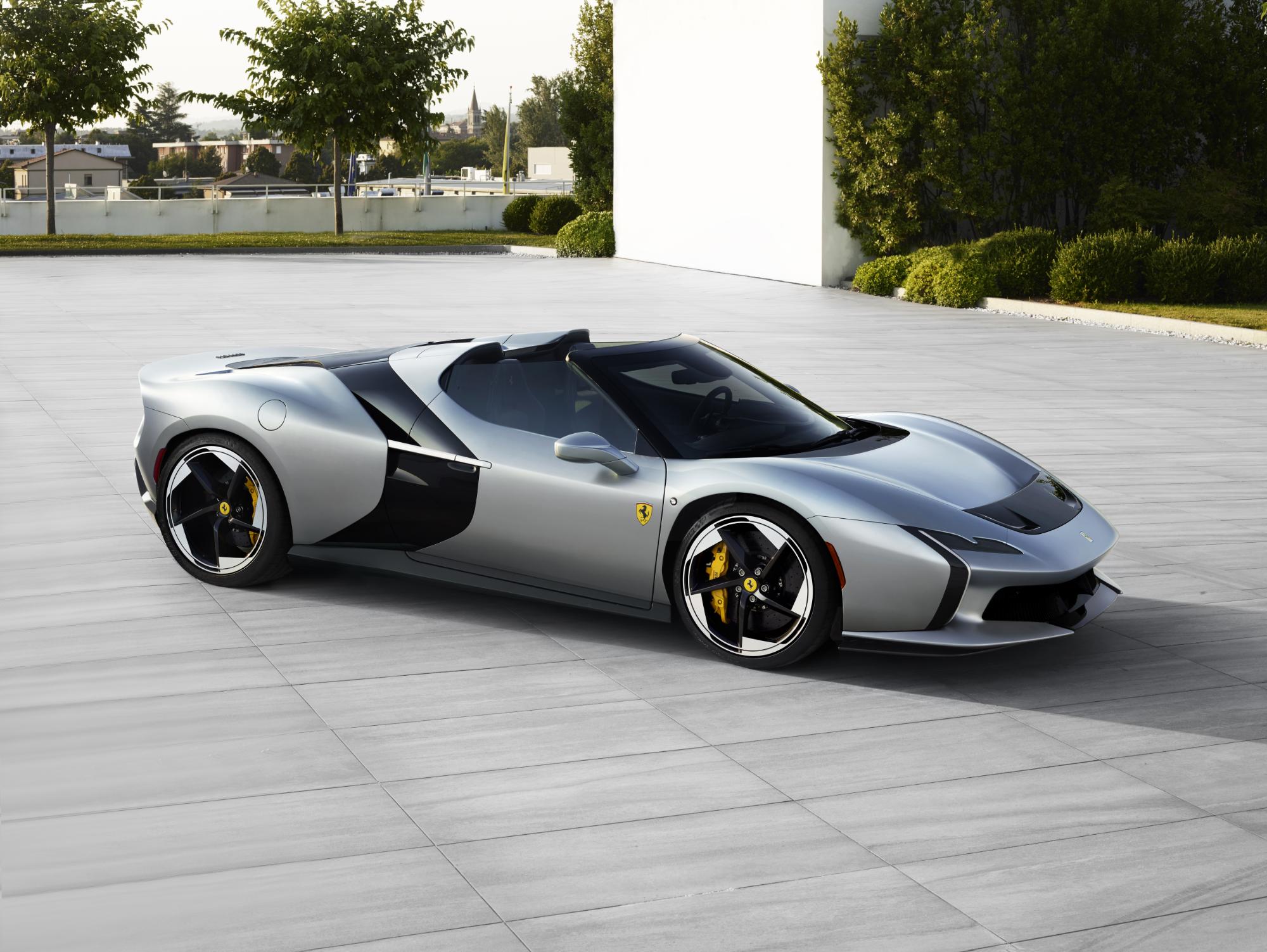
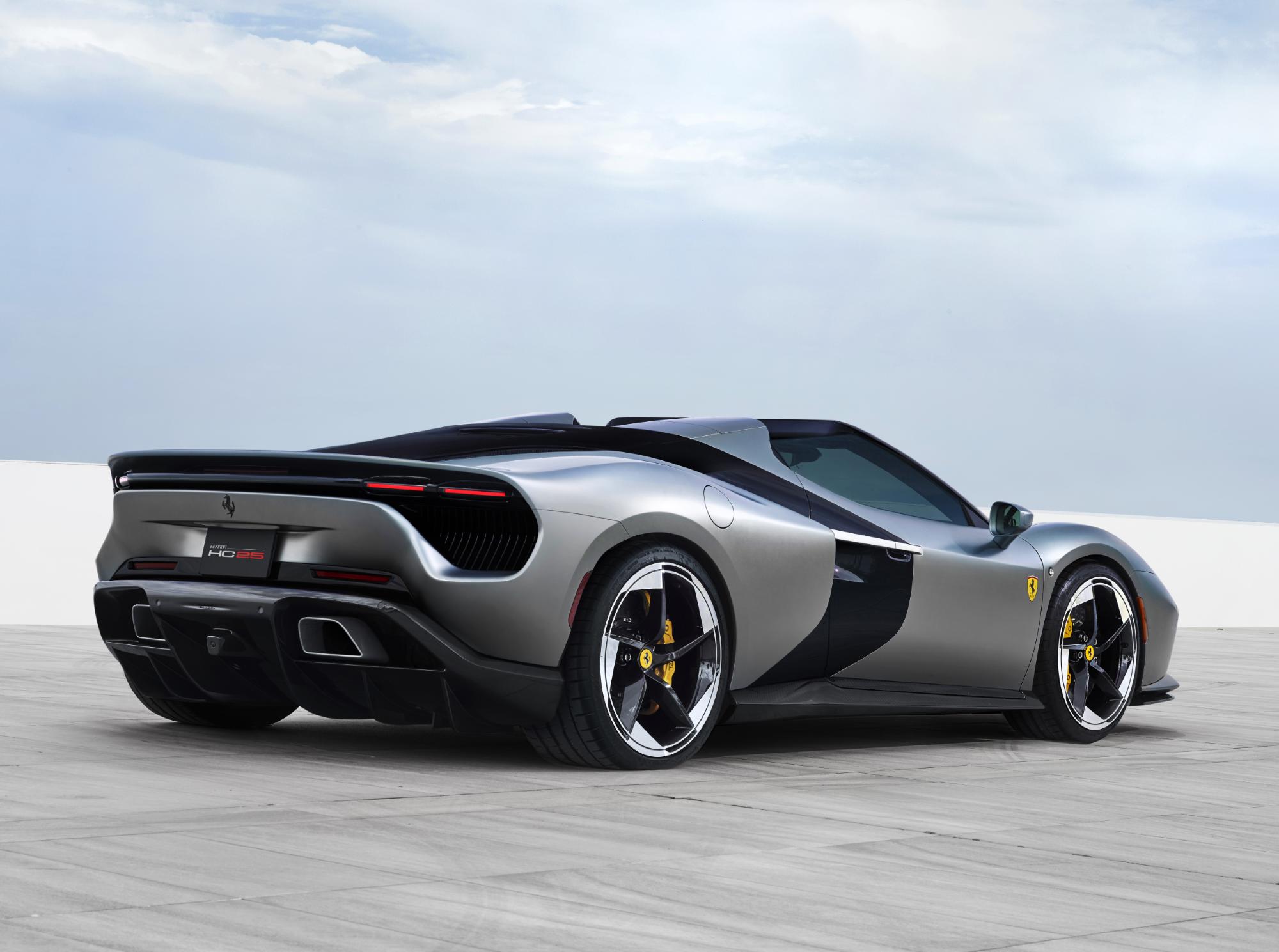
Ferrari has unveiled the HC25, a one-off roadster created through its Special Projects program. The car was built for a single client and is based on the architecture of the Ferrari F8 Spider, one of the last mid-engined Ferrari models powered by a non-hybrid V8. Ferrari describes the HC25 as a pure, uncompromising roadster, and that description fits the car well: it keeps the mechanical character of the F8 Spider but wraps it in a completely redesigned body.
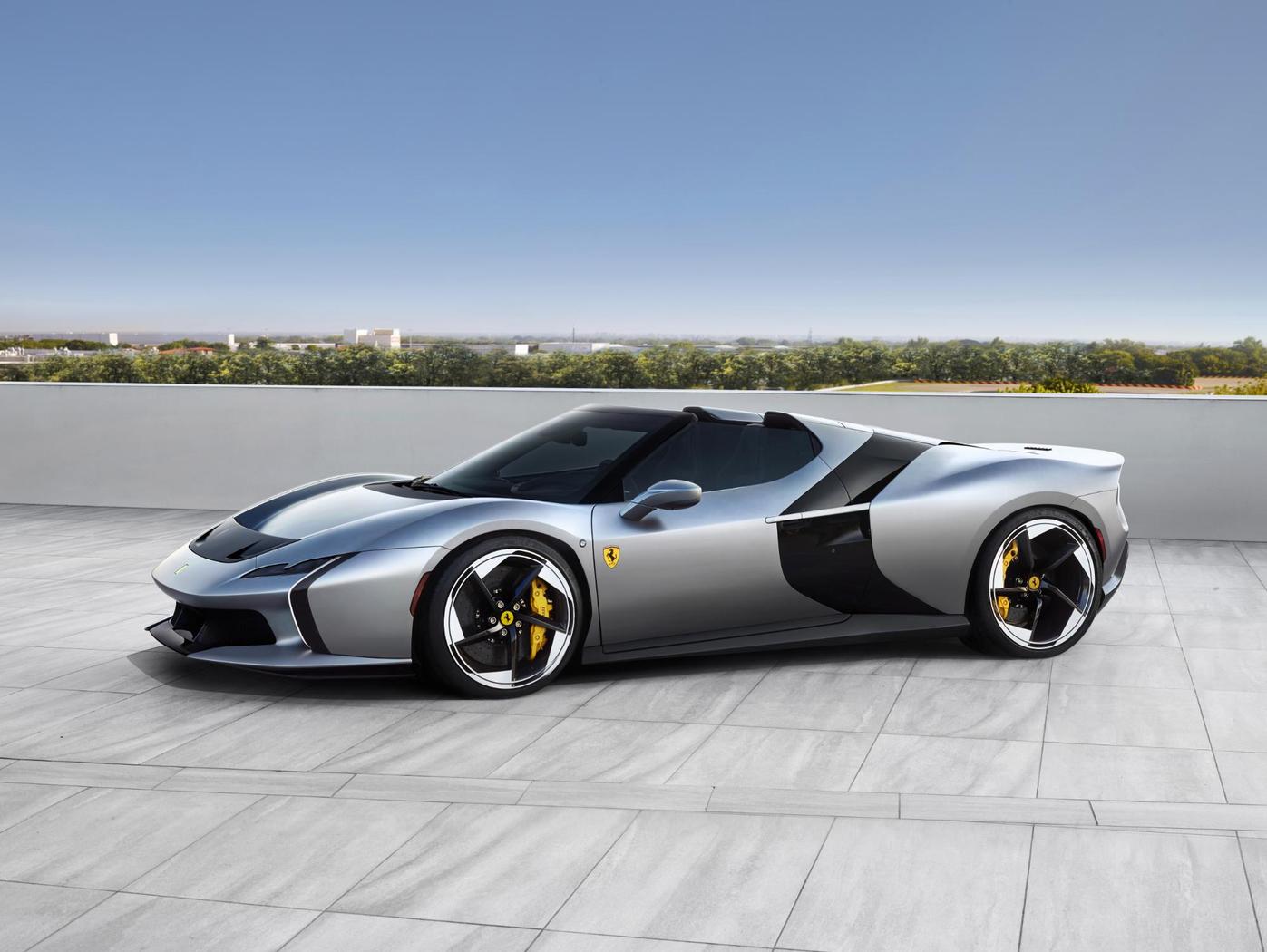
The HC25 is important not only because it is unique, but because it represents a symbolic farewell to Ferrari’s mid-rear-engine V8 spider formula without electrification. Modern Ferrari performance cars are increasingly moving toward hybrid powertrains, including models such as the 296 GTS and SF90 Spider. The HC25 therefore feels like a bridge between two eras: the emotional, combustion-only V8 Ferraris of the past and the sharper, more futuristic design language Ferrari is developing for the future.
Key facts about the Ferrari HC25
Detail | Ferrari HC25 |
|---|---|
Type | One-off roadster |
Program | Ferrari Special Projects |
Base model | Ferrari F8 Spider |
Engine | 3.9-liter twin-turbo V8 |
Electrification | None |
Power | 710 hp / 720 cv |
Torque | 568 lb-ft / 770 Nm |
Transmission | 7-speed dual-clutch automatic |
Drivetrain | Rear-wheel drive |
0–100 km/h | 2.9 seconds |
0–200 km/h | 8.2 seconds |
Top speed | 340 km/h / 211 mph |
Client | Private customer, reportedly from the United States |
Price | Not officially disclosed |
Based on the Ferrari F8 Spider, but visually transformed
Under the skin, the HC25 uses the same basic technical foundation as the Ferrari F8 Spider. That means a mid-mounted 3.9-liter twin-turbocharged V8, rear-wheel drive and a 7-speed dual-clutch transmission. In performance terms, Ferrari has not announced a power increase over the F8 Spider, so the HC25 keeps the familiar figures: 710 hp, 568 lb-ft of torque, 0–100 km/h in 2.9 seconds and a top speed of 340 km/h.
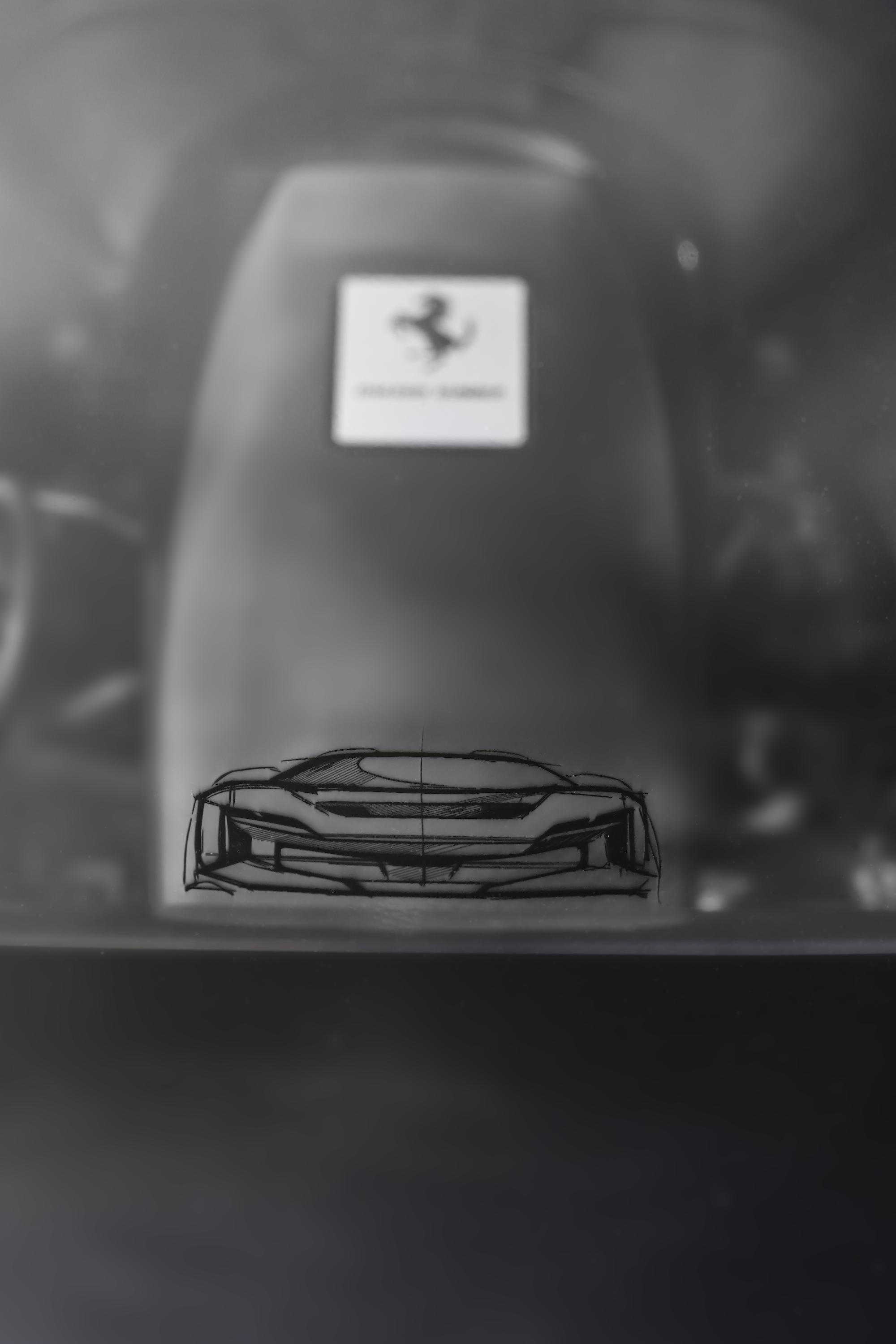
But visually, this is not simply an F8 Spider with a different bumper. The HC25 has a completely reworked exterior created by the Ferrari Design Centre under Flavio Manzoni. The design is cleaner, more geometric and more futuristic than the F8 Spider, while still keeping the proportions of a mid-engined Ferrari roadster.
What makes the HC25 design different?
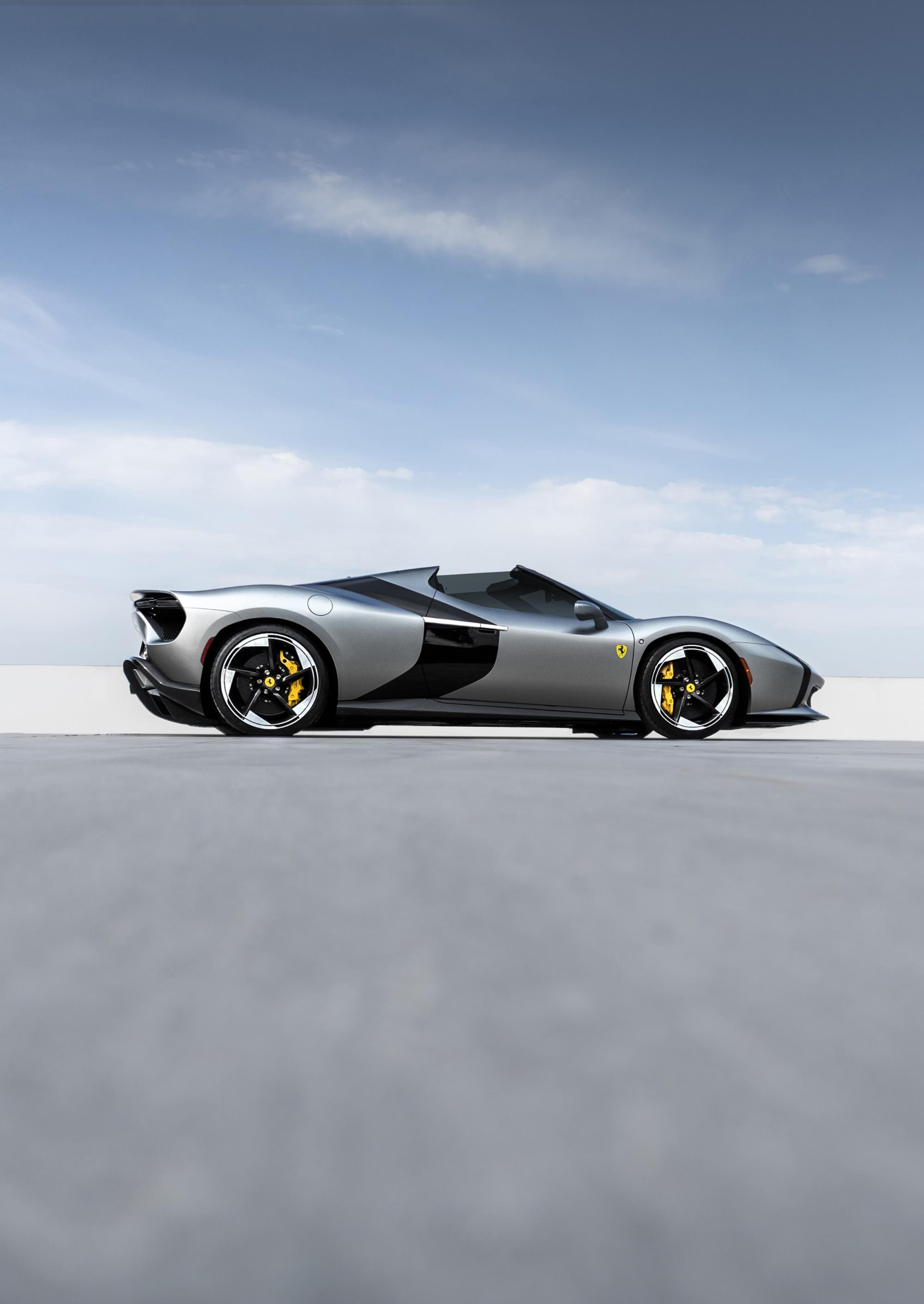
The most distinctive design element is the gloss-black band that runs across the car and visually separates the front and rear sections. This is not only a styling trick. The black section also integrates functional elements such as engine cooling intakes and hot-air outlets.
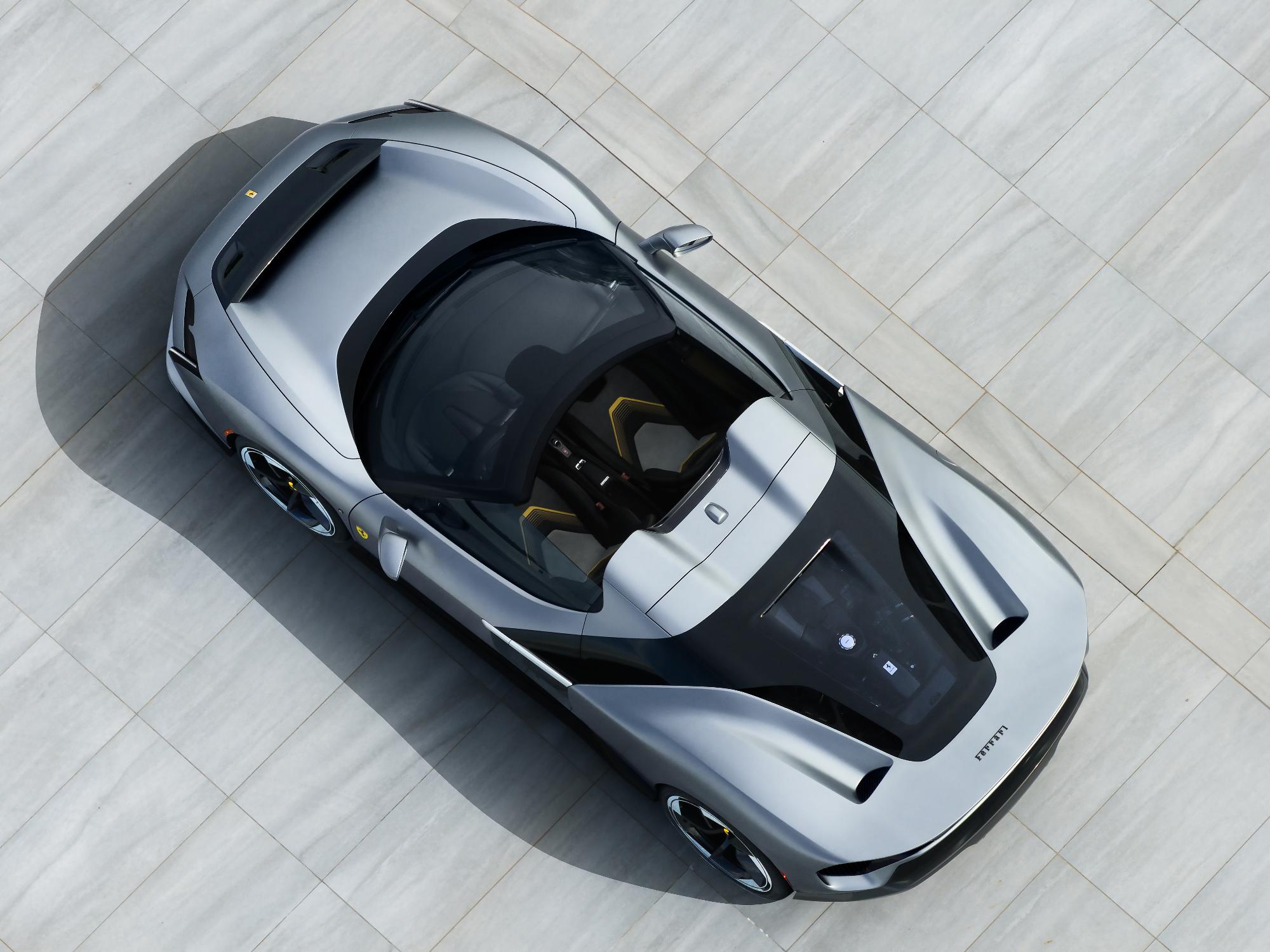
Exterior highlights
Slim front headlights with a new lighting signature.
Vertical daytime running lights, used in this form for the first time on a Ferrari.
Gloss-black aerodynamic band surrounding key parts of the body.
Matte Moonlight Grey bodywork, contrasted with dark detailing.
Solid aluminium side blade, with the door handle integrated into it.
Unique wheels, designed specifically for the HC25.
Rhombus-shaped exhaust finishers, replacing the rounder style seen on the F8 Spider.
Sharper rear treatment, with thin taillights and a more sculpted diffuser area.
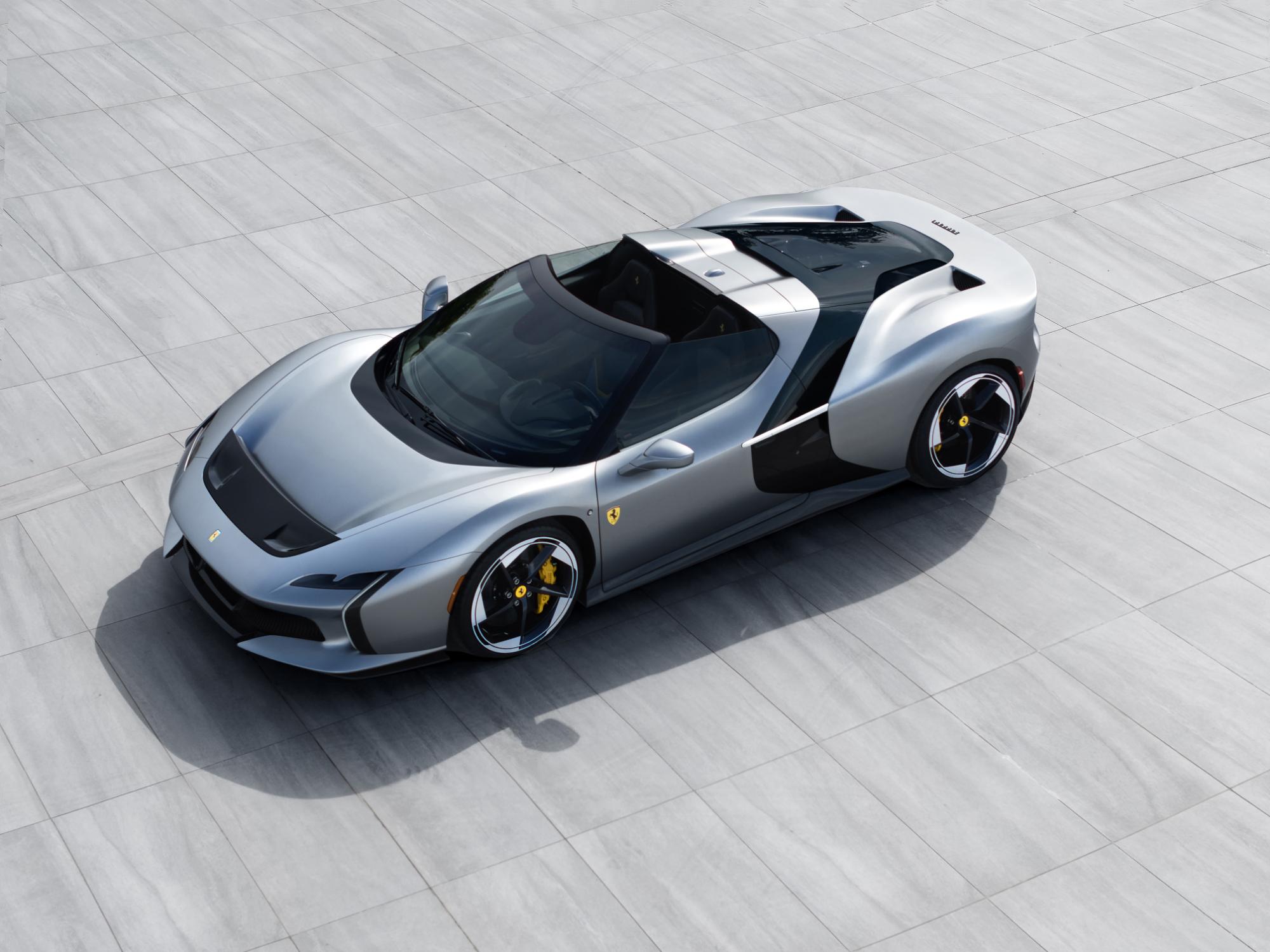
The result is a car that looks familiar in proportion but very different in execution. The HC25 still has the stance of an F8 Spider, but its design details connect it more closely to Ferrari’s newer visual language seen on cars such as the F80 and 12Cilindri.
A pure V8 without hybrid assistance
The biggest technical point is simple: the Ferrari HC25 is powered by a pure internal-combustion V8. It does not use hybrid assistance, electric motors or plug-in technology.
That makes it very different from Ferrari’s current direction. The 296 GTS uses a hybrid V6 setup, while the SF90 Spider combines a twin-turbo V8 with electric motors. By comparison, the HC25 stays closer to the traditional Ferrari mid-engine V8 formula: combustion engine, dual-clutch gearbox, rear-wheel drive and no electric boost.
Engine and performance
Specification | Value |
|---|---|
Engine | 3.9-liter twin-turbo V8 |
Power | 710 hp / 720 cv |
Torque | 568 lb-ft / 770 Nm |
Gearbox | 7-speed dual-clutch |
Driven wheels | Rear |
0–100 km/h | 2.9 sec |
0–200 km/h | 8.2 sec |
Top speed | 340 km/h / 211 mph |
For Ferrari collectors, this matters. The HC25 is not just another custom-bodied supercar. It is likely to be remembered as one of the final expressions of Ferrari’s non-hybrid, mid-engined V8 spider era.
Interior: familiar architecture, bespoke details
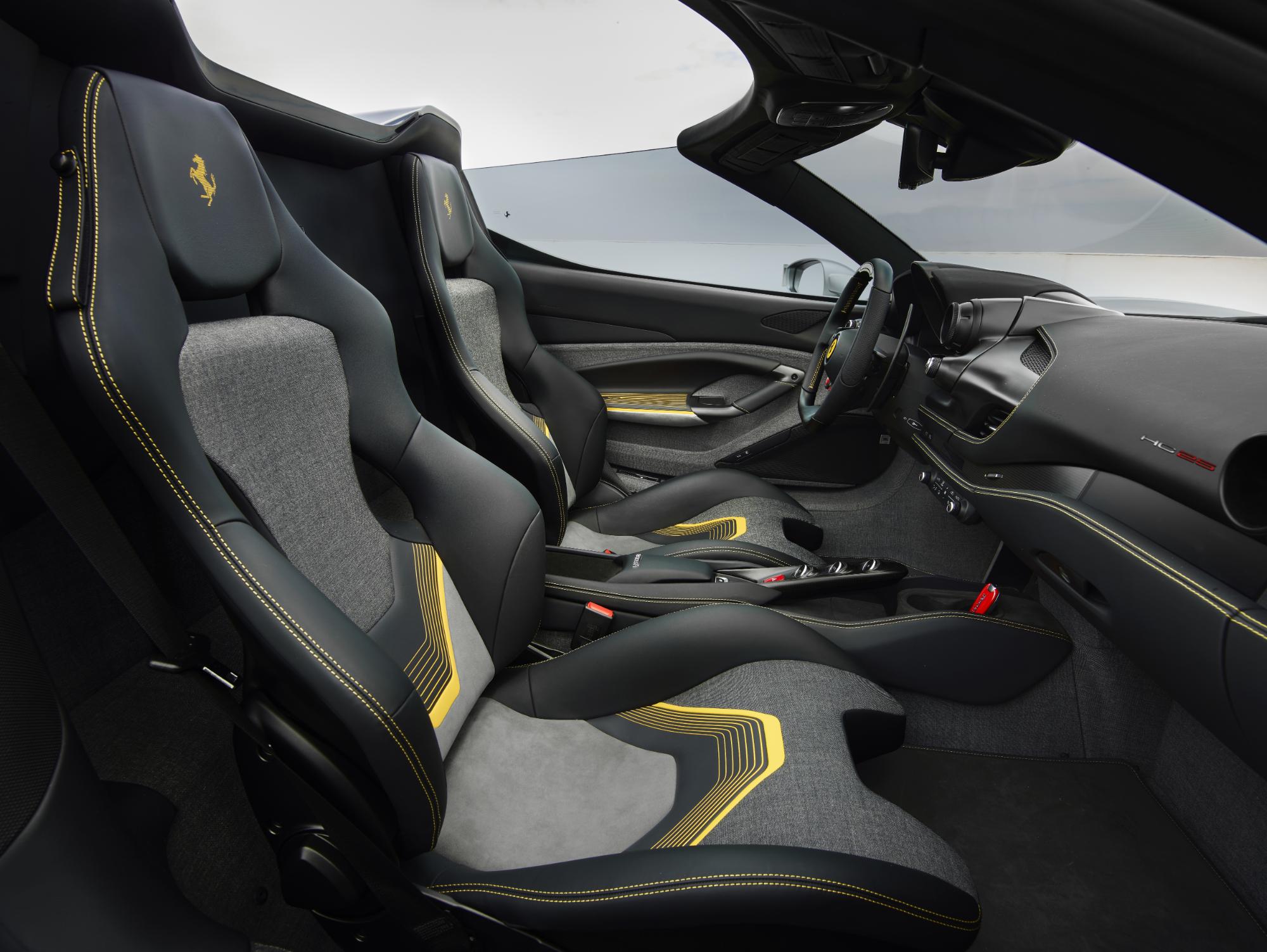
Inside, the HC25 keeps the general cabin architecture of the F8 Spider, but adds a bespoke material and color treatment. The interior combines grey tones with yellow accents inspired by Ferrari’s shield, yellow brake calipers and exterior details.
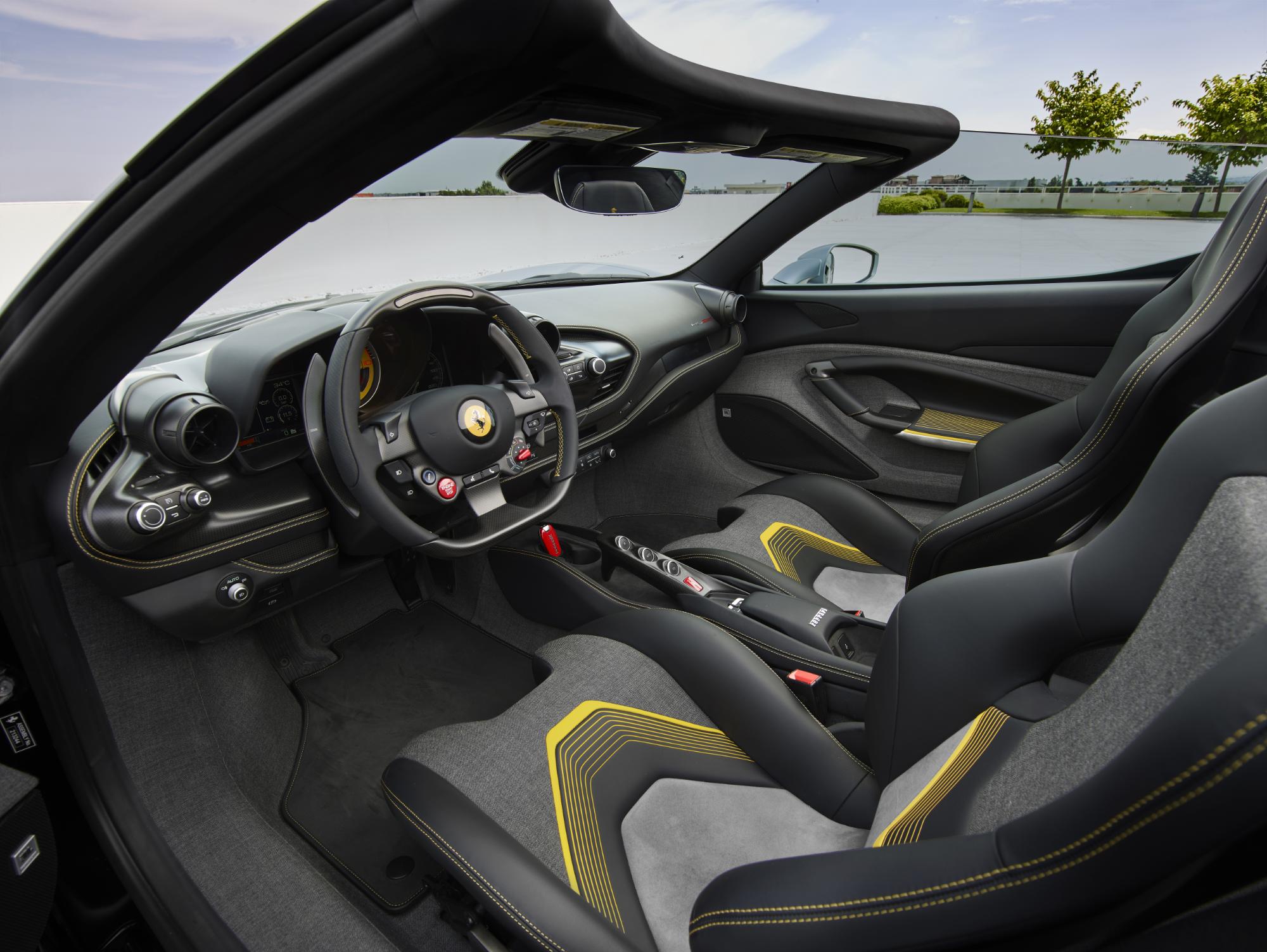
The seats use a mix of leather and fabric, with yellow boomerang-shaped accents on the seatbacks and cushions. Yellow stitching is also used across the dashboard and bolsters. The cabin is not radically redesigned, but it is carefully tailored to match the exterior theme.
Interior highlights
Leather and fabric upholstery.
Yellow contrast stitching.
Yellow boomerang-style seat accents.
Grey and yellow color theme.
F8 Spider-based cockpit layout.
Bespoke trim details created for the individual client.
Why Ferrari Special Projects cars matter
Ferrari’s Special Projects division creates one-off cars for a very limited group of clients. These are not normal limited editions. They are unique vehicles developed around a specific customer brief, usually using the platform and mechanical base of an existing Ferrari model.
According to Motor1, Ferrari one-off projects typically take around two years to develop, with the client working closely with Ferrari designers and engineers on styling, materials and technical details.
This makes the HC25 more than a design exercise. It is a factory-built Ferrari, engineered and finished to Ferrari standards, but with a body and specification that no other customer will receive.
HC25 vs F8 Spider: what changed?
Area | Ferrari F8 Spider | Ferrari HC25 |
|---|---|---|
Production | Series-production Ferrari | One-off |
Engine | 3.9-liter twin-turbo V8 | 3.9-liter twin-turbo V8 |
Hybrid system | No | No |
Platform | F8 Spider | F8 Spider-based |
Body design | Standard Ferrari design | Fully bespoke exterior |
Lights | F8 Spider lighting | Unique slim headlights and vertical DRLs |
Interior | Standard F8 Spider layout | Bespoke materials and yellow accents |
Availability | Discontinued production model | Built for one client only |
Collectability | High | Extremely high |
The HC25 does not appear to be about creating more performance than the F8 Spider. Instead, its value comes from exclusivity, design and historical timing. It takes one of Ferrari’s most important modern V8 platforms and turns it into a personal, one-of-one statement.
Why the HC25 is interesting for car enthusiasts
The Ferrari HC25 is interesting for three main reasons.
First, it preserves a formula that is becoming rare: a mid-engined Ferrari V8 roadster without hybrid assistance. As emissions rules, performance demands and electrification reshape the supercar world, combustion-only cars like this are becoming more collectible.
Second, it shows how Ferrari is using its Special Projects program not only to satisfy wealthy collectors, but also to explore design ideas. The HC25’s headlights, black body band, sharp surfacing and futuristic proportions may not appear exactly the same on future Ferraris, but the direction is clear.
Third, the HC25 proves that the F8 Spider platform still has emotional value. Even after the arrival of newer hybrid Ferraris, the F8’s 3.9-liter twin-turbo V8 remains one of the most respected modern Ferrari engines.
Final thoughts
The Ferrari HC25 is not a model that customers can order, configure or compare at a dealership. It is a one-off creation for a single owner. But for the wider automotive world, it is still important.
It is a reminder of what made Ferrari’s modern V8 supercars so desirable: compact proportions, a mid-mounted engine, rear-wheel drive, extreme performance and a strong emotional identity. At the same time, its futuristic design shows where Ferrari may be heading next.
In simple terms, the HC25 is both a farewell and a preview: a farewell to the pure, non-hybrid V8 spider era, and a preview of Ferrari’s next design language.