 EN
EN

Frequently asked questions
Yes. BMW has said the next-generation M3 will be offered with a petrol engine and as a fully electric model. Names, markets and launch sequence have not been confirmed.
BMW says future electric M models will use four electric motors, an 800-volt architecture and a battery with more than 100 kWh of usable capacity. The M3’s specific power output, range, weight and charging curve remain unknown.
BMW has confirmed that a petrol version will remain part of the next generation. Its engine layout, electrification, output, transmission and equipment have not been officially disclosed.
The next-generation BMW M3 will be offered in two versions: fully electric and powered by a petrol engine. This follows from official BMW material released in China. The company has not yet published exact launch dates, prices or specifications for either car, so it is too early to compare them by power or range.
The main point is already clear: the electric M3 is not being developed as a simplified replacement for the petrol model. BMW is pursuing two different technical approaches for the same model, which changes the question facing future buyers. The choice will not be between the “old” and “new” M3, but between two different ways of getting a fast sports sedan.
In brief: what is known as of 14 August 2026
Question | What has been confirmed | What remains unknown |
|---|---|---|
Will there be two M3 versions? | BMW has said that the next-generation M3 will be available with a petrol engine and as a fully electric model. | The names, markets and launch sequence. |
What technology will the electric version use? | Future electric BMW M models will use four electric motors, an 800-volt architecture and a battery with more than 100 kWh of usable capacity. | The power output, range, weight and charging curve of the M3 specifically. |
What will happen to the internal-combustion version? | The petrol M3 will remain part of the next generation. | The type of electrification, engine output, transmissions and equipment levels. |
21 January 2026: BMW explains the foundation of electric M models
On 21 January 2026, BMW Group published details of a new electric architecture for BMW M. It features four electric motors, with each motor driving its own wheel through a separate reduction gear. The control system distributes torque and regenerative braking between the wheels, while the front axle can be completely disconnected.
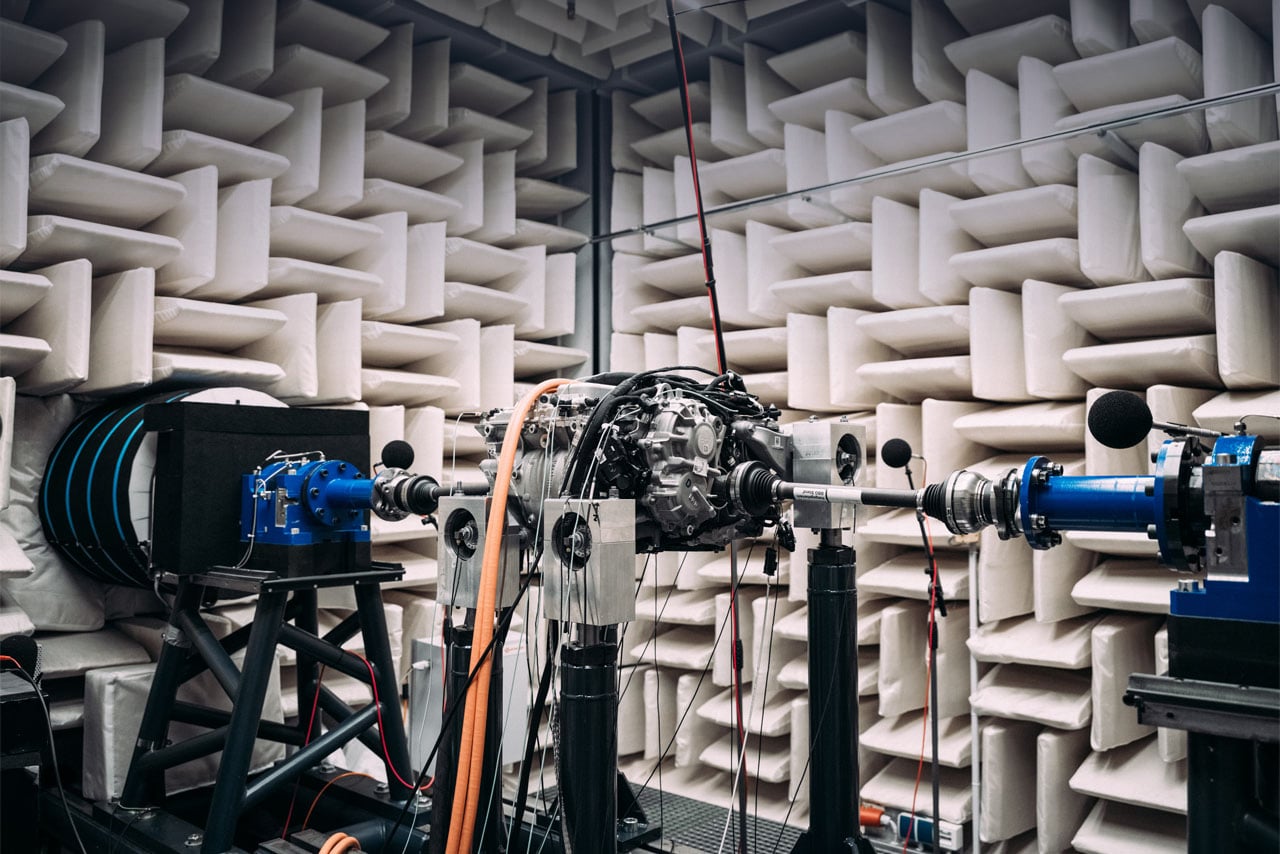
The practical value of this layout goes beyond acceleration. On slippery surfaces, it allows torque to be metered more precisely at each wheel, while disconnecting the front axle enables the car to run with rear-wheel drive. For the driver, that matters more than an impressive figure in a specification sheet: the car’s behaviour in a corner and on corner exit will depend not only on power, but also on the control logic applied to each motor.
BMW also cites an 800-volt system and a battery with more than 100 kWh of usable capacity. These are specifications for future electric BMW M models as a whole, not the final specification of the M3 itself. The manufacturer has not yet disclosed either the maximum charging power or the future sedan’s real-world range.
What not to confuse
BMW has confirmed the four-motor layout for the new electric generation of M models.
The BMW M Concept Neue Klasse is a concept, not a production-ready car.
Photos of the petrol prototype published by automotive media do not replace an official BMW specification.
12 June 2026: the concept showed the direction, not a finished M3
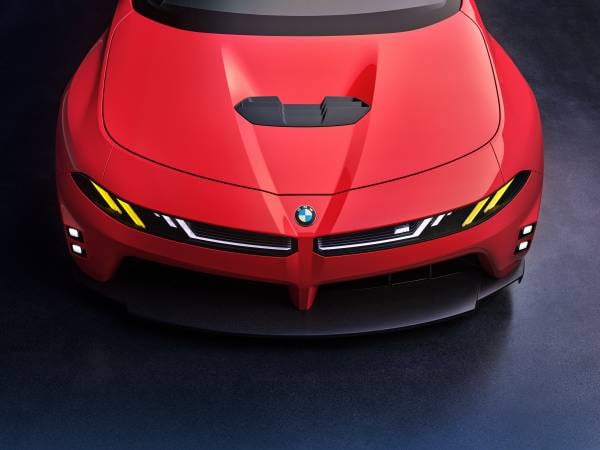
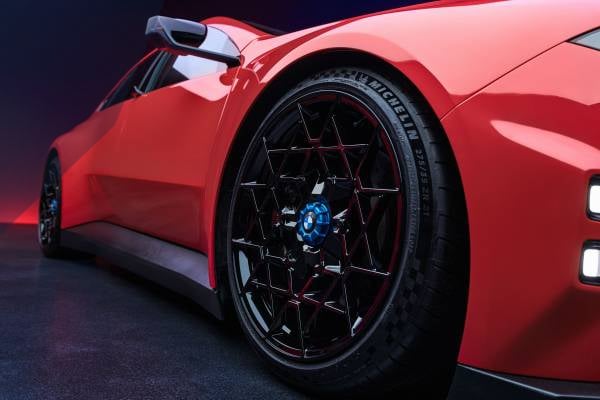
On 12 June 2026, the BMW M Concept Neue Klasse premiered at the 24 Hours of Le Mans. BMW describes it specifically as a demonstration of a new design philosophy for high-performance M models and the brand’s electric future.
The concept features wide wheel arches, pronounced aerodynamic elements, four bucket seats and natural-fibre components. Its details should not, however, be transferred directly to the production M3. The concept helps illustrate the direction of the design and technology, but it does not confirm the shape of the bumpers, the interior, wheel sizes or equipment of the production car.
The petrol M3 is not becoming a “previous-generation model”
BMW is not abandoning the internal-combustion M3. In an official Chinese press release, the company says that the next M3 will be offered in petrol and fully electric versions. This is significant: the statement refers not to temporarily keeping the current model alongside an EV, but to two powertrains within the future generation.
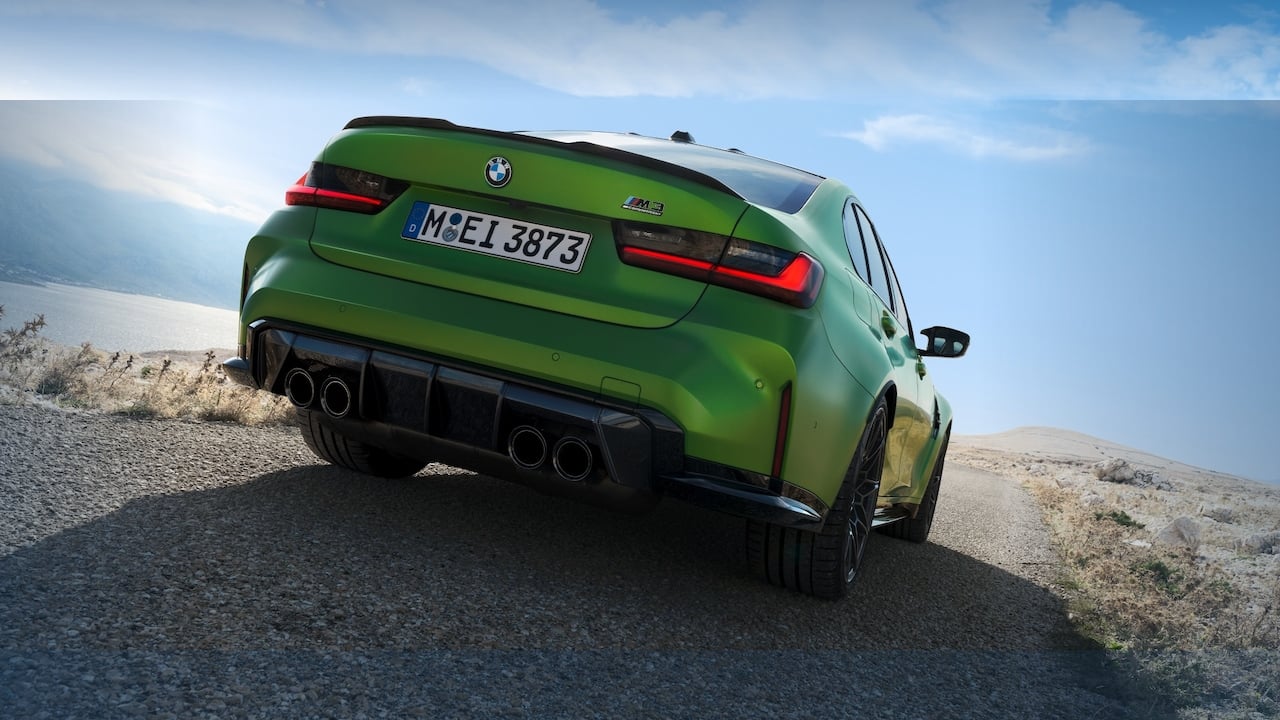
On 17 July 2026, Car and Driver published photos of a petrol prototype being tested at the Nürburgring and reported a turbocharged six-cylinder engine. That is a report from a specialist publication, not a BMW technical release. It is therefore still impossible to say whether the next petrol M3 will have a hybrid system, whether a manual gearbox will remain available or what its power output will be.
The current model provides a useful reference point: the present BMW M3 Sedan is offered with a petrol inline-six. BMW M’s official page lists 480 hp for the rear-wheel-drive M3 with a six-speed manual gearbox, 510 hp for the M3 Competition and 530 hp for the M3 Competition with M xDrive. These figures apply to the current generation and are not a forecast for the next one.
Why buyers may want two M3 versions
BMW has not disclosed the commercial reasons for this decision. From a buyer’s perspective, however, the two versions offer different starting points.
Electric M3
four motors and individual torque distribution to each wheel;
the ability to operate with the front axle disconnected;
an 800-volt architecture;
no confirmed information yet on range, charging time, price or weight.
Petrol M3
BMW has confirmed that an internal-combustion version will remain available;
there are no official details about the technical layout of the next version;
the current M3 shows that the brand still offers a combination of an inline-six, rear-wheel drive and a manual gearbox in selected markets.
What to consider before buying the current M3
The arrival of future models does not, by itself, make the current M3 irrelevant. Buyers choosing a car now should assess their own use case rather than wait for an abstract “next generation”.
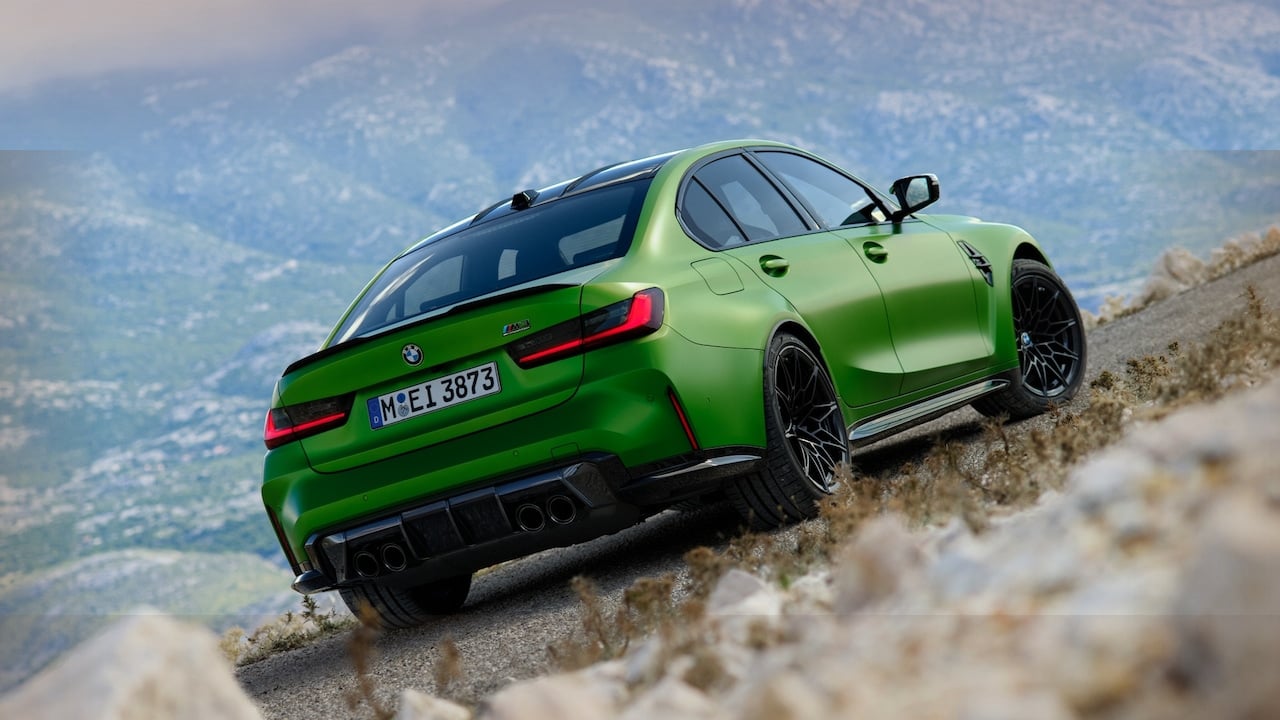
If a manual gearbox and the sound of an inline-six are priorities, check the availability of the current M3 in your region and its actual equipment level.
If electric-car torque and track handling are what interest you, it makes sense to wait for the electric M3’s official specifications. Without its weight, tyres, battery thermal-management data and charging curve, the comparison will be incomplete.
If you need a car soon, do not base your decision on unconfirmed launch dates or projected prices for future versions.
The key fact is already known: the next-generation M3 will not force buyers to choose between the brand and a type of powertrain. BMW intends to offer both options. But a meaningful choice between them will only be possible once production specifications and prices are published.