 EN
EN

Frequently asked questions
The GT 53 uses two electric motors, while the GT 55 and GT 63 use three. The GT 63 has the highest peak output and more standard chassis equipment, while the GT 55 can offer the larger battery and charging at up to 710 kW, depending on the market.
With the 128 kWh battery, Mercedes-Benz USA quotes around 12 minutes at up to 710 kW. With the 106 kWh battery, the stated time is 11 minutes at up to 600 kW. At a 400 kW station, the quoted times rise to 16 and 14 minutes respectively.
The 2.5-second result uses a 1-foot rollout, which excludes the first 30.48 cm of movement. Without rollout, the published result is 2.7 seconds. Acceleration figures should be compared only when the same testing method is used.
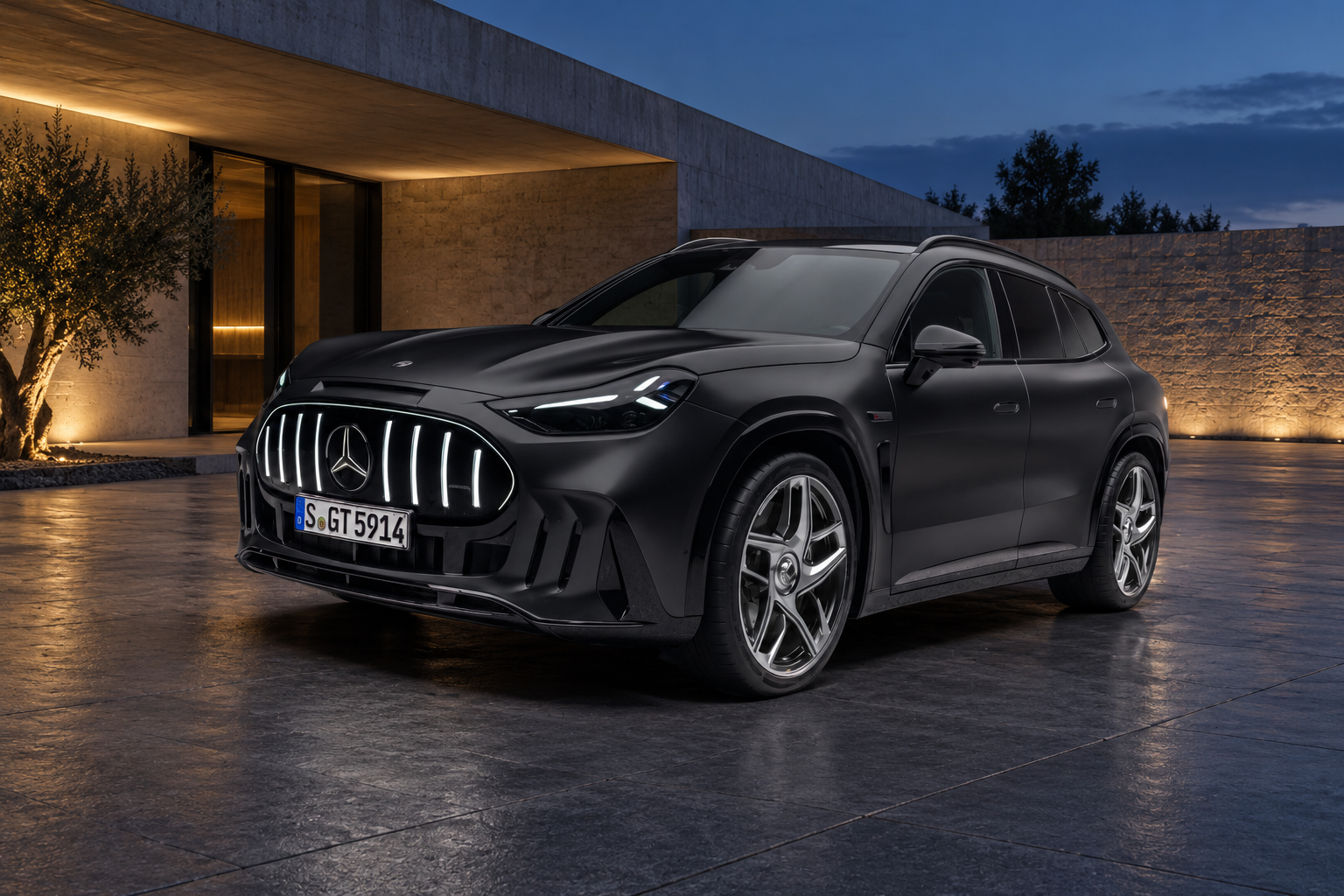
On October 17, 2026, Mercedes-AMG unveiled the electric GT SUV—the first large SUV developed from the ground up entirely by the division. The range includes three versions: the GT 53, GT 55 and GT 63. Their differences go beyond power: the entry-level model uses a different drivetrain layout, while the maximum 710 kW charging rate is available with the larger battery.
According to the official Mercedes-Benz release, orders for the GT 53 in Germany will open on October 20, 2026. The announced price starts at €113,050, including Germany's 19% VAT. The GT 55 and GT 63 will follow in spring 2027. These dates and the price apply to the specified market.
GT 53, GT 55 and GT 63: Key Differences
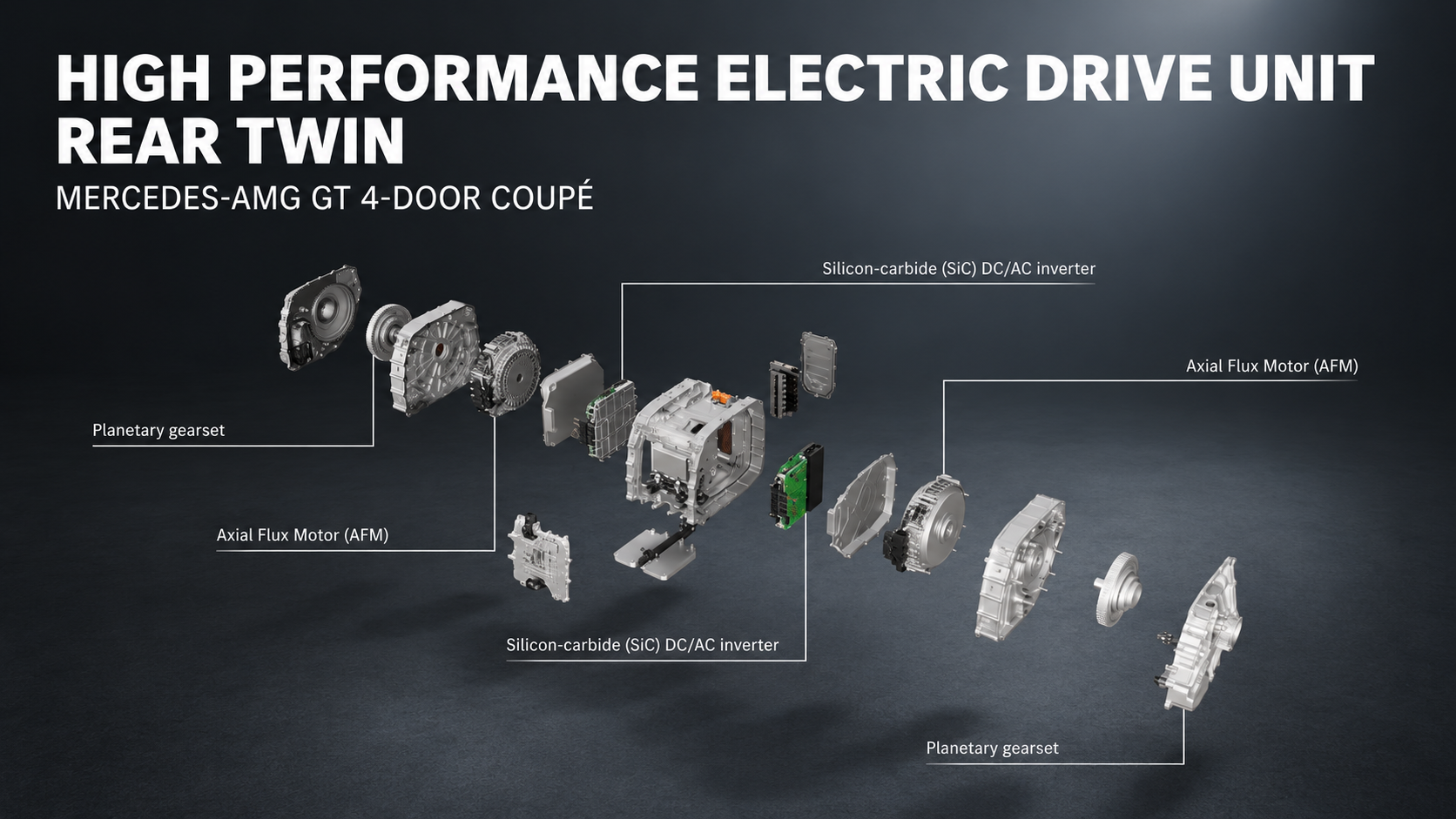
The GT 53 has two permanent-magnet synchronous electric motors, one on each axle. The GT 55 and GT 63 use three axial-flux motors: one at the front and two at the rear. This layout allows the traction at the rear wheels to be controlled independently. All three versions have all-wheel drive.
Specification | GT 53 SUV | GT 55 SUV | GT 63 SUV |
|---|---|---|---|
Number of motors | 2 | 3 | 3 |
Peak power | 400 kW / 544 hp | 600 kW / 816 hp | 860 kW / 1169 hp |
Continuous power | 270 kW / 367 hp | 530 kW / 721 hp | 530 kW / 721 hp |
Torque | 800 Nm | 1860 Nm | 2000 Nm |
0–100 km/h without rollout | 4.2 s | 3.1 s | 2.7 s |
Usable battery capacity | 106 kWh | 106 or 128 kWh | 106 or 128 kWh |
Maximum DC charging power | 600 kW | 600 or 710 kW | 600 or 710 kW |
Power is stated in metric horsepower. The listed battery options refer to the international specification: the US release lists 128 kWh batteries for the GT 55 and GT 63. The availability of a particular combination should be checked in the country of purchase.
Why the Two More Powerful Versions Have the Same 721 hp
Peak and continuous power are different specifications. The GT 55 and GT 63 have the same stated continuous output, but the GT 63 allows a higher peak. Therefore, the difference between 816 and 1169 hp does not mean that the more powerful version constantly has a 353 hp advantage. Both figures matter when comparing the models.
The GT 53 has another distinctive feature: a two-speed transmission for its rear electric motor. The short first gear helps with launch, while the second is intended for high-speed driving. The front motor can disconnect under light loads; in the more powerful versions, it is also engaged when needed.
Acceleration: Why Both 2.5 and 2.7 Seconds Are Quoted
The manufacturer publishes both results for the GT 63. The 2.5-second figure was recorded with a 1-foot rollout, meaning the first 30.48 cm of movement is excluded from the measurement. Without that exclusion, the result is 2.7 seconds. Acceleration figures from different vehicles can be compared fairly only when the same testing method is used.
Charging at Up to 710 kW: What Mercedes-AMG Actually Claims
The system is built around an 800-volt architecture and direct cooling of the cylindrical cells with electrically non-conductive oil. The oil flows around each cell and carries heat away. According to the manufacturer, this solution is designed to support high battery output and fast charging.
In the Mercedes-Benz USA technical description, the 128 kWh battery is rated for up to 710 kW and around 12 minutes to charge from 10% to 80%. The 106 kWh battery is rated for up to 600 kW and 11 minutes. At a 400 kW charging station, the stated times increase to 16 and 14 minutes respectively.
The Calculation: A 710 kW Peak Is Not the Average Power
For the larger battery, Mercedes states that 83 kWh can be added in ten minutes. Dividing energy by time gives: 83 ÷ (10/60) = 498 kW. This is the calculated average power based on the published figures, not the result of an independent test. 710 kW is the peak, not a promise that this power will be maintained throughout the charging session.
For trip planning, the time needed to add the required charge is more useful than a single maximum figure. The charging station must support the necessary voltage and power, while the actual result also depends on the battery's condition. Charging from 400-volt stations is supported, but that alone does not mean the vehicle can reach the maximum 710 kW.
The claim of adding approximately 450 km in ten minutes uses the WLTP cycle. It does not mean the vehicle will travel the same distance on a motorway in winter: energy consumption changes with speed, temperature, load and use of the climate-control system. The release identifies the charging data as preliminary.
Other Equipment Differences
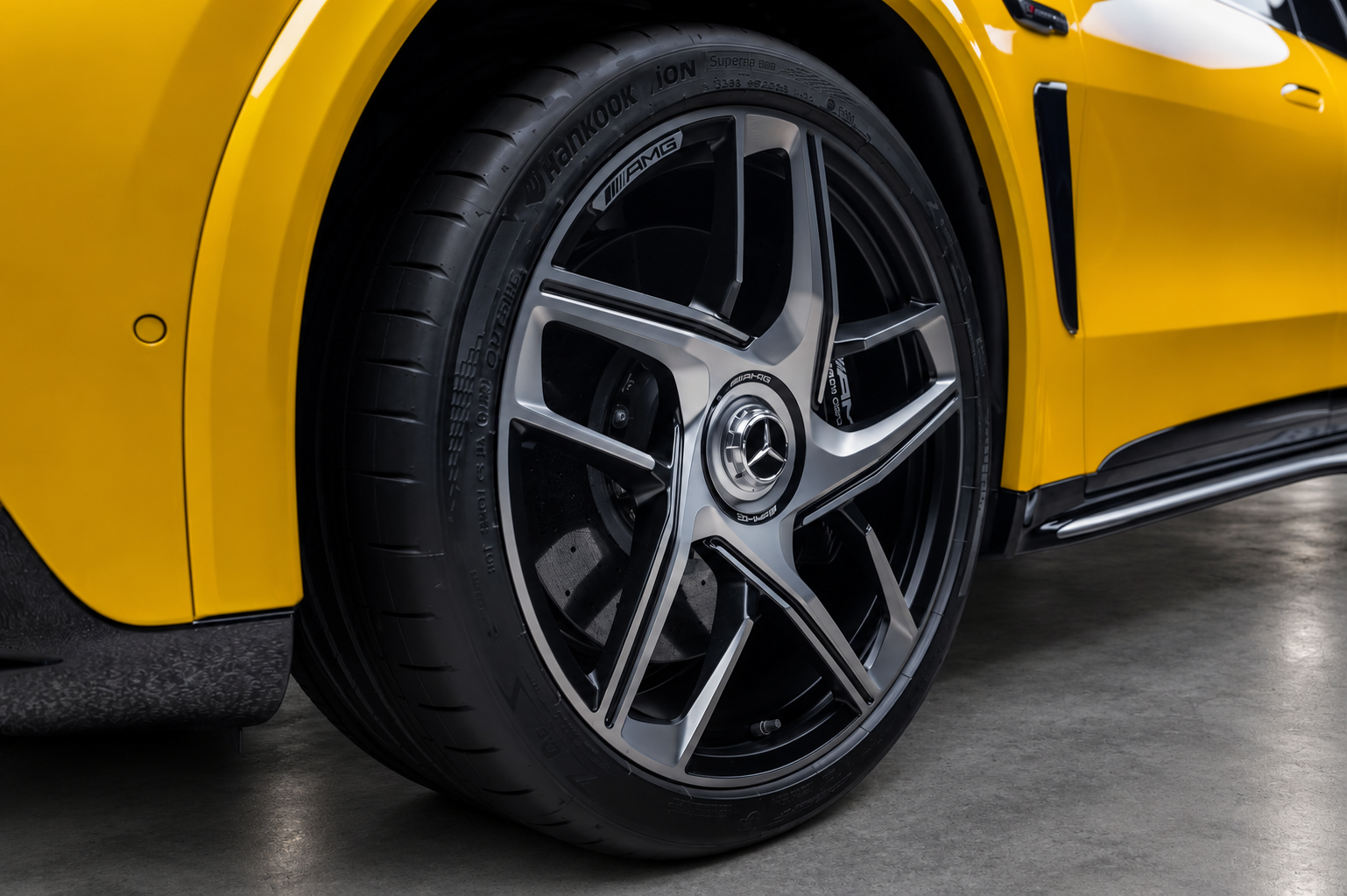
Carbon-ceramic brakes are standard on the GT 63 and optional on the GT 55. The AMG ACTIVE RIDE CONTROL+ active suspension, which controls body roll and pitch, is also standard on the GT 63 and available at extra cost on the GT 55. Comparing the two more powerful versions therefore requires looking beyond output and considering their equipment levels.
An Electric Vehicle That Recreates a V8
On the GT 55 and GT 63, AMGFORCE Sport+ mode recreates the sound of an eight-cylinder engine. As explained on the official model page, real vehicles were recorded for this purpose, including the AMG GT R. The soundtrack responds to acceleration and simulated gear changes, while vibration elements in the seats add physical feedback. This is a separate sensory feature: there is no petrol engine under the hood.
How to Read the Specifications Before Buying
The GT 53 is a distinct two-motor design. It retains the 800-volt architecture and fast charging, but its drivetrain layout differs from those of the more powerful versions.
The GT 55 offers three axial-flux motors and a battery capable of charging at up to 710 kW without moving up to the GT 63's maximum output. Battery availability depends on the market.
The GT 63 adds higher peak output and more generous standard chassis equipment. The extra cost can be assessed properly once local prices and the options list are available.
For long-distance travel, the key combination is the selected battery and the charging stations available along the route. For performance, the drivetrain version, chassis equipment and acceleration test conditions matter. The GT 63 badge or a 710 kW figure alone cannot replace these details.