 EN
EN

Frequently asked questions
It is set to use a twin-turbocharged 4.4-liter petrol V8 producing 635 hp and 750 N·m. The road-going version is promised the unrestricted output, while the racing car’s output was restricted by regulations.
Announced equipment includes coil springs, Bilstein Advanced dampers, 20-inch forged wheels, 35-inch tires, D7x architecture, a transmission and all-wheel-drive system based on the D7X-R and OCTA, and a four-seat 2+2 cabin.
Reservations are planned to open in early 2027, while the full technical specification is promised during the 2027 Dakar Rally. As of August 17, 2026, the price, production quantity, sales regions, performance figures, and delivery start had not been disclosed.
On August 14, 2026, Defender unveiled a design preview of the road-going Defender Dakar at The Quail in California. The premiere took place during Monterey Car Week—seven months after the D7X-R racing model won the production-based SUV category at the Dakar Rally.
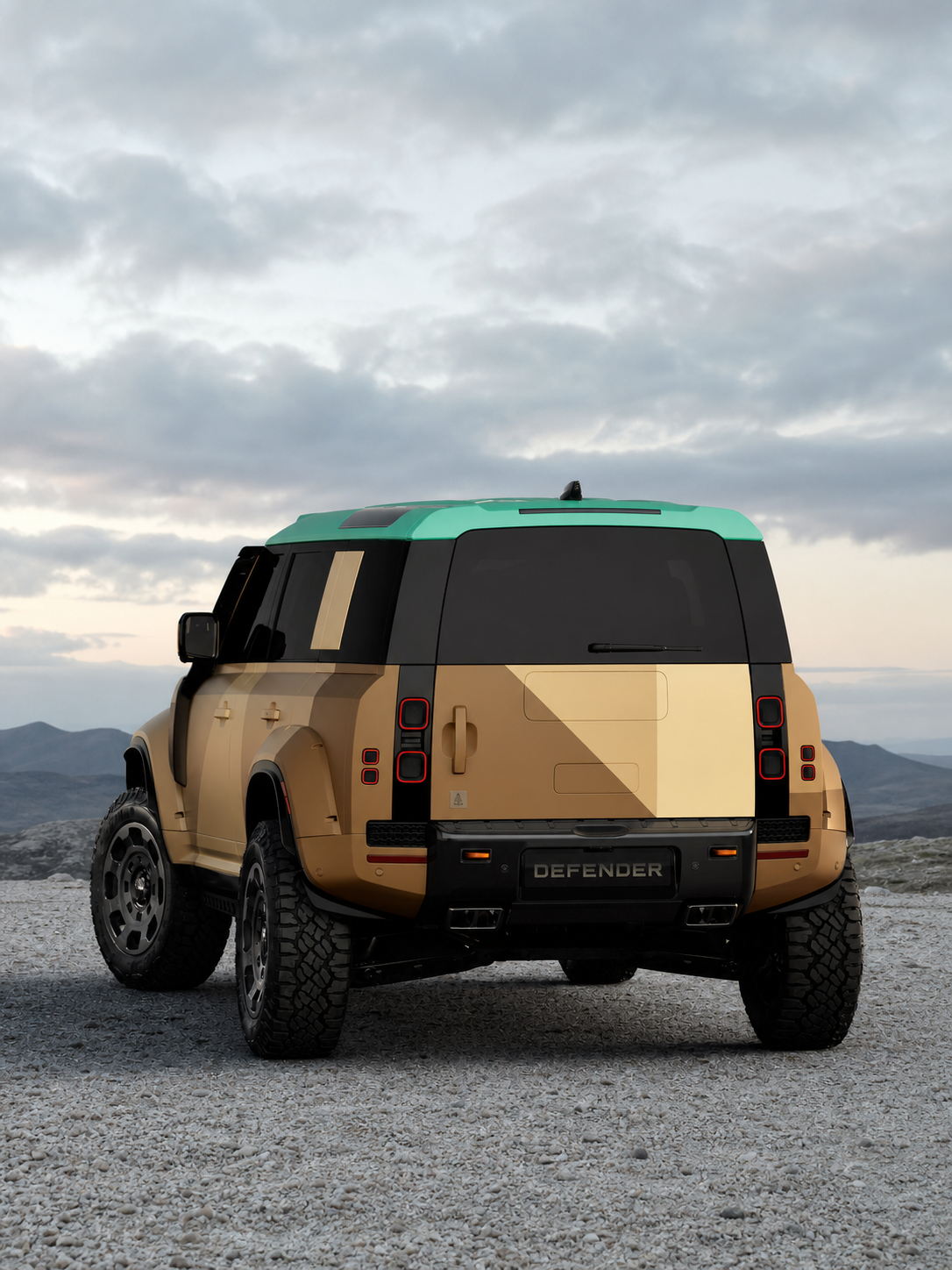
The vehicle on display carries Design Preview Model status: it shows the project's direction but is not yet a final production specification. The manufacturer has confirmed the engine, key chassis components, and equipment, but has not yet announced the price, exact production run, or sales markets.
Defender Dakar in a minute
The road-going version is based on the D7X-R rally Defender, which in turn was developed from the Defender OCTA.
Power comes from a twin-turbocharged 4.4-liter petrol V8 producing 635 hp and 750 N·m.
The announced equipment includes coil-spring suspension with Bilstein dampers, 20-inch forged wheels, and 35-inch tires.
The cabin is configured for four occupants in a 2+2 layout.
Reservations are planned to open in early 2027.
How the Dakar winner became the basis for a road model
The final, 13th stage of the 2026 Dakar Rally ended on January 17, 2026. In the new Stock category, Rokas Baciuška and Oriol Vidal took first place in a Defender D7X-R. Sara Price and Sean Berriman finished second in another vehicle from the team, while Stéphane Peterhansel and Michaël Metge came fourth. These results are published in the official rally standings: select the Stock category on the results page.
Defender also reports that the three D7X-Rs occupied the top three positions in their class at 10 of the 13 stages. The new vehicle's connection to the race therefore goes beyond its color scheme: the road-going Dakar retains the D7x body architecture, transmission, all-wheel drive, and engine type used by the racing car.
Why 24,000 km is not the route length for one crew
The press release states that the three Defender vehicles covered 24,000 km together. This is the team's combined distance, not the mileage of one vehicle and not the length of the 2026 Dakar route. The distinction matters when assessing the cars' racing durability.
What is known about the Defender Dakar's technology
The V8 without a racing restriction
The road-going Dakar is set to use a twin-turbocharged 4.4-liter V8. The racing car's output was restricted by the regulations, while the future production version is promised the full 635 hp and 750 N·m. An upgraded cooling system is intended to handle sustained loads, but Defender has not yet described its design.
The project's starting point remains the Defender OCTA. It produces the same maximum 635 hp, but the road-going Dakar differs in its suspension settings and chassis design. The manufacturer is not transferring the racing car as a complete package; it is carrying over the proven combination of body, transmission, and all-wheel drive, then adding equipment for regular roads.
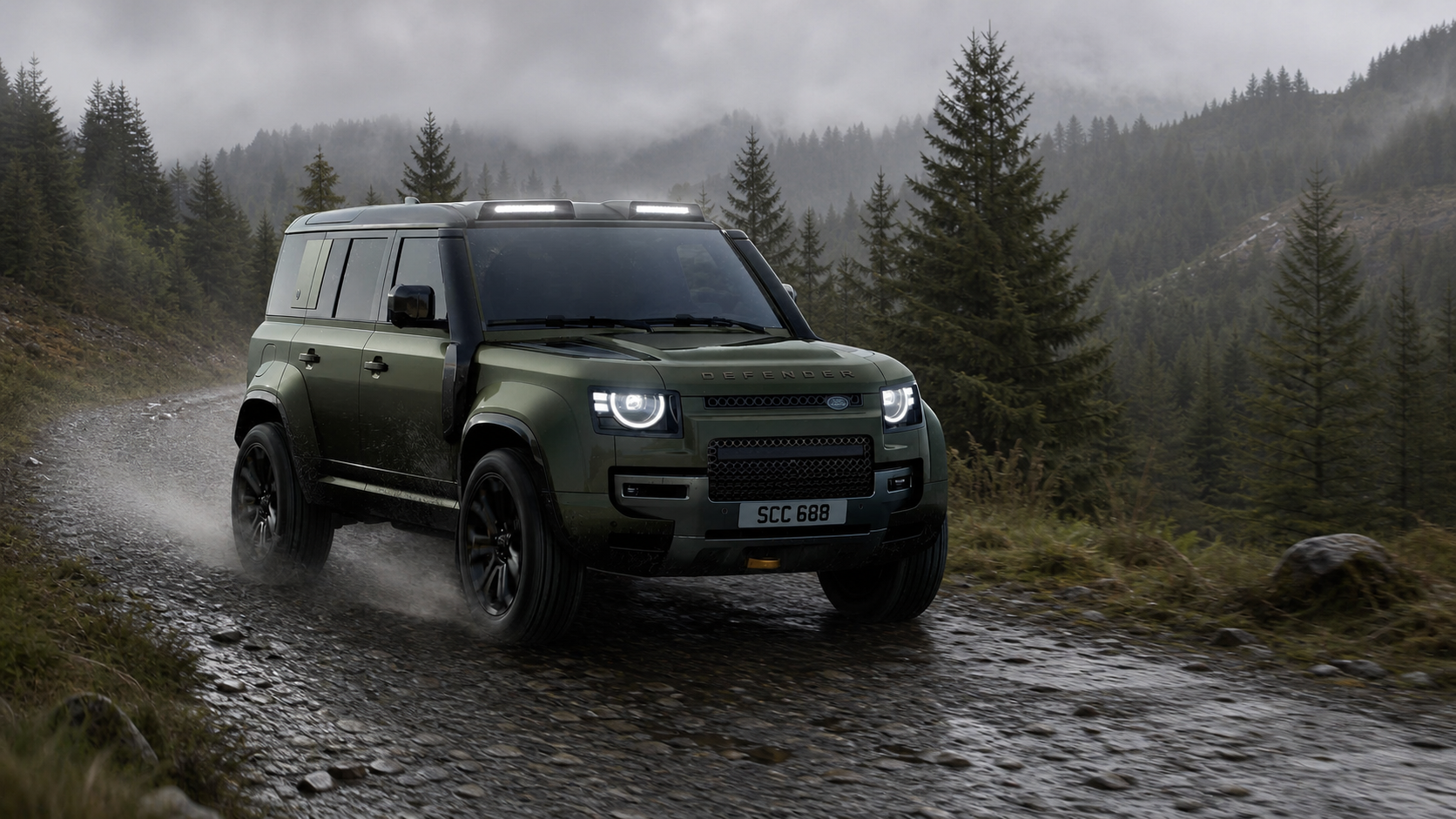
Coil springs instead of the OCTA's air suspension
The Defender OCTA uses 6D Dynamics air suspension with hydraulically interconnected dampers. The Dakar is set to use coil springs and Bilstein Advanced dampers tested in motorsport. Exact suspension travel, ground clearance, and the dimensions of the wider track have not yet been published.
The SUV will receive 35-inch Advanced All-Terrain tires on new 20-inch forged wheels. The drive-mode list adds Dunes for sand, Gravel for loose surfaces, and Flight Mode. The latter was developed for the D7X-R to make landings after becoming airborne smoother. Its operating logic and the loads permitted in the road-going version have not yet been disclosed.
Confirmed specifications and remaining gaps
Parameter | Confirmed | Still unknown |
|---|---|---|
Status | A design preview of the road-going model has been shown | Which details will change before production |
Engine | 4.4-liter V8, twin turbochargers, 635 hp and 750 N·m | Acceleration, top speed, fuel consumption, and emissions |
Chassis | D7x architecture, transmission, and all-wheel drive based on the D7X-R and OCTA | Track width, ground clearance, suspension travel, and vehicle weight |
Suspension | Coil springs and Bilstein Advanced dampers | Adjustment range and road settings |
Wheels | 35-inch tires and 20-inch forged wheels | Tire supplier and options for different markets |
Interior | 2+2 layout, front racing seats, optional four-point harnesses | Infotainment, cargo capacity, and the complete equipment list |
Sales | Reservations are scheduled to open in the first months of 2027 | Price, exact production run, delivery countries, and the first customer handover dates |
Body: functional details instead of decorative imitation
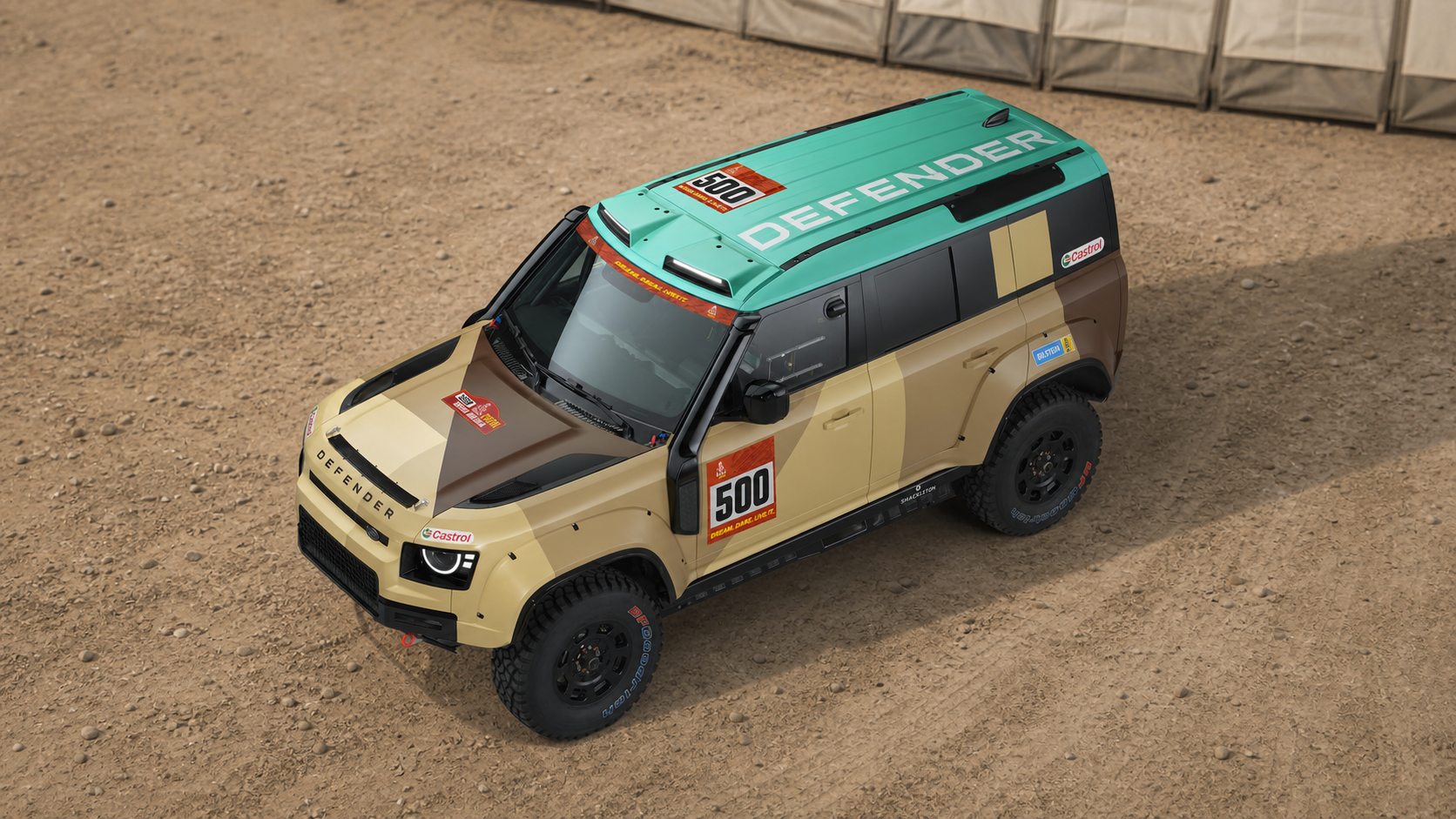
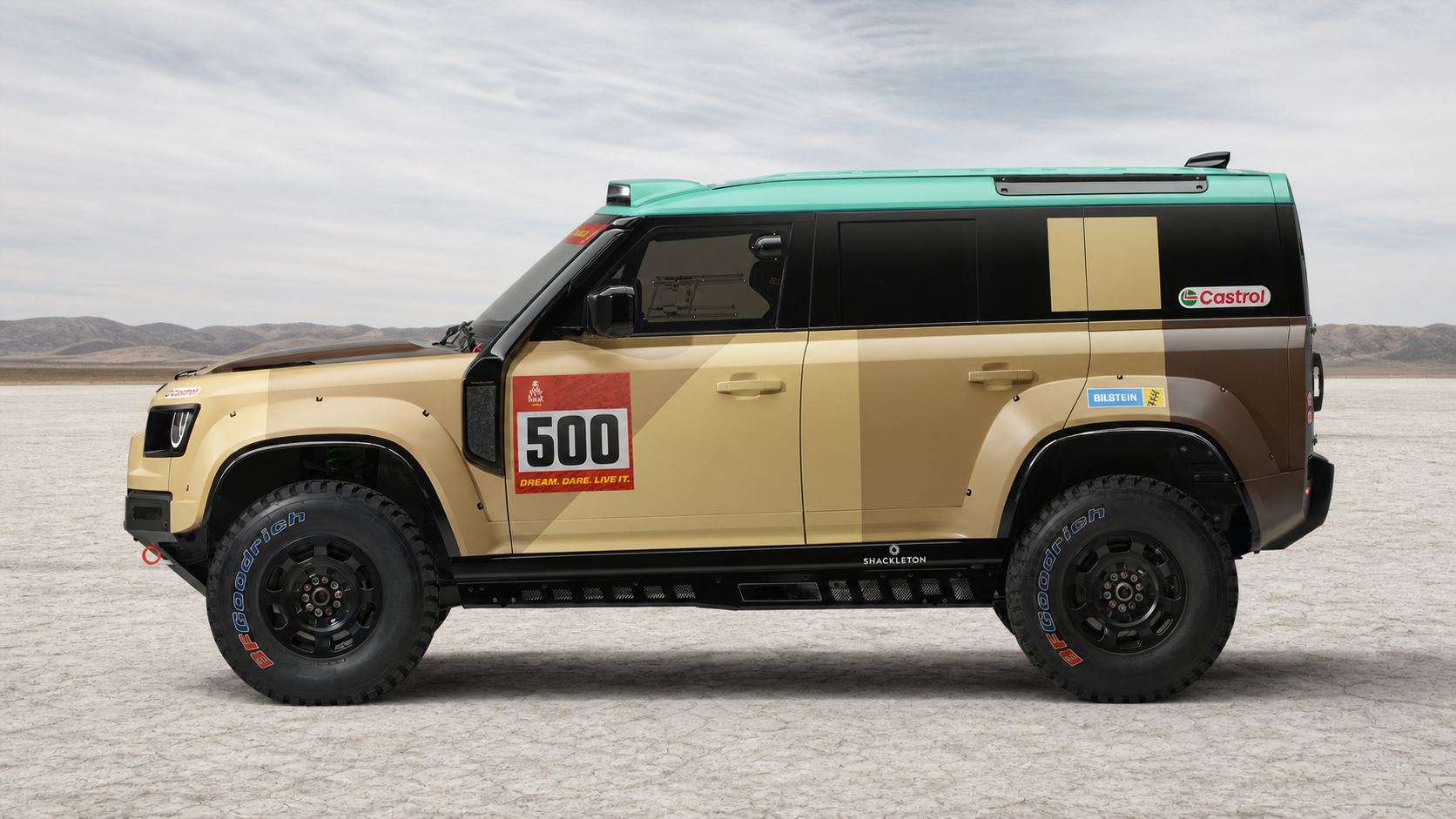
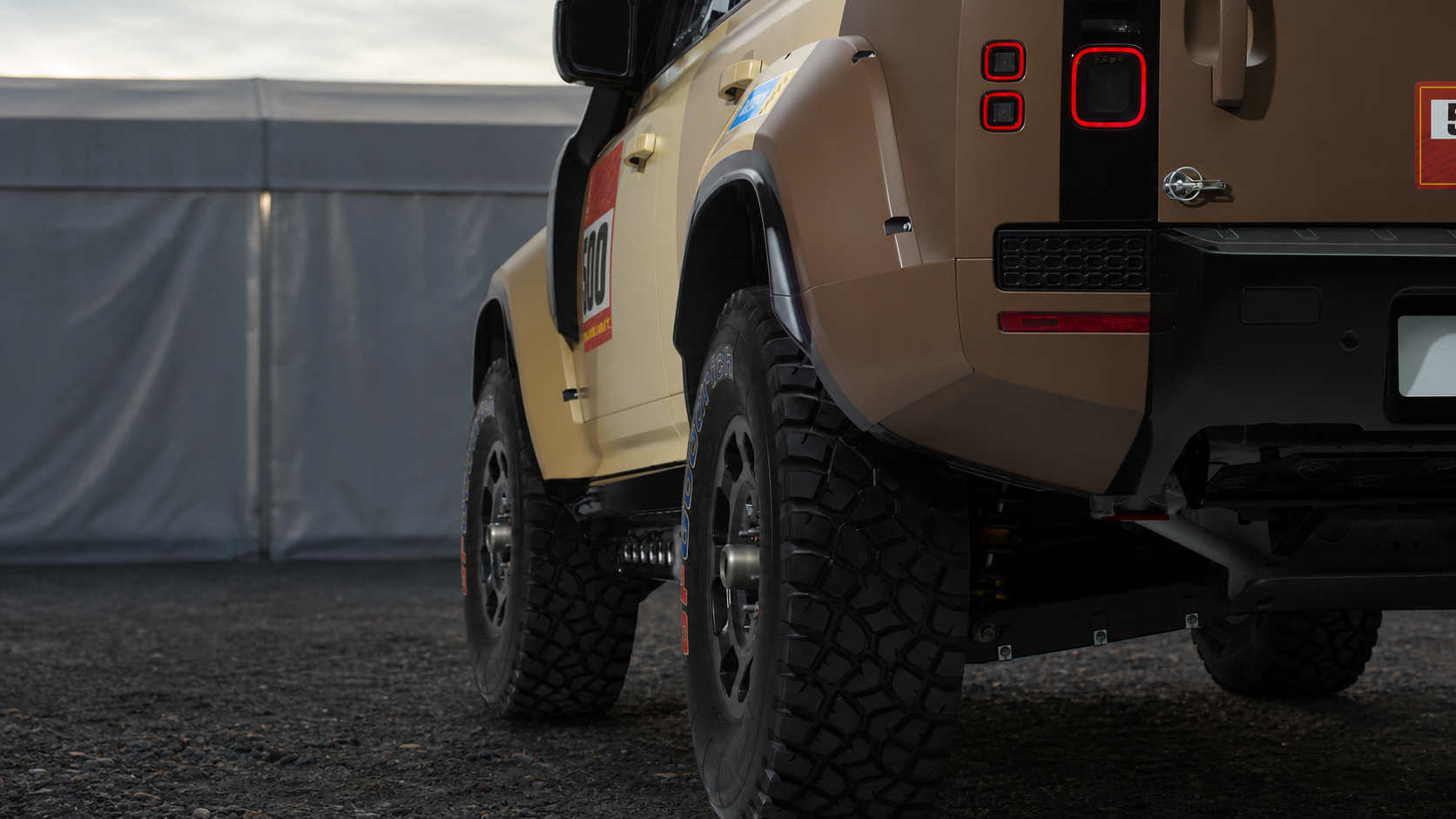
The Defender Dakar has widened wheel arches and a broader track. Additional light modules have been added to the roof, while the raised air intakes and hood are made from carbon fiber. Underneath, there is metal front-end protection and reinforced underbody panels. The tailgate has no conventional external spare-wheel carrier; instead, a dedicated space for the wheel is provided inside the cargo area.
The main color scheme combines Dakar Sand with a Yanbu Turquoise roof and repeats the D7X-R race car's design. Narvik Black and Alaska White will also be offered, with a matte protective film available for them. The final palette for individual countries has not yet been announced.
A four-seat cabin with space for racing equipment
Instead of the usual five-seat layout, the vehicle uses a 2+2 configuration. Individual seats have been developed for the front row, while four-point harnesses will be available as an option. The rear section includes storage recesses for helmets, a spare-wheel mount, and an air compressor.
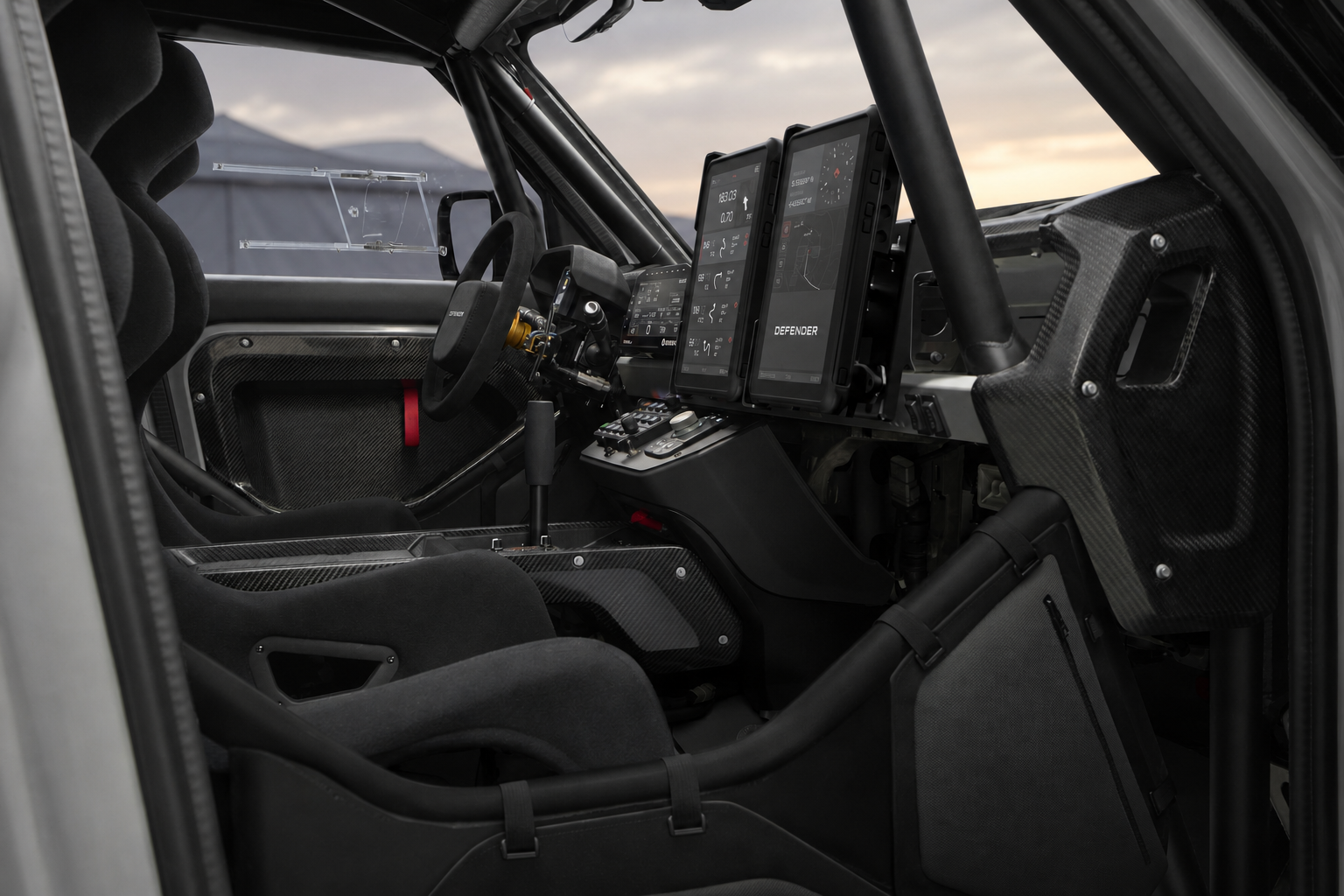
It is not yet known whether conventional three-point belts will be standard alongside the racing harnesses, where the four-point system will be permitted, or how cargo capacity will change. These details depend on the final homologation and the specification for each market.
What to check before reserving one
Whether the vehicle will be officially sold and serviced in your country.
Which tires will be included in the local specification and whether they are approved for year-round use.
How the manufacturer will regulate the use of four-point harnesses and Flight Mode.
What will remain standard equipment when the vehicle moves from design preview to production.
When the price and full specifications will be announced
Defender is already collecting applications from interested customers and intends to open reservations in early 2027. The full technical specification is promised during the 2027 Dakar Rally in Saudi Arabia.
As of August 17, 2026, the price, production quantity, sales regions, performance figures, and start of deliveries have not been disclosed. Reports about a specific production run or availability in individual countries therefore cannot yet be considered official.
The Defender Dakar is interesting not only because of its rally connection. It shows what has to change to turn the OCTA first into the D7X-R race car and then bring that construction back to the road: coil-spring suspension, larger wheels, additional cooling, underbody protection, and a more specialized cabin. The final balance between racing solutions and everyday usability will become clear after the production specifications are published.