 EN
EN

Frequently asked questions
Removing the roof can make a car’s body twist more and affect door, window and suspension geometry. Eccentrica retained the steel frame, added carbon-fiber structural reinforcements and used carbon-fiber body panels to help reduce panel weight, shape components and support the structure.
The manual gearbox requires driver input when selecting gears, releasing the clutch and modulating the throttle. Combined with the naturally aspirated V12, it provides a different driving rhythm from an automated transmission, although it is slower during acceleration, requires skill and can be tiring in heavy traffic.
No. Until independent tests are available, the figures remain manufacturer claims. Eccentrica lists 550 hp, 3.8 seconds to 100 km/h and a 335 km/h top speed.
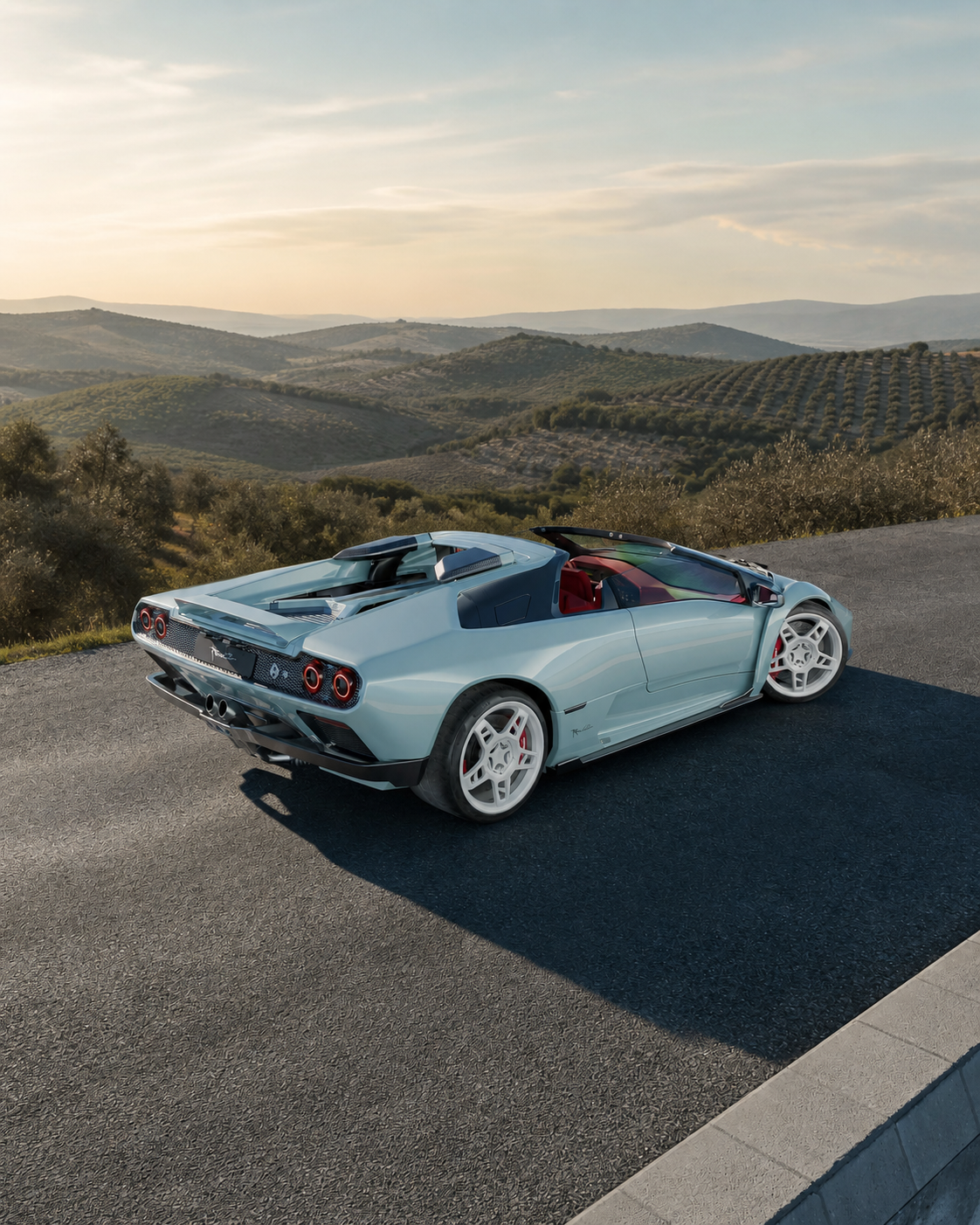
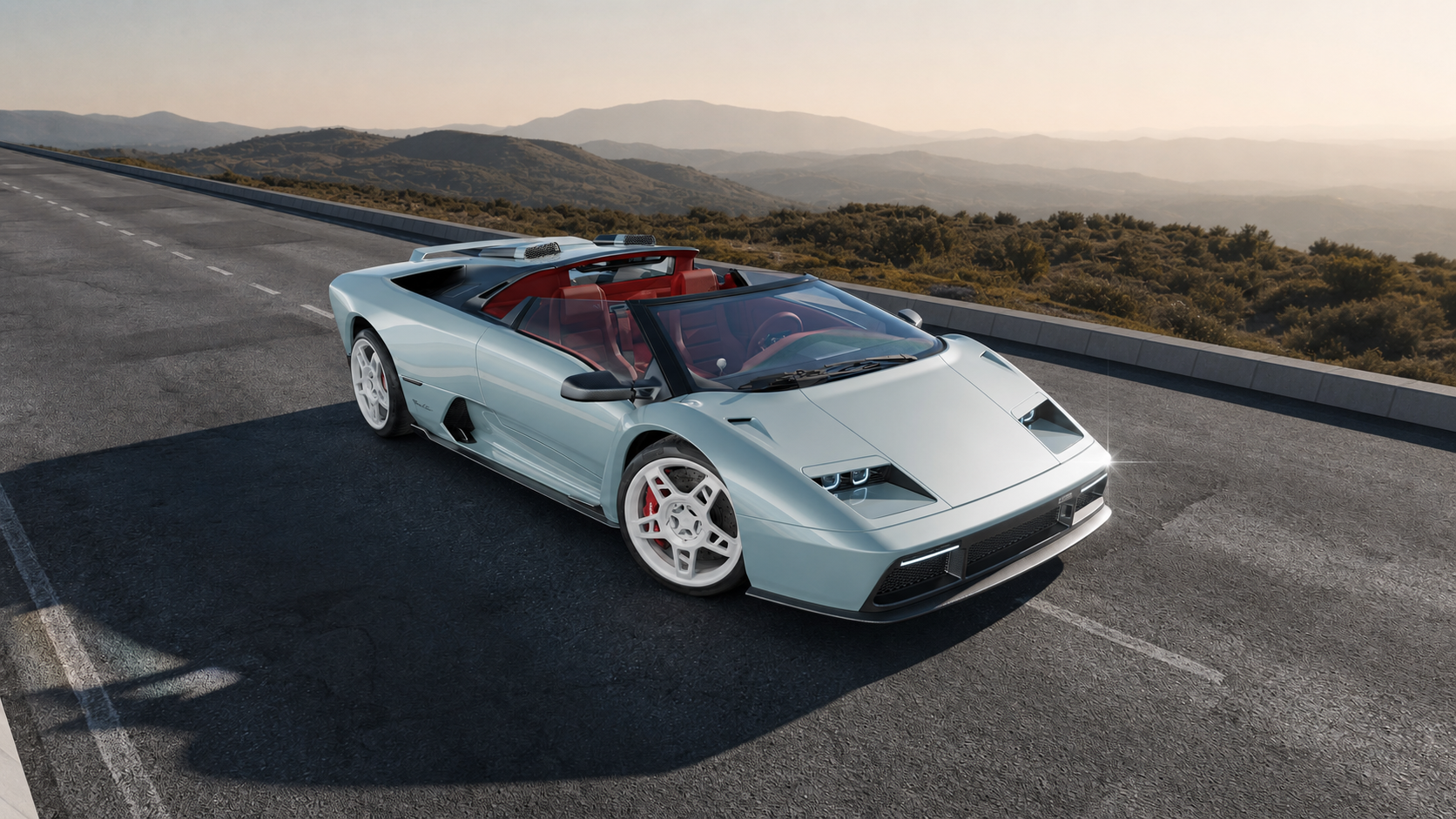
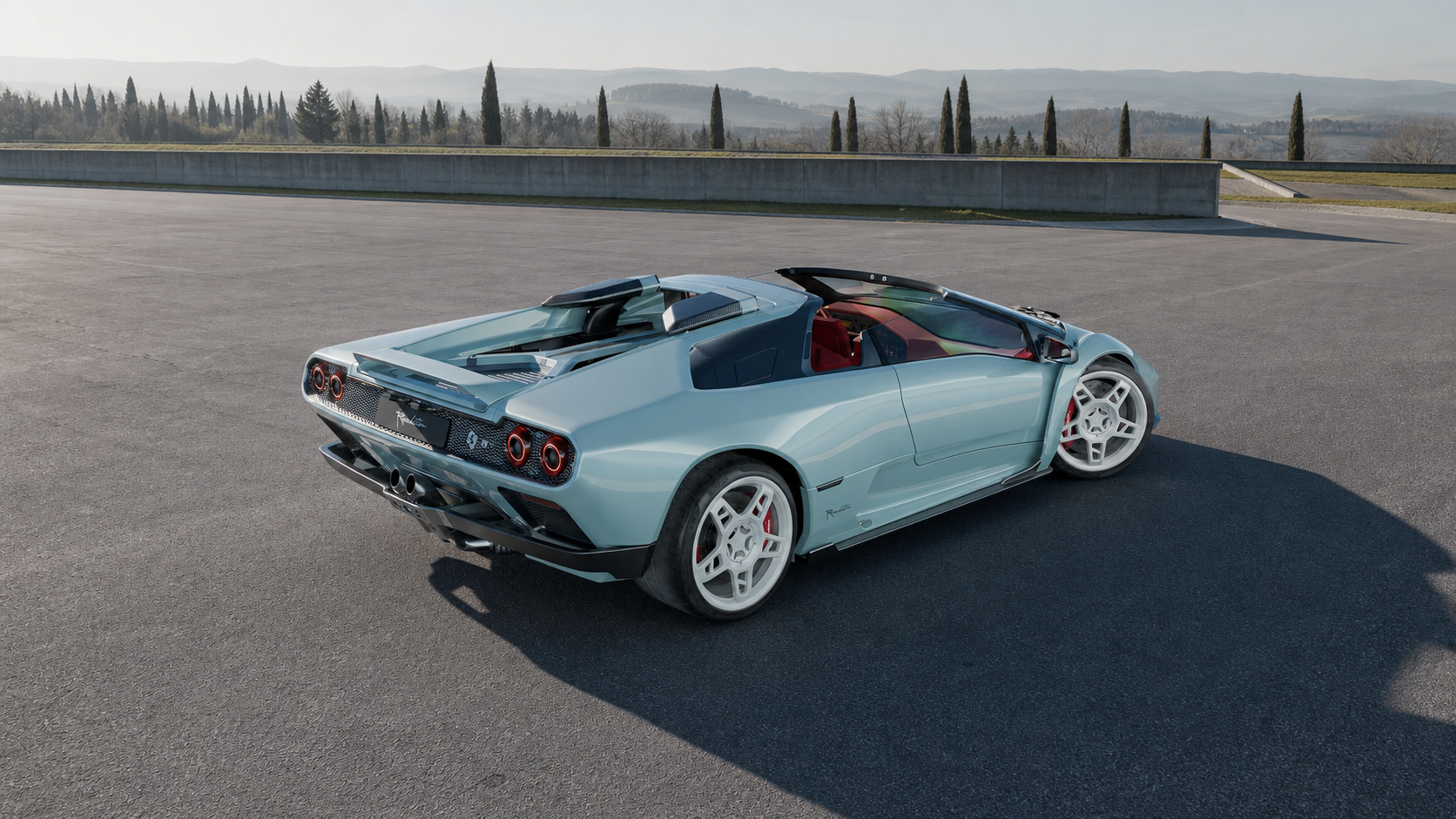
On August 10, 2026, Eccentrica introduced the V12 Roadster, an open-top version of its restomod based on the early Lamborghini Diablo. This is neither a restored Diablo nor a new Lamborghini: Eccentrica itself emphasizes that it has no connection with Automobili Lamborghini. The project follows a different idea: take a 1990s car, comprehensively rework its engineering, and keep a naturally aspirated V12 with a manual gearbox at the driver's disposal.
The Roadster's public debut is scheduled for August 14, 2026, at The Quail, A Motorsports Gathering. Until the first independent tests, almost all specifications remain manufacturer claims. That does not reduce the project's significance, but it does call for careful wording: the claimed 550 hp, 3.8 seconds to 100 km/h and 335 km/h top speed still have to be verified on the road.
What Eccentrica actually changed
The starting point is a first-series Diablo. According to Eccentrica, each car involves more than 3,500 new parts: the body, chassis, suspension, brakes, electronics and interior have all been rebuilt. This is not a cosmetic package for a finished supercar, but a deep reconstruction of the donor vehicle. The project's official description and debut dates were published in Eccentrica's press release dated August 10, 2026.
Specification | Eccentrica data |
|---|---|
Engine | Naturally aspirated 5.7-liter V12 |
Power and torque | 550 hp at 7,000 rpm and 600 Nm at 6,500 rpm |
Transmission | 6-speed manual with an exposed gated mechanism |
Body and structure | Steel space frame with carbon-fiber reinforcements; full carbon-fiber body |
Suspension and brakes | Double wishbones, semi-active dampers; 380 mm Brembo brakes at the front and 345 mm at the rear |
Production run | 19 examples |
Why carbon fiber was needed after removing the roof
On a coupe, the roof forms part of the body's structural system. Remove it without making other changes, and the body will twist more over uneven surfaces, while the doors and windows may struggle to maintain their geometry. The suspension setup can also stop working as intended. For the Roadster, Eccentrica retained the steel frame, added carbon-fiber structural reinforcements and created the body panels from carbon fiber.
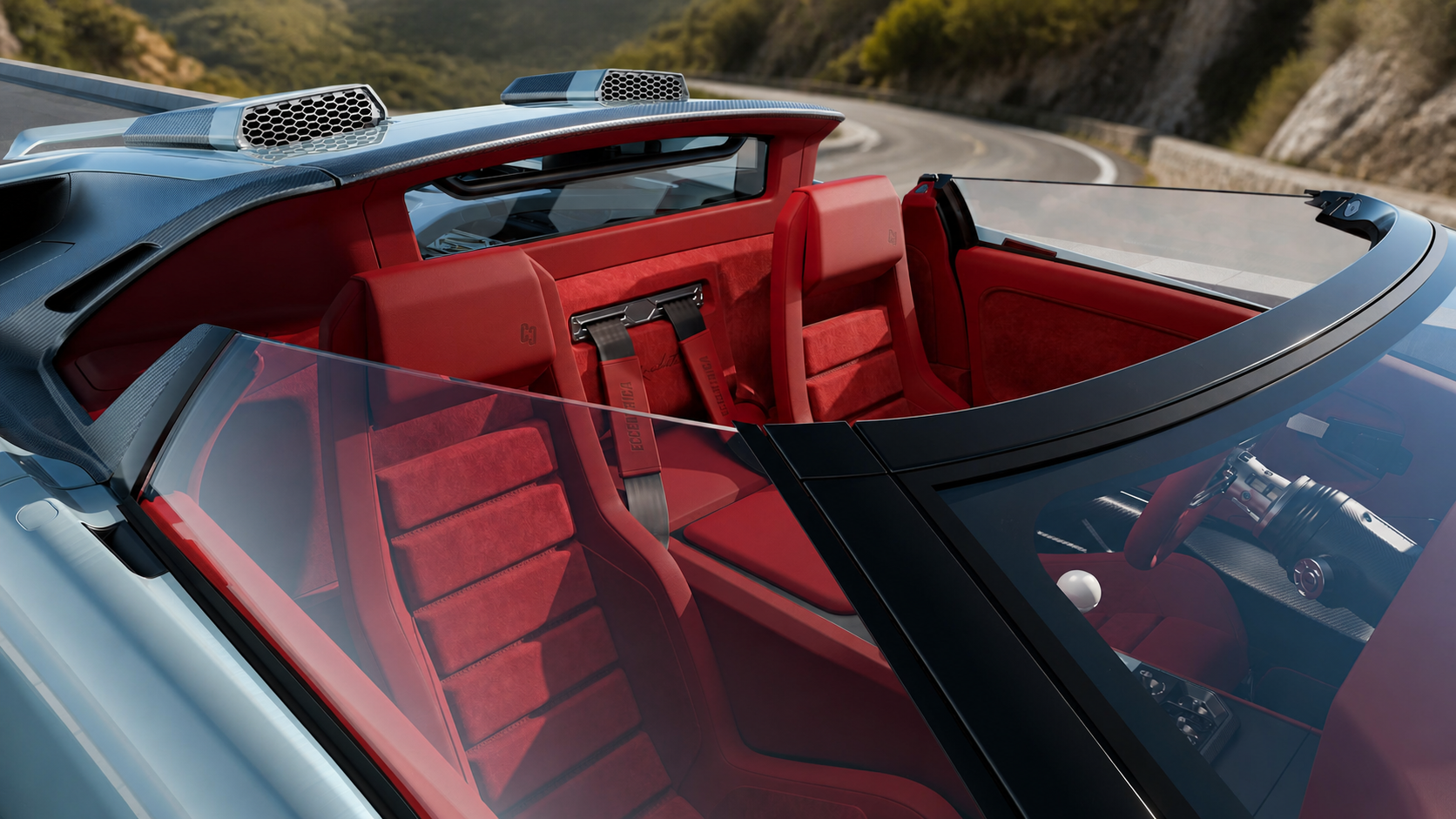
The company also claims a wider track, revised suspension geometry, semi-active dampers and dedicated aerodynamic work on the airflow around the open cabin. A complete description of the construction is available on the official V12 Roadster page. Eccentrica has not published a torsional-stiffness figure, however. It is therefore impossible to say with confidence whether the open version is stiffer or more flexible than the original Diablo; all we have is a list of the modifications made.
The carbon fiber is not there just for the weave
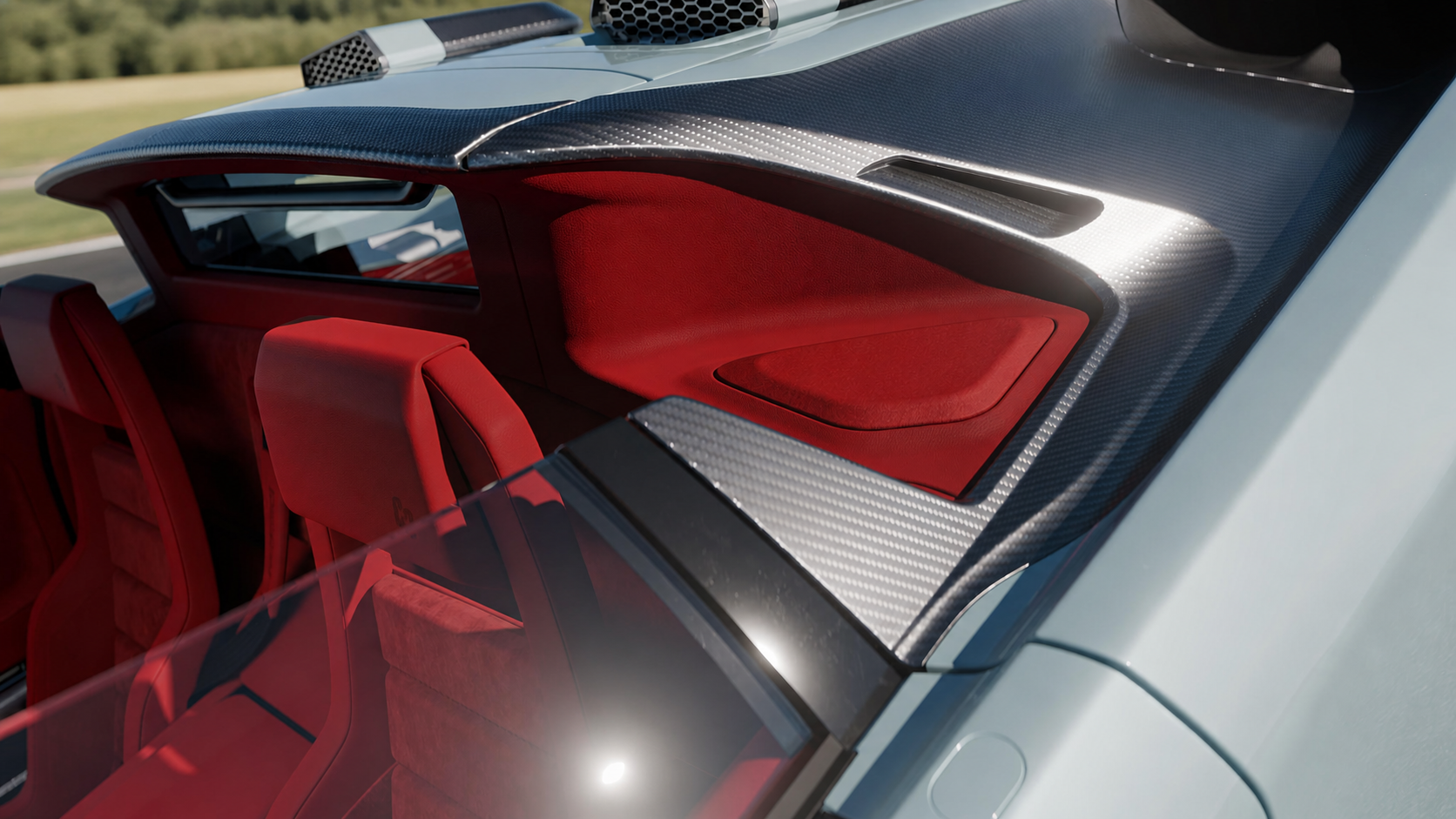
In the Roadster, carbon fiber serves several purposes at once: it helps reduce the weight of the body panels, allows greater freedom in shaping individual components and contributes to structural reinforcement. But carbon fiber alone does not make a car better. The result depends on the design of the frame, mounting points, suspension tuning and weight distribution. That is why the body material cannot be judged separately from the complete vehicle structure.
Why keep the manual gearbox
Eccentrica was not trying to create the fastest-shifting version of the Diablo. The six-speed manual gearbox, with its exposed gate and short ratios, demands input from the driver: selecting the gear, releasing the clutch and modulating the throttle more precisely when exiting a corner. Combined with the naturally aspirated V12, it creates a different rhythm from that of a modern supercar with an automated transmission.
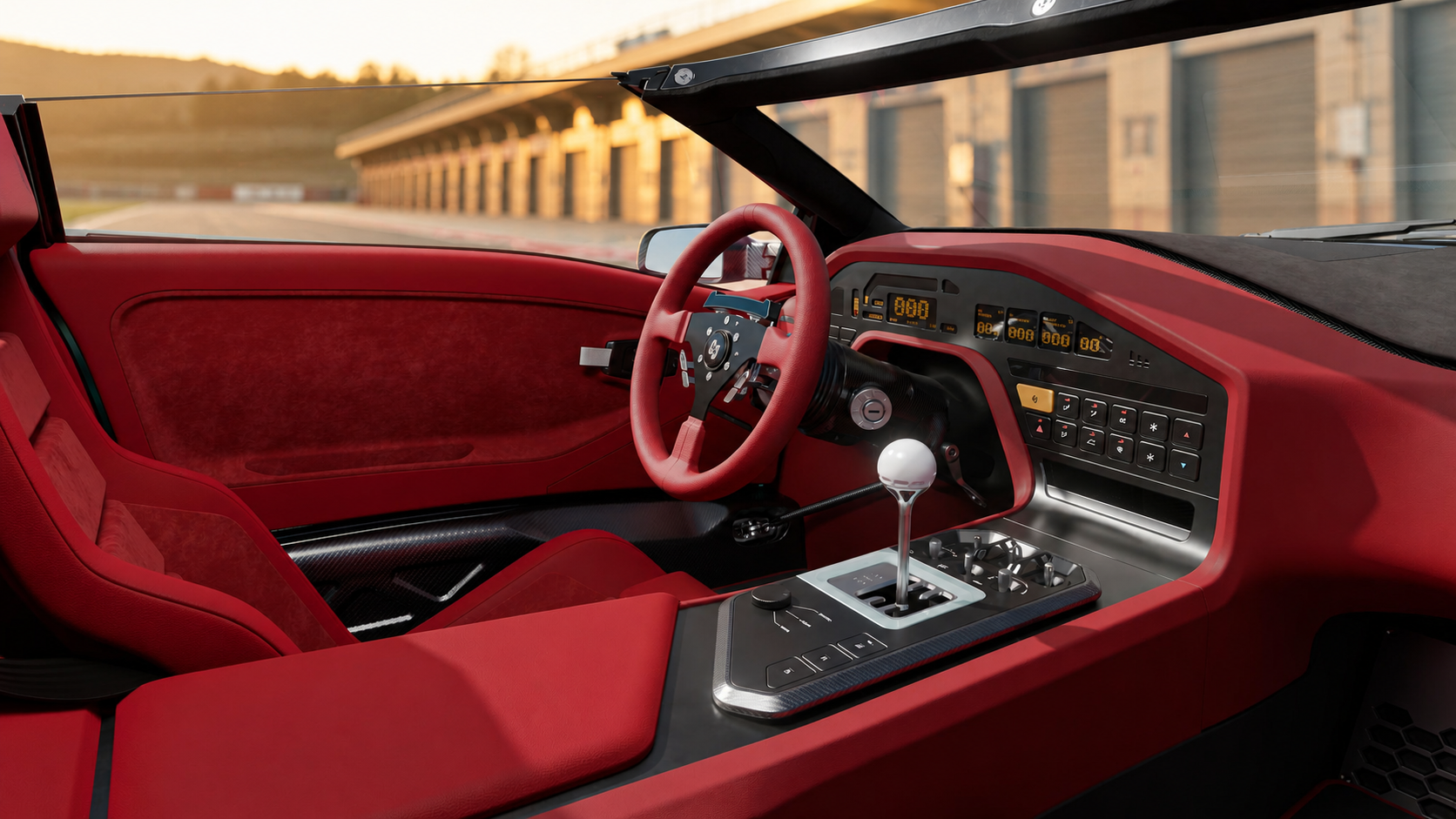
This choice also has drawbacks. A manual gearbox is slower than an automatic during acceleration, requires skill and can become tiring in heavy traffic. That may be a disadvantage in a daily driver; for a run of 19 collectible Roadsters, it is a deliberate part of the project's character. The standard Eccentrica V12 also received a six-speed manual, and the company described its technical concept in a production announcement dated May 5, 2025.
Engine: an upgraded V12, not a new engine
The Roadster uses a reworked 5.7-liter naturally aspirated V12. Eccentrica points to revised engine-control calibration, improved cooling and optimized airflow. Claimed output is 550 hp at 7,000 rpm and 600 Nm at 6,500 rpm. Power is sent exclusively to the rear wheels.
The company also lists a weight of 1,540 kg, a 41:59 front-to-rear weight distribution, acceleration to 100 km/h in 3.8 seconds and a top speed of 335 km/h. These figures should be read as manufacturer-claimed specifications, not as the results of independent testing.
What future owners need to know
The Roadster's price has not yet been published. A suitable Diablo donor will also be required.
Each of the 19 cars will be built to an individual specification, so no two examples will be identical.
Before buying, check the rules for registering, insuring and servicing a restomod in the country where it will be operated.
The donor car's history and condition are critical: they affect both the value of the project and the quality of the finished result.
The main takeaway
The Eccentrica V12 Roadster is not trying to preserve the Diablo in factory form. The carbon-fiber body, reinforced frame, new suspension and modern brakes are intended to make the open car work as a coherent structure. The manual gearbox, by contrast, preserves something rarely found in new supercars: a direct connection between the driver's actions, the naturally aspirated V12's revs and the behavior of the rear wheels. That is the logic of a restomod—not to recreate the past literally, but to address its weak points without losing the character of the original.