 EN
EN

Frequently asked questions
No. The NISMO B5 produces 130 kW and 345 N·m, while the B7 produces 160 kW and 355 N·m—matching the corresponding standard LEAF powertrains.
It gets retuned suspension and subframe bushings, stronger springs and anti-roll bars, lighter 19-inch Enkei wheels, Michelin Pilot Sport 5 tires, revised drive modes, and four steering-wheel-controlled regenerative-braking levels.
Nissan has not confirmed sales outside Japan. The article states that a global launch should not be considered planned until the company provides official confirmation.
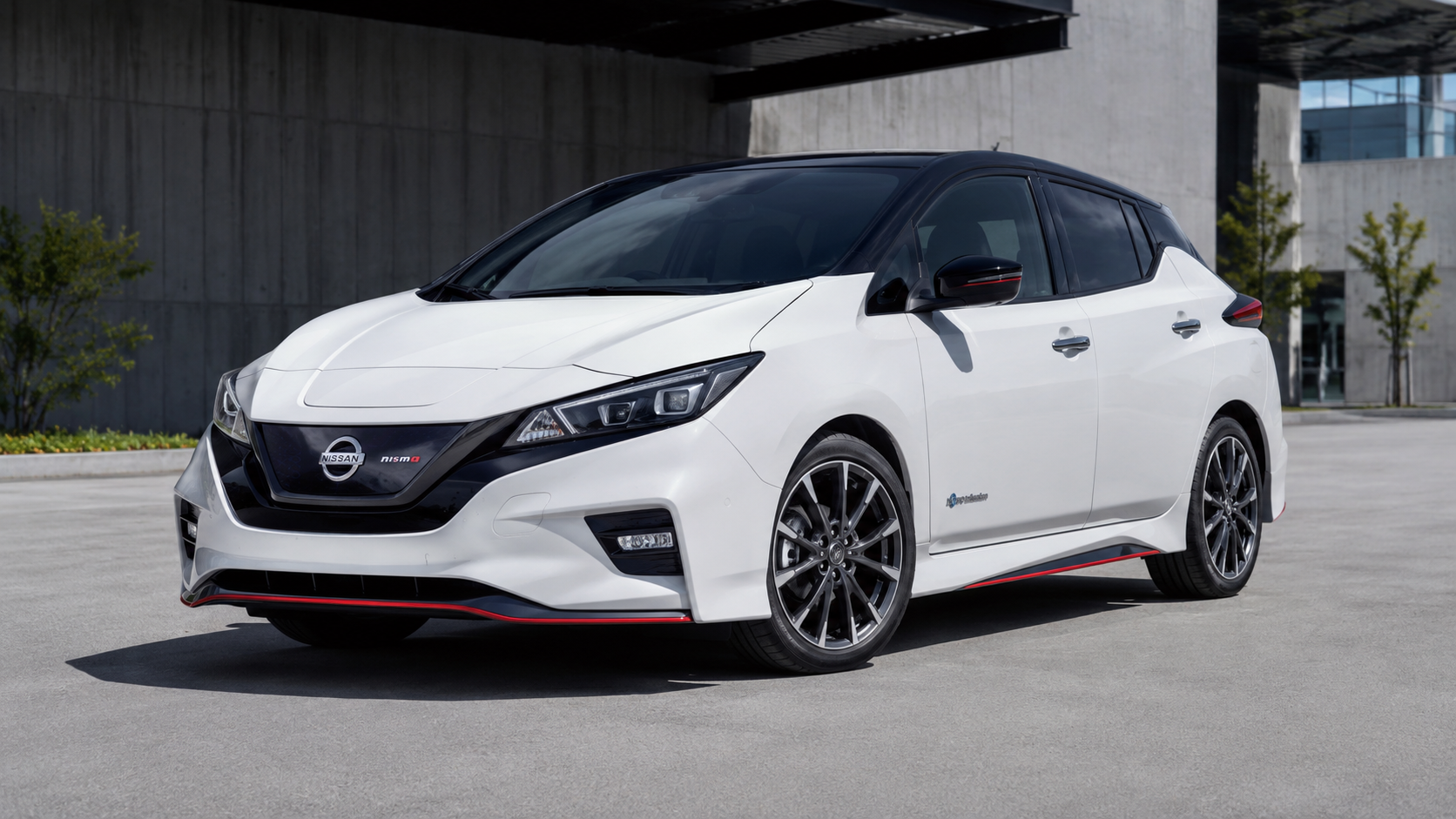
On July 22, 2026, Nissan began sales of the new LEAF NISMO in Japan. The version bearing the badges of Nissan's performance division features a retuned chassis, dedicated drive modes, grippier tires, and a functional aerodynamic body kit. However, the electric motor's peak power remains the same as in the standard third-generation LEAF.
The LEAF NISMO is not an attempt to turn a family electric crossover into a race car. Its main purpose is to sharpen responses, reduce body roll, and give the driver more control over acceleration and deceleration. Nissan achieved this not by increasing power, but by tuning components that were already in place.
Why the LEAF NISMO Did Not Get More Power
The third-generation Nissan LEAF was fully unveiled on June 17, 2025. The model is offered with two liquid-cooled traction batteries rated at 52 and 75 kWh. The smaller powertrain develops 130 kW and 345 N·m, while the larger one produces 160 kW and 355 N·m. The same figures are retained by the NISMO B5 and NISMO B7 versions.
The specifications of the standard powertrains can be compared on the official third-generation Nissan LEAF page. Based on the published data, the NISMO version does not receive a separate, more powerful electric motor or increased torque.
The difference should be felt in how the car puts its available torque onto the road. Engineers changed accelerator-pedal response, drive-mode operation, suspension characteristics, and the level of regenerative braking. As a result, the driver can get a livelier response without any change to the maximum figures in the specification sheet.
Version | Battery | Power | Torque | Price in Japan |
NISMO B5 | 52 kWh | 130 kW | 345 N·m | 6 601 100 yen |
NISMO B7 | 75 kWh | 160 kW | 355 N·m | 6 952 000 yen |
NISMO B7 with RECARO seats | 75 kWh | 160 kW | 355 N·m | 7 227 000 yen |
These are the manufacturer's recommended prices for Japan, including local tax. Registration, insurance, delivery, and optional-equipment costs are not included.
The Suspension Was Changed More Than the Powertrain
For the LEAF NISMO, Nissan strengthened the front and rear springs as well as the anti-roll bars. The suspension uses Kayaba dampers with swing valves—a supplementary valve that helps control small body movements at the start of a turn while preserving acceptable ride comfort over uneven surfaces.
Several front-subframe bushings also received dedicated tuning. Their purpose is to transmit force from the steering mechanism to the wheels more precisely and reduce the delay between steering-wheel movement and the car's response. Nissan says the changes should reduce body roll and oscillation without making the suspension excessively stiff.
A detailed description of the components is available on the official LEAF NISMO chassis-tuning page.
Lighter Wheels, a Wider Rim, and Sportier Tires
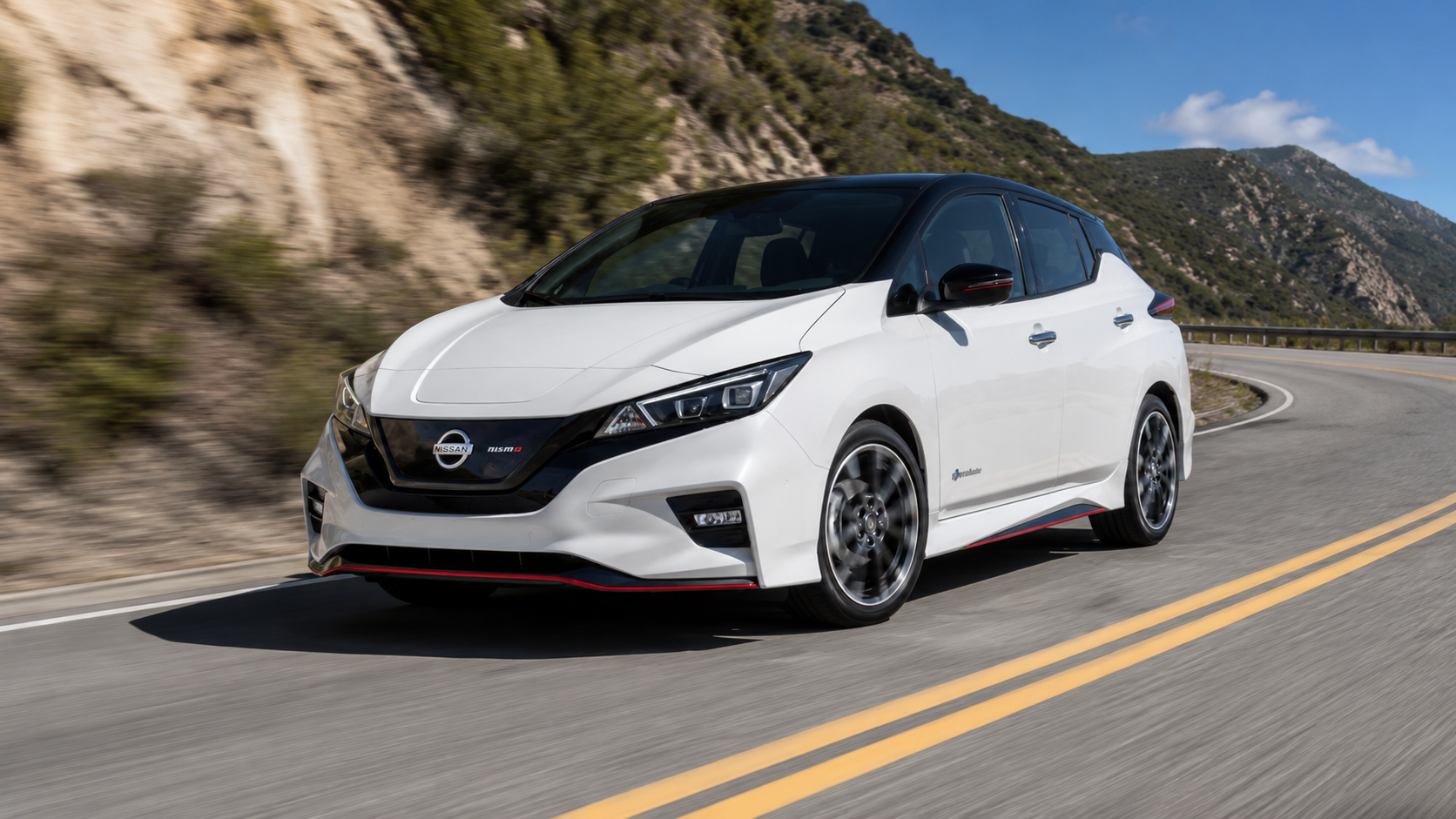
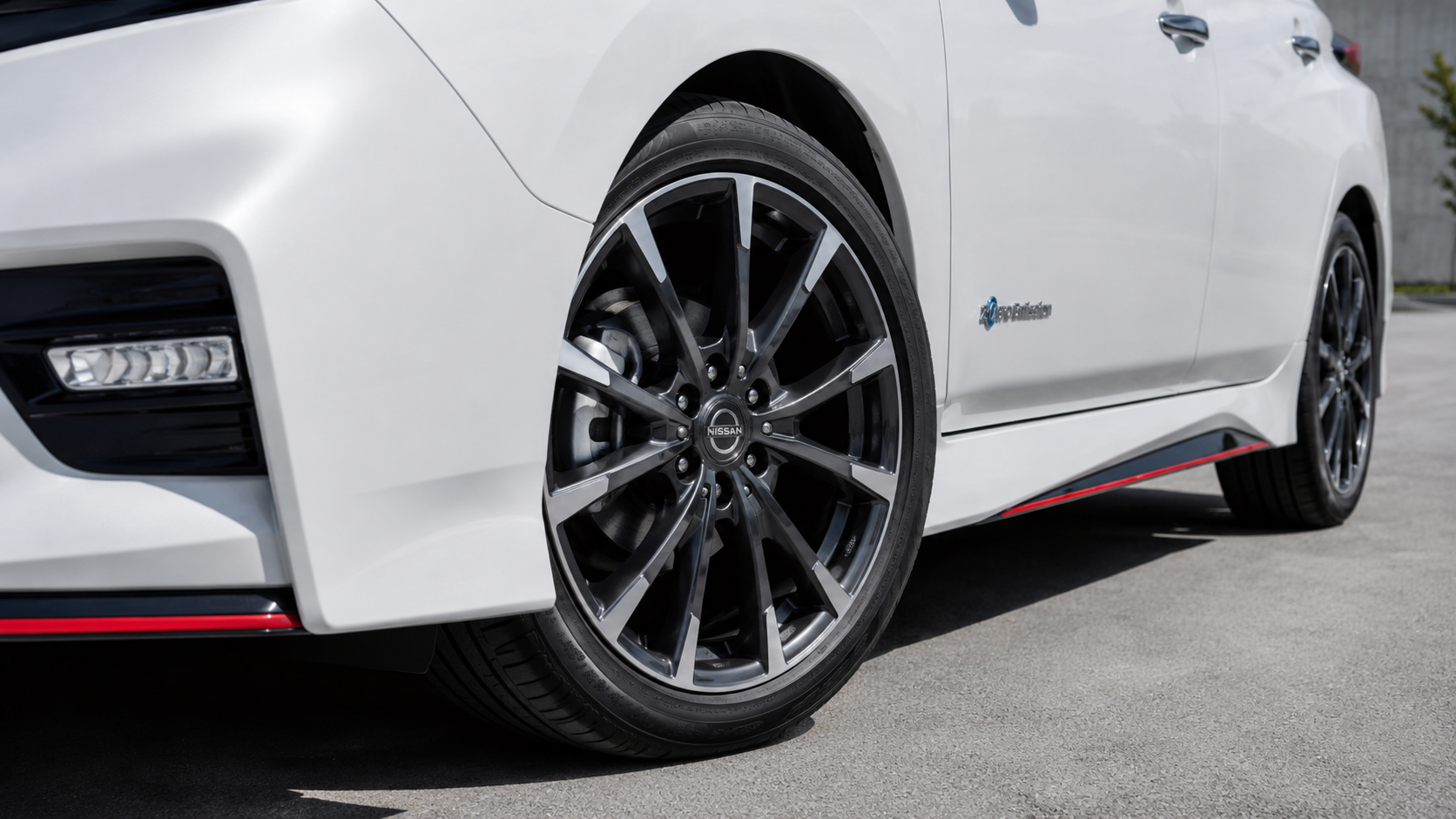
Nissan fitted 19-inch Enkei wheels that are 8 inches wide. The rim is 0.5 inches wider than on the standard car, yet Enkei MAT technology makes each wheel approximately 1 kg lighter than the standard version.
The wheels are fitted with 235/45 ZR19 Michelin Pilot Sport 5 tires. This is a significant change: a more precise suspension cannot deliver the desired result if the tire cannot hold its line. Here, Nissan prioritized grip on dry and wet surfaces while also considering rolling resistance, which matters for an electric vehicle.
Reducing unsprung mass by approximately 4 kg across the complete wheel set can improve suspension and steering response. It does not make the car more powerful, but it helps the chassis react more quickly to the driver's inputs.
What Changed in the Drive Modes and Regenerative Braking
The LEAF NISMO has dedicated settings for NISMO, Standard, and Eco modes. NISMO mode sharpens the initial accelerator response. Standard is aimed at smoother, more sustained acceleration in everyday driving, while Eco retains its focus on energy efficiency but is matched to the chassis's revised character.
One interesting technical detail is the steering-wheel paddles for controlling regenerative braking. The driver can select one of four deceleration levels without taking their hands off the wheel. At level one, the car coasts more freely, while level four allows significantly stronger deceleration when the accelerator is released.
Why Regenerative-Braking Control Matters in a Sporty Version
In an electric vehicle, the driver controls the pace not only with the accelerator and conventional brakes. Strong regeneration can slow the car before a corner, while weaker regeneration preserves momentum on a straight. The ability to change the level quickly makes the car's behavior more predictable on roads with frequent climbs, descents, and sequences of corners.
The Aerodynamic Body Kit Is More Than a Styling Exercise
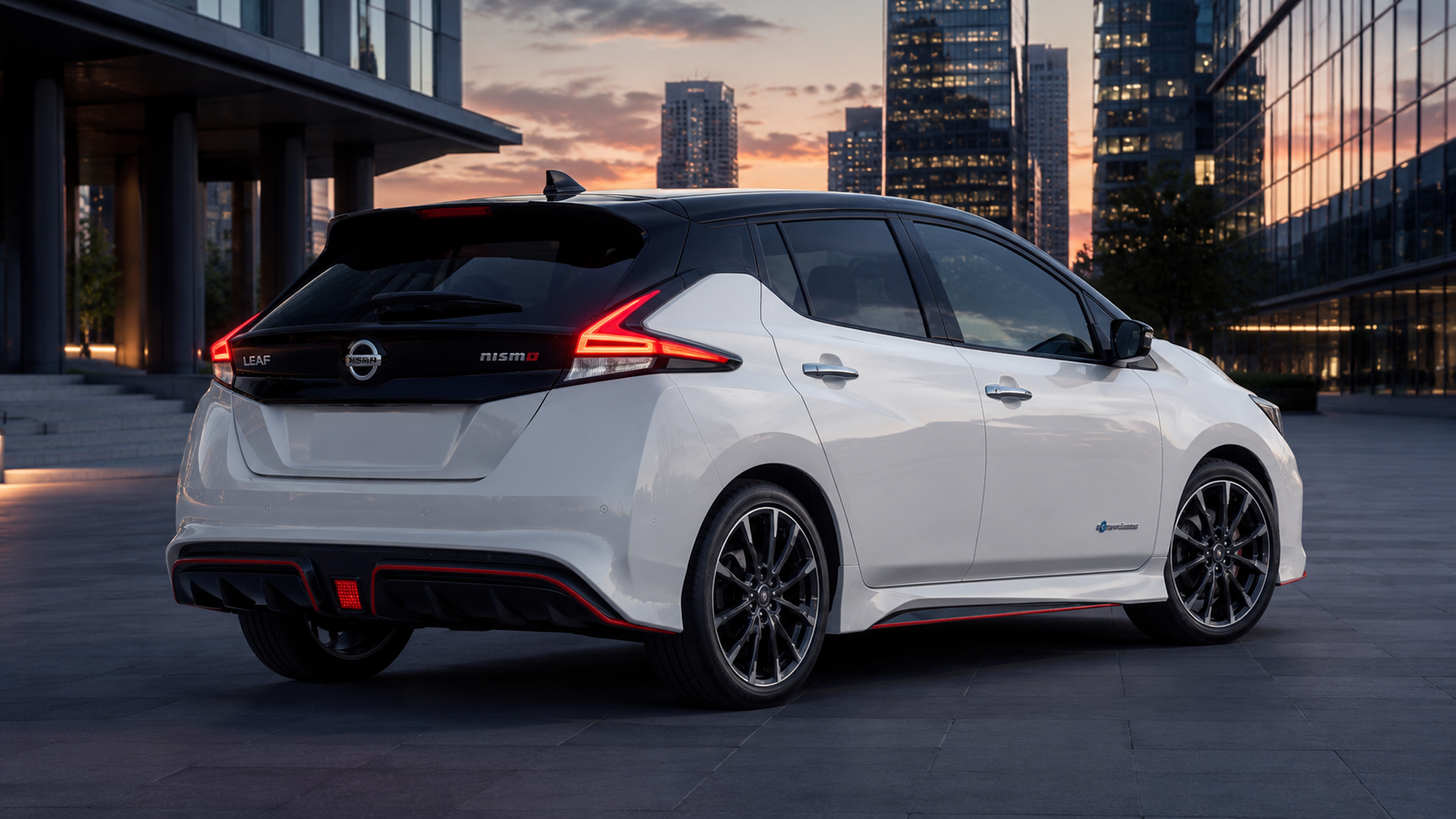
The LEAF NISMO receives new elements at the edges of the front bumper, lower door extensions, a revised rear bumper, and a larger spoiler on the tailgate. Red accents emphasize its place in the NISMO family, but the shape of these components was also developed with airflow in mind.
The front guides direct air toward the sides of the body. The lower extensions help reduce lift, while the diffuser-style rear bumper and spoiler manage the airflow behind the car. According to Nissan, the package creates negative lift without increasing aerodynamic drag.
The official specifications, prices, and model description are available in Nissan's press release dated July 22, 2026.
Interior: Sporty Details Without Giving Up Comfort
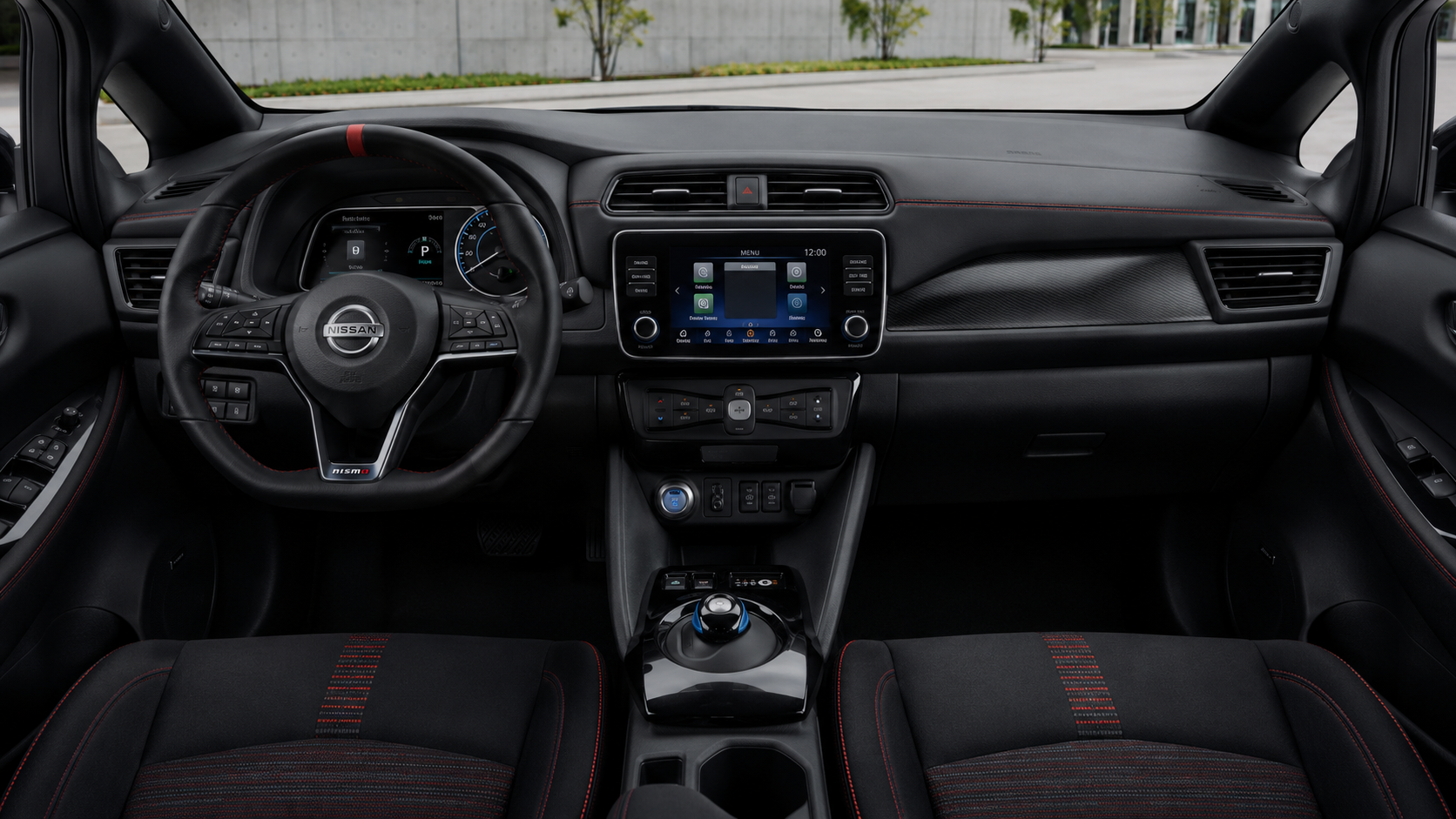
The standard interior is finished in black with red accents. A central red marker has been added to the steering wheel, helping the driver identify the wheel position more quickly. The front seats have more pronounced side bolsters.
The higher-grade version can be equipped with specially tuned RECARO seats trimmed in leather and Alcantara, with power-adjustable backrest angle. These are road-oriented sport seats rather than rigid racing buckets: they should hold the body more securely through corners while remaining comfortable for everyday driving.
Five Facts About the New LEAF NISMO
Sales in Japan began on July 22, 2026, alongside the official publication of detailed specifications.
The peak power of the B5 and B7 versions matches that of the standard LEAF with the corresponding battery.
The Enkei wheels are 0.5 inches wider than the standard wheels but approximately 1 kg lighter each.
The model is the first road-going NISMO to use steering-wheel paddles to control four levels of regenerative braking.
The most expensive Japanese version is distinguished by its RECARO seats, but it does not receive additional power.
What Has Not Been Disclosed Yet
As of July 23, 2026, Nissan had not published a separate 0–100 km/h acceleration figure for the LEAF NISMO or disclosed a certified range specifically for the sporty version. Wider wheels, higher-grip tires, and aerodynamic elements may affect energy consumption, but it is too early to assess the difference without official test results.
The company has also not confirmed LEAF NISMO sales outside Japan. Japanese prices therefore cannot be applied directly to other markets: the final cost will depend on taxes, equipment levels, certification, and Nissan's decision about the model's sales regions.
Questions and Answers
Is the Nissan LEAF NISMO more powerful than the standard LEAF?
No. The B5 develops 130 kW and 345 N·m, while the B7 produces 160 kW and 355 N·m. These figures match the powertrains of the standard LEAF with batteries of the corresponding capacity.
What is the point of the NISMO version, then?
The main changes concern handling and responses: the suspension, subframe bushings, drive modes, and regenerative braking have all been retuned. The car also gets lighter wheels, sportier tires, and a functional aerodynamic package.
Does the LEAF NISMO have all-wheel drive?
No. The versions introduced in Japan use a single electric motor and front-wheel drive.
Can RECARO seats be ordered for the entry-level B5?
In the published Japanese lineup, a separate factory configuration with RECARO seats is available for the NISMO B7.
Will the LEAF NISMO be sold in Europe or the United States?
Nissan has not announced deliveries of the model outside Japan. Until there is official confirmation, a global launch should not be considered planned.
The Main Takeaway
Nissan chose an approach for the LEAF NISMO that is not the most obvious, but is logical. Instead of chasing higher peak power, the company focused on what the driver feels all the time: accelerator response, steering precision, body roll, tire grip, and the character of deceleration.
This is a sporty version defined by its tuning, not by record-breaking figures. How noticeable the difference will be on ordinary roads should become clear after independent testing. However, the list of changes shows that the LEAF NISMO is more than decorative trim and red stripes.