EN
EN

Frequently asked questions
The Audi Q9 is longer and has a longer wheelbase than both. It measures 209.0 inches long, compared with 203.6 inches for the BMW X7 and 205.0 inches for the Mercedes-Benz GLS. However, the Q9 is lower than both rivals, so it should not be described as the largest in every dimension.
Audi quotes 19.3 cubic feet of cargo space behind the third row. Folding the third row increases capacity to 50.0 cubic feet, while folding both the second and third rows provides a maximum of 87.7 cubic feet. Direct comparisons with other vehicles require caution because manufacturers may measure cargo areas differently.
According to Audi of America, the Q9 is expected to reach U.S. dealerships in the fourth quarter of 2026. Its listed base MSRP is $87,700, excluding destination charges, taxes, registration, options and any potential dealer markup.
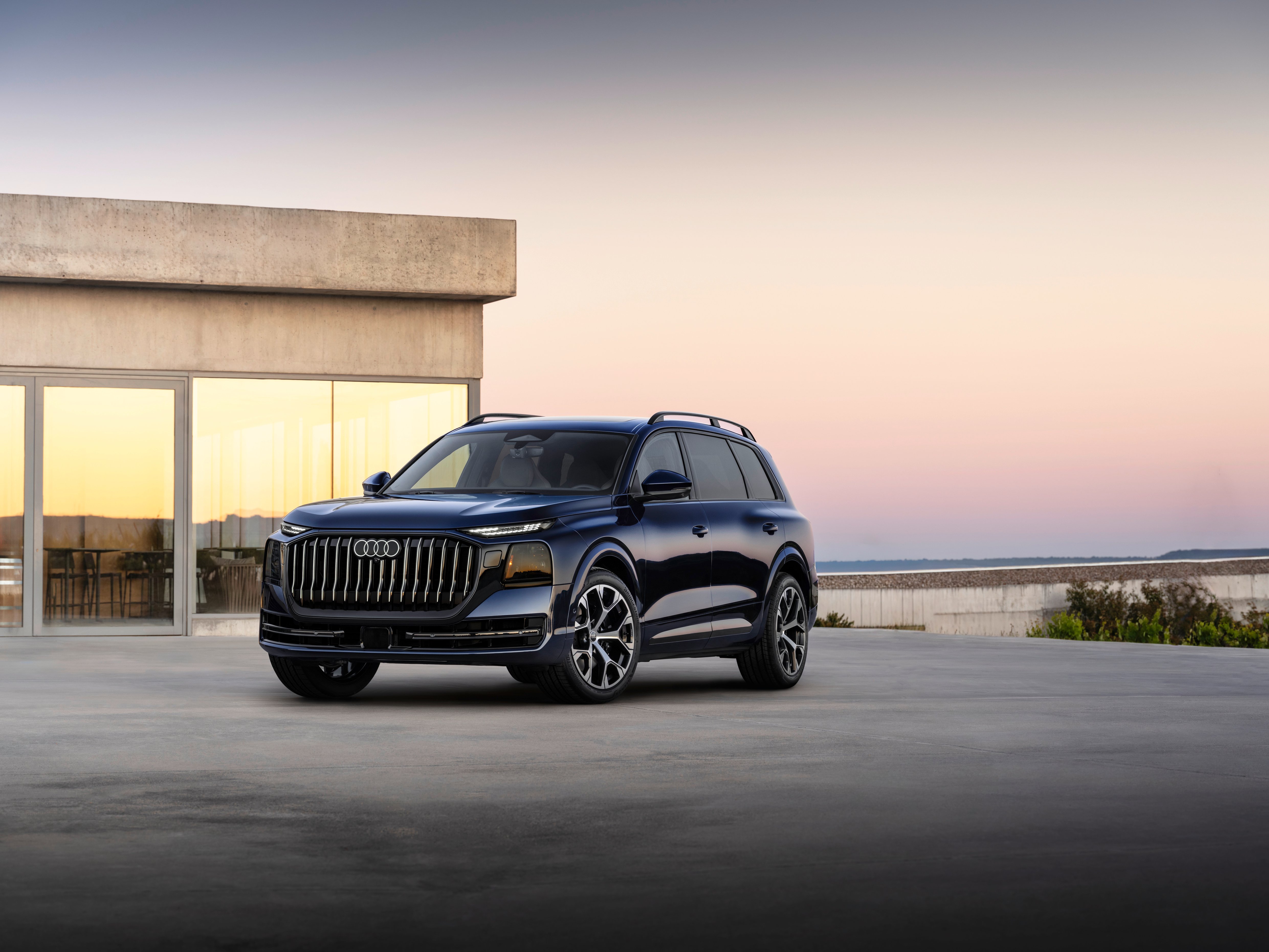
On July 28, 2026, Audi fully unveiled the Q9, its first full-size SUV and new flagship model. It measures 209.0 inches long, or about 5.31 meters. That makes it 5.4 inches, roughly 13.7 centimeters, longer than the BMW X7 and 4.0 inches, about 10.2 centimeters, longer than the Mercedes-Benz GLS.
The claim that the Q9 is larger is accurate when referring to length and wheelbase. The Audi Q9 is not taller than both rivals and should not be called the largest in every dimension. A fair comparison requires matching versions and a consistent measurement method, especially for width and cargo capacity.
Where the Q9 is genuinely larger
length — 209.0 inches versus 203.6 for the BMW X7 and 205.0 for the Mercedes-Benz GLS;
wheelbase — 123.5 inches versus 122.2 and 123.4 inches, respectively;
height — 71.4 inches: the Q9 is lower than both the X7 and GLS here.
From the first cabin preview to the full debut
On May 12, 2026, Audi offered the first detailed look at the Q9 interior. In its official interior announcement, the manufacturer confirmed six- or seven-seat layouts, electrically powered doors and a panoramic roof measuring about 1.5 m². Full dimensions and U.S. specifications were released at the global premiere on July 28, 2026.
According to an official Audi of America release, the Q9 will begin reaching U.S. dealers in the fourth quarter of 2026. The SUV will be built in Bratislava, Slovakia. The specifications below apply to the U.S.-market 2027 model year and were described as preliminary at the time of publication.
Audi Q9, BMW X7 and Mercedes-Benz GLS: dimensions compared
The comparison uses the base U.S. versions: the V6-powered Audi Q9, BMW X7 xDrive40i and Mercedes-Benz GLS 450 4MATIC. X7 figures were checked against the BMW USA technical page, while the GLS specifications come from the official Mercedes-Benz USA page.
Specification | Audi Q9 | BMW X7 xDrive40i | Mercedes-Benz GLS 450 |
|---|---|---|---|
Length | 209.0 inches / about 5.31 m | 203.6 inches / about 5.17 m | 205.0 inches / about 5.21 m |
Wheelbase | 123.5 inches / about 3.14 m | 122.2 inches / about 3.10 m | 123.4 inches / about 3.13 m |
Height | 71.4 inches / about 1.81 m | 72.2 inches / about 1.83 m | 71.8 inches / about 1.82 m |
Seating capacity | 7; optional 6 | 7; optional 6 | 7; optional 6 |
Base-model power | 429 hp | 375 hp | 375 hp |
0–60 mph | 4.9 sec. | 5.6 sec. | 5.8 sec. |
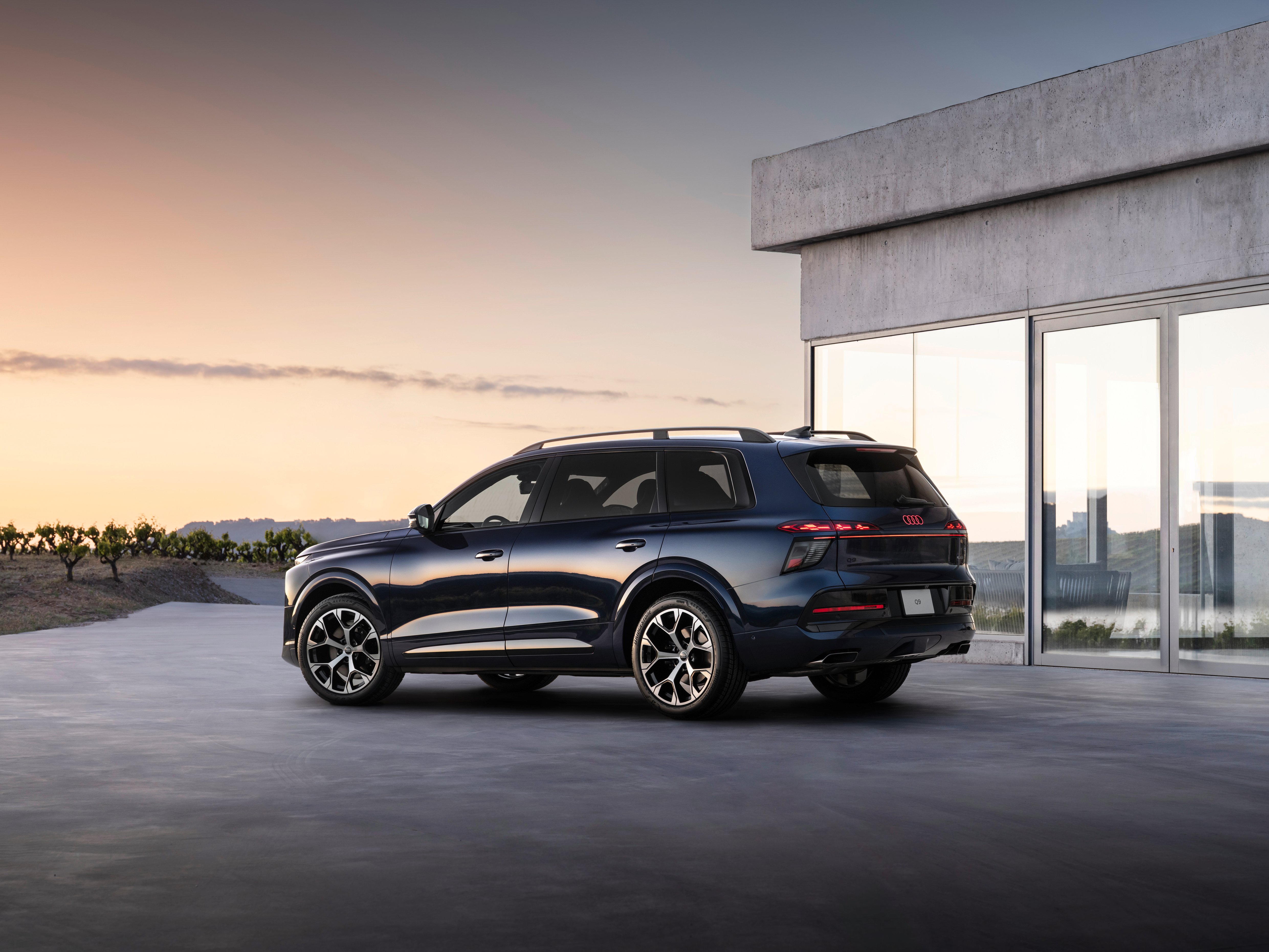
The wheelbase difference between the Q9 and GLS is just 0.1 inches, or about 2.5 millimeters. The BMW trails by more: 1.3 inches, or roughly 3.3 centimeters. Audi's main size advantage is not a record in every dimension, but the combination of the longest body and longest wheelbase among these three German SUVs.
Why width is not included in the table
Audi lists the Q9's width as 86.8 inches, but manufacturers may state width either with or without the mirrors. BMW and Mercedes-Benz publish both figures separately. Without a consistent definition, the row would appear precise while comparing different measurements, so width has been deliberately left out.
What the extra length means for the cabin
The Q9 comes standard with seven seats and a bench in the second row. The optional six-seat cabin replaces it with two separate power-adjustable captain's chairs. The third-row backrests fold independently, and child-seat mounting points are provided in both the second and third rows.
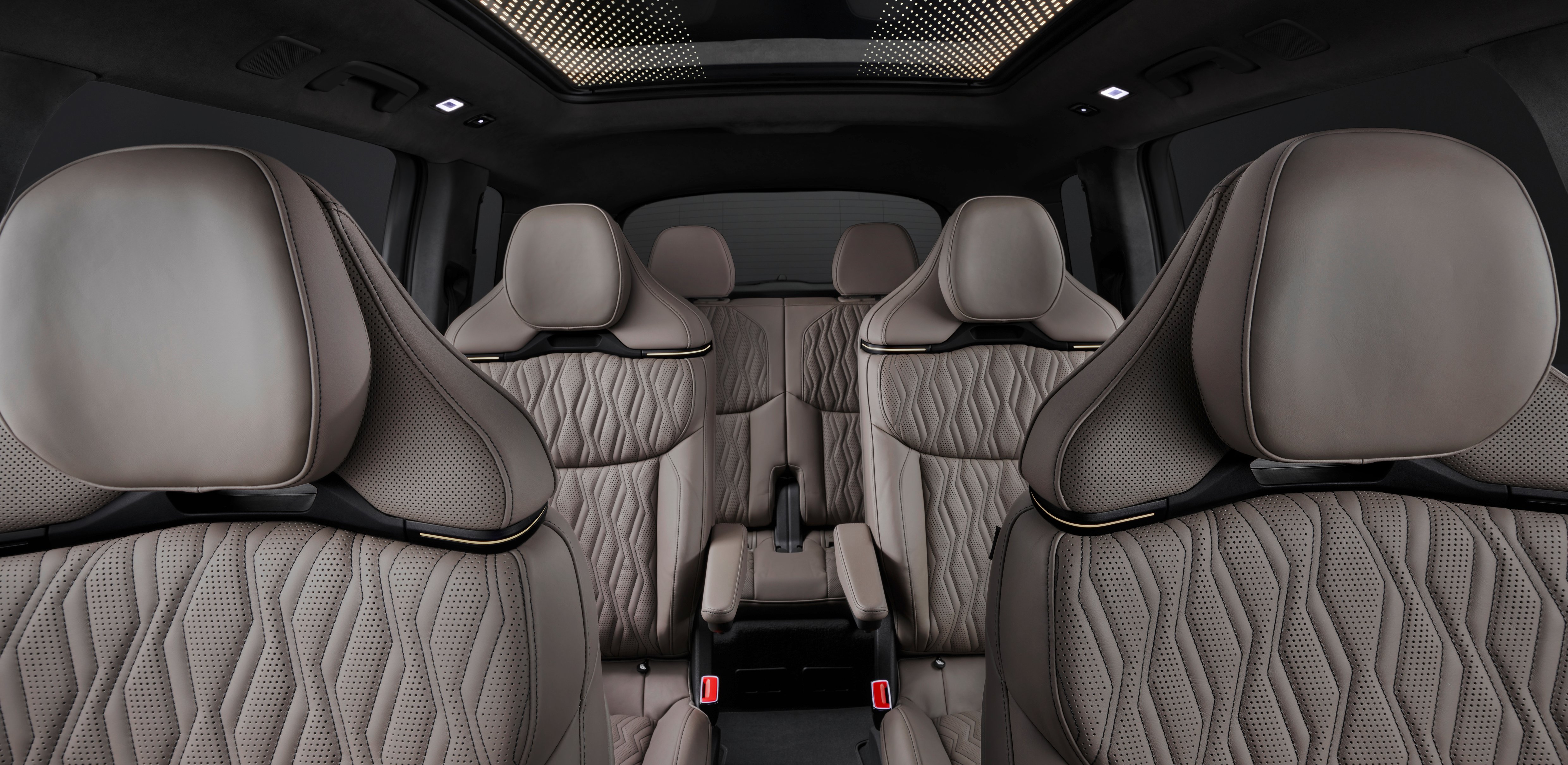
Audi quotes 19.3 cubic feet, or about 547 liters, of cargo space behind the third row. Folding that row increases capacity to 50.0 cubic feet, or about 1416 liters. With the second and third rows folded, maximum capacity reaches 87.7 cubic feet, approximately 2483 liters, behind the front seats.
Directly comparing cargo figures requires caution: manufacturers may measure the space beneath the floor and above the window line differently. The figures are useful for showing the Q9's various configurations, but an independent cargo test would provide a fairer answer to how many identical suitcases fit in each of the three competing models.
Power-operated doors and a panoramic roof are more than styling features
The Q9 is available with doors that open electrically to an angle of up to 90 degrees. Sensors monitor the space beside the vehicle and can stop a door before it reaches an obstacle; the system is also designed to detect approaching cyclists and other road users. The doors can be operated in several ways, including through the key, the infotainment system and the myAudi app.
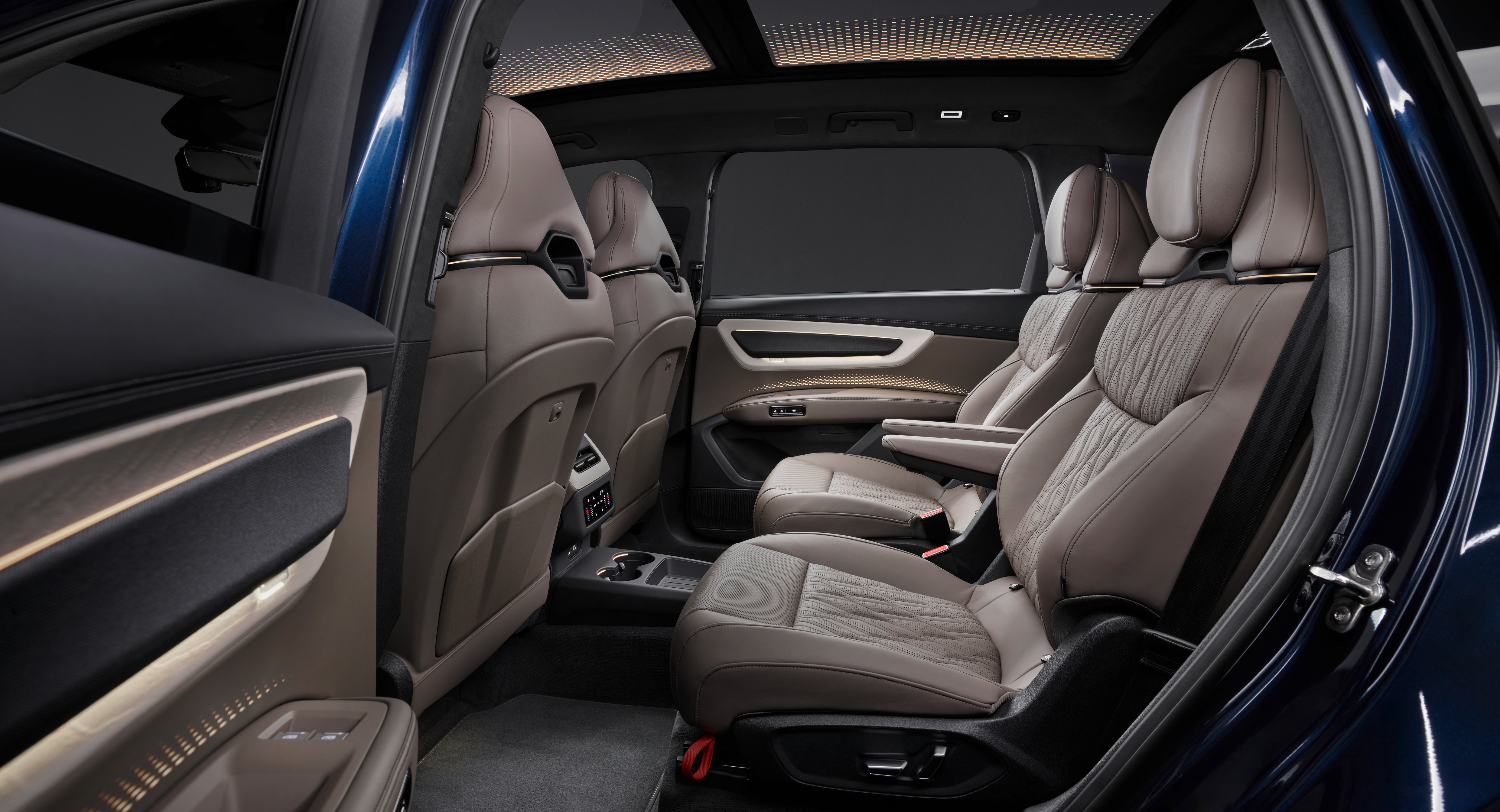
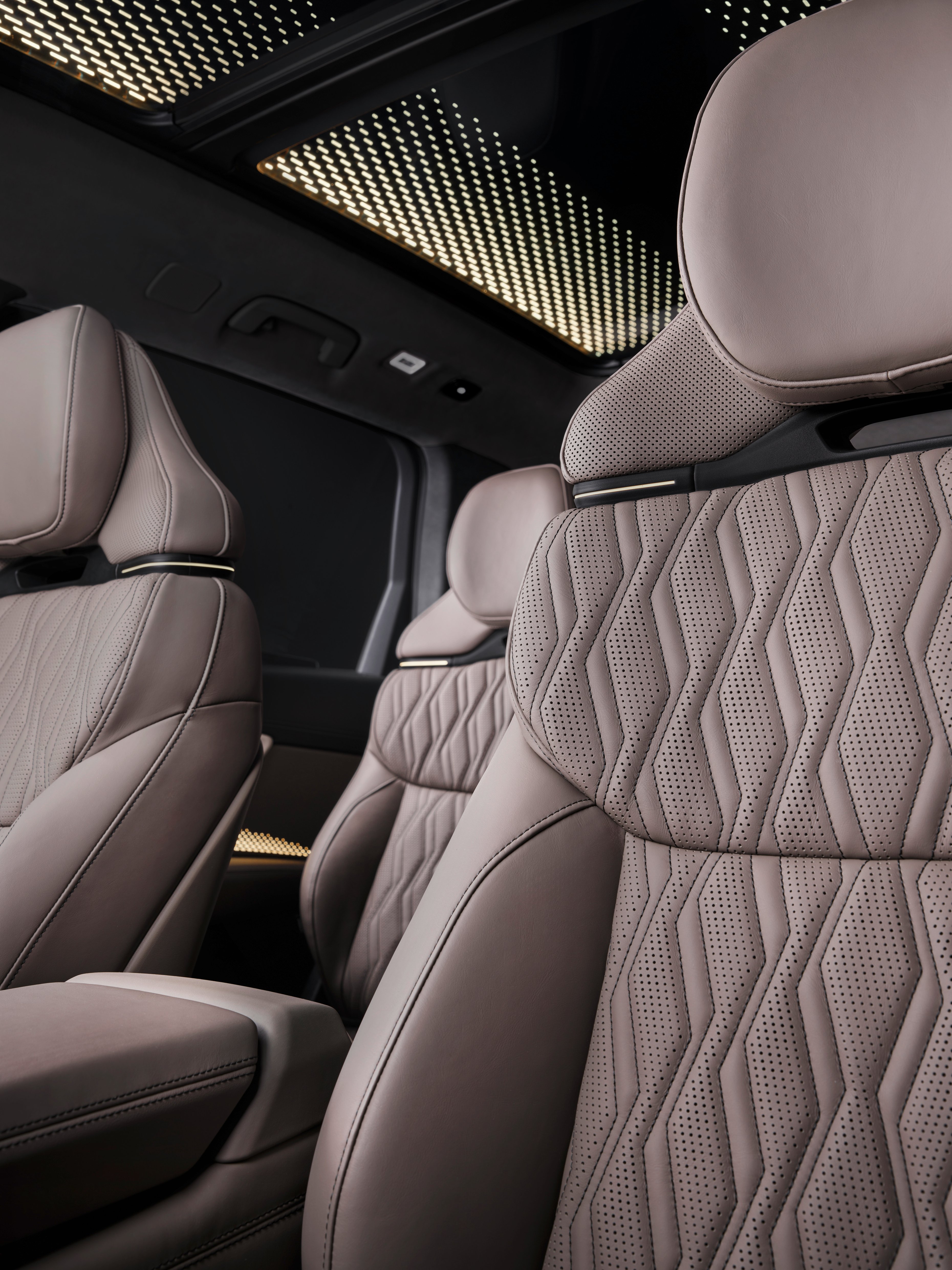
The standard panoramic roof covers about 1.5 m². It uses nine independently controlled segments with variable transparency. When the vehicle is parked, the glass can automatically turn opaque. Audi officially described these features on May 12, 2026, before revealing the exterior design and engine lineup.
Practical question: will the Q9 fit in a typical garage?
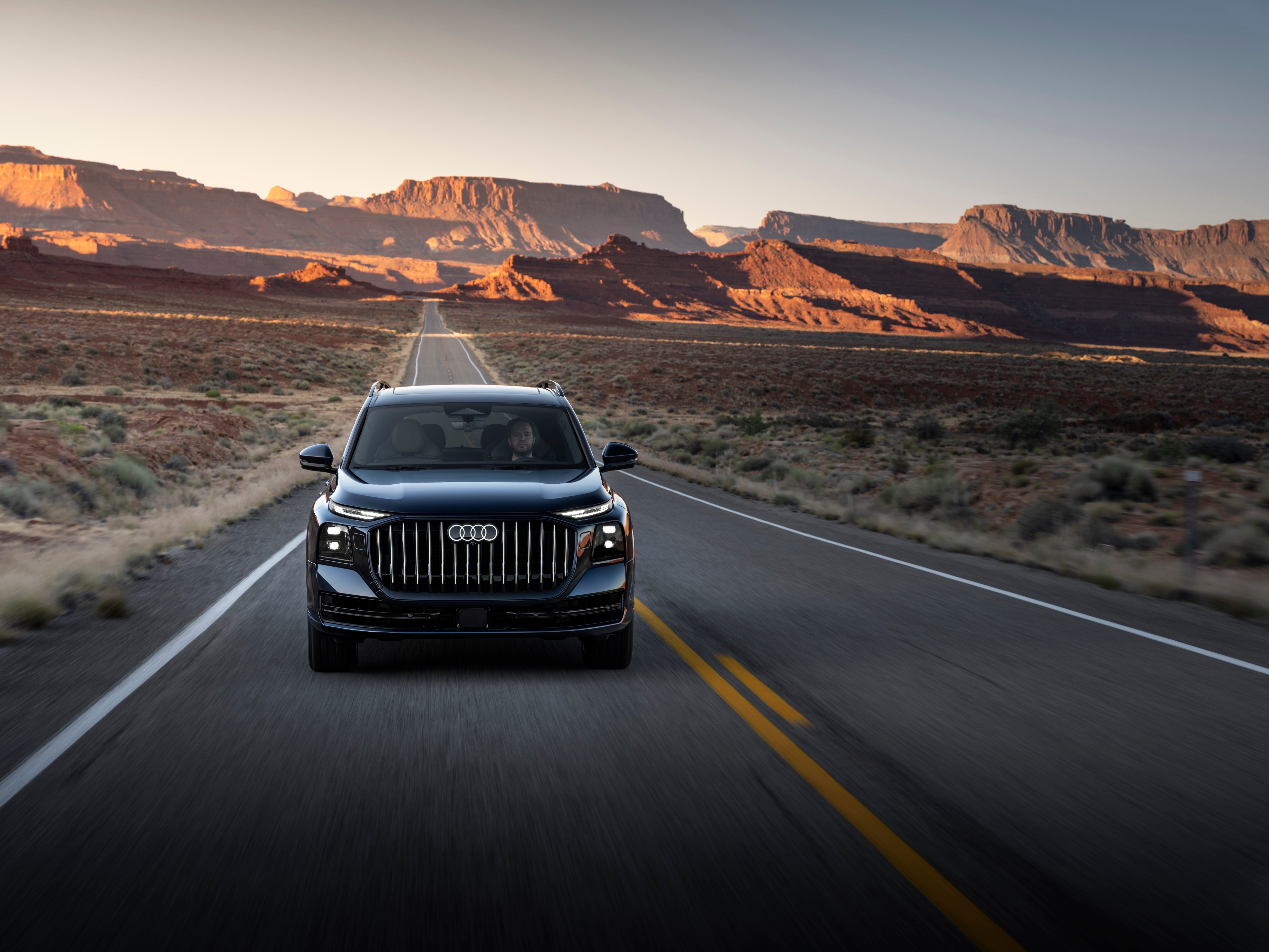
At about 5.31 meters long, the new Audi needs roughly 14 centimeters more space than the X7 and 10 centimeters more than the GLS. Before buying, measure not only the garage itself but also the clearance needed to close the door and walk around the vehicle. Available rear-wheel steering reduces the sense of a long wheelbase during maneuvers, although Audi has not yet published a single turning radius for all U.S. configurations.
The base Q9 is more powerful than the six-cylinder X7 and GLS
The U.S.-market Audi Q9 uses a 2.9-liter twin-turbocharged gasoline V6. It produces 429 hp and 442 lb-ft, or about 599 N·m. An eight-speed Tiptronic transmission and quattro all-wheel drive are standard. The manufacturer claims a 0–60 mph time of 4.9 seconds, equivalent to 0–96 km/h.
For comparison, the inline-six engines in the BMW X7 xDrive40i and Mercedes-Benz GLS 450 each produce 375 hp. Their claimed 0–60 mph times are 5.6 and 5.8 seconds, respectively. These are factory figures, not the results of a single independent test conducted under identical conditions.
Adaptive air suspension is standard on the Q9 and can vary the ride height across a 90 mm range. The Prestige version is listed with rear-wheel steering of up to five degrees. With the appropriate equipment, maximum permitted towing capacity is 7700 pounds, or about 3493 kg.
Audi Q9 pricing and delivery timing
In the United States, the Q9 has a listed base MSRP of $87,700. This amount excludes destination charges, taxes, registration, options and any potential dealer markup. As a result, prices published by automotive media that include delivery charges may be higher without contradicting the official MSRP.
The first vehicles are expected to arrive at U.S. dealerships in the fourth quarter of 2026. The U.S. press release does not provide prices or precise delivery dates for individual European countries, so converting the U.S. price directly for other markets would be misleading.
What still needs to be verified
final certified specifications for U.S.-market vehicles;
the actual usability of all three rows in an independent comparison test;
the engine lineup, trim levels and pricing for each European country;
the availability of power-operated doors and rear-wheel steering on different versions;
fuel economy and performance under identical road conditions.
Bottom line: the Q9 is larger, but the claim needs context
The Audi Q9 is the longest of these three full-size German SUVs, exceeding the BMW X7 by 13.7 centimeters and the Mercedes-Benz GLS by 10.2 centimeters. Its wheelbase is also the longest, although its advantage over the GLS is only a few millimeters.
At the same time, the Q9 is lower than both rivals. It is therefore more accurate to describe it not as unconditionally the largest vehicle in every measurement, but as the longest Audi and the longest member of the German trio comprising the Q9, X7 and GLS. The extra length supports a seven-seat cabin and 547 liters of cargo space behind the third row, but final conclusions about everyday comfort will have to wait for back-to-back testing.