 EN
EN

Frequently asked questions
All three models receive a redesigned front end, Matrix LED headlights, an 11.2-inch central display, Google Gemini integration and a new sensor platform with cameras, radars and 12 ultrasonic sensors. The XC40 and EX40 also receive revised rear lights, a new tailgate and a redesigned rear bumper.
Volvo describes the figures as preliminary: the EX40 offers up to 575 km and the EC40 up to 584 km on the WLTP cycle. Actual range depends on the vehicle version, temperature, weather, terrain, speed and driving style.
Orders opened on September 10, 2026, in selected markets. Production is scheduled to begin in autumn 2026, but the exact date when the first vehicles will leave the assembly line has not been announced.
On September 10, 2026, Volvo unveiled updated versions of the XC40, EX40 and EC40. From the outside, this is a careful modernization of a familiar family, but the main changes are not in the bodywork. The vehicles receive a new sensor platform, more cameras and radars, a larger central display and additional driver-assistance features.
There is no entirely new generation yet. Volvo is extending the life cycle of a model that debuted almost nine years ago while bringing the gasoline-powered crossover and its two electric versions to a more consistent equipment level.
The essentials in 30 seconds
The XC40, EX40 and EC40 receive a shared redesigned front end and Matrix LED headlights.
The infotainment display has grown to 11.2 inches, with Google Gemini integrated into the interface.
The new sensor suite includes a front camera, radars and 12 ultrasonic sensors.
The EX40 is claimed to offer up to 575 km and the EC40 up to 584 km on the preliminary WLTP cycle.
Orders are open only in selected markets; production will begin later in autumn 2026.
From one XC40 to a three-model family
Four dates in the history of Volvo’s 40 Series
On September 21, 2017, Volvo unveiled the XC40 in Milan. It was the brand’s first compact SUV and the first Volvo model built on the CMA modular architecture.
On October 16, 2019, Volvo premiered the XC40 Recharge, its first production electric vehicle. With it, the brand introduced an infotainment system based on Android Automotive and major over-the-air software updates.
On February 20, 2024, the company renamed the XC40 Recharge as the EX40 and the C40 Recharge as the EC40. The XC40 name was retained for the internal-combustion version.
On September 10, 2026, Volvo announced the current comprehensive update for all three models.
How to tell the models apart
The XC40 is a crossover with an internal-combustion engine, the EX40 is its fully electric counterpart, and the EC40 is an electric crossover with a more sharply sloping roofline. Before the 2024 renaming, the latter two models were called the XC40 Recharge and C40 Recharge.
How the XC40, EX40 and EC40 differ after the update
Model | Vehicle type | Exterior changes | Range |
|---|---|---|---|
Volvo XC40 | Compact SUV with an internal-combustion engine; the powertrain range varies by market | New front end, rear lights, tailgate, rear bumper and 18-, 19- or 20-inch wheels | Not applicable |
Volvo EX40 | Fully electric compact SUV | New front end, rear lights, tailgate and rear bumper | Up to 575 km on the preliminary WLTP cycle |
Volvo EC40 | Fully electric crossover with a sloping roof | Updated front end; the distinctive rear design remains | Up to 584 km on the preliminary WLTP cycle |
The range figures come from Volvo’s global announcement of September 10, 2026. The manufacturer describes them as preliminary. Actual range depends on the vehicle version, temperature, weather, terrain, speed and driving style.
The models are now more closely related from the front
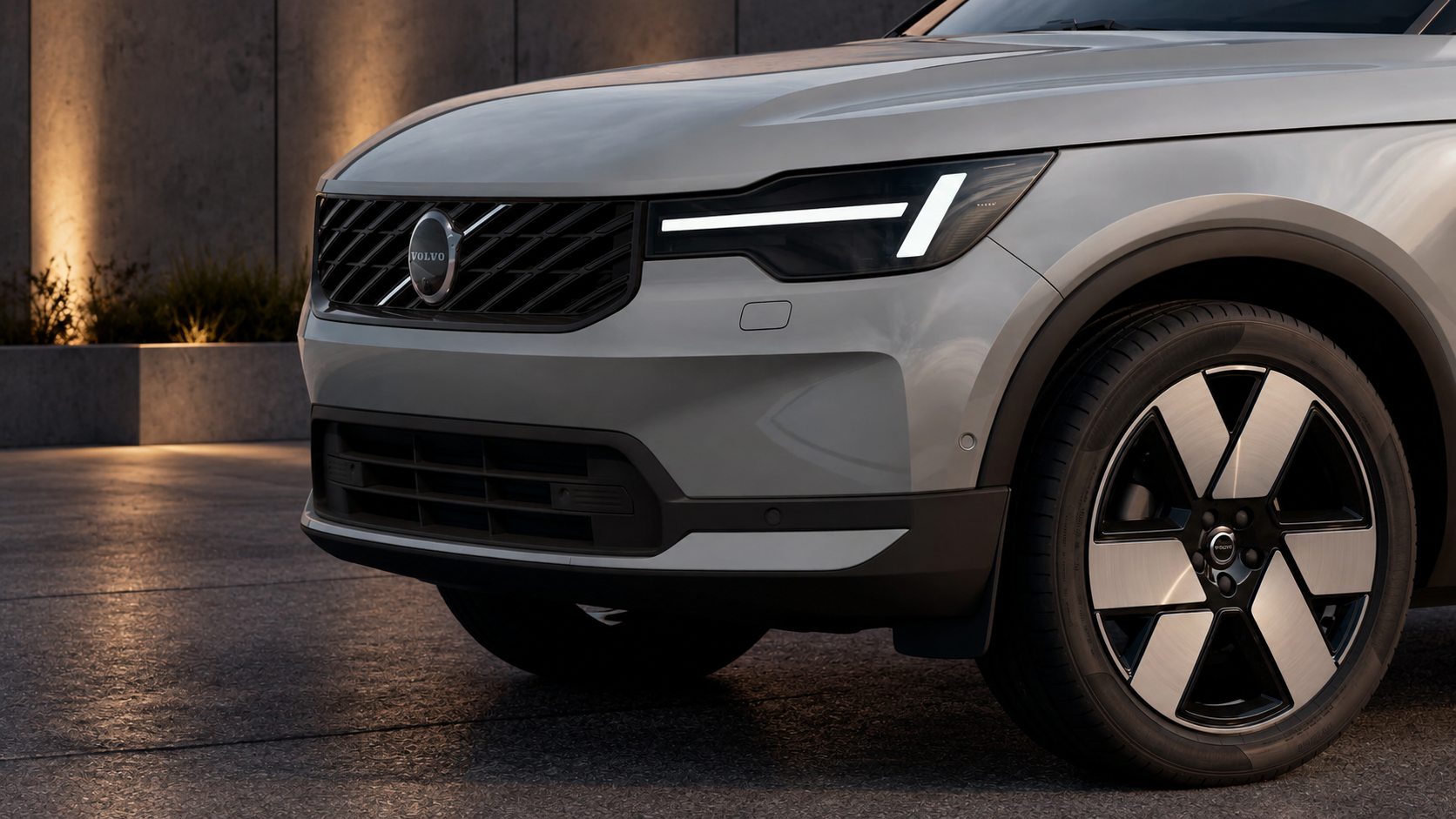
All three vehicles receive new Matrix LED headlights with revised “Thor’s Hammer” graphics. Volvo has also redesigned the grille, front bumper, hood and front fenders. The update is therefore more noticeable when the new vehicle is compared directly with the old one, although the body proportions remain familiar.
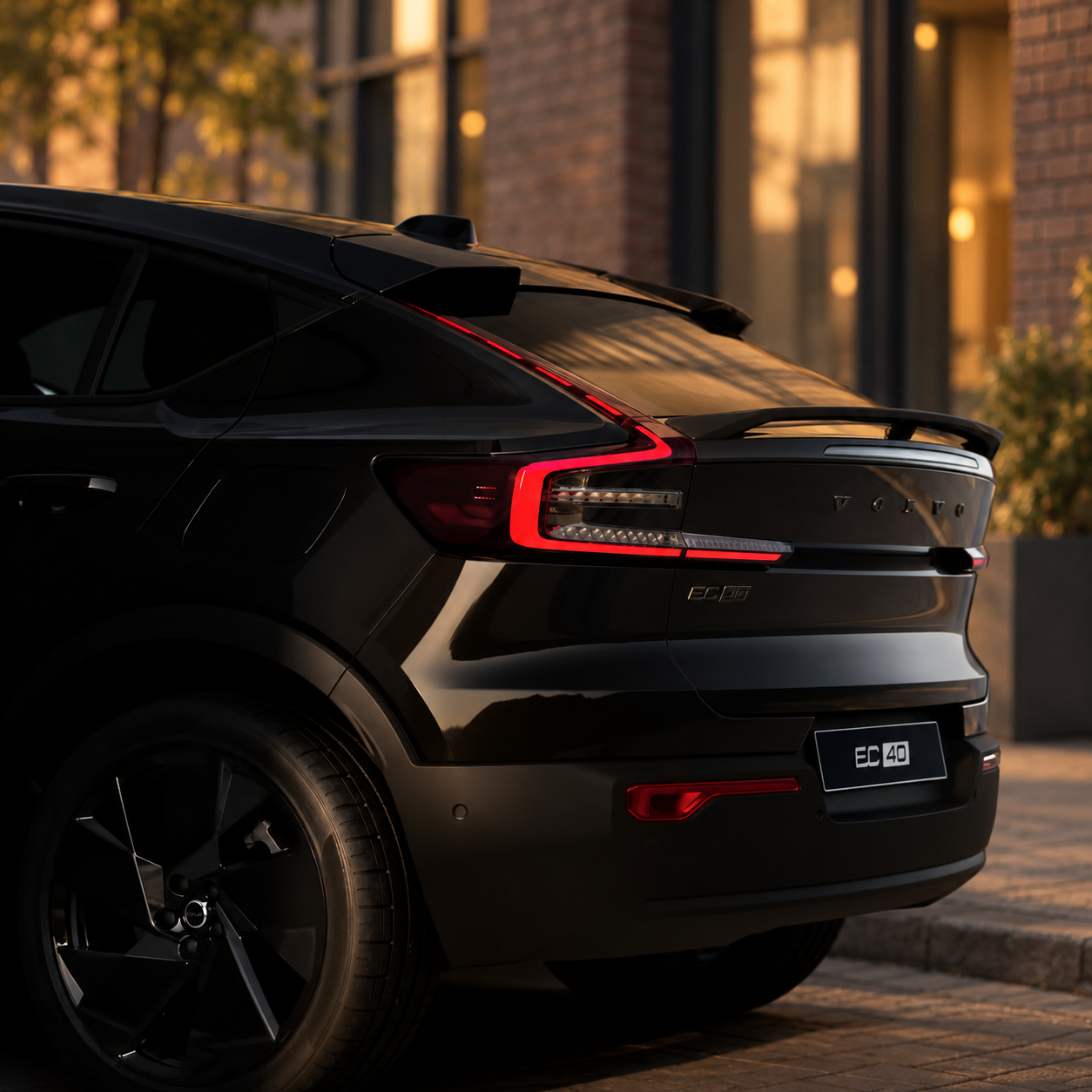
There are more changes at the rear. The XC40 and EX40 receive revised LED lights, a new tailgate and a redesigned bumper. The EC40 retains its own rear treatment: its vertical light sections and sloping roof continue to set it apart from the more practical EX40.
The XC40 gets new diamond-cut wheels measuring 18, 19 and 20 inches. The manufacturer has not yet published a single global list of colors, trims and wheels for all markets.
The screen is larger, but the cabin’s physical features remain
The central display has grown from 9 to 11.2 inches. It uses Volvo’s current interface, which the company says provides faster access to key functions and requires fewer taps for common actions. The center-console air vents have been adapted for the new display, and the wireless phone-charging pad has been updated.
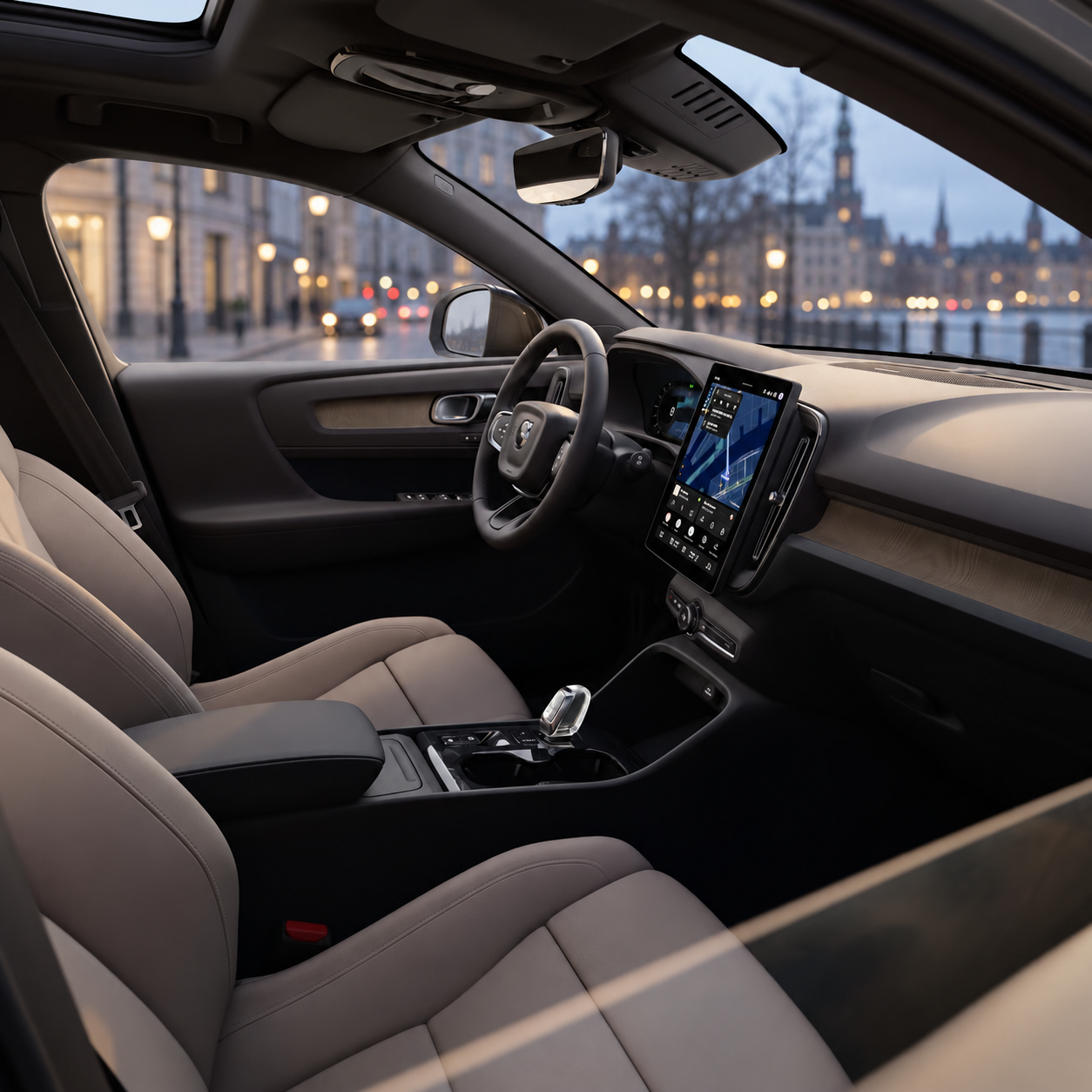
Google Gemini is integrated into the infotainment system. The assistant can be used to plan routes, find stops and handle messages through ordinary voice requests. The availability of Gemini, connected services and individual features depends on the country, user settings and local restrictions.
The XC40 gains new interior options: Arianne Cardamom leather is paired with Brown Ash trim, while Black Ash inserts and aluminum are also available. Ambient lighting has been added to the dashboard and doors. Practical details such as storage areas, the removable basket in the center console and the bag hook remain.
The most substantial update is the camera and radar system
Volvo has installed a new hardware and software platform for its safety systems. It includes front and corner radars, separate rear corner radars, a new front-facing camera, parking cameras and 12 new ultrasonic sensors. Together, these sensors are intended to give the electronic assistants a more complete picture of the area around the vehicle.
The door-opening warning system monitors vehicles and cyclists approaching from the side. If a passenger is about to open a door in front of a moving object, the vehicle issues a warning. This feature is particularly useful in urban parking areas and on streets with bike lanes.
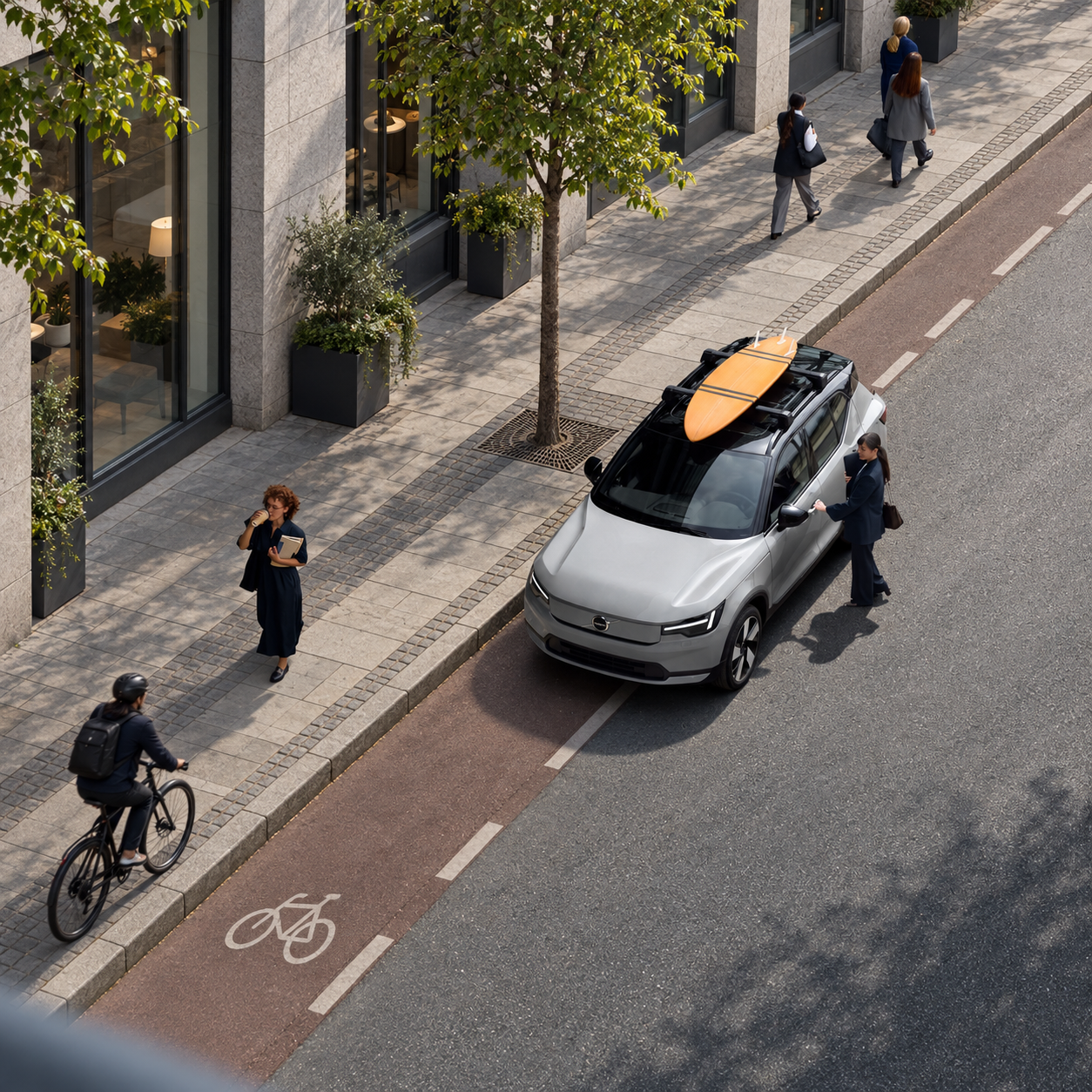
Optional Pilot Assist can now help with lane changes and is designed to keep the vehicle on its path more smoothly. The surround-view camera has gained a 3D mode, allowing the driver to change the viewing angle on the screen when parking or maneuvering at low speed.
What drivers will actually notice every day
larger buttons and fewer menu steps on the 11.2-inch screen;
a view of the vehicle from different angles in 3D mode;
a warning before opening the door next to a cyclist or vehicle;
lane-change assistance on versions equipped with optional Pilot Assist;
software feature updates without a service visit through OTA.
The new driver aids do not make the vehicle fully autonomous. Volvo describes them as driver-support systems, and equipment availability depends on the market and trim level.
Has the electric-vehicle technology changed?
Volvo’s release does not mention new batteries, electric motors or a fundamentally different architecture for the EX40 and EC40. Therefore, the claimed 575 and 584 km cannot be attributed to new battery technology without further confirmation. For now, the manufacturer has described the design, electronics and equipment in detail, but has not published a complete global set of technical specifications.
The same applies to the XC40: powertrains and drivetrain configurations may vary by country. For example, specifications for one market cannot automatically be applied to European, US or Moldovan versions.
When will the updated Volvos go on sale?
Orders for the XC40, EX40 and EC40, including the Black Edition, opened on September 10, 2026, in selected markets. Production is scheduled to begin in autumn 2026, but the exact date when the first vehicles will leave the assembly line has not been announced.
There is no single global price list. Prices, trim levels, powertrains and delivery times should be checked for the relevant country once its local configurator is published. This is particularly important for the EX40 and EC40, as the availability of electric versions also varies by region.
The 2026 update does not change the family’s concept, but it addresses its most noticeable age-related gap in electronics. Almost nine years after the XC40 debuted, the models have gained a modern interface and a more advanced sensor suite while retaining their familiar layout and the split between gasoline-powered and electric versions.