 EN
EN

Frequently asked questions
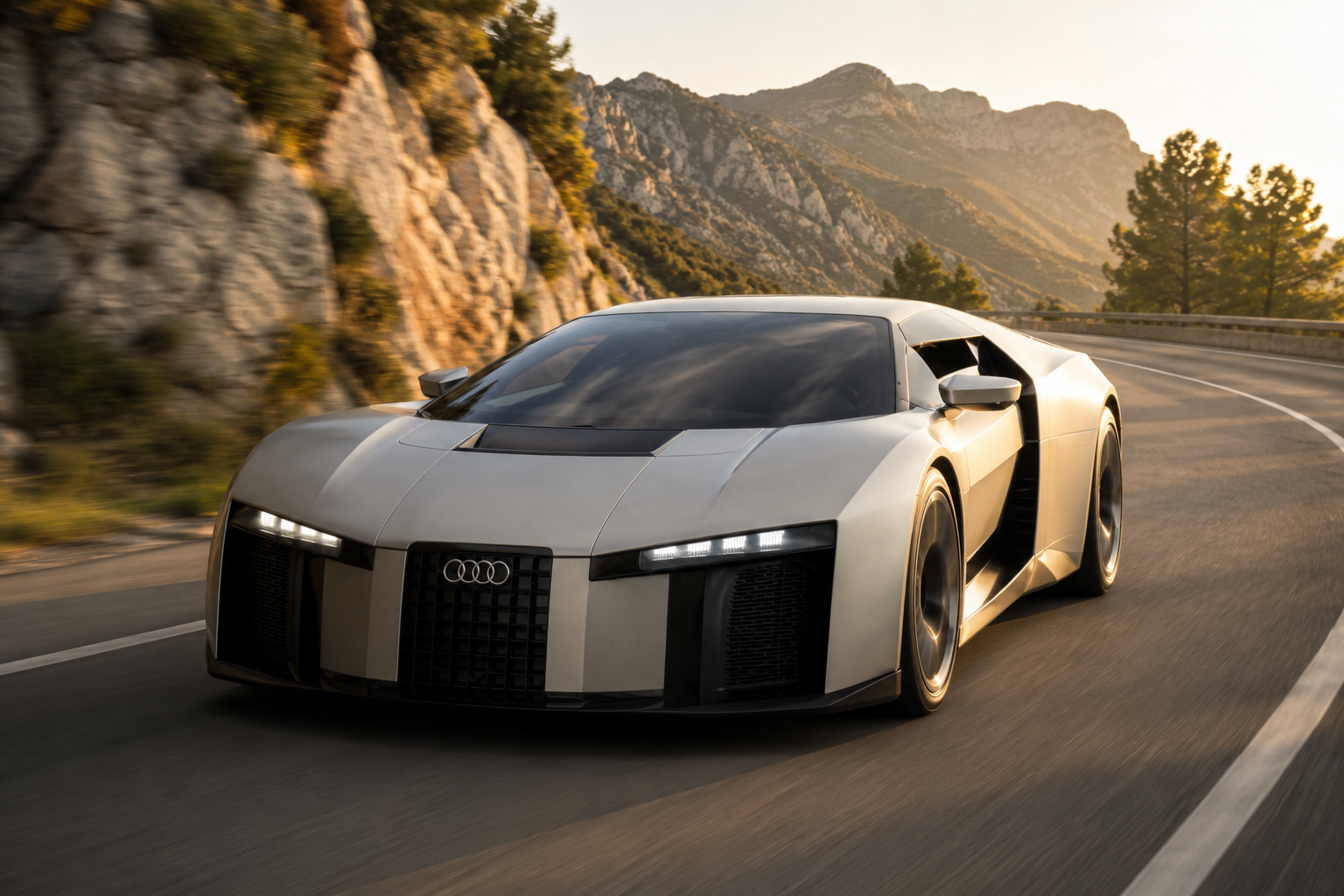
The Audi Nuvolari uses a 4.0-liter twin-turbo V8 with three electric motors, producing about 987 hp or 1,001 PS. The article states that it can accelerate from 0 to 100 km/h in 2.6 seconds and reach more than 350 km/h.
Audi will build 499 units of the Nuvolari in a limited series.
First deliveries are expected in the first half of 2027. In Germany, the listed starting price is around 600,000 euros.
For a long time, Audi was known for building cars in which technology felt like character rather than a cold set of numbers. Quattro, aluminum construction, the R8, and Auto Union’s racing heritage all shaped the image of a brand that does not shout the loudest, but can go very fast and with real confidence.
After the Audi R8 was discontinued, fans of the brand were left with a sense of emptiness. Yes, the lineup still included powerful RS models, fast electric cars, and sophisticated premium vehicles. But there was no true flagship supercar — a car at the top of the range that showed what Audi can do when engineers are given maximum freedom.
Now that role is being taken over by Audi Nuvolari.
This is not just a new sports car. It is a symbolic return of Audi to the supercar world. And not a cautious return, but a loud one: a hybrid powertrain, a V8 engine, three electric motors, nearly 1,000 hp, a top speed above 350 km/h, and a limited run of just 499 cars.
Why does the name Nuvolari matter?
The name Nuvolari was chosen for a reason. It refers to Tazio Nuvolari, the legendary Italian racer who competed for Auto Union in the 1930s, the historical predecessor of Audi.
For the brand, that is an important emotional link. Nuvolari is not just a beautiful name for a new supercar. It is an attempt to connect past and future: the era of silver racing cars, the courage of old-school drivers, and modern hybrid technology.
Not the first appearance of the Nuvolari name
Audi has used this name before. In 2003, the Nuvolari quattro concept was unveiled — a powerful V10 coupe that, in many ways, anticipated the brand’s future design philosophy. But back then, it was only a concept.
Now Nuvolari is becoming a production car, even if in extremely limited numbers.
The most powerful and fastest Audi in history
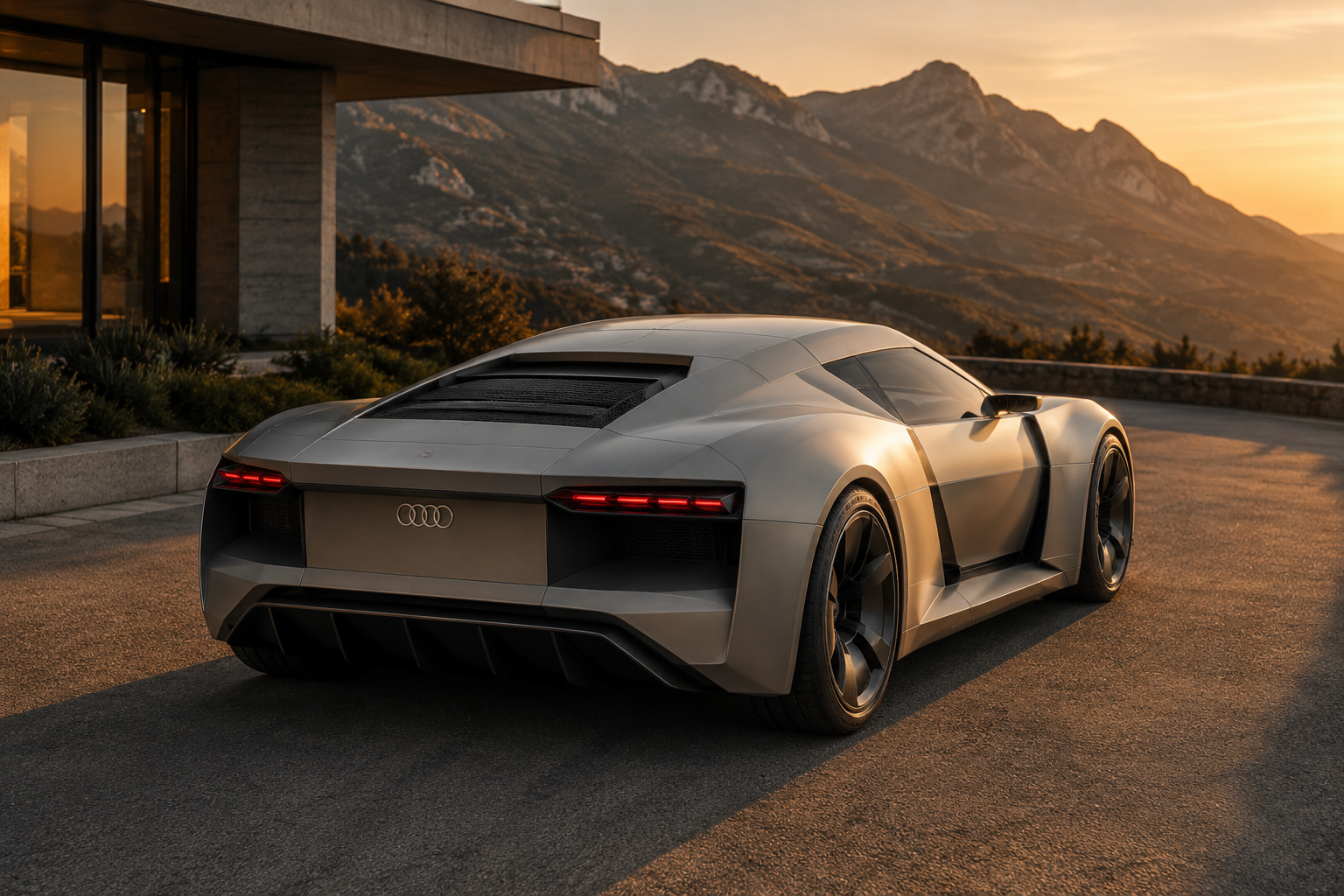
The new Audi Nuvolari features a hybrid powertrain built around a 4.0-liter twin-turbo V8. The internal combustion engine works together with three electric motors, and the system’s combined output is about 987 hp, or 1,001 PS.
For Audi, that is a historic milestone. Nuvolari becomes the brand’s most powerful road car.
Key specifications
powertrain: 4.0-liter twin-turbo V8 + 3 electric motors;
total output: about 987 hp / 1,001 PS;
0–100 km/h: 2.6 seconds;
0–200 km/h: about 6.8 seconds;
top speed: more than 350 km/h;
hybrid battery: 7.3 kWh;
production: 499 units.
These numbers sound almost unreal for Audi, especially if you remember how restrained the brand has been in recent years. That is exactly why Nuvolari matters so much. It shows that Audi wants to surprise again.
Hybrid technology instead of simple nostalgia
It would have been easy to make a “new R8” and rely only on fans’ memories. But Audi chose a different path. Nuvolari does not try to copy the past. It takes the idea of a mid-engine supercar and brings it into a new era.
There is a gasoline V8 here, but it does not work alone. Three electric motors help the powertrain respond faster, distribute torque more effectively, and create the sensation of instant acceleration.
Why is this more than just an add-on to the engine?
In a hybrid supercar, electric motors are not only about efficiency. They help cover the areas where an internal combustion engine is not always ideal: launching from a standstill, instant response, torque distribution between axles, and stability on the way out of corners.
In the Nuvolari, the electric side does not make the car softer or duller. On the contrary, it strengthens its character.
Connected to Lamborghini, but with Audi character
Technically, Nuvolari is linked to the Lamborghini Temerario. The cars share the same underlying powertrain architecture, but Audi emphasizes that Nuvolari has its own tuning, its own character, and its own philosophy.
That is an important point. The R8 was also related to Lamborghini, yet it was still seen as a distinct car. It was more restrained, more precise, and less theatrical. Nuvolari seems to continue that tradition.
Audi does not need to shout
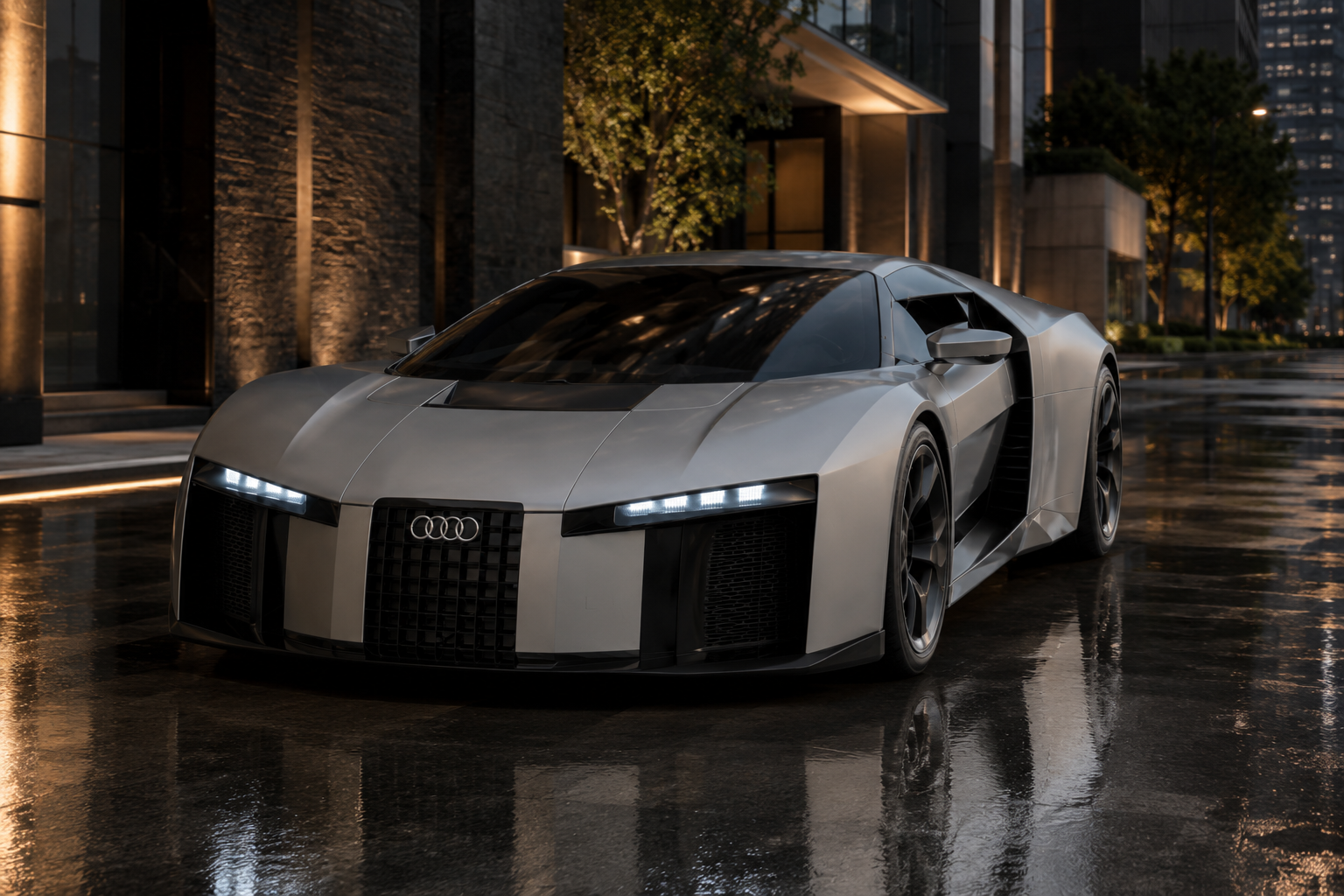
An Italian supercar is usually built around emotion, drama, and a loud personality. Audi takes a different approach. Nuvolari looks more restrained, more disciplined, almost architectural. It is not trying to be the most aggressive car in the parking lot. It wants to be the most composed.
There is a special strength in that. Sometimes real status does not need extra noise.
A new Audi design language
Nuvolari matters not only as a supercar. It shows a new design chapter for Audi. The car’s exterior continues the ideas the brand has been showing in concepts in recent years: cleaner surfaces, sharper proportions, less decorative noise, and more architectural strength.
Purity of form
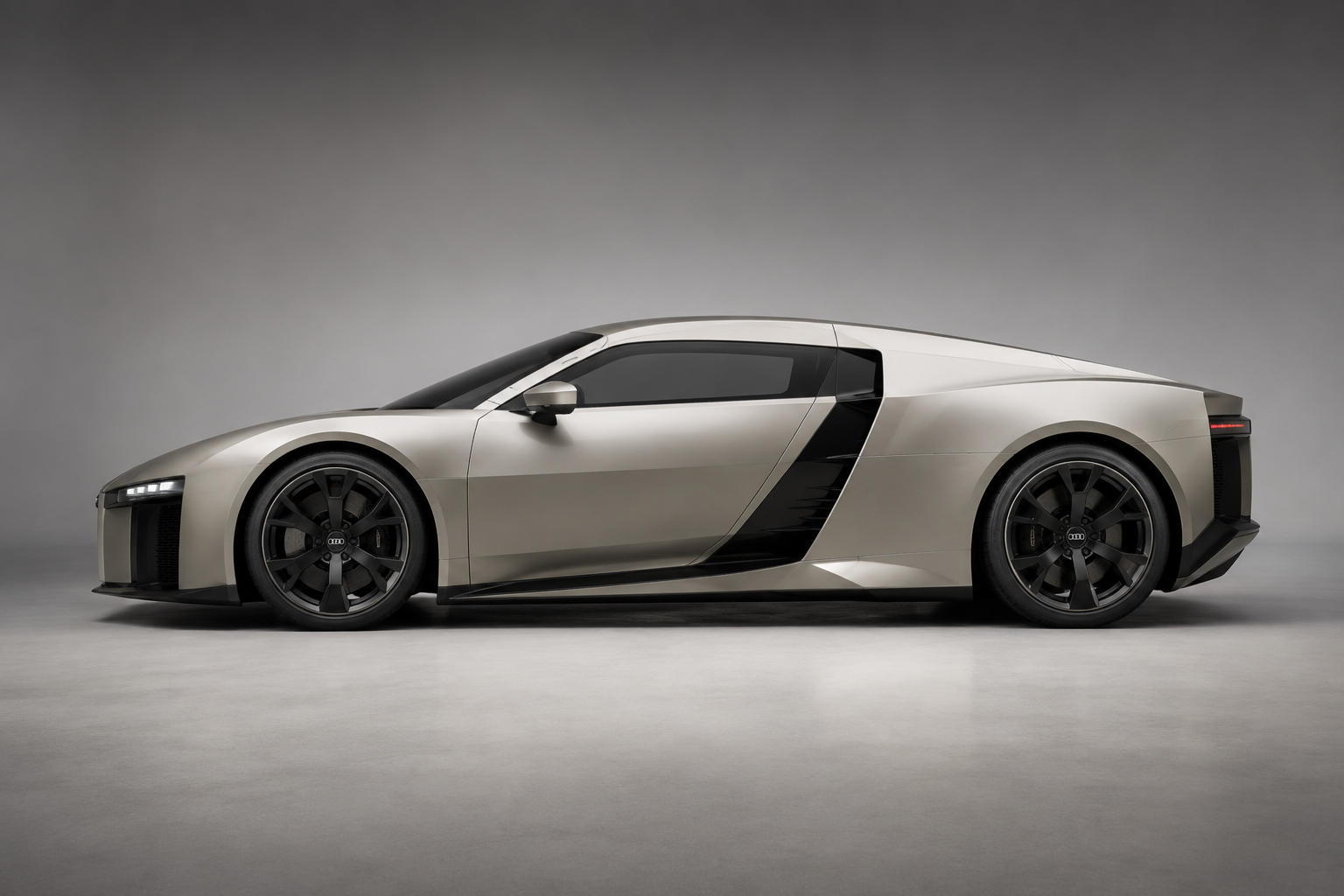
There is no sense of random lines in the Nuvolari. The body looks like a single, cohesive object: low, wide, tightly drawn, with pronounced air intakes and active aerodynamics.
This is a car that does not try to look “space-age” just for effect. It looks expensive, technical, and confident.
Active aerodynamics
Among the key technical solutions is an adaptive rear wing with several operating modes. It can change its configuration depending on the selected driving mode and road conditions.
There is also a system similar to Formula 1’s DRS. It helps reduce drag and increase top speed when needed.
Formula 1 as a source of inspiration
Audi is preparing for a new chapter in motorsport, and Nuvolari is clearly shaped with racing technology in mind. That is visible in the aerodynamics, brakes, materials, and the car’s overall philosophy.
Brakes and chassis
Nuvolari gets a powerful braking system with carbon-ceramic hardware, 10-piston front calipers, and large discs. For a car with this much power, that is not a luxury — it is a necessity.
A supercar must not only accelerate quickly, it must also stop with confidence. Especially when it can travel at more than 350 km/h.
Lightweight construction
The car is based on an aluminum space frame, and the body panels are largely made of carbon fiber. This helps keep mass under control and gives the engineers more freedom when shaping the body.
The cabin: less screen noise, more quality
One of the most interesting details is the approach to the interior. In recent years, many cars have started to look like a collection of huge screens. Audi, judging by the Nuvolari, wants to bring back the feeling of real quality.
The cockpit of the new supercar is built around the driver. There are screens, but they are not supposed to dominate everything else. Physical controls, materials, seating position, and tactile feel are once again taking center stage.
Why does that matter?
For a supercar, the interior is not just where the driver sits. It is a space for concentration. Everything should help with driving, not distract from it.
Audi is trying to bring back that German clarity, where every detail has a purpose instead of simply decorating the cabin.
Limited run: just 499 cars
Audi will build the Nuvolari in a limited series of 499 units. That makes the model not only a technical flagship, but also a collector’s piece.
That production figure clearly sets the Nuvolari apart from the R8, which was built in much larger numbers over the years. The new supercar is not being created as a mass-market sports car for wealthy enthusiasts, but as a rare peak in the model lineup.
Why does the limit matter?
A limited run allows Audi to use more expensive and complex technologies that would be difficult to apply in large-scale production. It also adds to the car’s status.
Nuvolari becomes not just a car, but an event.
Deliveries and price
The first Audi Nuvolari deliveries are expected in the first half of 2027. In Germany, the starting price is listed at around 600,000 euros.
That is a huge amount, but in the world of limited-run hybrid supercars it makes sense. Buyers of the Nuvolari will not be paying only for power. They will be paying for rarity, technology, history, and the status of Audi’s first major supercar statement after the R8.
Why is Nuvolari important for Audi itself?
In recent years, Audi has often been criticized for losing some of its former boldness. The brand remained strong, but at times it felt as if it lacked an emotional flagship — a car that makes people talk about the brand with admiration.
Nuvolari does exactly that.
This is not just a replacement for the R8
Nuvolari is not called the R8, and it does not try to bring it back directly. But in meaning, it fills the same place: the pinnacle, the dream car, the technology showcase, the model that points the way forward.
For Audi, it is a way of saying the brand has not forgotten how to make cars that raise your pulse.
The emotional side of the new supercar
The most important thing about Nuvolari is not only 987 hp and not only 2.6 seconds to 100 km/h. The real emotion is something else.
Audi is reclaiming its right to dream. Not just building practical crossovers, executive sedans, and electric cars, but creating a car that exists not because it is necessary, but because it inspires.
In a world where the auto industry increasingly talks about rationality, batteries, platforms, and software, Nuvolari is a reminder that a car can still be a dream.
Conclusion
The Audi Nuvolari is one of the brand’s most important cars in recent years. It combines racing heritage, modern hybrid technology, new design, a limited production run, and almost 1,000 hp.
It is the most powerful and fastest road-going Audi in history. But its importance goes beyond the dry numbers. Nuvolari restores the emotional peak that many people were waiting for after the R8 went away.
It does not just sprint to 100 km/h in 2.6 seconds. It accelerates Audi itself — back into the world of big automotive dreams.