 EN
EN

Frequently asked questions
It has two permanent-magnet electric motors, 550 hp and 850 Nm of system output, a 118.5 kWh usable battery, and a claimed 0–60 mph time of 4.3 seconds.
The manufacturer claims up to 372 miles (approximately 598 km) on the WLTP cycle and gives a real-world estimate of up to 333 miles (535 km). Charging from 10% to 80% takes approximately 22 minutes under suitable conditions, such as with a compatible high-power charger and a preconditioned battery.
The claimed maximum wading depth is 900 mm. Range Rover also says its single-pedal driving mode can start the vehicle on a 33-degree incline and continue climbing a 45-degree incline. These figures are manufacturer claims under specified conditions and still require independent verification.
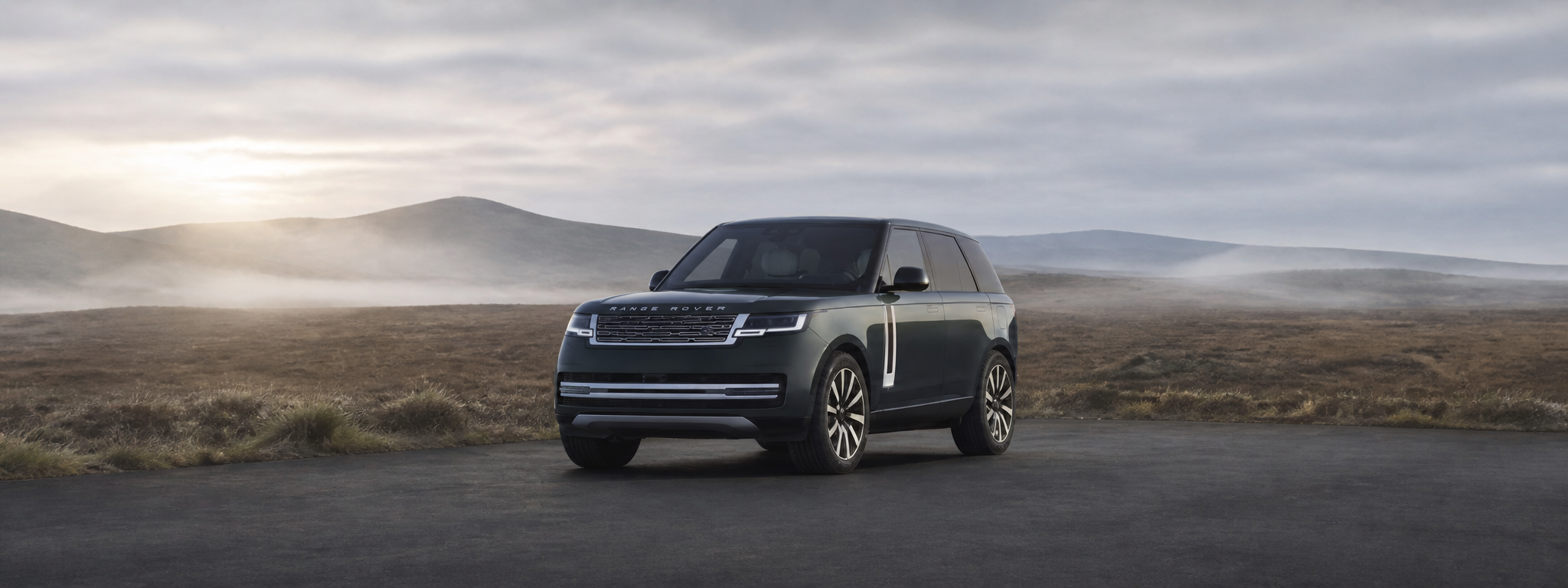
On 2 September 2026, Range Rover unveiled the production Range Rover Electric and opened the order books. For the brand, this is more than replacing an internal-combustion engine with a battery and two electric motors. The electric version must preserve the qualities buyers associate with Range Rover: precise traction control, the ability to move slowly over difficult surfaces, deep-water wading capability and the ability to complete long journeys without turning them into a series of lengthy stops.
In its official premiere announcement, the manufacturer revealed the powertrain, battery, charging figures and test results. These details show which engineering solutions Range Rover is using to offset the limitations of a heavy electric SUV. However, range and off-road behaviour still need to be verified in independent testing.
In brief: what has been confirmed
two permanent-magnet electric motors, one on each axle;
system output of 550 hp and 850 Nm;
a battery with 118.5 kWh of usable capacity and an 800 V architecture;
up to 372 miles, or approximately 598 km, on the WLTP cycle;
charging from 10% to 80% in approximately 22 minutes under suitable conditions;
a claimed maximum wading depth of 900 mm.
From the first announcement to the production car
Range Rover revealed the project in stages. Almost three years passed between the first official announcement and the full premiere, with much of that time devoted to showing prototype testing in extreme heat and cold.
Date | Event | What was revealed |
|---|---|---|
13.12.2023 | First official announcement | The company released the first images and opened a waiting list. |
23.04.2024 | Public testing programme begins | Range Rover announced that prototypes were being tested in different climatic conditions. |
28.11.2024 | Hot-climate testing | The manufacturer showed tests of the power electronics and cooling system in the desert. |
25.04.2025 | Winter testing | Prototypes were tested on snow and ice beyond the Arctic Circle. |
19.05.2026 | Pre-production vehicle previews | The vehicle began appearing at private events ahead of the opening of orders. |
02.09.2026 | World premiere | The main specifications were revealed and the order books opened. |
Key Range Rover Electric specifications
Platform | MLA-Flex |
|---|---|
Powertrain | Two permanent-magnet electric motors, each producing 260 kW |
System output | 550 hp, 850 Nm |
Battery | 118.5 kWh usable capacity, 344 prismatic cells |
Range | Up to 372 miles, or approximately 598 km, on WLTP; the manufacturer’s real-world estimate is up to 333 miles, or 535 km |
Fast charging | 10–80% in approximately 22 minutes; up to 220 km of WLTP range in 10 minutes at a charging station rated up to 350 kW |
Acceleration | 0–60 mph in 4.3 seconds |
Wading depth | Up to 900 mm |
Each motor is rated at 260 kW, but those two figures cannot simply be added together and presented as the vehicle’s output. The manufacturer gives a separate system figure: 550 hp, or approximately 404 kW, for the complete powertrain. That is the correct figure to use when comparing the vehicle with other models.
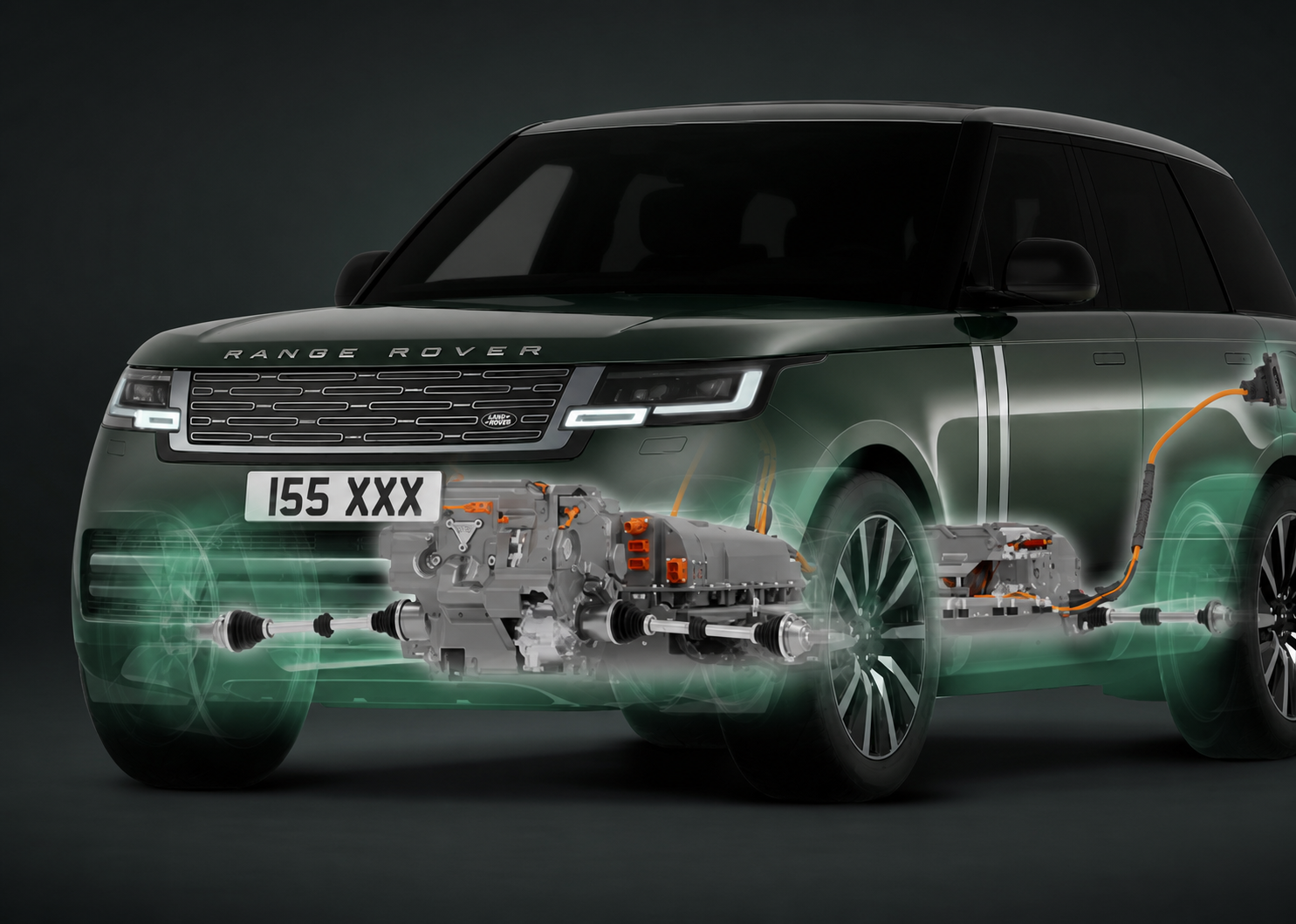
Two motors replace the mechanical connection between the axles
In a conventional four-wheel-drive vehicle, traction is distributed through the transmission, differentials and clutches. In the Range Rover Electric, separate motors drive the front and rear axles. The electronics can vary each motor’s contribution without waiting for a mechanical component to engage.
The Integrated Traction Management system controls motor speed within 50 milliseconds. According to Range Rover, wheelspin control operates up to 100 times faster than in a comparable internal-combustion version. This is the manufacturer’s estimate, not the result of an independent comparative test.
The rear axle uses Intelligent Driveline Dynamics. It can send all the traction available to that axle to the rear wheels or reduce it to zero. The aim is to prevent unnecessary wheelspin and meter torque more precisely on loose or slippery surfaces.
Why milliseconds matter off-road
On rocks, snow or wet grass, available grip can change faster than the driver can adjust the accelerator. The sooner the system detects a spinning wheel accelerating and reduces torque, the less likely the vehicle is to break up the surface or move away from its chosen line. The real advantage will depend not only on electronic response time, but also on the tyres, suspension settings and software algorithms for each surface.
Slow-speed control remains part of the off-road setup
High electric-motor torque alone does not make a vehicle a good off-roader. On difficult terrain, it is more important to apply power smoothly and maintain it without surging. Range Rover says its single-pedal driving mode can start the vehicle on a 33-degree incline and continue climbing a 45-degree incline. These figures describe the vehicle’s claimed capability under the manufacturer’s specified conditions, not every slope with the same geometry.
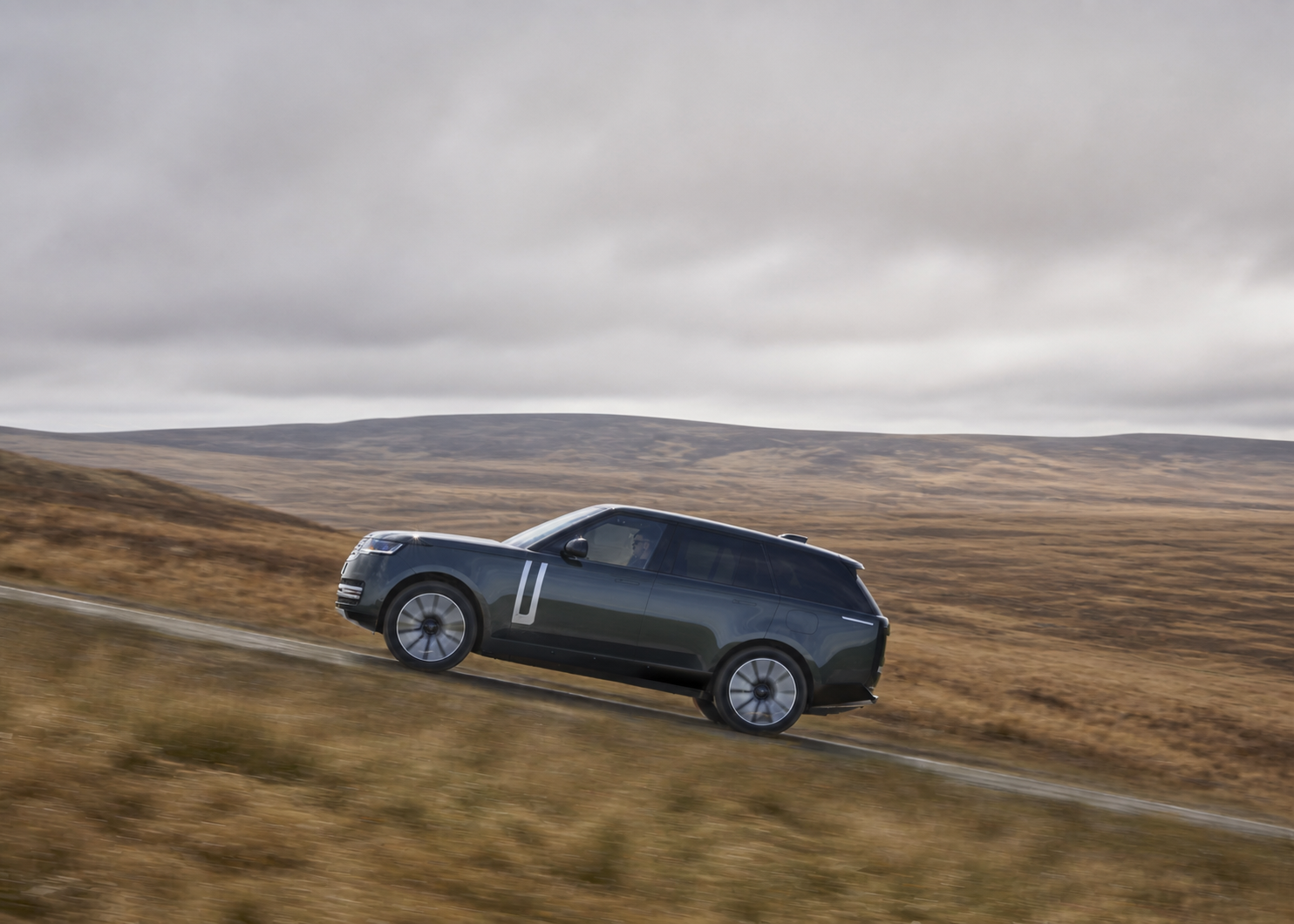
When the accelerator is released, the system slows the vehicle without requiring the driver to keep moving a foot to the brake pedal. This can make it easier to control speed precisely on a rocky descent or in deep ruts. The smoothness and predictability of the system can only be assessed from behind the wheel of a production vehicle.
The battery must withstand more than charging cycles
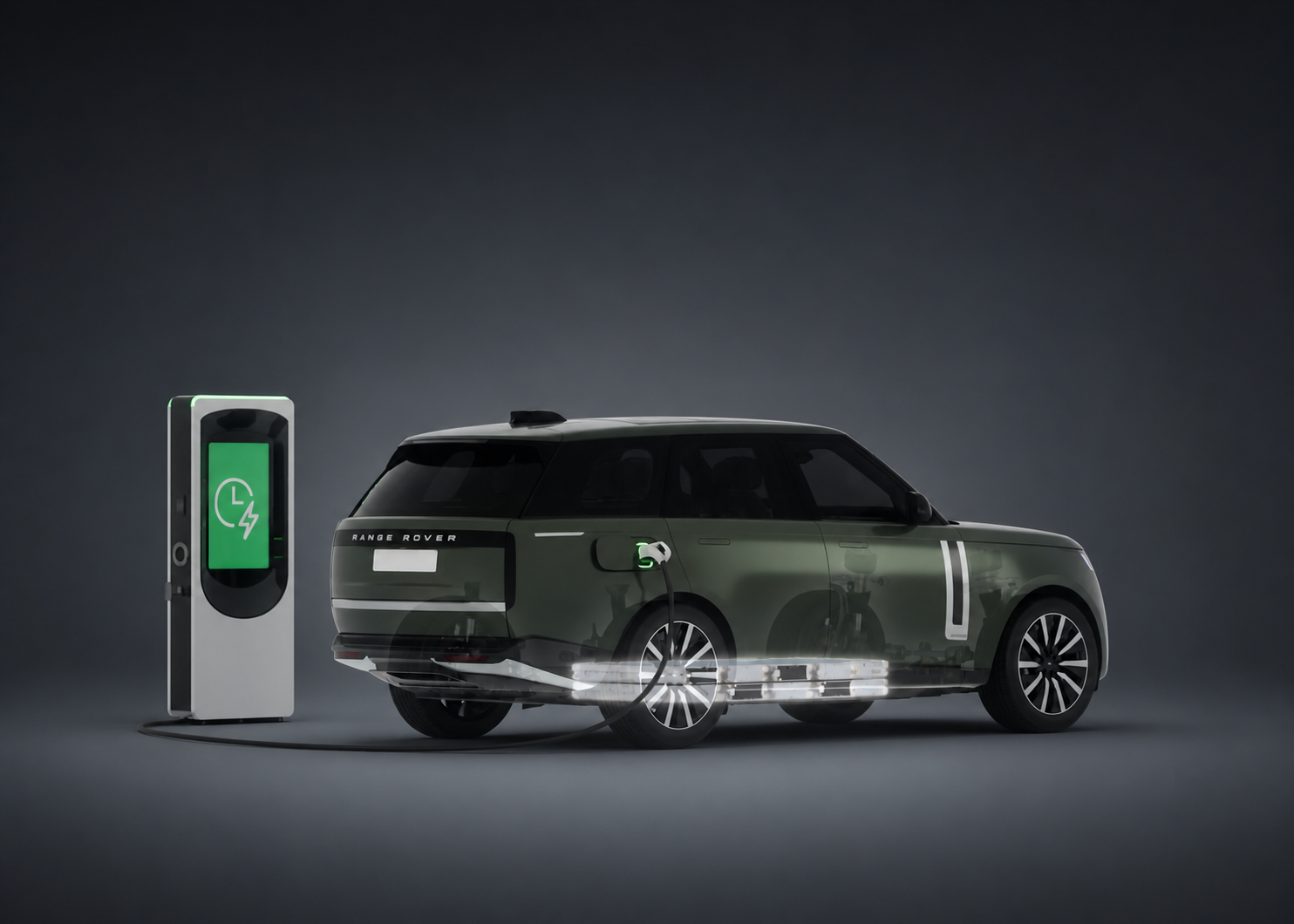
The traction battery consists of 344 prismatic cells arranged in two levels. This layout allows 118.5 kWh of usable capacity to be installed in the floor of the MLA-Flex platform. The casing is made from high-strength aluminium and also forms part of the vehicle’s structural architecture.
According to Range Rover, the battery systems were tested at temperatures ranging from −40 to +90 °C. The overall development programme covered more than 1.5 million kilometres and 250,000 hours of physical and virtual testing. It included winter testing in Arjeplog, Sweden, desert heat in Dubai and off-road routes in Eastnor, UK.
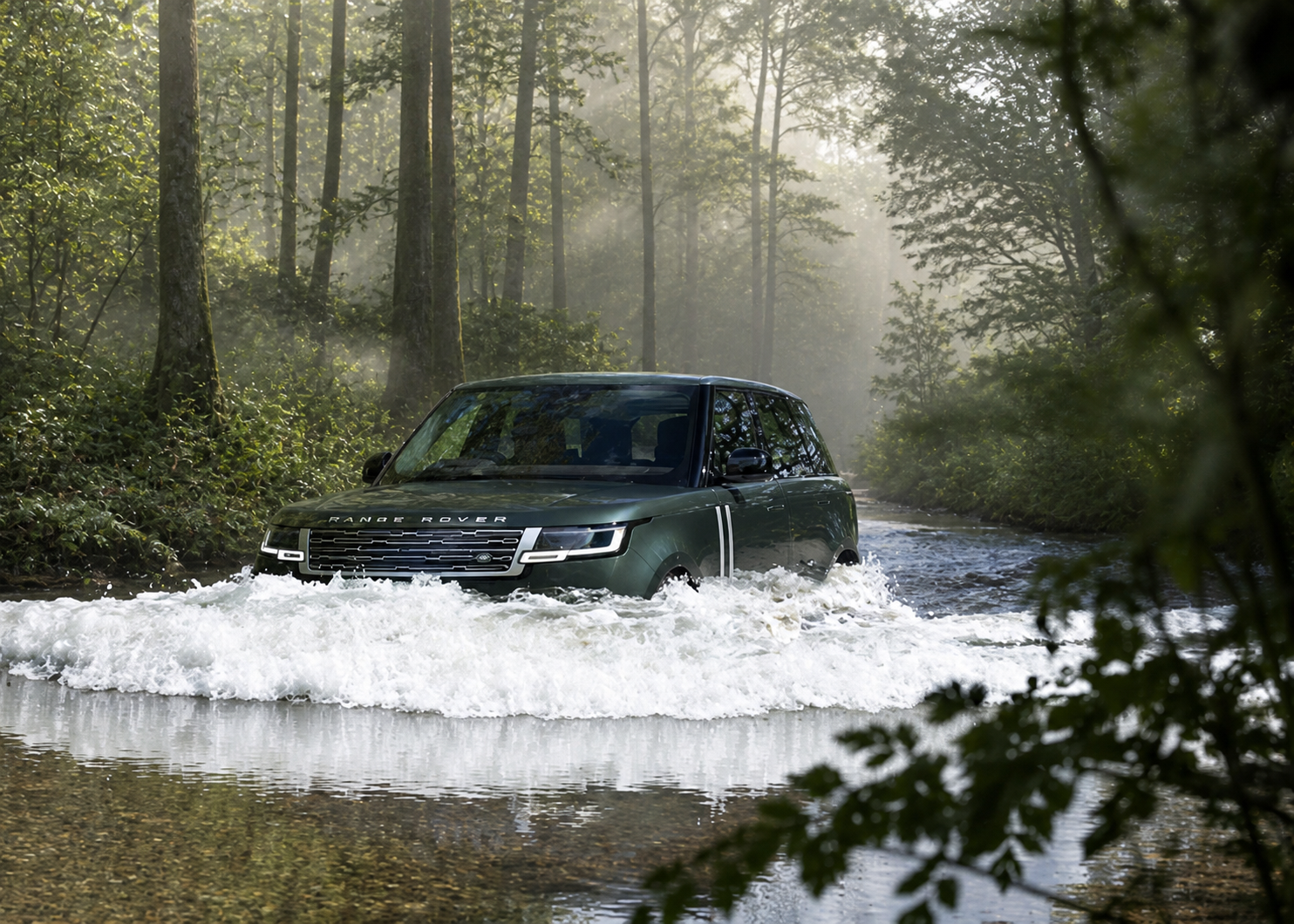
The claimed maximum wading depth is 900 mm, the same as that of current Range Rover models with internal-combustion engines. This figure does not mean that the vehicle can enter 900 mm-deep water in all circumstances. Current, bottom conditions, entry speed, fitted wheels and vehicle damage all change the level of risk. After the underbody has struck an obstacle, the battery casing’s watertight integrity cannot be taken for granted.
Range: laboratory cycle versus real-world estimate
The maximum result—372 miles, or approximately 598 km—was achieved under WLTP. This is a standardised procedure whose rules are set out in UN Regulation No. 154, published by the European Commission. It is intended to compare vehicles under the same conditions, but it does not promise the same distance on a motorway in winter, with a full load or on larger wheels.
The manufacturer also gives a real-world guide of up to 333 miles, or 535 km. The words “up to” matter here: the result depends on temperature, speed, route, cabin heating and the selected specification. The official Range Rover Electric page provides the current versions and conditions used to calculate the figures for the market.
Calculation: what does 10–80% charging in 22 minutes mean?
Seventy per cent of the 118.5 kWh usable capacity is approximately 83 kWh. If the stated 22 minutes is used, the average power over that interval would need to be around 226 kW. This is our calculation based on the published data, not a separate Range Rover specification. The 350 kW peak cannot be maintained throughout the session: charging speed varies with battery temperature, state of charge and the capabilities of the charging station.
The claimed 22 minutes applies to a powerful compatible charger and a preconditioned battery, not every charging point. The 800 V architecture supports what is known as split charging: the battery system can coordinate with both 400 V and 800 V infrastructure without a separate heavy-duty boost converter. At a station rated up to 350 kW, the manufacturer says the vehicle can add up to 220 km of calculated WLTP range in ten minutes.
Weight remains the main physical compromise
Autocar reports a kerb weight of 2885 kg. Range Rover’s official release does not provide one universal figure for every version, so actual weight may depend on body length, equipment and market.
Almost three tonnes place greater demands on the tyres and brakes, increase inertia and make driving over soft ground more difficult. The low-mounted battery helps lower the centre of gravity, while the air suspension and active chassis systems should control body movement, but they do not eliminate the weight. Independent measurements of braking distance, energy consumption and behaviour on loose surfaces will therefore be just as revealing as the 4.3-second 0–60 mph acceleration time.
What cannot yet be considered established
There are no independent range measurements at different temperatures and speeds.
The full fast-charging curve has not been published: only the peak power and the time for the 10–80% range are known.
Prices and first-delivery dates vary by market. As of 02.09.2026, the UK launch price is listed at £154,070 including on-the-road costs; applying it directly to other countries would be misleading.
Battery durability under regular off-road use can be demonstrated only by long-term testing and owner experience.
Has the Range Rover remained an off-roader?
Based on the published specifications, Range Rover has not abandoned its key off-road benchmarks when moving to electric power. The wading depth remains 900 mm, two motors allow faster control of traction between the axles, and the single-pedal mode is configured for slow movement on inclines. At the same time, the battery delivers almost 600 km on WLTP and supports short stops at a high-power charging station.
The final answer will come from independent testing: on a slippery climb, in deep ruts, during fast charging after motorway driving and in winter. For now, the fair conclusion is that the engineers have preserved measurable off-road capabilities and adapted traction control to electric power, but the physical limitations of weight and dependence on charging infrastructure have not disappeared.