EN
EN

Frequently asked questions
The Magma has more power, a wider and lower body, revised suspension geometry, larger brakes, forged 21-inch wheels, wider Pirelli summer tyres, and dedicated drive modes. It produces 478 kW and 790 N·m in Boost mode, compared with 360 kW and 700 N·m for the GV60 Performance AWD.
The Magma uses the same 84-kWh battery and can charge from 10% to 80% in 18 minutes under suitable conditions. Its official UK WLTP range is 425 km, compared with approximately 500 km for the GV60 Performance.
In the UK, the GV60 Magma starts at £75,915. It launched in South Korea at 96.57 million won before subsidies. Car and Driver reported a US price of $71,495 including delivery, but as of July 30, 2026, the official Genesis USA website had not published its own price list.
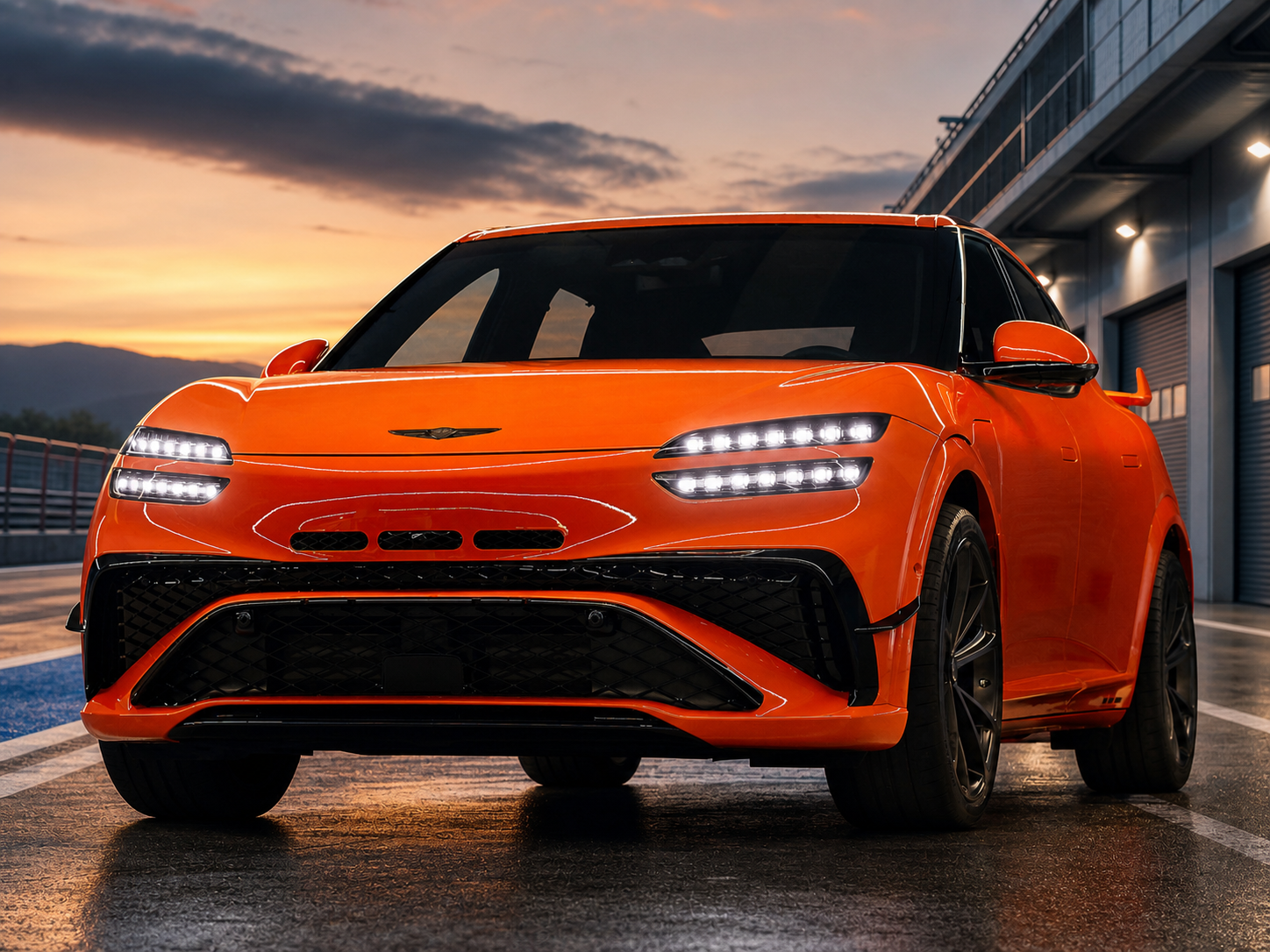
Genesis has begun introducing the GV60 Magma to global markets. This is not a styling package or another GV60 trim level, but the first production model in the Magma performance program, with more powerful electric motors, a retuned chassis, larger brakes, and dedicated drive modes. The underlying package remains familiar: an all-wheel-drive platform, an 84-kWh battery, and the current GV60’s 800-volt charging architecture.
The short answer
The closest regular equivalent is the GV60 Performance AWD, but the Magma is more powerful, wider, lower, and significantly more focused on spirited driving. In Boost mode, it produces 478 kW and 790 N·m, compared with 360 kW and 700 N·m for the GV60 Performance. The extra performance costs more than just money: the Magma’s UK WLTP range figure is lower.
Five key dates in the history of the Genesis GV60 Magma
On March 25, 2024, Genesis unveiled the GV60 Magma Concept at Genesis House New York and announced the launch of the Magma high-performance program. This is confirmed by Genesis’s official press release.
On July 11, 2024, the concept made its dynamic debut at the Goodwood Festival of Speed. It later completed the 1.86-kilometre Sunday Shootout course in 52.72 seconds and won the four-seat production car category.
On November 20, 2025, the production GV60 Magma was presented at the Paul Ricard circuit in Le Castellet, France. Genesis described it as the brand’s first production high-performance model in its global premiere announcement.
Sales began in South Korea on January 13, 2026. In its home market, the car launched in a single trim priced at 96.57 million won before subsidies.
On July 29, 2026, Car and Driver reported the US starting price and the first delivery regions. For now, this should be treated as a report from a specialist publication: as of July 30, 2026, the official Genesis USA website only indicated that the model would arrive soon and that the initial production run would be limited.
GV60 Magma vs. GV60 Performance: specification comparison
Comparing the Magma with the rear-wheel-drive base GV60 would not be especially meaningful because the differences would be too large. The table therefore uses the GV60 Performance AWD, the fastest version in the standard range. Prices and range figures are shown for the UK to avoid mixing data from different markets and certification methods.
Specification | GV60 Performance AWD | GV60 Magma |
|---|---|---|
Maximum power | 360 kW in Boost | 448 kW; 478 kW in Boost |
Maximum torque | 700 N·m | 740 N·m; 790 N·m in Boost |
0–100 km/h | 4.0 s in Boost | 3.4 s in Boost |
Top speed | 235 km/h | 264 km/h |
Battery | 84 kWh | 84 kWh |
10–80% charging | 18 minutes under suitable conditions | 18 minutes under suitable conditions |
WLTP range, UK | 311 miles, about 500 km | 264 miles, 425 km |
Dimensions, L × W × H | 4545 × 1890 × 1580 mm | 4635 × 1940 × 1560 mm |
Tyres | 255/40 R21 | 275/35 R21, Pirelli, summer |
UK starting price | £67,715 | £75,915 |
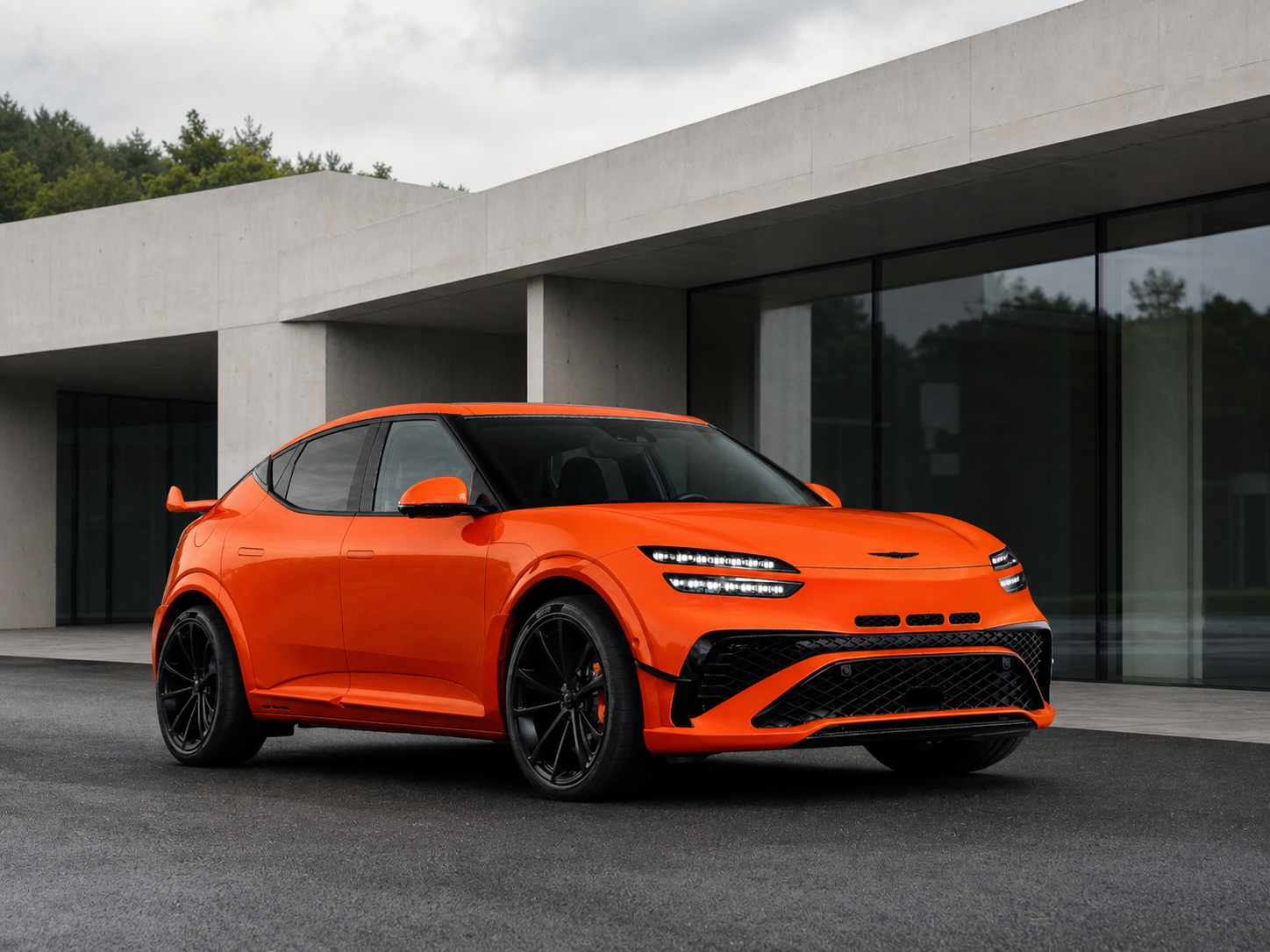
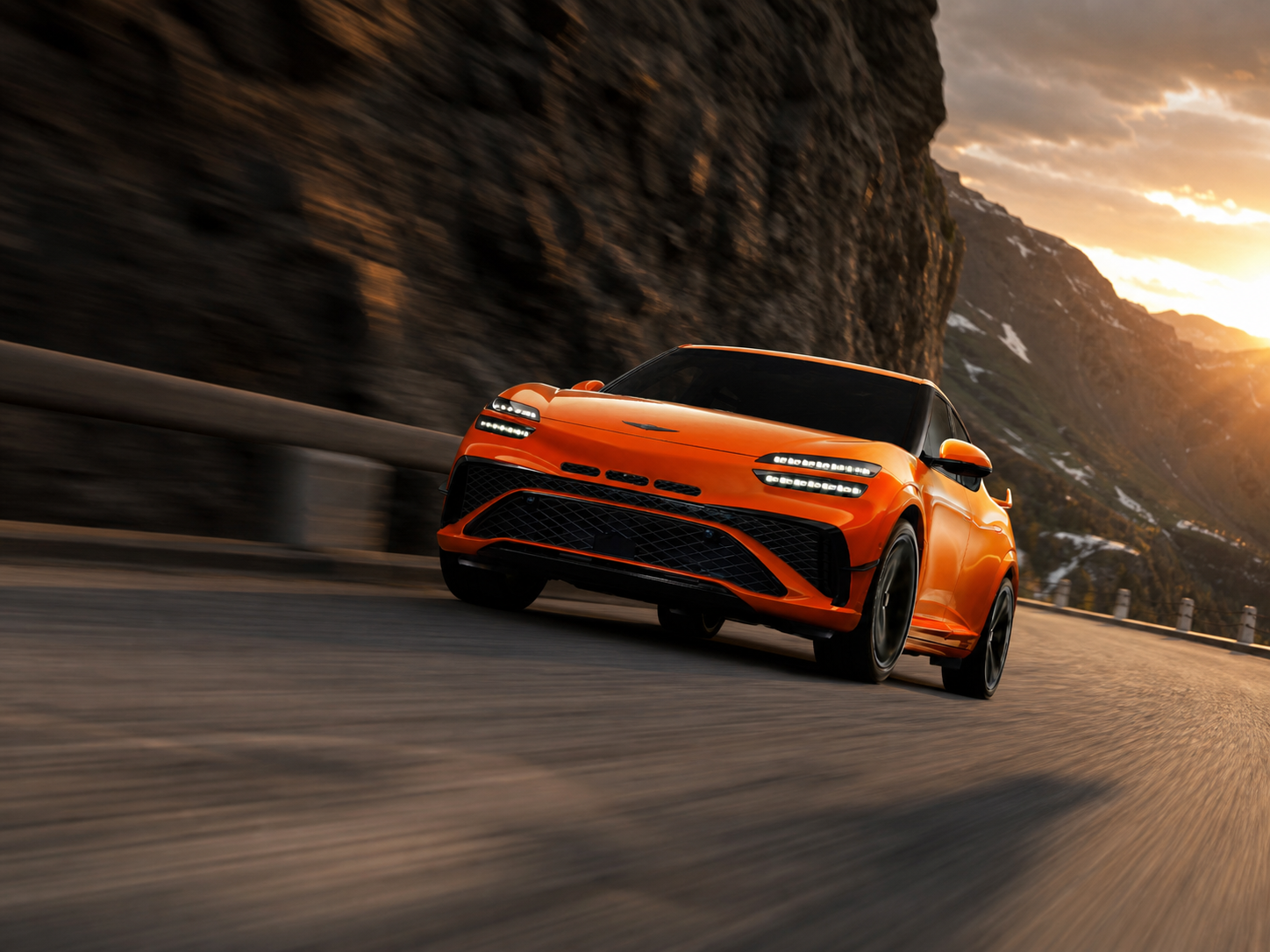
Both versions have the same 2900 mm wheelbase. The Magma’s additional 90 mm of length comes from redesigned front and rear bumpers, while the body is 50 mm wider and 20 mm lower. As a result, the proportions change without increasing the distance between the axles.
Why some figures show 650 and 641 hp
There is no contradiction. Genesis’s global materials quote 650 PS, meaning metric horsepower. The US page converts the same 478 kW into 641 hp using the mechanical horsepower standard. For a direct comparison, kilowatts are the more reliable reference: the GV60 Magma’s peak power is 478 kW.
The Magma’s extra power is only part of the story
The Magma’s two electric motors produce 448 kW and 740 N·m in the standard maximum-power mode. Pressing the Boost button raises output to 478 kW and 790 N·m for approximately 15 seconds. With Launch Control, the car accelerates from a standstill to 200 km/h in 10.9 seconds. In the standard GV60 Performance, Boost lasts 10 seconds and peak power is 360 kW.
Under heavy loads, the High-Performance Battery Control system can prepare the battery temperature in advance for a short acceleration run or sustained fast driving. Genesis has also revised the cooling systems for the electric motors and power electronics. The manufacturer does not publish a separate lap time or state how many consecutive full-power runs the car can complete without reducing output.
Chassis: different settings, larger brakes, and a wider track
The engineers changed the suspension geometry and roll-centre position, and fitted electronically controlled dampers with an End-of-Travel system that manages suspension movement near the limits of its travel. Hydraulic bushings are used at the front, while the rear subframe gets dual-layer bushings. Their purpose is to combine more precise responses with acceptable isolation of the body from impacts and vibrations.
The front monobloc calipers work with 400 mm discs. The Magma also gets its own forged 21-inch wheels and 275 mm-wide Pirelli summer tyres. The GV60 Performance uses narrower 255/40 R21 tyres. It is the combination of the wider track, revised suspension kinematics, brakes, and tyres that makes the Magma a distinct high-performance version rather than simply a GV60 with a software power increase.
What the driver will notice
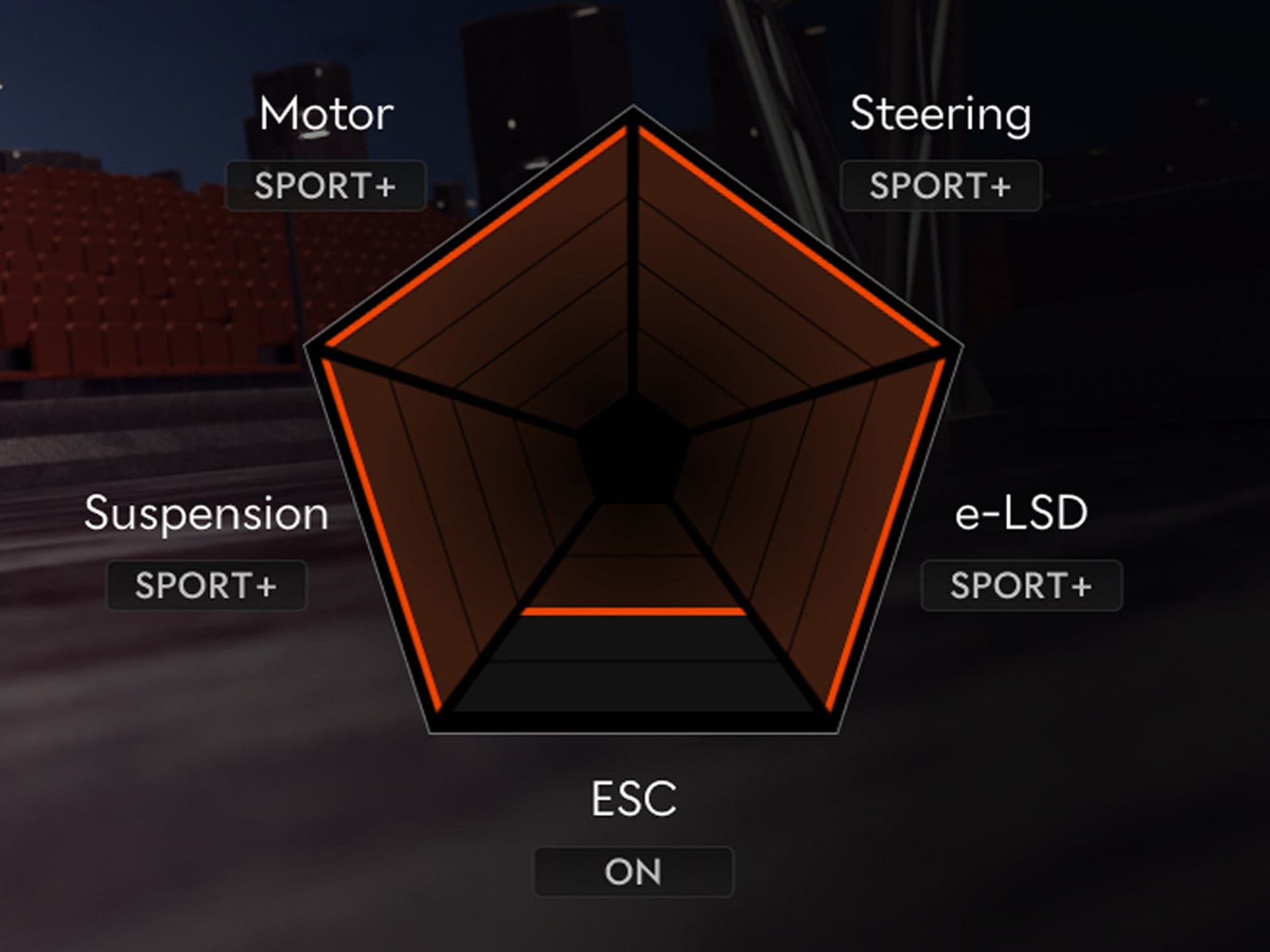
in GT mode — a calmer setup for fast long-distance journeys;
in Sprint mode — the sharpest possible responses from the powertrain and chassis;
in Drift mode — an all-wheel-drive character biased towards the rear axle;
with VGS enabled — eight virtual gears, changes in traction during shifts, and a synthesized high-revving engine sound;
in MY Mode — the ability to adjust the e-LSD, stability control, and other parameters separately.
Some electronic features are already familiar from the GV60 Performance
VGS virtual shifting, the electronic rear differential, adaptive suspension, and even Drift Mode are not entirely new to the GV60 family: they are available on the current GV60 Performance in selected markets. In the Magma, these functions have their own calibration, while GT and Sprint modes, enhanced battery preparation, and a dedicated interface have been added.
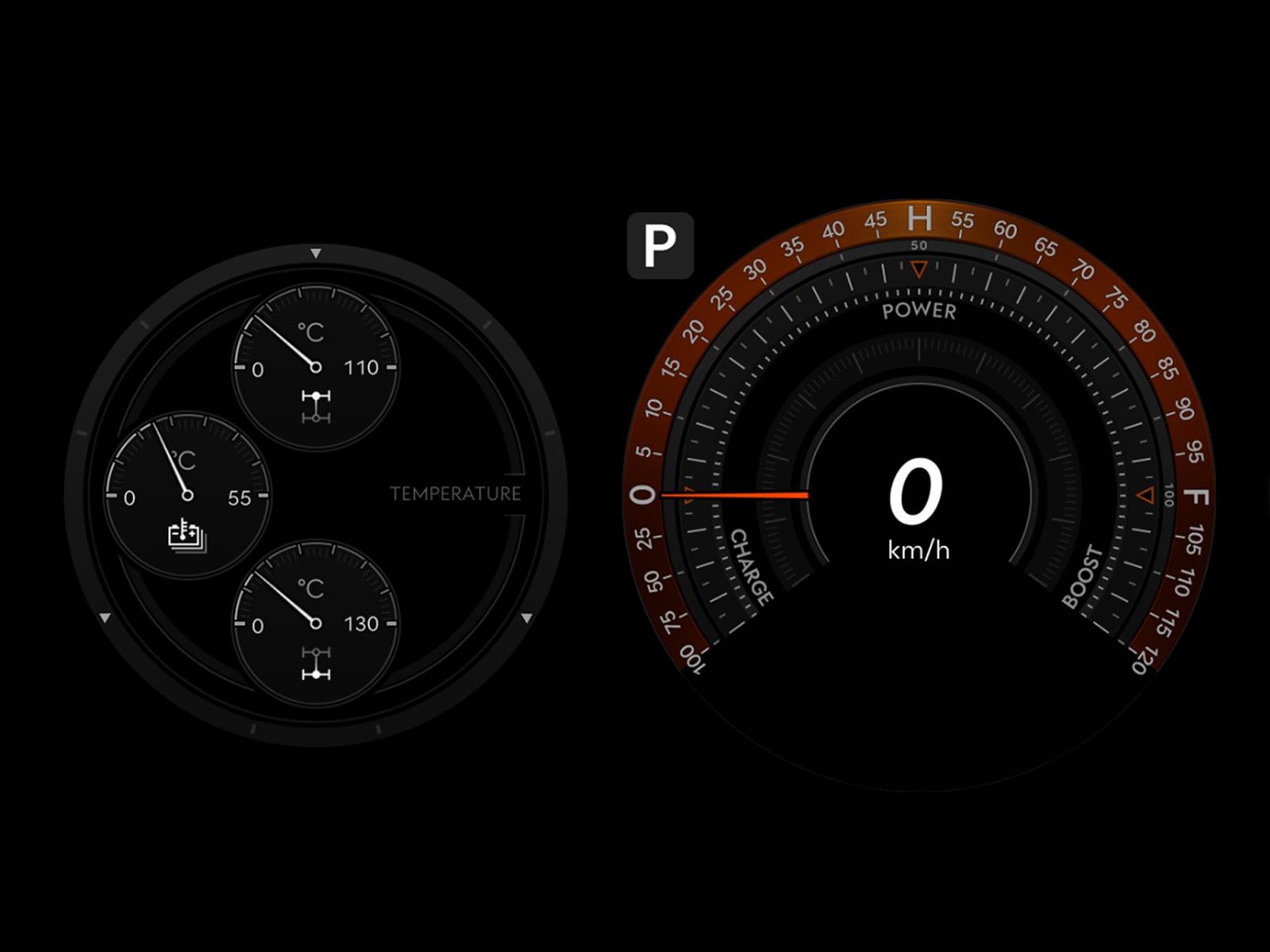
In Magma mode, the instrument section of the 27-inch display switches to a layout with three circular gauges. It shows motor and battery temperatures, G-force, pedal positions, and a timer. The head-up display shows speed, the level of regenerative braking, and the remaining Boost time.
Interior: bucket seats without giving up comfort
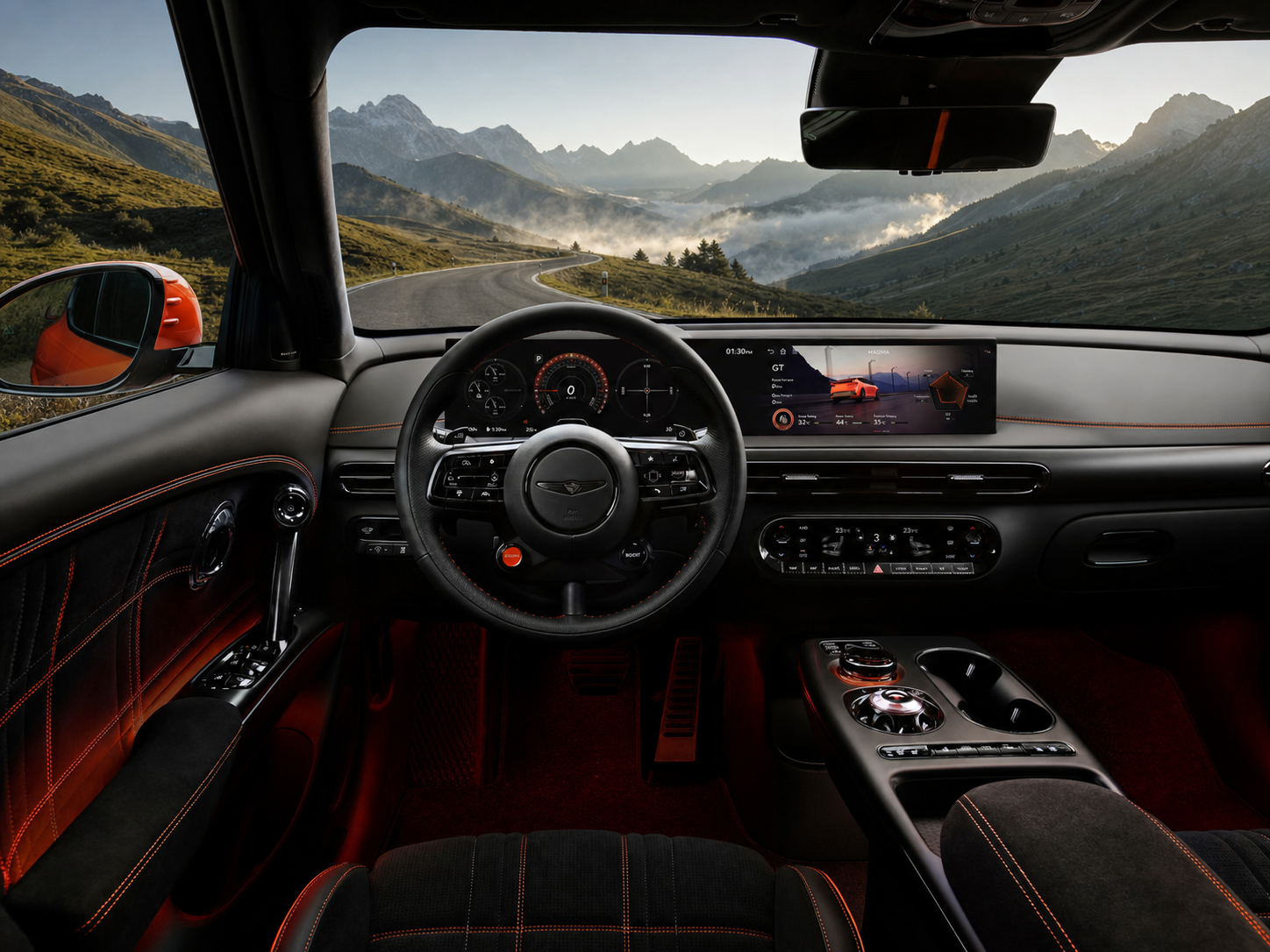
The Magma gets front bucket seats with 10-way power adjustment, heating, ventilation, and dynamic side bolstering. Depending on speed and drive mode, the bolsters hold the body more firmly. Chamude, a suede-textured material, is used on the seats, doors, and centre console; the steering wheel gains a dedicated Magma button and an orange Boost button.
The regular UK GV60 Performance has an 18-way Ergo-Motion driver’s seat with relaxation functions. Moving to the Magma is therefore not an unconditional upgrade in every respect: the sports seats are designed to hold the body more securely, while the standard range-topper places greater emphasis on a broad range of comfort adjustments.
The battery is the same, but the range is shorter
Both versions use an 84 kWh battery and can charge from 10% to 80% in 18 minutes when connected to a sufficiently powerful DC charger and under suitable battery-temperature conditions. However, the official UK WLTP figures differ: 425 km for the Magma versus approximately 500 km for the GV60 Performance.
Genesis does not disclose how much of this difference is caused by the wider tyres, aerodynamic elements, weight, or powertrain calibration. It would therefore be incorrect to attribute the reduced range to a single factor. The Magma’s current figures and test conditions are published on the official Genesis UK page.
The practical takeaway for buyers
The Magma does not need more time to fast-charge than the GV60 Performance, but under the UK WLTP cycle it travels 47 miles, or approximately 75 km, less. For occasional track trips, this is an expected compromise; for frequent long-distance journeys, the difference may affect the number of charging stops required.
Where the GV60 Magma is already on sale and how much it costs
South Korea was the first market: Genesis began sales there on January 13, 2026, with a single trim priced at 96.57 million won before subsidies. Its certified range in South Korea is 346 km, but it cannot be directly compared with the European WLTP figure because the measurement procedure is different.
In the UK, the official price starts at £75,915, which is £8,200 more than the GV60 Performance. The UK website already lists an offer for orders placed between July 1 and September 30, 2026, confirming the move from announcement to commercial launch.
For the US, Car and Driver reported a price of $71,495 including delivery on July 29, 2026, and said the first cars should reach dealers in California, New Jersey, and New York. These are recent details, but they have not yet been replicated on the official Genesis USA page. The manufacturer itself only refers to a limited initial production run and the model’s imminent arrival on public roads.
What remains unknown
Genesis has not announced the total GV60 Magma production volume or how cars will be allocated between countries.
The full list of European markets and a single delivery start date have not been published.
The official EPA figure for the US version has not yet been disclosed.
As of July 30, 2026, Genesis USA had not published its own price list despite the Car and Driver report.
Conclusion: how far has the Magma moved beyond the regular GV60?
The GV60 Magma retains the standard model’s battery, wheelbase, and fast-charging capability, but adds a more powerful powertrain, a wider body, different suspension geometry, larger brakes, wide forged wheels, and a dedicated set of drive modes. The difference from the GV60 Performance is measured by more than 118 kW of peak power: the chassis, cooling, interface, and driver seating position all change the car’s character.
The trade-offs are a higher price and shorter range. The Magma is therefore aimed not at buyers who simply want the most expensive GV60, but at those who will genuinely use the powertrain and chassis upgrades.