 EN
EN

Frequently asked questions
The Audi A2 e-tron is 4.32 m long, has a 396-litre boot plus 13 litres at the front for the charging cable, and offers rear-wheel drive. It can tow a braked trailer weighing up to 1,600 kg, although the article says it may not suit buyers who need a very large boot, three child seats across the second row or regular heavy-trailer towing.
The 12.8 kWh/100 km figure applies to the 140 kW (190 hp) version with the efficiency package and specific 19-inch aerodynamic wheels under WLTP. Without that equipment, the same powertrain is rated at 14.7 kWh/100 km and up to 615 km under WLTP. Real-world consumption and range vary with factors including temperature, speed, gradients, tyre pressure, luggage, heating and driving style.
The UK-announced versions have gross batteries of 52 or 61 kWh, or 84 kWh. Maximum DC charging power ranges from 100 kW to 183 kW, and the stated 10–80% charging times are 24, 26 or 29 minutes, depending on the version. The article notes that specifications, prices and equipment may differ in other markets.
Short answer: The Audi A2 e-tron is not a stripped-down city EV with limited capabilities. It is a compact car designed for drivers who want one vehicle for everyday use. It has a properly usable boot, rear-wheel drive, a towing capacity of up to 1 600 kg and battery options designed for more than just short trips. However, the figure of “12.8 kWh/100 km” applies to a specific version and test conditions, so choosing the car based on that number alone would be a mistake.
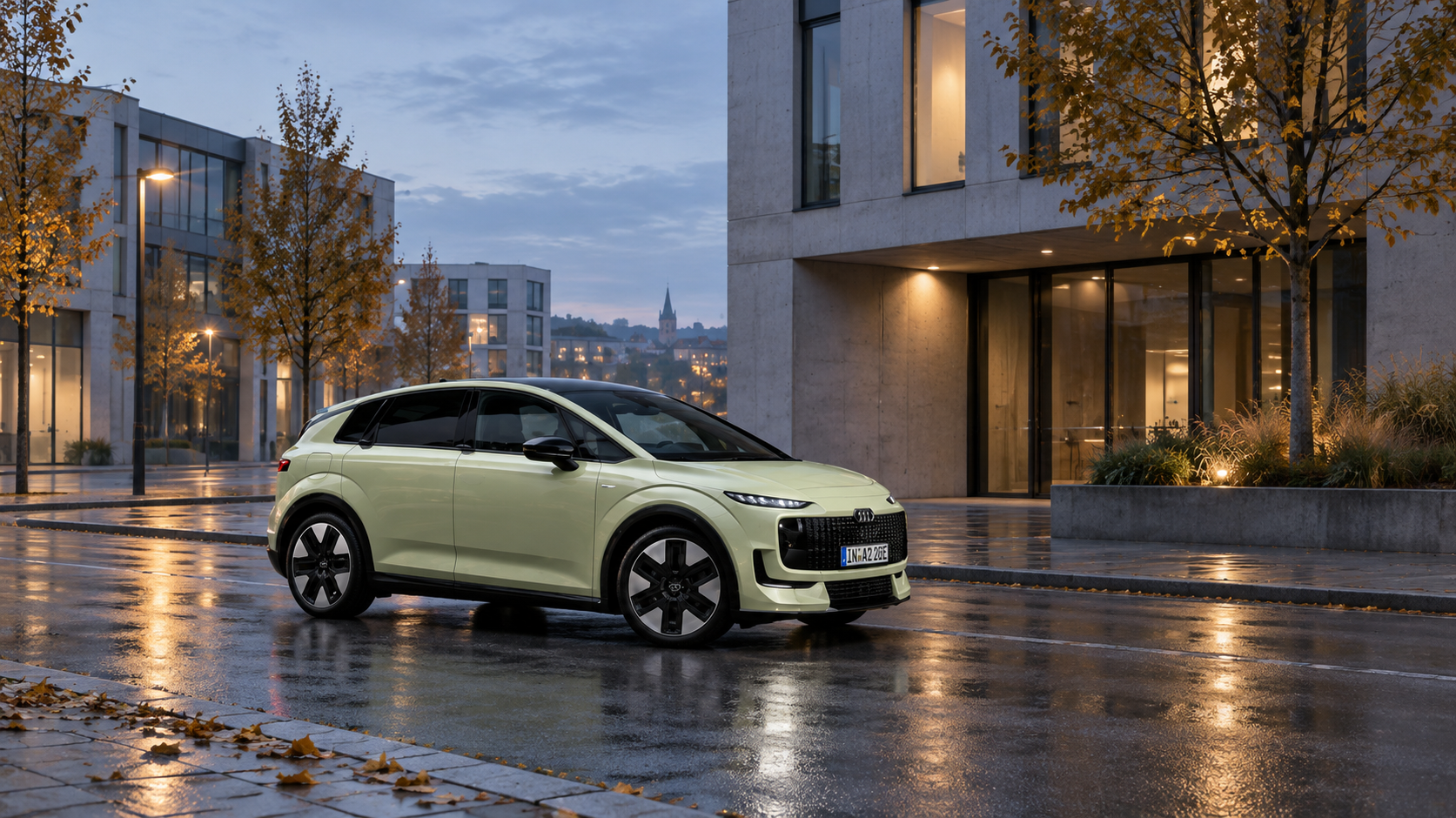
On 7 September 2026, Audi unveiled the A2 e-tron in Paris. The model brings the A2 name back to the range after two decades, although it has little in common with the previous aluminium hatchback: this is a fully electric compact car developed for the European market and built in Ingolstadt. The main details of the launch were published in Audi’s official announcement.
Not a small car, but a compact format
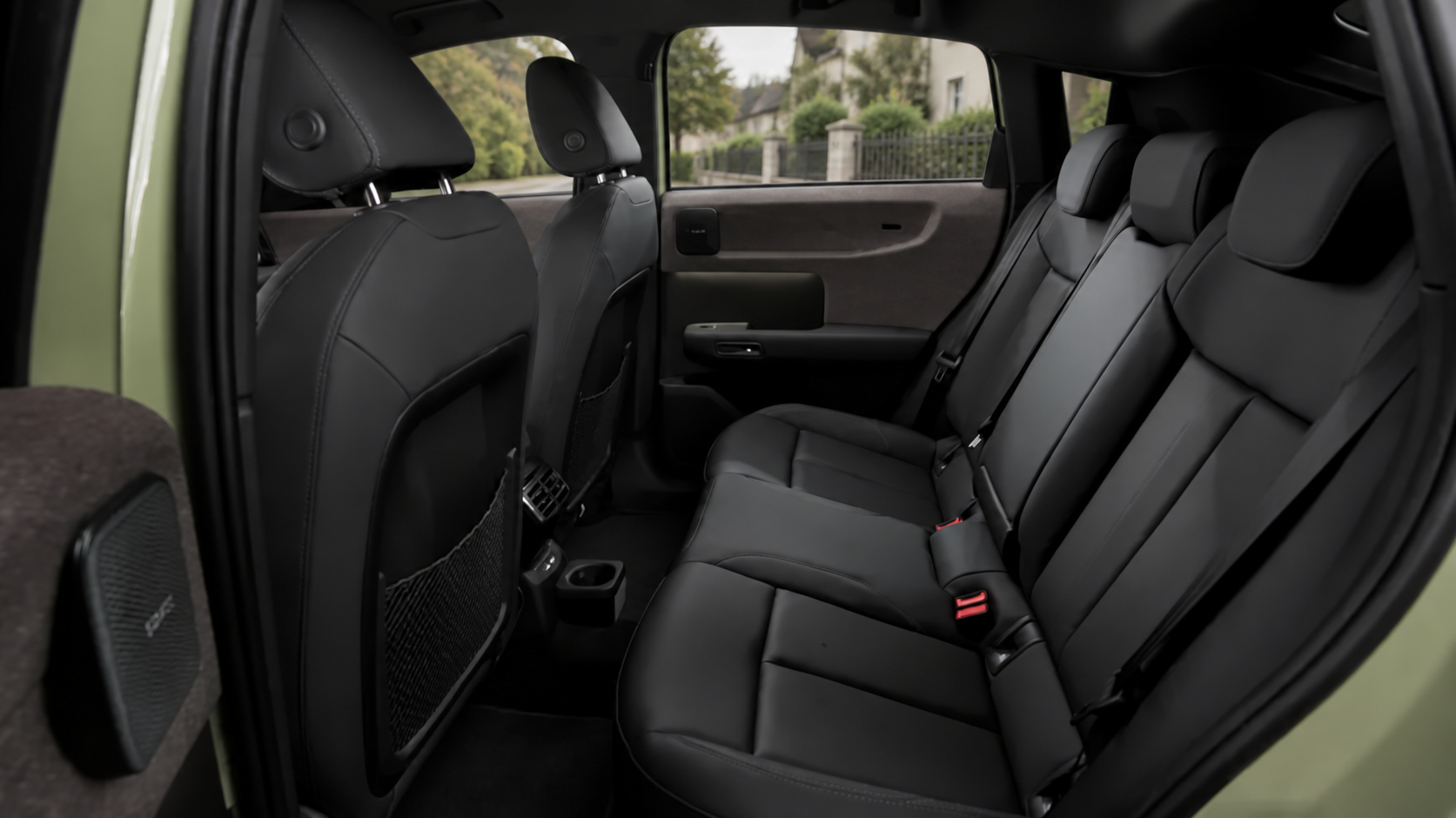
The A2 e-tron is 4.32 m long. That is 28 cm shorter than the Audi Q4 e-tron, but it is not quite city-car territory. Rear-wheel drive helps Audi package the powertrain efficiently, while the long wheelbase for this type of body should provide more cabin space than the exterior dimensions suggest. The boot offers 396 litres, with a further 13 litres at the front for the charging cable.
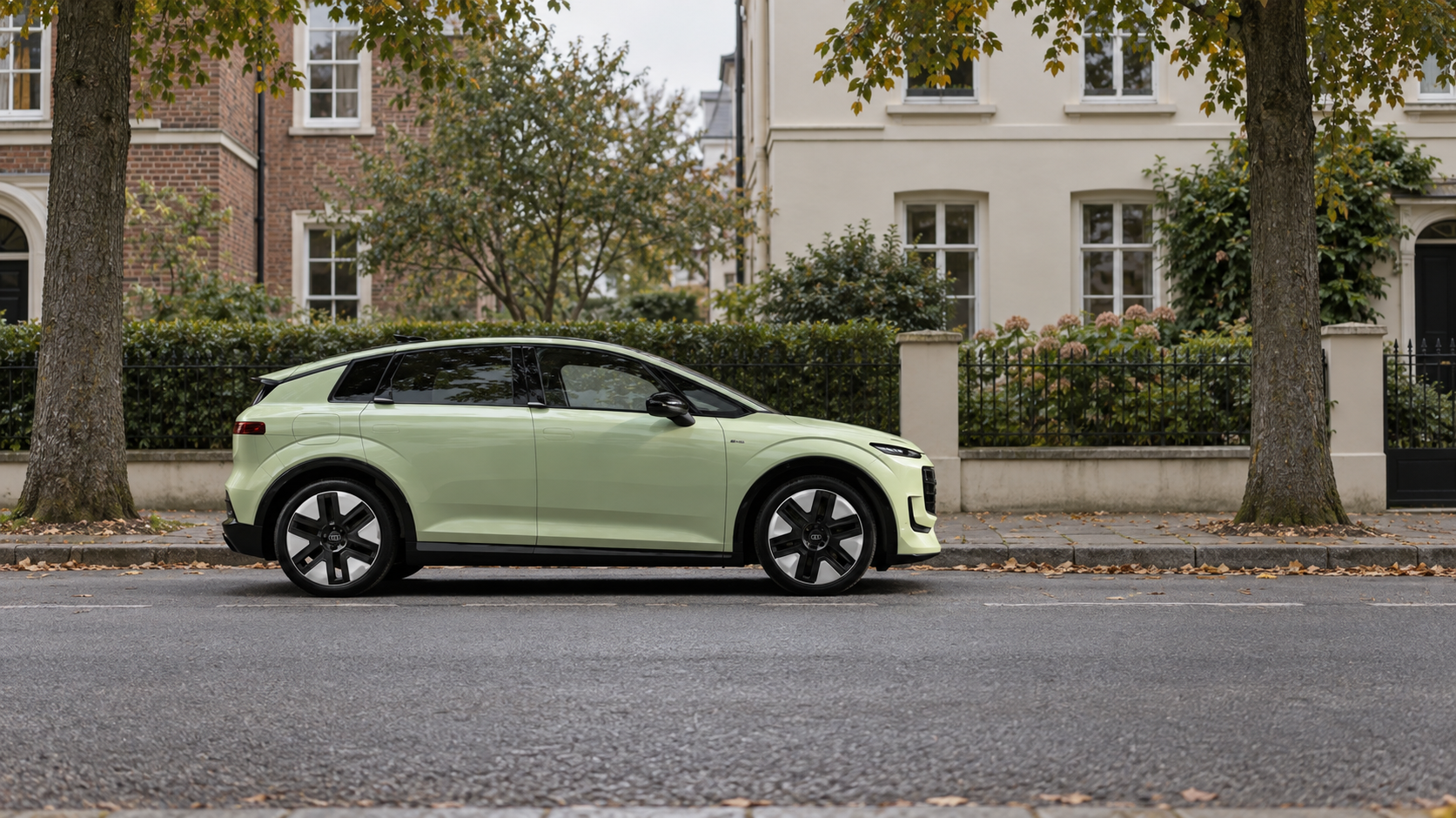
For everyday use, another figure matters more: Audi quotes a maximum braked trailer weight of up to 1 600 kg. That does not turn the A2 e-tron into a heavy-duty towing vehicle, but it does allow owners to use a light trailer, a small boat or a pair of motorcycles. Dimensions, boot capacity and towing figures for the Danish market are listed in Audi Danmark’s official publication; these figures should be checked against the local specification before ordering.
Practical takeaway: The A2 e-tron should be viewed not as a replacement for the A1 when parking in the city centre, but as a more compact alternative to an electric crossover. Its strengths are the combination of modest exterior dimensions, a useful boot and the ability to travel beyond the city.
How the record efficiency is achieved
Audi calls the A2 e-tron the most efficient production car in its range. In its most favourable configuration, it is rated at 12.8 kWh/100 km under WLTP, with a range of up to 646 km. A drag coefficient of 0.24, a fully enclosed underbody, an adjustable air intake and special wheels all contribute to this result.
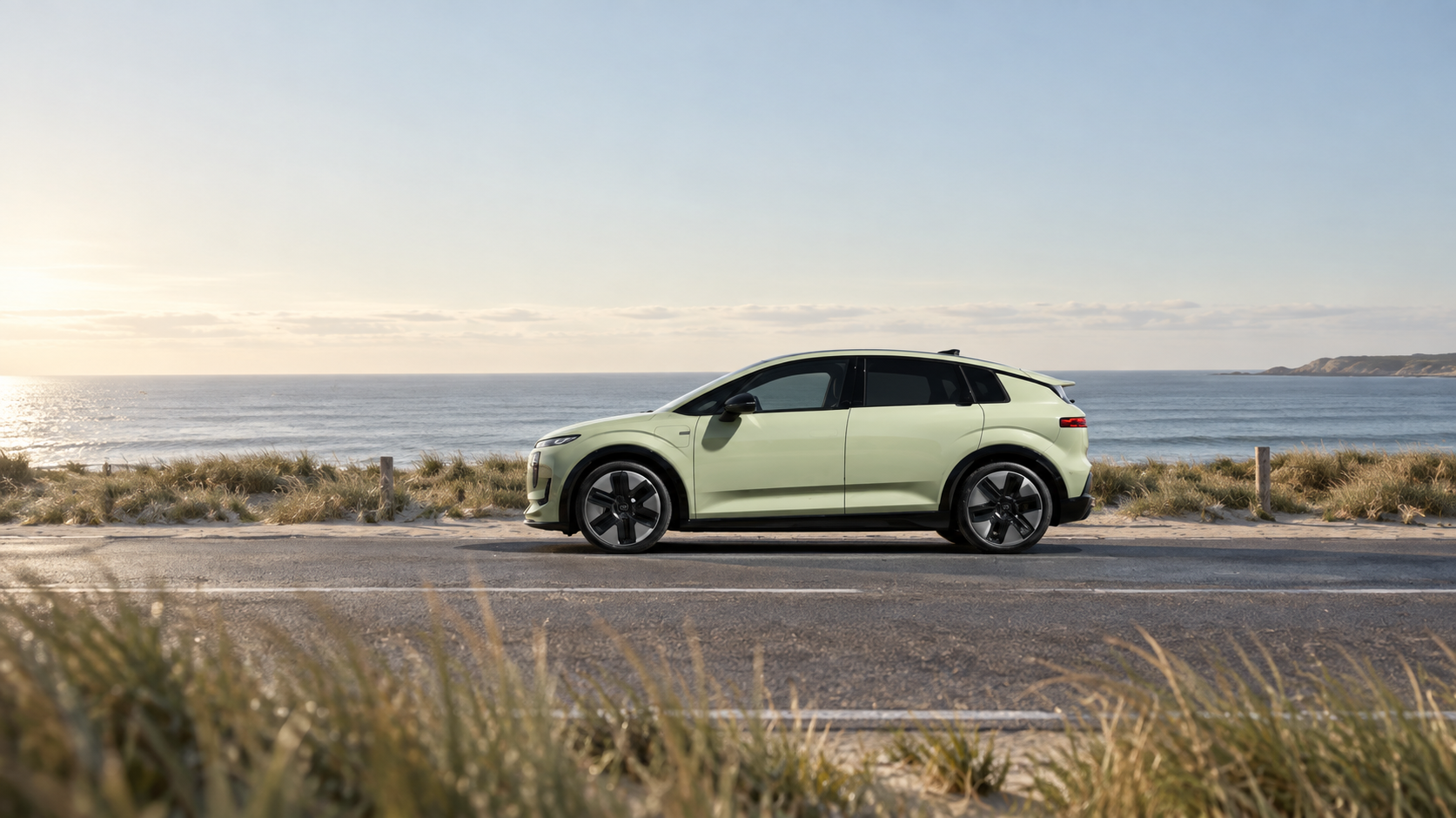
However, 12.8 kWh/100 km is not the average consumption of every A2 e-tron. According to Audi Danmark, it applies to the 140 kW (190 hp) version with the efficiency package and specific 19-inch aerodynamic wheels. Without them, the same powertrain is rated at 14.7 kWh/100 km and up to 615 km under WLTP. That does not make the official figures useless; it means you need to compare versions and equipment levels rather than looking only at the model name.
WLTP is a comparison guide, not a promise of real-world range
WLTP tests the car over a standardised cycle. In real-world driving, the result changes with temperature, speed, gradients, tyre pressure, luggage, heating and acceleration style. On motorways, sustained high speeds usually increase consumption more than urban driving with regenerative braking. For that reason, the quoted 646 km should not be turned into a route plan without a margin for error. It is more useful to consider the official consumption figure for the chosen version, the available battery and your usual charging routine.
What to check during a test drive: how quickly the cabin warms up in winter, how well the navigation system plans charging stops and whether the second-row seating position is comfortable. These answers can influence the choice more than a difference of several dozen kilometres in WLTP range.
Four versions: battery and charging options
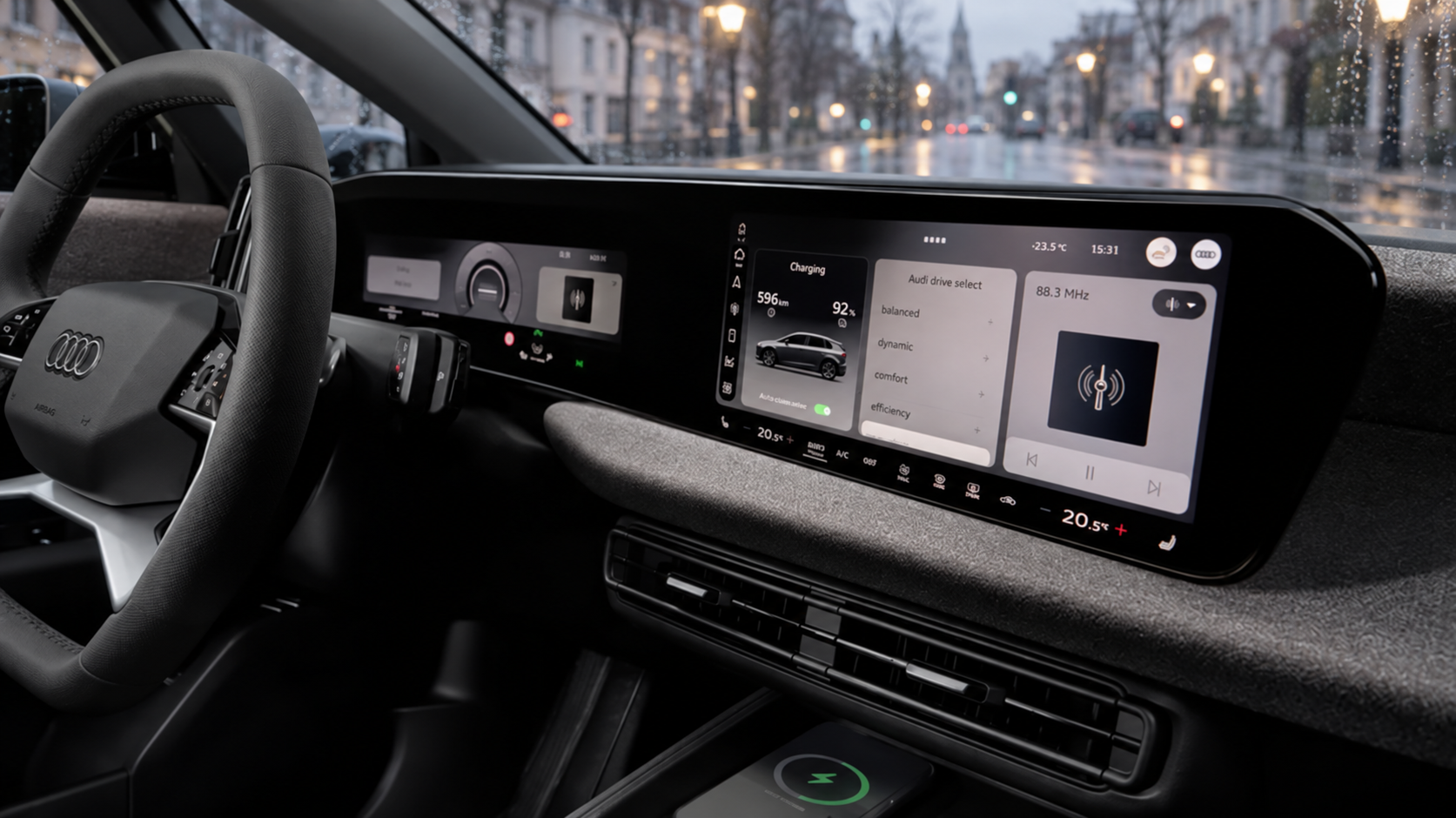
Audi offers four power levels and three battery sizes. The figures below are those announced for the UK; other markets may have different versions, prices and equipment.
Version | Battery, kWh (gross) | Maximum DC power | 10–80% charging |
|---|---|---|---|
170 hp | 52 | 100 kW | 24 minutes |
190 hp | 61 | 105 kW | 26 minutes |
231 hp | 84 | 183 kW | 29 minutes |
326 hp | 84 | 183 kW | 29 minutes |
The smaller battery charges from 10 to 80% even faster than the larger unit, although its peak charging power is lower. The larger battery makes more sense for frequent intercity journeys: it provides greater range and supports 183 kW at a rapid charger. Even so, the choice is not simply a case of “bigger is always better”. If the car is charged overnight at home or during the working day at a low-power charger, the smaller battery may be sufficient and avoids carrying unnecessary weight.
Audi lists the full specifications, including acceleration and quoted range, in the UK press release for the model. It also states that orders in the UK will open in October 2026, with the first cars arriving at dealers in early 2027. These dates and the £32 200 price apply to the UK only.
Bidirectional charging: a useful feature with conditions
The A2 e-tron supports Vehicle-to-Load, allowing the traction battery to power external devices through a socket in the boot or an adapter. This could be useful on a trip, at a holiday home or when using power tools. Vehicle-to-Home allows the car to act as a home energy store, but availability depends on the country, a compatible DC wallbox and local connection rules.
You should not buy an A2 e-tron solely for home energy supply. First check whether V2H is supported in your market, whether it is included in the chosen specification and whether it is compatible with your existing home electrical system. For many drivers, V2L will be the more straightforward and genuinely useful feature.
Who should choose the A2 e-tron—and who should wait?
A good fit for drivers who want one EV for city use, commuting and occasional long-distance journeys.
Choose the larger battery if you often drive on motorways and do not want to plan a charging stop after every long stretch.
Consider carefully if you need a very large boot, three child seats across the second row or regular towing of a heavy trailer.
Wait for the local price list if you are buying outside countries where Audi has already announced the versions and ordering conditions: the A2 e-tron does not have one globally uniform specification.
What changed between the announcement and the launch
As recently as 17 March 2026, Audi had announced only the A2 e-tron’s upcoming autumn launch, production in Ingolstadt and its role as an entry-level electric model. After the 7 September presentation, specific details emerged about the batteries, power outputs, charging and equipment. The original announcement is available on Audi’s website.
The A2 e-tron is interesting not simply because it promises a record range. Its core idea is more straightforward: a compact body does not have to force buyers to choose between everyday practicality and trips beyond the city. Whether Audi can prove that on real routes will be shown by independent tests and the arrival of the first cars. Until then, the right approach is to choose not the “longest-range A2”, but the version that matches your own mileage, charging access and family needs.