 EN
EN

Frequently asked questions
It combines a 4.0-liter twin-turbo V8 with a permanent-magnet electric motor, producing 812 hp and 1,000 Nm of torque. Its 25.9 kWh battery enables electric driving for more than 60 km according to Lamborghini.
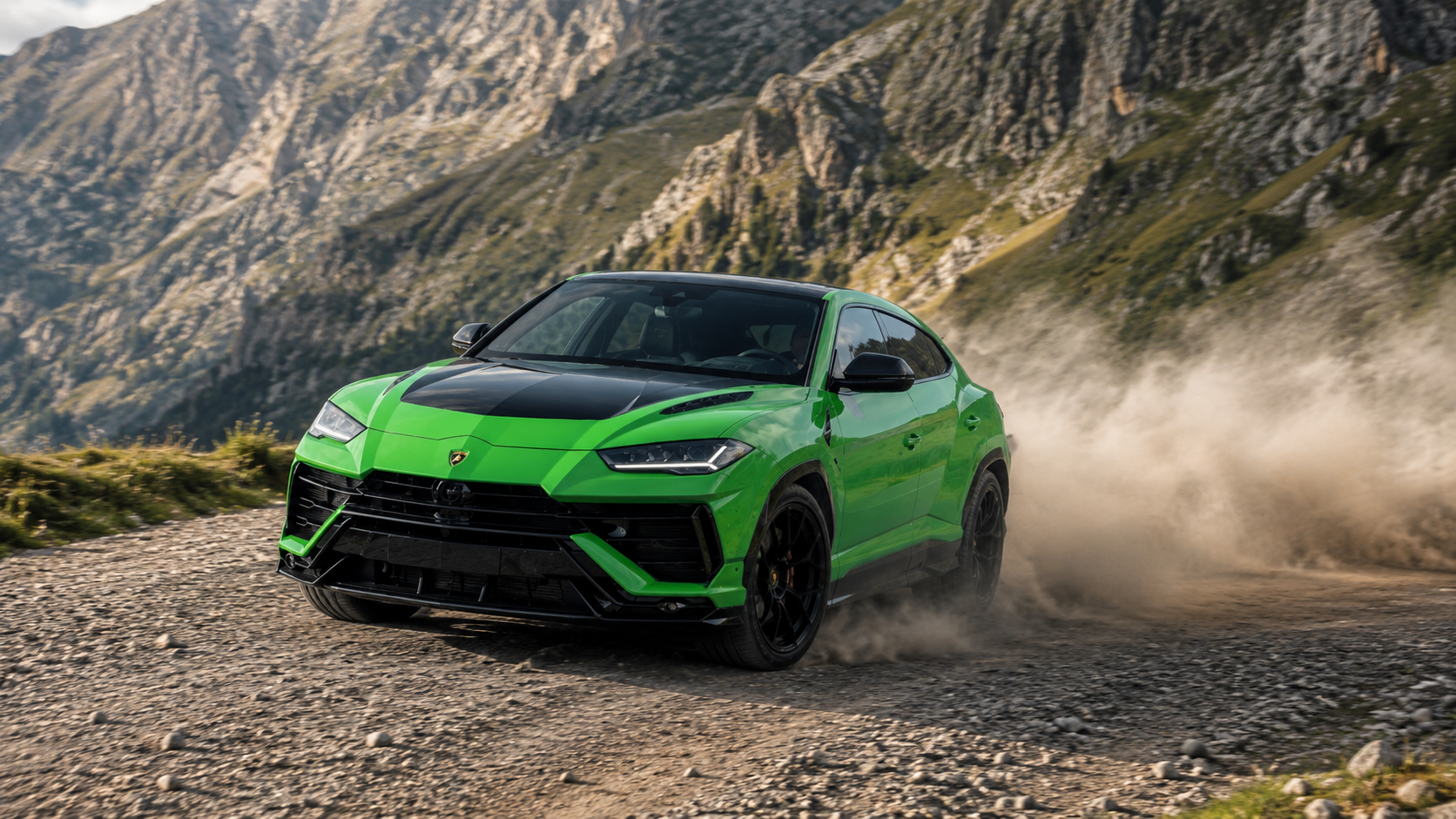
Rally mode adapts torque distribution, suspension behavior and electronic systems for low-grip surfaces such as gravel. It is intended to allow controlled sliding and better tire contact, but the article says it does not turn the Urus SE Performante into a serious off-road vehicle.
Lamborghini positions it as a more performance-focused derivative, with sharper throttle response, revised aerodynamics, AURA two-chamber air suspension, a 6D sensor, Rally mode and a 32 kg weight reduction compared with the Urus SE.
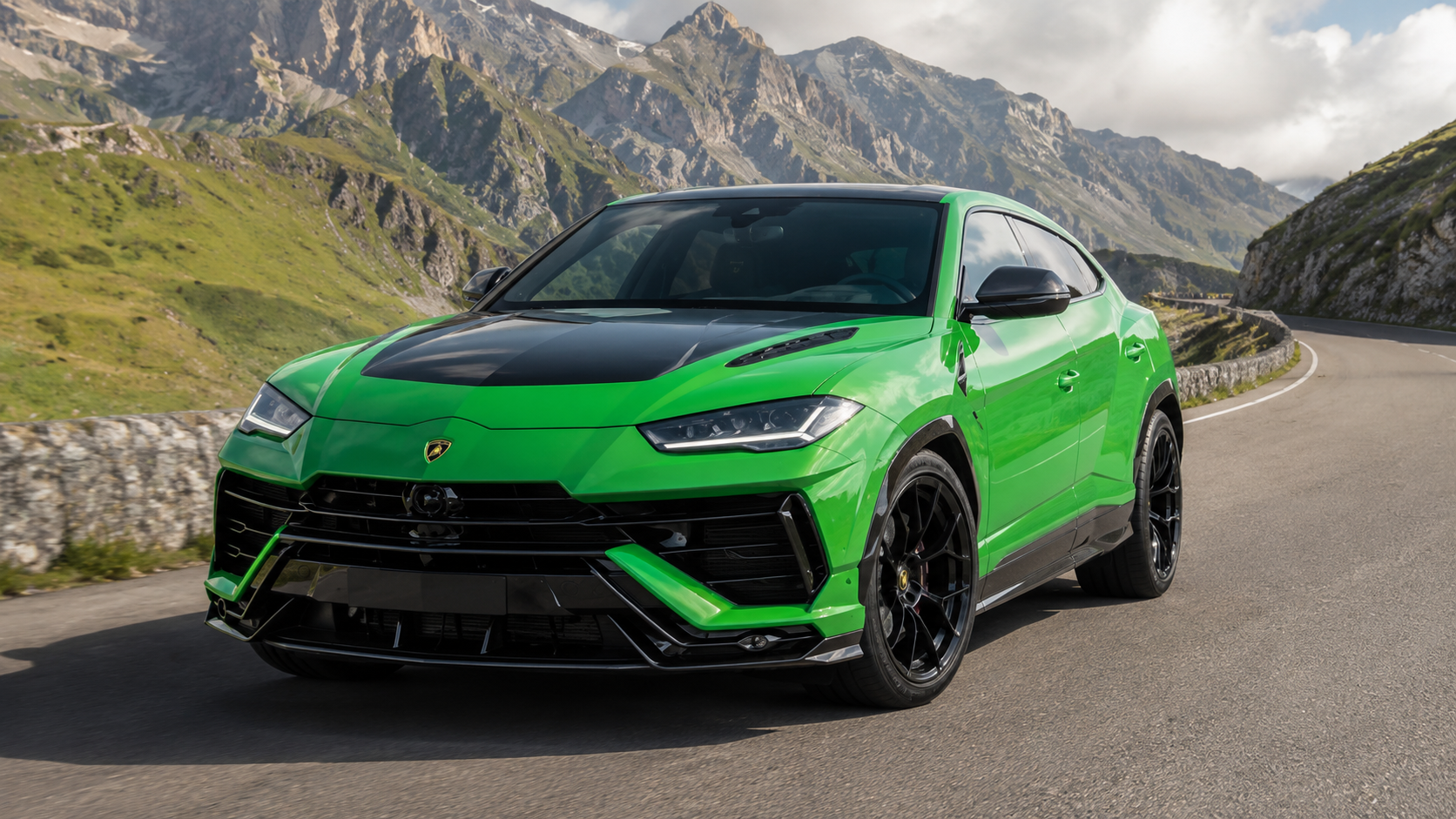
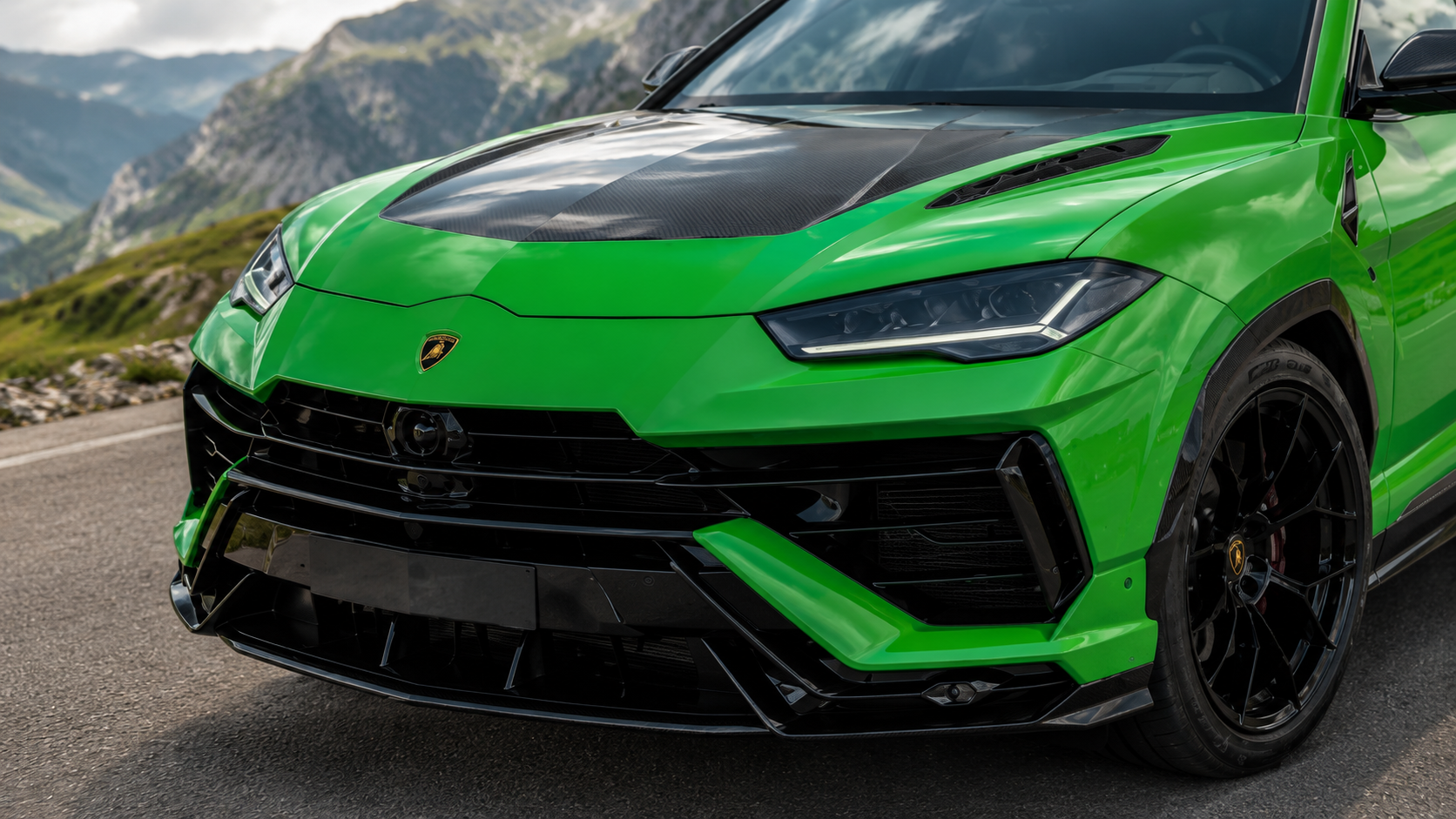
On July 1, 2026, Lamborghini unveiled the Urus SE Performante - a new peak for the Urus family and the most powerful version of the model to date. The hybrid SUV combines a 4.0-liter twin-turbo V8, an electric motor, 812 hp and 1,000 Nm. But the point of the Performante is not just the extra power: it also gets a two-chamber air suspension, a revised set of aerodynamic elements, a 6D body-motion sensor and a dedicated Rally mode for gravel.
The previous Urus Performante focused on reduced weight and stiffer settings. The new Urus SE Performante keeps that character, but it is now built around a plug-in hybrid system. The electric motor helps the V8 build torque faster, the battery makes it possible to drive without starting the engine, and the electronic systems are designed to make the heavy SUV more precise in fast corners. The result is not just an Urus with different body kit parts, but a separate tuning of the entire platform.
In brief: what the Urus SE Performante gets
Parameter | Lamborghini data |
Powertrain | 4.0-liter twin-turbo V8 + permanent-magnet electric motor |
Total output | 812 hp (596 kW) at 6,000 rpm |
Maximum torque | 1,000 Nm |
0-100 km/h | 3.3 seconds |
0-200 km/h | 10.8 seconds |
Top speed | 312 km/h |
Traction battery | Lithium-ion, 25.9 kWh |
Electric range | More than 60 km according to Lamborghini |
Curb weight | 2,473 kg |
Weight reduction compared with the Urus SE | 32 kg |
Urus SE Performante in a few questions
How is it different from the regular Urus SE?
Lamborghini positions the Performante as a more extreme derivative of the plug-in hybrid Urus SE. The basic idea is not to replace the comfortable hybrid version, but to offer a car with a sharper throttle response, enhanced aerodynamics and settings for spirited driving. That is why, alongside the familiar Strada, Sport and Corsa modes, there is now Rally.
Why does this car need a hybrid system?
Not only so it can cover part of the journey on electric power. The electric motor is mounted before the transmission and works with the V8, helping it build torque without a pause while the turbochargers reach their ideal operating range. Lamborghini claims 812 hp and 1,000 Nm - that is 146 hp and 150 Nm more than the previous Urus Performante with the gasoline V8.
Can it be used as an electric car?
In EV mode, the car can travel more than 60 km on the battery and electric motor alone. The manufacturer also says that in this mode the top speed can exceed 130 km/h. Real-world range will depend on temperature, terrain, speed and the selected configuration, so this figure should be seen as the manufacturer's reference, not a guaranteed result on every trip.
Does Rally make the Urus a full-fledged off-roader?
No. The new mode adapts torque distribution, suspension behavior and electronic systems for low-grip surfaces such as gravel. It is meant to allow controlled sliding and better tire contact with the surface, but it does not turn the Urus SE Performante into a vehicle for serious off-road use.
The hybrid is tuned for response, not just efficiency
At the core of the powertrain is a 4.0-liter twin-turbo V8. The engine itself produces 620 hp, while the synchronous electric motor adds up to 141 kW. Energy is stored in a 25.9 kWh battery mounted under the cargo floor. That layout helps avoid raising the center of gravity any more than necessary for a large SUV.
All-wheel drive works through a centrally controlled electronic clutch and a rear electronic limited-slip differential. Their job is not just to send torque to both axles, but to vary the split depending on grip and the selected mode. Lamborghini specifically notes that this setup allows “controlled oversteer” at the driver's request.
The eight-speed automatic has also been retuned: according to the brand, software changes should reduce response time to driver inputs and cut the delay when delivering torque. Detailed specifications for the powertrain, battery and transmission are published on the official Urus SE Performante page.
Carbon and airflow: what changed outside
The Performante's exterior is not just about visual aggression. The version gets a new carbon hood with a central bulge and S-Duct vents, revised front and rear bumpers, wheel arches, side skirts, a spoiler and the largest rear diffuser ever fitted to a Urus. Lamborghini says this version uses more exposed carbon than any previous Urus.
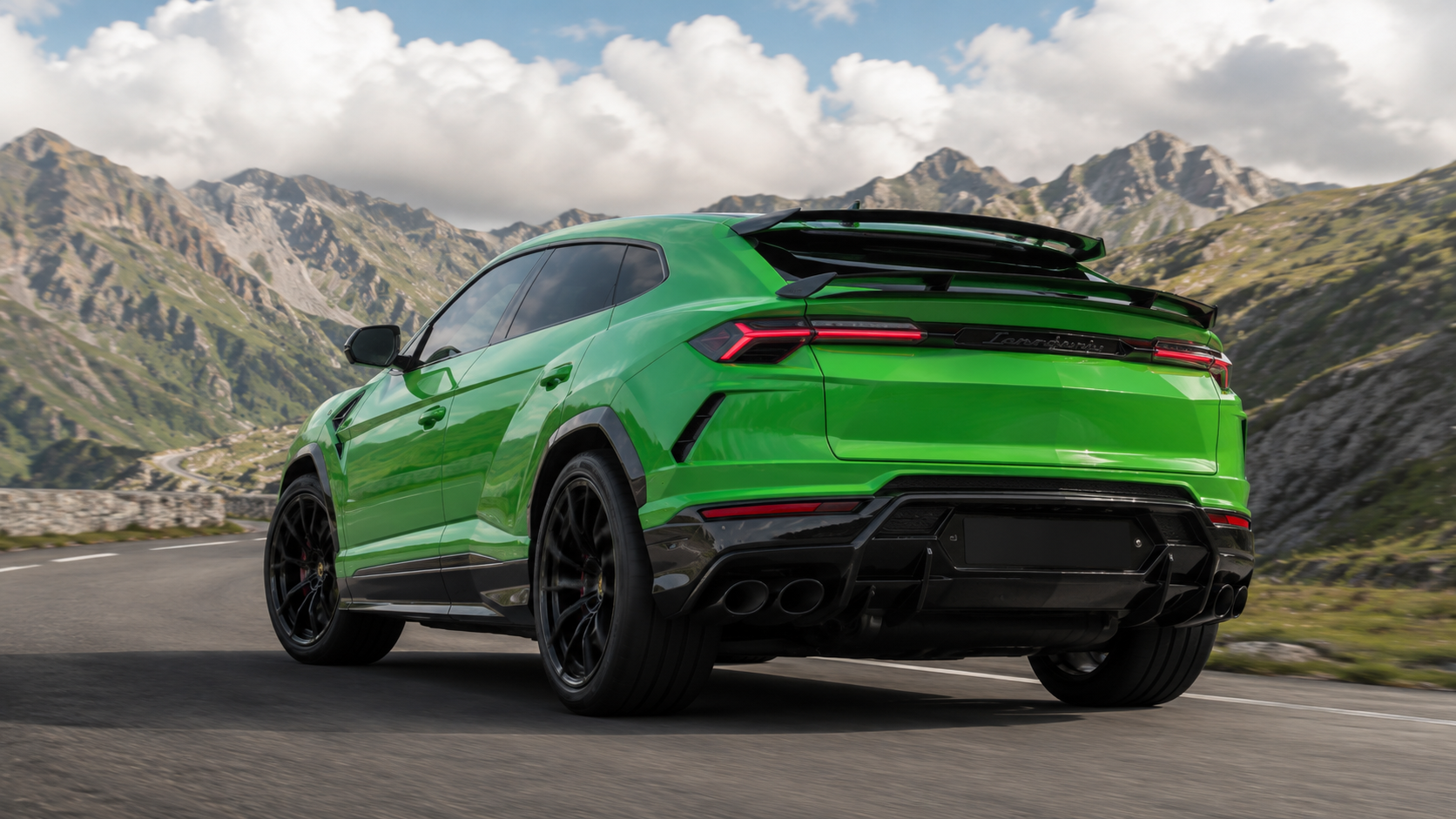
The front end has two practical jobs: direct more air to the radiators and reduce lift. At the rear, two spoilers work together - an upper and a lower one. Together they help stabilize the SUV at speed, while the diffuser manages airflow underneath the car.
drag has been reduced by 3% compared with the Urus SE;
downforce is up by 23% compared with the Urus SE;
front-axle downforce has increased by 22% compared with the previous Urus Performante;
brake cooling efficiency has improved by 8% compared with the Urus SE.
These figures come from the manufacturer. They do not guarantee the same feel on every road, but they explain why the Performante gets new hood vents, fender ventilation and a separate NACA duct that directs air to the brakes. Lamborghini revealed the full list of changes in the official launch story.
AURA suspension: the main technical upgrade
The most important chassis change is the AURA system with two-chamber air springs and two-valve dampers. Unlike a conventional air suspension, this setup lets you adjust stiffness and damping separately over a wide range: one chamber is tuned for dynamic driving, while the second is engaged where ride comfort matters more.
Lamborghini says this setup cuts body roll in spirited driving by 55% compared with the previous Urus Performante, and reduces vibration in comfort modes by 25%. These claims should be read as the brand's internal measurements, but the basic idea is clear: instead of choosing between a stiff track setup and a soft everyday one, the suspension changes its character depending on the situation.
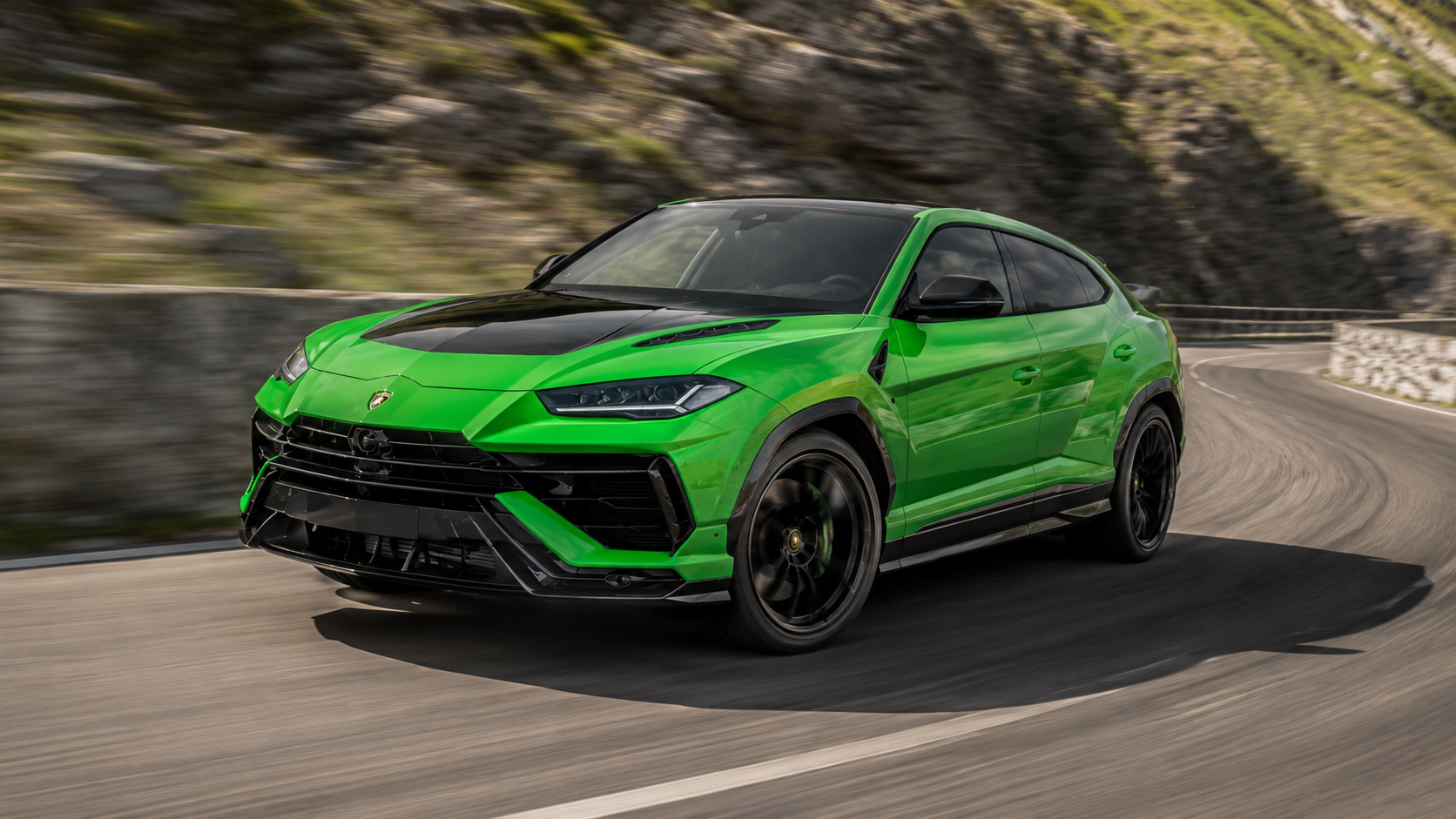
The front and rear tracks are 16 mm wider. Combined with rear-wheel steering, this should make the car more stable in sudden lane changes and quicker when changing direction. For an SUV weighing almost 2.5 tons, such settings matter more than another power increase: they determine how confidently the car behaves at high speed and through a series of corners.
What the 6D sensor measures and why it needs eight accelerometers
The Urus SE Performante gets a 6D sensor, used by Lamborghini for the first time on the limited-production Fenomeno. It is located near the vehicle's center of gravity and records acceleration along three axes, as well as angular speeds related to roll, pitch and yaw.
Eight accelerometers are added to it: four are at the wheels, and four more are on the body. These data are used by the brake, traction and stability control units. In theory, the electronics can not only react to a slide that has already started, but also pre-emptively adjust brake pressure and torque delivery based on body movement and available grip.
For the driver, that does not mean the car will go faster without any input. But in a heavy, powerful SUV, predictive control can make responses smoother and the transition between grip and slip less abrupt.
From track to gravel: how the modes work
The Urus SE Performante has four main driving modes: Strada, Sport, Corsa and Rally. They work together with four hybrid strategies - EV, Hybrid, Recharge and Performance. Modes are selected with the Tamburo dial on the center console.
EV is designed for driving without the V8 engaging. Hybrid is aimed at balancing engine and battery use. Recharge allows the battery to be charged to 80% while driving in Strada, Sport or Corsa. Performance uses the powertrain's full potential when outright pace becomes the priority.
Rally is the most notable addition. In this mode, the suspension should keep the tires in contact with loose surfaces better, while the transmission sends more torque to the rear so the driver can control the car with slides. That is a rare scenario for an Urus owner, but it clearly shows the intent behind the Performante version: it is meant to be not just faster on paper, but set up in a noticeably different way.
Interior: less decoration, more cockpit feel
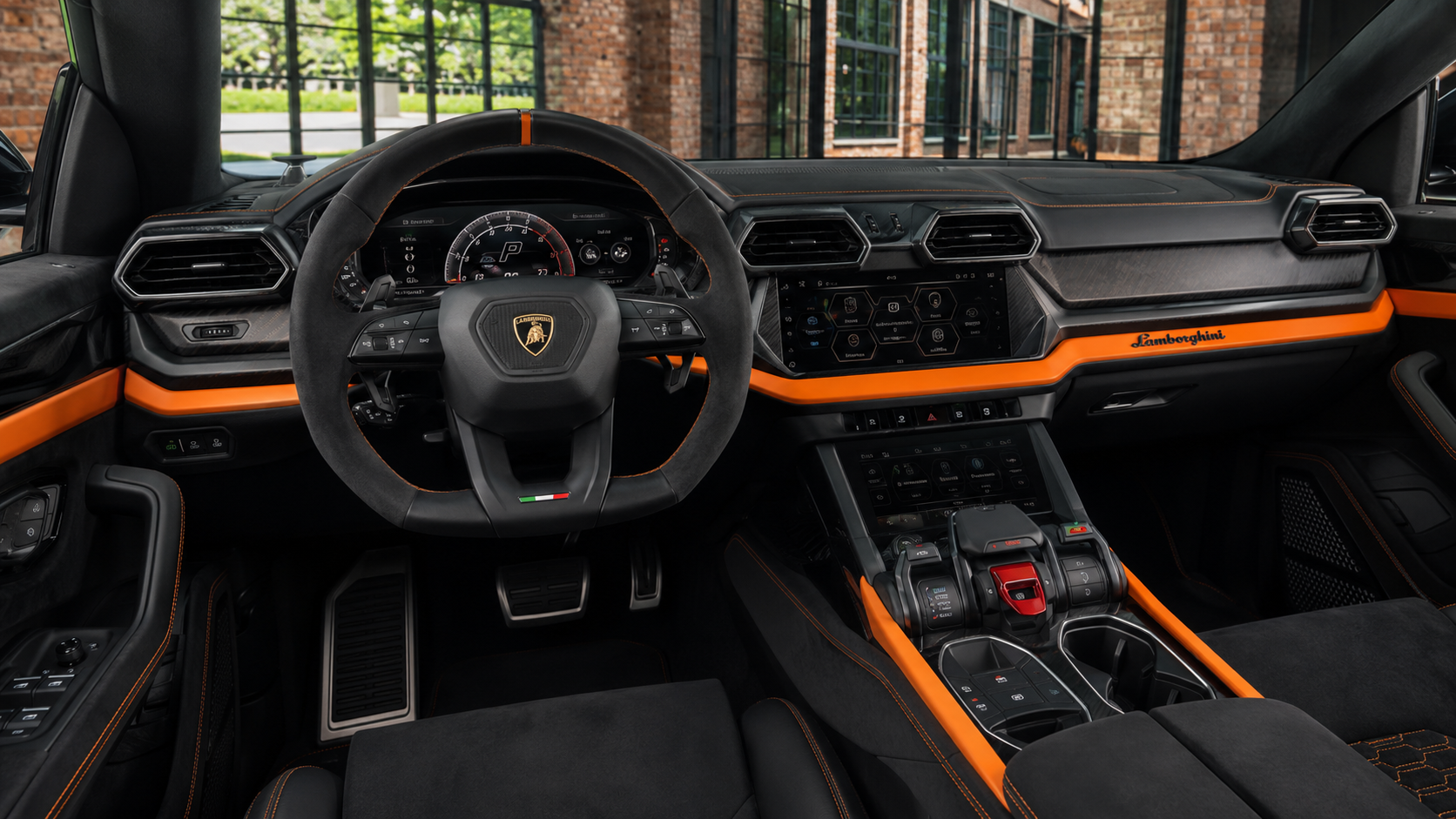
Inside, Lamborghini has kept the familiar Urus layout, but added special materials and graphics. The dashboard, seats, doors and headliner use CorsaTex by Dinamica microfiber, and there is more carbon trim throughout. The new steering wheel gets a carbon insert, while some elements feature Y-shaped motifs and contrast red stitching.
The 12.3-inch central display gets an updated interface inspired by the Revuelto. Another 12.3-inch screen serves as the digital instrument cluster. The Performante version also gets its own telemetry system, which displays vehicle dynamics data and works with the driver-assistance systems.
The bottom line
The Lamborghini Urus SE Performante is not a new type of Urus, but the most performance-focused version of the hybrid platform. Its key differences are 812 hp, a body that is 32 kg lighter, revised aerodynamics, the AURA two-chamber air suspension, a 6D sensor and Rally mode. Here, the hybrid system is not only for electric range, but above all for a faster and more predictable response from a heavy SUV.
At the time of the premiere, Lamborghini disclosed the technical specifications, but did not publish prices or delivery schedules for individual markets. So the Urus SE Performante's place in the range and its real cost can be judged only after local price lists appear.