 EN
EN

Frequently asked questions
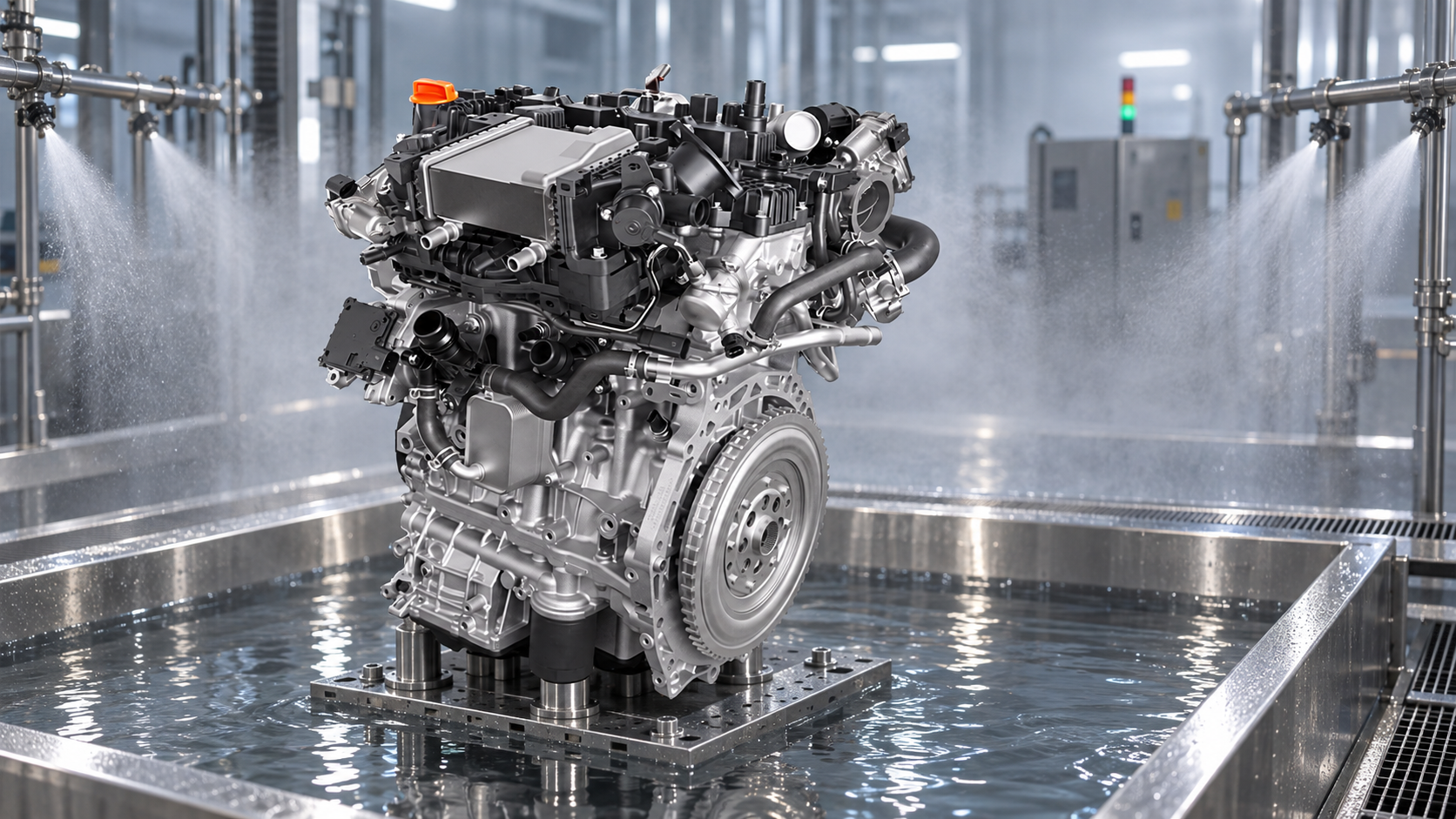
The HORSE B20 is a 2.0-liter turbocharged gasoline engine designed to operate when the powertrain is submerged to a stated depth of up to 1.1 meters. It is intended for hybrid SUVs and pickup trucks crossing deep water, not for boats.
Water does not replace the engine’s air supply or take part in its operation. HORSE says the engine uses a sealed housing, protected electrical components and sensors, and a sealed connection to the transmission. The finished vehicle must determine the air-intake and exhaust arrangement.
No. The 1.1-meter figure refers to the stated capability of the HORSE B20, not automatically to every vehicle using it. The vehicle manufacturer must also protect components such as the high-voltage battery, traction motors, power electronics, connectors and transmission, and specify the permitted depth and speed for water crossings.
The HORSE B20 is a 2.0-liter gasoline turbo engine designed to operate when the powertrain is submerged in water to a depth of up to 1.1 meters. HORSE Powertrain disclosed its specifications on September 8, 2026. The engine is not intended for boats, but for hybrid SUVs and pickup trucks that have to cross deep water.
Water does not take part in the engine’s operation or replace its air supply. The B20’s stated distinguishing feature is the sealing of its housing, electrical components, and connection to the transmission. Official materials do not explain how air intake and exhaust are arranged in a particular vehicle; that is the responsibility of the complete powertrain.
Three Dates in the History of the HORSE B20

On April 23, 2025, Geely presented the Galaxy Cruiser prototype at the Shanghai Auto Show. The manufacturer said it would feature a water-crossing radar, an automotive sonar system, the ability to cross water more than 800 mm deep, and the ability to remain afloat for up to two hours. These capabilities are described on the official Geely website.
In April 2026, HORSE showed the B20 engine for the first time at the Beijing Auto Show. At that point, the detailed specifications were not accompanied by any announcement of the start of mass production.
On September 8, 2026, HORSE published a technical description of the B20 and said that the engine had been used in the Geely Galaxy Cruiser 700 plug-in hybrid powertrain for the Chinese market.
Do Not Confuse the Prototype with a Production Vehicle
The 2025 Galaxy Cruiser demonstrated a range of off-road technologies under development. HORSE’s September 2026 announcement named the Galaxy Cruiser 700 with the B20 and a 3DHT230 three-speed hybrid transmission. However, HORSE has not disclosed when engine production will begin, how many units will be built, or which other models will receive it.
HORSE B20 Specifications
Parameter | Stated data |
|---|---|
Type | Turbocharged gasoline inline four-cylinder engine |
Displacement | 1.999 L |
Injection | Gasoline direct injection, GDI |
Power | 140–185 kW, or approximately 190–252 hp |
Torque | 300–380 N·m |
Weight | 130 kg |
Operating cycle | Miller cycle |
Stated thermal efficiency | 48.4% |
Water protection | IPX8, operation when submerged to a depth of up to 1.1 m |
Hybrid configurations | HEV, PHEV and REEV |
Emissions standard | China 6b |
The 140–185 kW range means the engine can be tuned for different vehicles and hybrid configurations. In a conventional HEV, it works alongside an electric motor; in a PHEV, it supplements a battery that can be charged from the grid; and in an REEV, it may primarily drive a generator while the electric system powers the wheels.
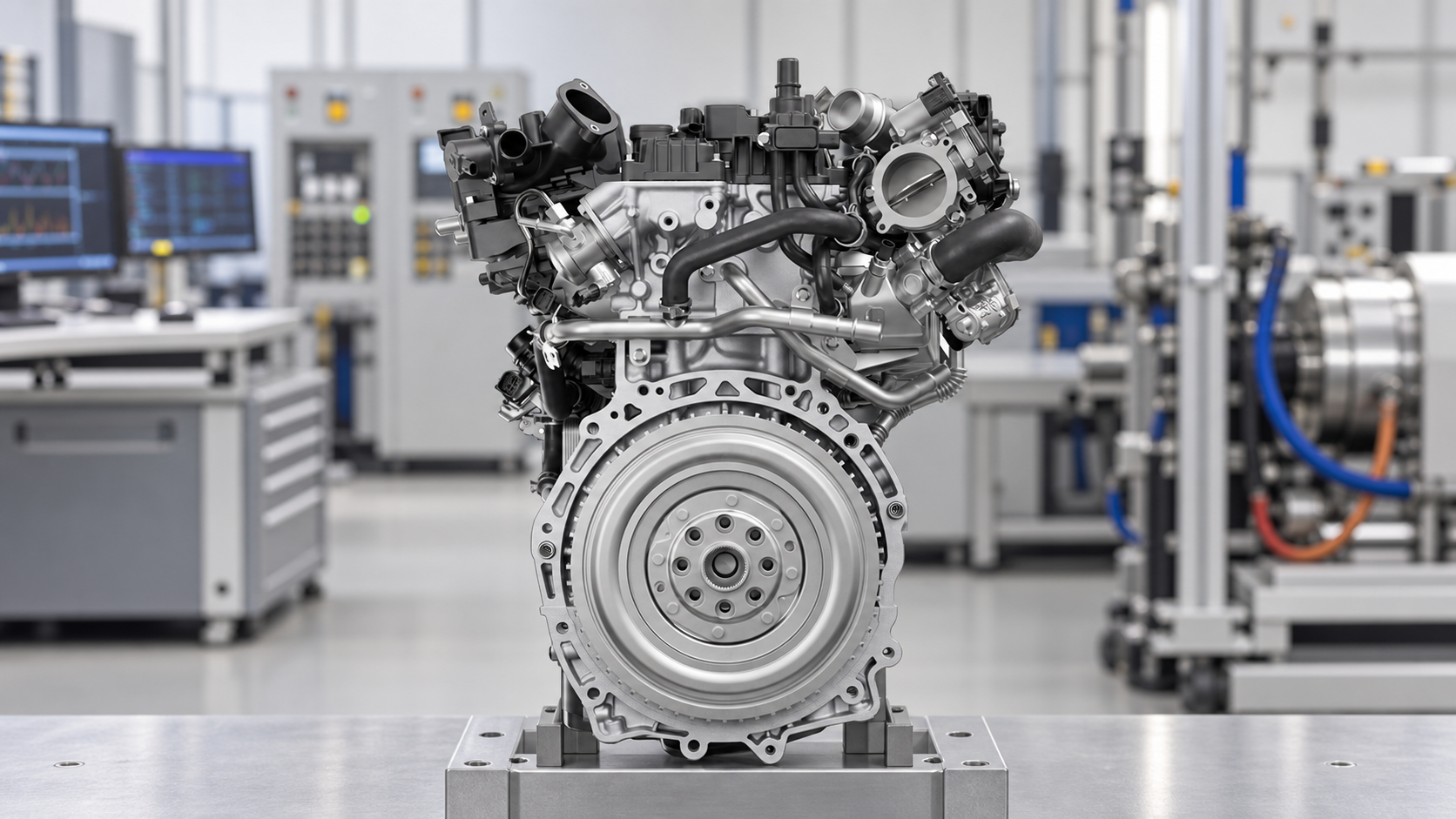
The 48.4% efficiency figure is the manufacturer’s claim, not the result of an independent vehicle test. It refers to the engine’s thermal efficiency: the share of the fuel’s energy converted into useful mechanical work at the shaft. This figure alone cannot be used to calculate the fuel consumption of a specific SUV; that would also require the vehicle’s weight, aerodynamics, battery and transmission specifications, and hybrid-system control algorithms.
How the Engine Is Protected from Water
HORSE describes the B20 as a fully sealed power unit. Special seals are used between the engine and transmission, while the design also includes torsional vibration dampers. The electrical components and sensors are protected to IPX8 as well.
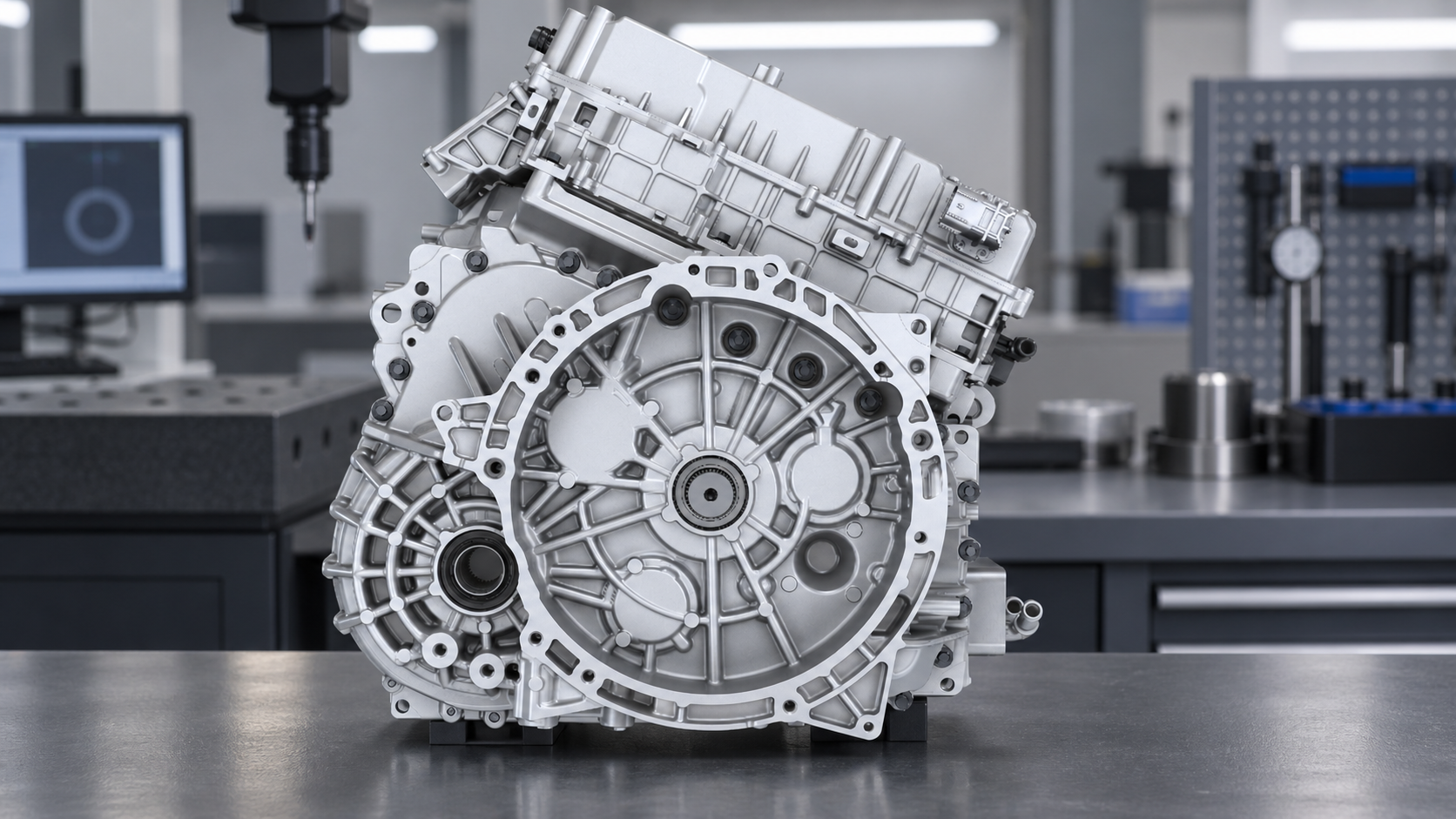
When the sensors detect submersion, the electronic control system changes the operating parameters. It can limit power or adjust accelerator-pedal response. This reduces the load when water is cooling the power unit’s external surfaces and resistance to the vehicle’s movement rises sharply.
A fully active dual-circuit cooling system maintains the temperature range. Lubrication is managed by a variable-displacement oil pump, which adjusts oil flow and pressure according to operating conditions. An aluminum portal-type block, an integrated exhaust manifold, and a simplified balance-shaft system also support operation under sustained high loads.
What IPX8 Means
The IP code classifies how well an enclosure is protected against the ingress of solid particles and water. The letter X means that no dust-protection class is specified, while the number 8 refers to immersion. The classification system itself is established by the IEC 60529 standard. For the B20, HORSE specified the operating condition as a depth of up to 1.1 meters. The official announcement of September 8 did not state how long the engine may remain submerged.
How the B20 Reaches 48.4% Efficiency
The B20 uses the Miller cycle. In this type of engine, the intake-valve closing point is selected to reduce the effective compression ratio relative to the expansion ratio. This can reduce some pumping and thermal losses, although it requires precise calibration of the boost system, fuel injection, and valve timing.
HORSE also specifies high-pressure injectors and intake ports that create intense airflow inside the cylinder. The piston crown uses a squish effect to direct the mixture toward the spark plug at the end of the compression stroke. The aim is to mix gasoline and air more quickly and achieve more stable combustion.
A 100% Grade Is Not a 100-Degree Angle
HORSE claims that the B20 can operate reliably while climbing a 100% grade. In road specifications, a percentage grade represents the ratio of vertical rise to horizontal distance. A 100% grade corresponds to a 1:1 ratio, or an angle of approximately 45 degrees. This describes an engine test condition; it does not confirm that every vehicle equipped with a B20 can climb such a slope.
What the Engine Provides—and What the Vehicle Must Provide
The B20’s sealing protects the power unit and its electronics, but a vehicle’s ability to cross a ford depends on more than the engine. The vehicle manufacturer must protect the high-voltage battery, traction motors, power electronics, connectors, transmission, and ventilation channels. The air-intake location, body sealing, installation depth of control units, and buoyant force generated by the water also matter.

The 1.1-meter depth refers to the stated capability of the HORSE B20, not automatically to every vehicle equipped with this engine. The manufacturer of each model must specify the permitted depth and speed for water crossings. Water can conceal a hole, a current can move the vehicle, and the bow wave in front of the hood can briefly rise above the measured water depth.
What Has Not Been Disclosed Yet
the date when HORSE B20 series production will begin;
how long the engine can operate at a depth of 1.1 meters under the official test conditions;
which vehicles will receive the engine besides the Galaxy Cruiser 700;
the price of the power unit and its production volumes;
the intake and exhaust design in the finished vehicle;
the fuel consumption and specifications of the complete Galaxy Cruiser 700 hybrid system.
The HORSE B20 shows that hybrid powertrain development is not limited to efficiency and driving range. For off-road vehicles, manufacturers must also address cooling, sealing, lubrication, and electronic control during submersion.
The key achievement is not the ability to “drive underwater,” but keeping the engine running while crossing deep water. The technology’s practical value can be assessed only after production vehicles, instructions specifying the permitted wading depth, and independent tests become available.