EN
EN

Frequently asked questions
The concept used an 8.0-liter W16 engine architecturally similar to the Veyron’s, with a supercharged version considered and estimated power of around 800 hp. Engineers claimed it could reach around 350 km/h.
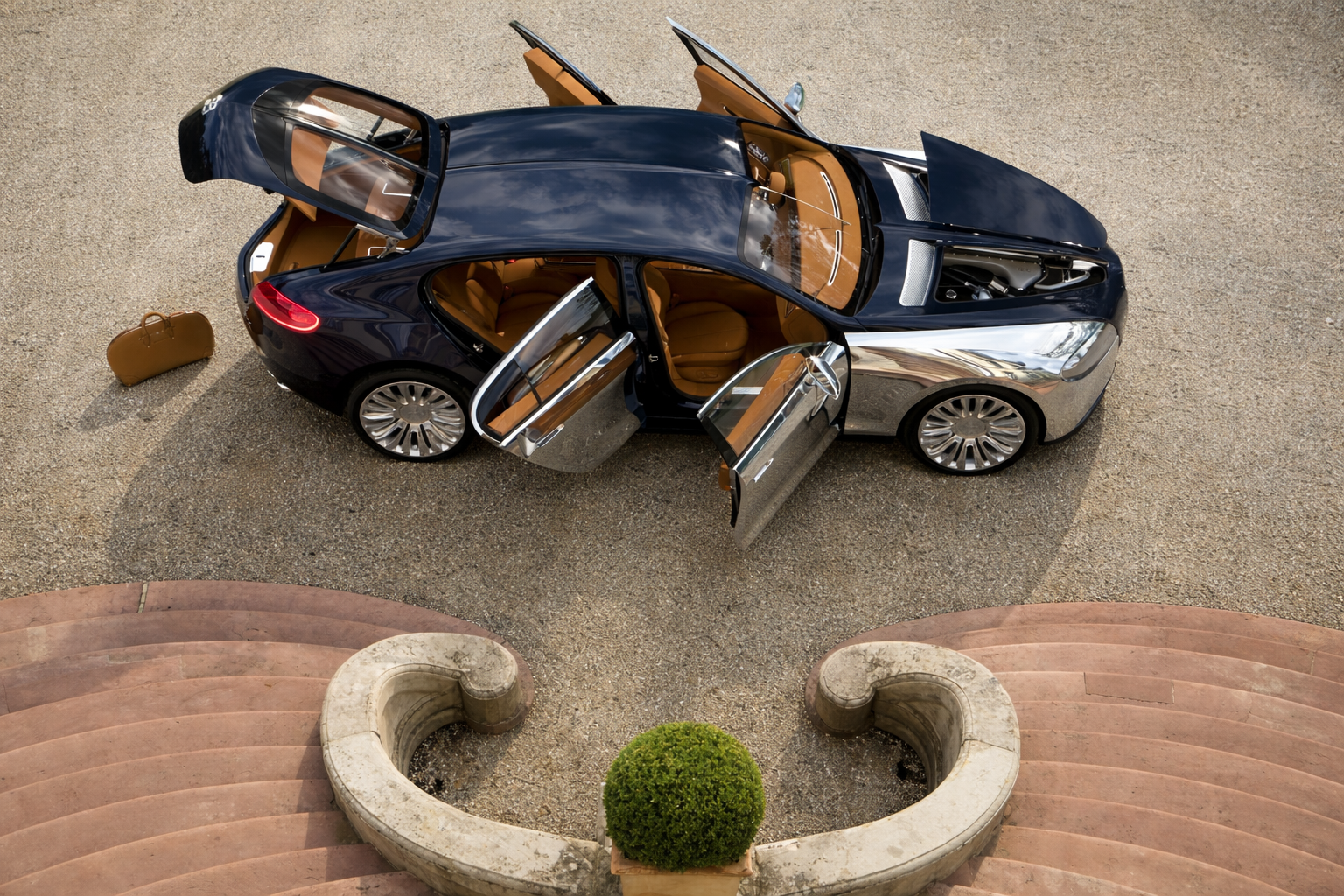
The interior featured hand-finished natural wood and metal, a central panel made from one piece of polished wood, and a removable Swiss Parmigiani Fleurier clock in the dashboard.
The project was not launched into production after Bugatti focused on its hypercar line, which later led to the Chiron. A sedan would also have required a separate platform, significant investment, and new market positioning; the concept was considered too radical for its time.
Bugatti 16C Galibier — the impossible made real
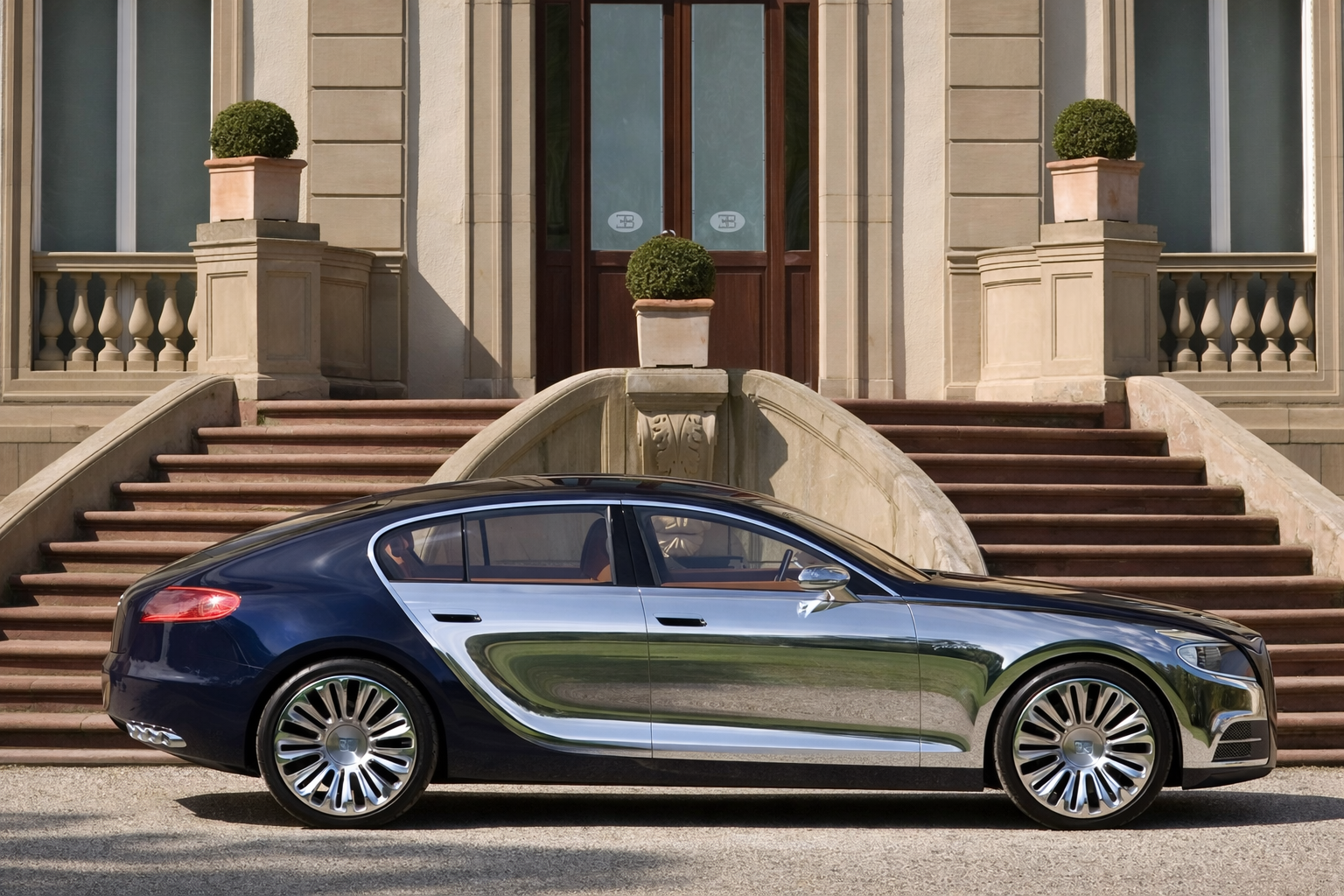
In a world where the name Bugatti is primarily associated with two-door hypercars, the idea of a four-door sedan with a W16 engine seemed almost audacious. But in 2009 the company unveiled the 16C Galibier concept — a car meant to combine limousine-level luxury with the power of the Veyron.
The Galibier was not just a design experiment. It was a genuine engineering project capable of changing perceptions of the ultra-luxury sedan class.
W16 Engine: a heart from a hypercar
Bugatti fitted the Galibier with the famous 8.0-liter W16 engine — architecturally similar to the one used in the Bugatti Veyron.
Technical concept
16 cylinders in a W configuration
Displacement — 8.0 liters
Mechanical supercharger (the concept considered a supercharged version)
Estimated power — around 800 hp
For a sedan, these were truly hypercar figures. Engineers claimed the car could reach around 350 km/h — a figure unattainable for most executive models.
Luxury without compromise
If from the outside the Galibier looked like a sleek grand tourer with four doors, inside it revealed a completely different design philosophy.
Interior as a work of art
Natural wood and metal, hand-finished
Central panel made from a single piece of polished wood
Removable Swiss Parmigiani Fleurier clock in the center of the dashboard
Each detail was crafted as a piece of high craftsmanship. It was not simply an interior — it was a demonstration of how a hypercar can become a space for four passengers.
Why the Galibier never reached production?
Despite serious intentions, the project was not launched into production. There are several reasons:
Strategic changes
After the success of the Veyron, the company focused on developing its hypercar line, which later led to the Bugatti Chiron.
The sedan would have required a separate platform, significant investment, and a new market positioning.
An idea too bold for its time
At the time, the market for ultra-luxury sedans was only forming into its modern shape. The Galibier proved to be a concept ahead of its time — the combination of 16 cylinders and four doors seemed too radical.
Legacy of the Galibier
The Bugatti 16C Galibier remains one of the brand's most ambitious unrealized projects. It showed that class boundaries are flexible and that a sedan can be as extreme as a coupe.
Today, as the industry undergoes a shift toward electrification and new formats, the Galibier idea sounds particularly interesting: a hypercar for four — without compromises in power or status.
Conclusion
The Bugatti 16C Galibier is not just a concept. It is a bold statement about what a top-class car can be: fast, rare, technically advanced, and emotionally powerful.