 EN
EN

Frequently asked questions
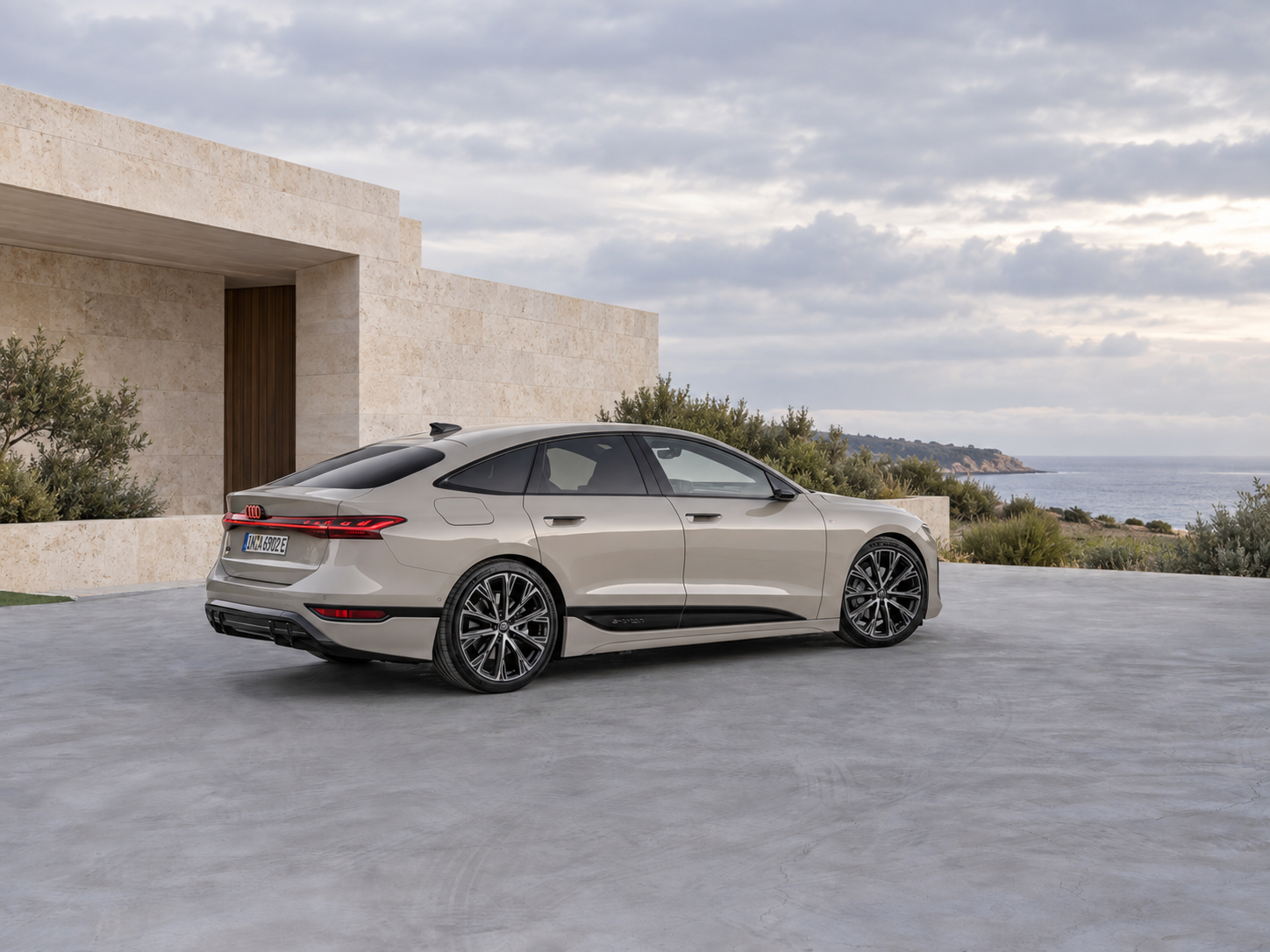
Miko Marczyk drove an Audi A6 Sportback e-tron in performance specification. The record does not apply automatically to the Avant estate, S6 or versions with a different battery.
The record attempt focused on energy efficiency under selected conditions, while WLTP is a standardised comparison procedure. Exceeding the WLTP figure does not make the official figure inaccurate or turn the record into a new benchmark.
No. The result came from one run under specific conditions, including an average temperature of 15 °C and a focus on efficiency. Everyday range depends on factors such as route conditions, consumption, available battery energy and access to charging.
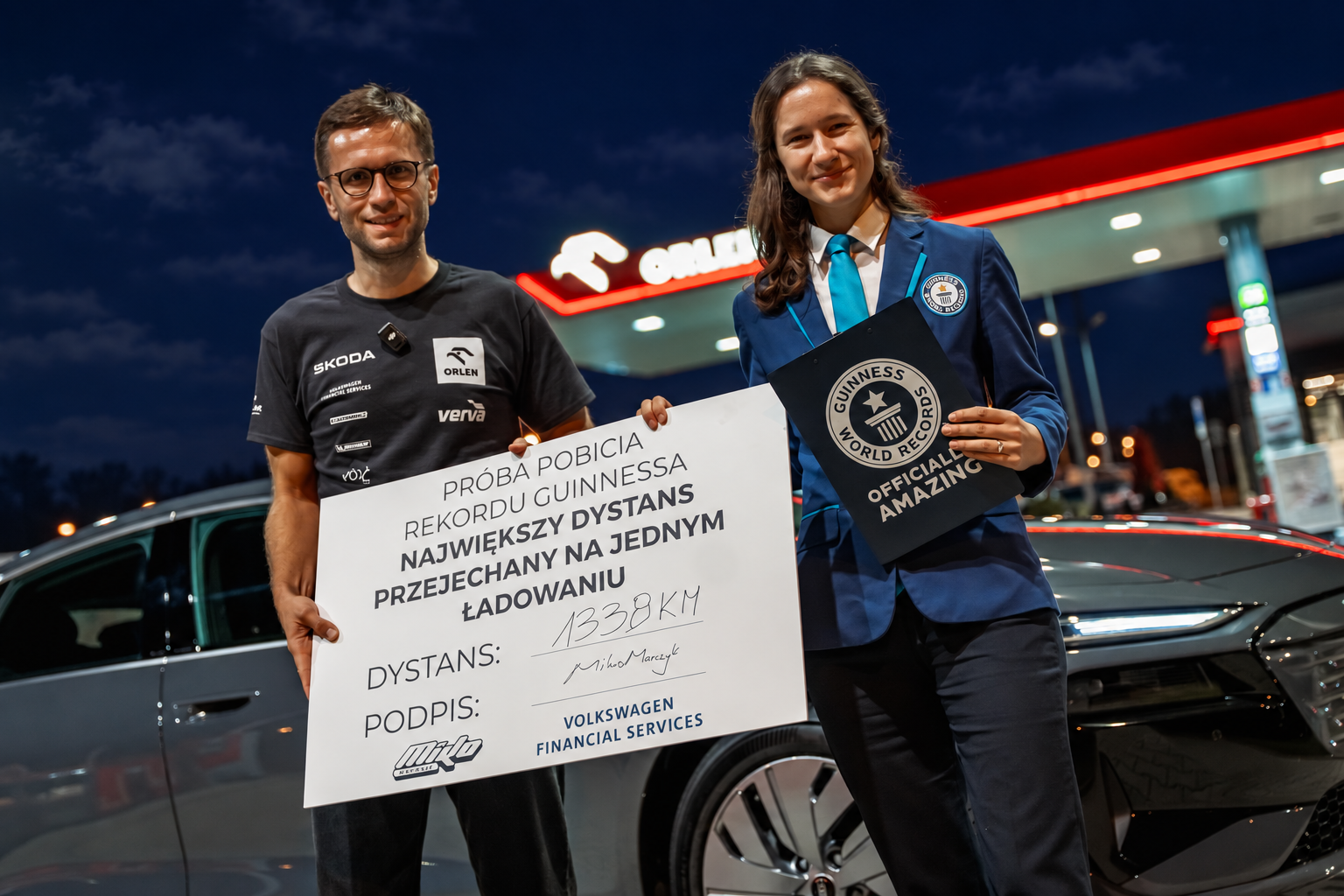
On September 24, 2026, Audi announced a Guinness World Record: rally driver Miko Marczyk drove an A6 Sportback e-tron performance for 1,338 km on a single charge. Average consumption was 7.09 kWh/100 km. The result shows how far the car can travel when efficiency is the priority. However, using this distance to plan an everyday journey would be a mistake.
When and under what conditions did the run take place?
According to Audi’s official account, Marczyk set off on September 11, 2026, at 01:55. The route ran through Kraków, Warsaw and Toruń to Hel on the Baltic Sea, then continued back in the opposite direction. The run ended between Toruń and Ciechocinek more than 45 hours after the start.
The car travelled on public roads, including during rush hour. The average temperature was 15 °C, while it fell to 7 °C in Grudziądz in the morning. These were the specific conditions of one run; they cannot automatically be applied to a winter motorway journey or a different route.
What does the figure “45 hours” actually mean?
The time from start to finish and the time spent driving are different figures. In this material, Audi does not provide a detailed schedule of stops or the average speed while the car was moving. Dividing 1,338 km by 45 hours and calling the result the car’s speed would therefore be incorrect. There is also no basis for claiming that the driver remained behind the wheel continuously throughout that period.
Which A6 e-tron set the record?
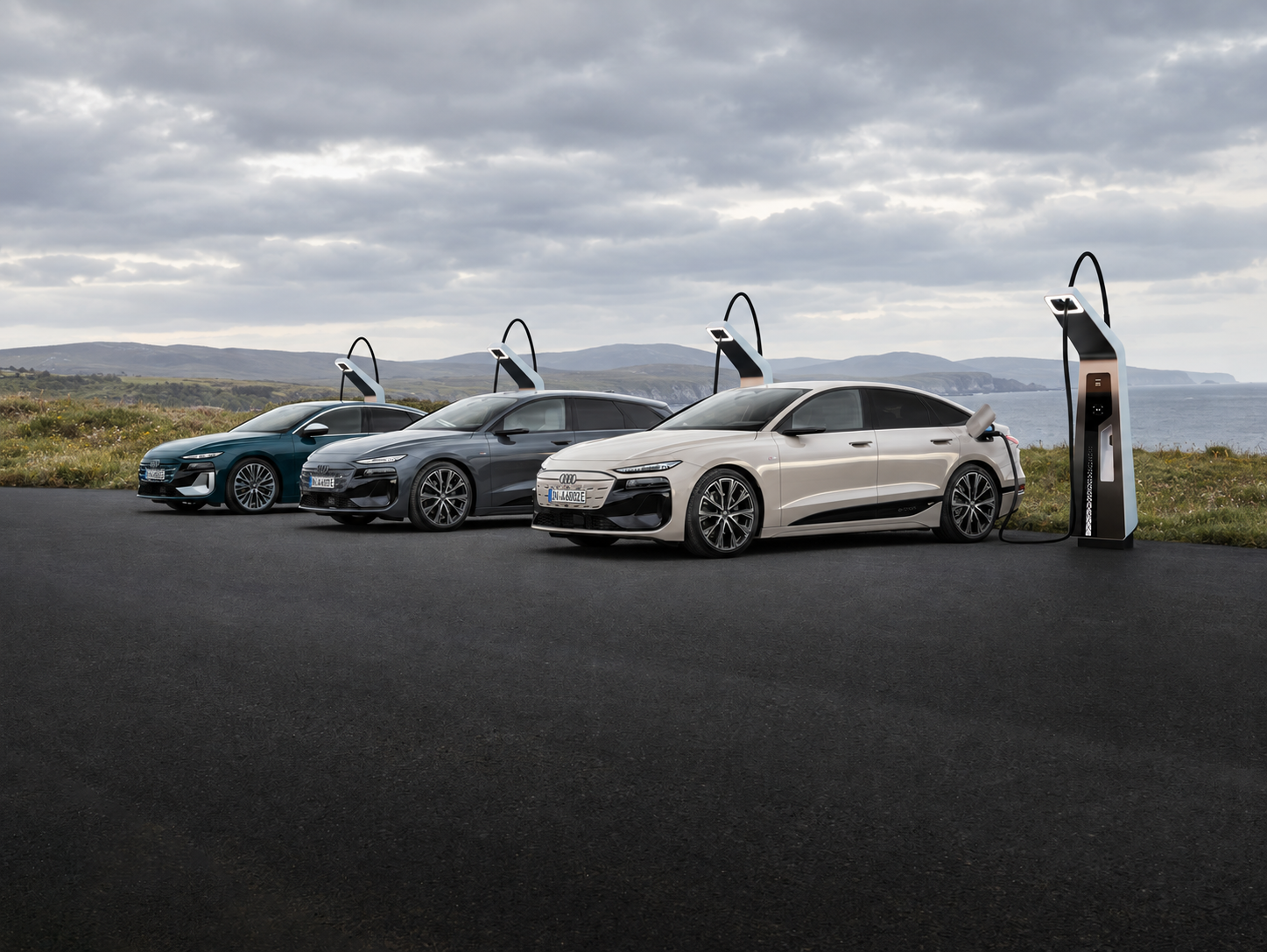
The run used the Sportback in performance specification. Audi presented the production A6 e-tron family on July 31, 2024. In its official launch material, Audi lists rear-wheel drive, 270 kW of power and a 100 kWh battery for the performance version, of which 94.9 kWh is usable.
The record applies to the specific Sportback performance version. It was not a test of every A6 e-tron model, so the result cannot be transferred to the Avant estate, S6 or a car with a different battery.
Metric | Value | How to interpret it |
|---|---|---|
Distance covered | 1,338 km | The result of one journey on a single charge |
Consumption during the run | 7.09 kWh/100 km | An achieved figure, not a promise of everyday consumption |
WLTP range | Up to 777 km | The figure quoted by Audi in its September 24, 2026 announcement |
Battery capacity | 100 kWh gross; 94.9 kWh usable | Usable capacity is used when calculating available energy |
Why did it travel farther than the WLTP figure?
WLTP is used to compare vehicles under a standardised procedure. It is not the maximum distance a car is physically capable of covering. In Audi’s explanation of the test method, the company states that the cycle covers different driving conditions, from urban traffic to motorways, and takes the effect of equipment on weight and aerodynamics into account.
The record attempt answers a different question: what range can be achieved by focusing on energy efficiency under selected conditions? Exceeding the WLTP figure therefore does not make the official figure inaccurate, nor does it turn the record into a new benchmark.
The Sportback has a drag coefficient of Cd 0.21. During deceleration, the electric motor can return some energy to the battery: Audi quotes a maximum recuperation power of up to 220 kW. This is not a constant output and does not provide extra energy without losses—the extent of recuperation also depends on factors including temperature and state of charge.
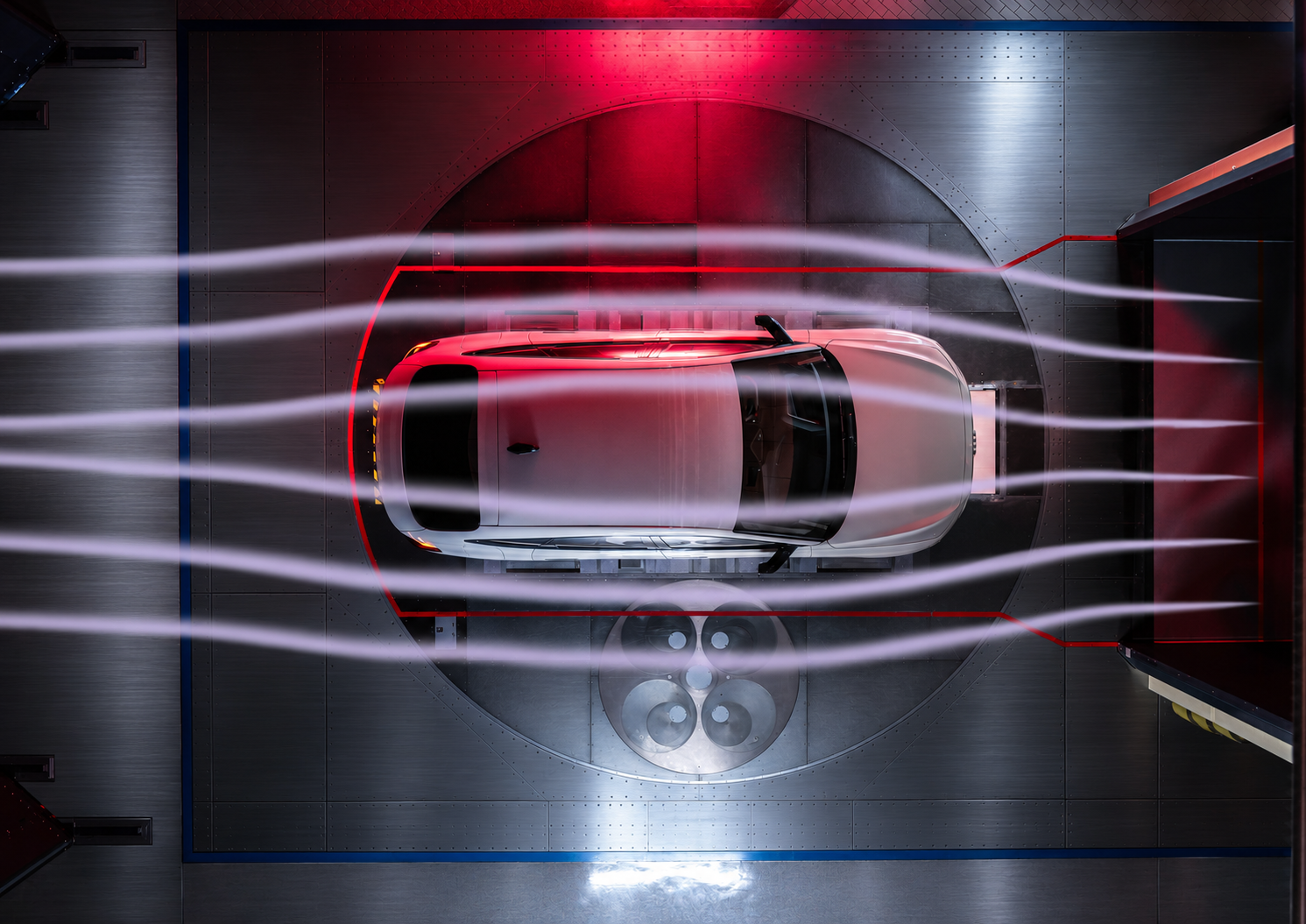
Range depends on how much energy the car uses for each kilometre. A large battery provides more stored energy, but it does not explain the result by itself: the same capacity produces a different distance at a different consumption level.
Calculating the distance between charges
For a simple example, take a new battery with 94.9 kWh of usable capacity and an assumed operating range from 80% to 10% charge. This provides approximately 66.4 kWh: 94.9 × 0.70. This is a selected calculation scenario, not a required way to operate the car.
At an assumed consumption of 15 kWh/100 km, the range would be about 443 km.
At 20 kWh/100 km, it would be about 332 km.
At 25 kWh/100 km, it would be about 266 km.
All three consumption figures are provided for illustration; they are not results from a road test of the A6 e-tron. The formula is simple: divide available energy by consumption and multiply by 100. For your own journey, use the actual consumption figure and take the battery’s condition into account. This calculation is more useful than the record distance when you need to choose the next charging stop.
What to check before a long journey
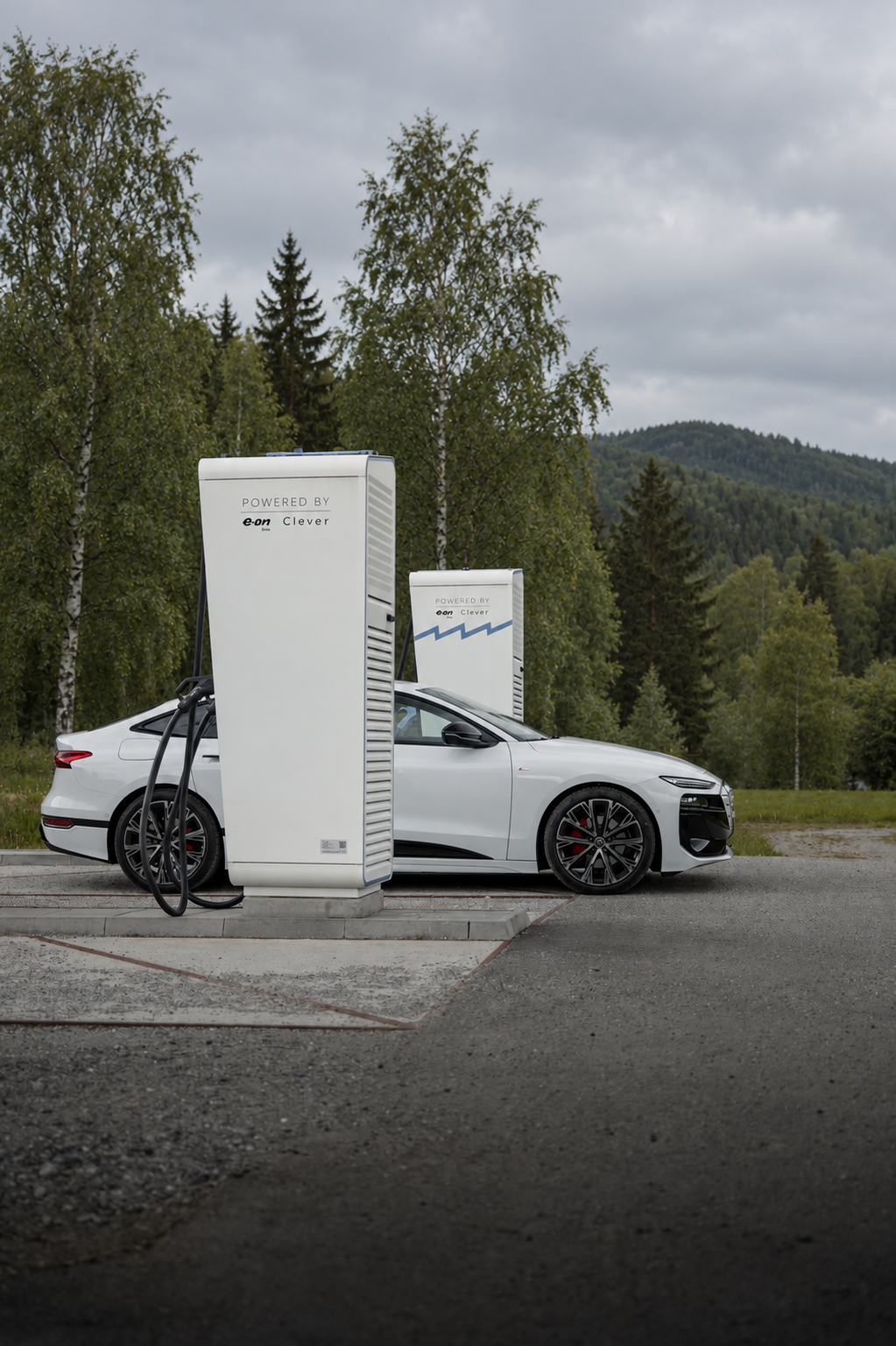
For an owner, the key factors are consumption on the planned route and the ability to recharge. For the A6 e-tron performance, Audi quoted fast-charging power of up to 270 kW and a 10–80% charge time of 21 minutes under suitable conditions. This describes a charging session, not a guaranteed duration for every stop: the station and the battery’s readiness for fast charging also need to be considered.
Check the exact vehicle version, usable battery capacity and official range for that specification.
Estimate consumption in conditions similar to the planned journey, rather than using the figure from the most economical short section.
Check the charging stations along the route and keep enough energy in reserve to reach an alternative location.
The 1,338 km result demonstrates efficiency potential, but it does not replace route planning. For everyday drivers, the most useful lesson is the relationship between consumption, available energy and the distance to the next charger. Those three values determine where the car will need to stop.