EN
ENDEALER

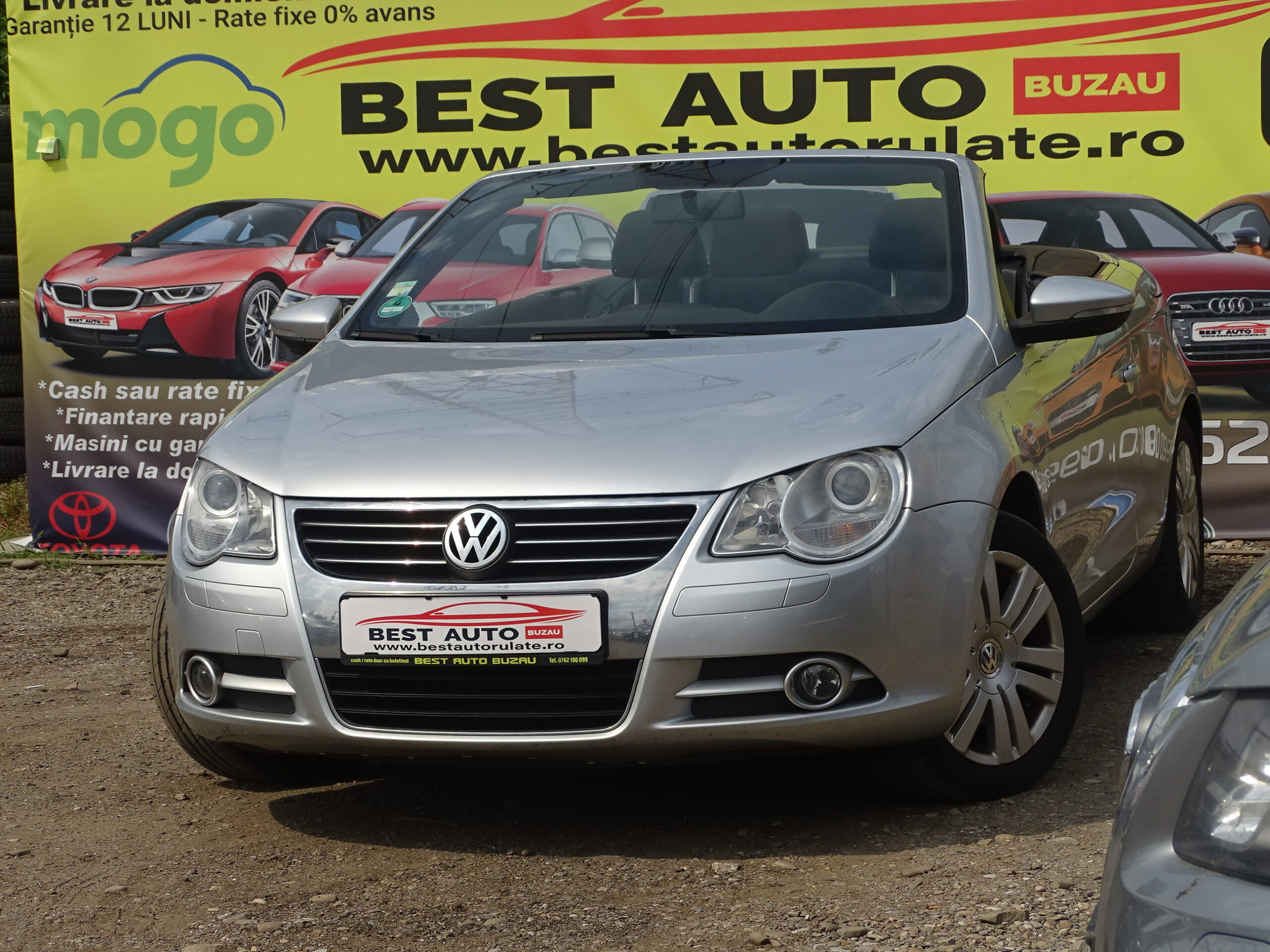
2009, gasoline, manual, 36K km, cabriolet, 1,984 cm3, 150 hp, blue, 2.0-16v fsi, Used condition, Europa, In stock, sale date 16.10.2026 03:15

CarOutlet.eu
 Netherlands
Auction starts
16 Oct, 03:15






















 Netherlands
 Romania, Bistriţa-Năsăud
 Romania, Bacău
 Romania, Buzău
 Romania, Buzău
If you are shopping for a Volkswagen Eos, the smart approach is not to rush the first decent-looking ad. Cars like this often attract buyers who want something a little different from the usual hatchback or coupe, so the best purchase usually comes from patience, good comparison habits, and a bit of skepticism. When a Volkswagen Eos appears in the EU market, the real question is not just whether it looks clean in photos, but whether the seller understands the car, has looked after it properly, and can prove the story behind it.
A Volkswagen Eos is often chosen with the heart as much as the head. That changes how you should read listings. With ordinary used cars, buyers can simply skip a weak ad and wait for the next ten. With a more specific choice like the Volkswagen Eos, it is often better to investigate carefully before dismissing an offer, but it is equally important not to talk yourself into a bad one just because the model is not everywhere.
That balance matters in the EU market. A seller with a brief description, few photos, and vague ownership history may still have an honest car, but on a niche-style search you should ask more questions, not fewer. If the answer to every detail is “I don’t know” or “come see it and decide,” treat that as a warning. A seller who has lived with a Volkswagen Eos for a while can usually explain what has been maintained, what works as it should, and what small flaws the next owner should expect.
Before you contact anyone, compare listings the way an experienced buyer would. Look for a full walk-around, cabin photos in daylight, clear images of the roof closed and open if available, the boot area, seat wear, steering wheel condition, and details around panel gaps and trim. On a Volkswagen Eos, incomplete photos are more suspicious than on a simpler used car, because buyers need to understand both everyday wear and the condition of the more complicated body-and-roof setup.
One useful trick: if the ad talks about “excellent condition” but avoids close photos of switches, seat bolsters, roof seals, or the luggage area, ask for them before arranging a viewing. Sellers of genuinely tidy cars usually do not mind. Weak offers often hide behind dramatic exterior photos, low-effort descriptions, and no document images. That does not automatically mean the car is bad, but it does mean the burden of proof shifts to the seller.
The best first message for a Volkswagen Eos is short and specific. Ask how long the seller has owned it, whether service history is documented, whether the roof operates smoothly through a full cycle, whether there are any dashboard warning lights, and whether any leaks, electrical faults, or recurring issues need attention. Also ask when routine maintenance was last done and whether there are invoices rather than only verbal claims.
This is where many average offers fall apart. A good seller normally answers in complete sentences and gives context: when the car was serviced, what was replaced, what still needs doing, and why the car is being sold. A weak seller often replies with one-word answers, avoids document questions, or keeps repeating that the Volkswagen Eos “drives perfectly” without saying anything useful. For this kind of car, ownership quality matters as much as mileage and visible condition.
Watch how the seller describes use. A Volkswagen Eos that was clearly enjoyed, maintained, and explained honestly can be a stronger buy than a supposedly pristine example with a thin story and no paper trail. Sometimes the better listing is the one where the owner openly mentions a cosmetic flaw, a recent service item, or a minor issue still to monitor. That kind of transparency is usually worth more than polished marketing language.
Another useful observation: buyers searching the EU market for a Volkswagen Eos can become too focused on finding the “perfect spec” and not focused enough on finding the best-kept example. Equipment matters, of course, but a well-documented car with believable mileage history and consistent presentation is usually the safer visit than a more tempting version with gaps in its story. Rarely does a weak listing become a strong car just because the color or trim is attractive.
When you go to see a Volkswagen Eos, start by checking whether the car matches the listing, not by getting impressed too quickly. Does the paint condition fit the photos? Do the interior wear points match the claimed mileage and care? Do all keys, manuals, and registration papers line up with the seller’s story? If the ad emphasized careful ownership, the small details should support it.
Then move to operation. Check cold start behavior if possible, listen for anything unusual at idle, try major electrical functions, and pay attention to whether the roof action appears smooth and confident rather than hesitant or improvised. You do not need to act like a technician, but you do need to notice whether the seller is relaxed about demonstrating everything. Hesitation, excuses, or “better not try that now” are not good signs on a Volkswagen Eos.
A lot of buying mistakes happen when shoppers compare a real car in front of them with an imaginary perfect one. In practice, you should compare one Volkswagen Eos listing against other available used offers by documentation quality, condition consistency, seller clarity, and how many questions remain unanswered after the call. If several doubts survive before you even inspect the car, that is usually enough reason to keep looking.
It also helps to compare the Volkswagen Eos with nearby alternatives in your shortlist, not to talk yourself out of the model, but to judge whether this particular seller has done enough to earn your time. A strong listing saves you effort: clear photos, readable history, sensible description, and a seller who sounds organized. A weak one makes you do detective work from the first message.
The right Volkswagen Eos is usually the one that feels coherent. The ad, the paperwork, the visible condition, the seller’s answers, and the test drive should all tell the same story. If one part feels too polished while the rest feels vague, step back. Patience is not wasted on a car like this; it is often the difference between buying something charming and buying someone else’s unfinished problem.
 Add as preferred sourceSee more from zvelta in Google Search Add as preferred source