 EN
ENDEALER

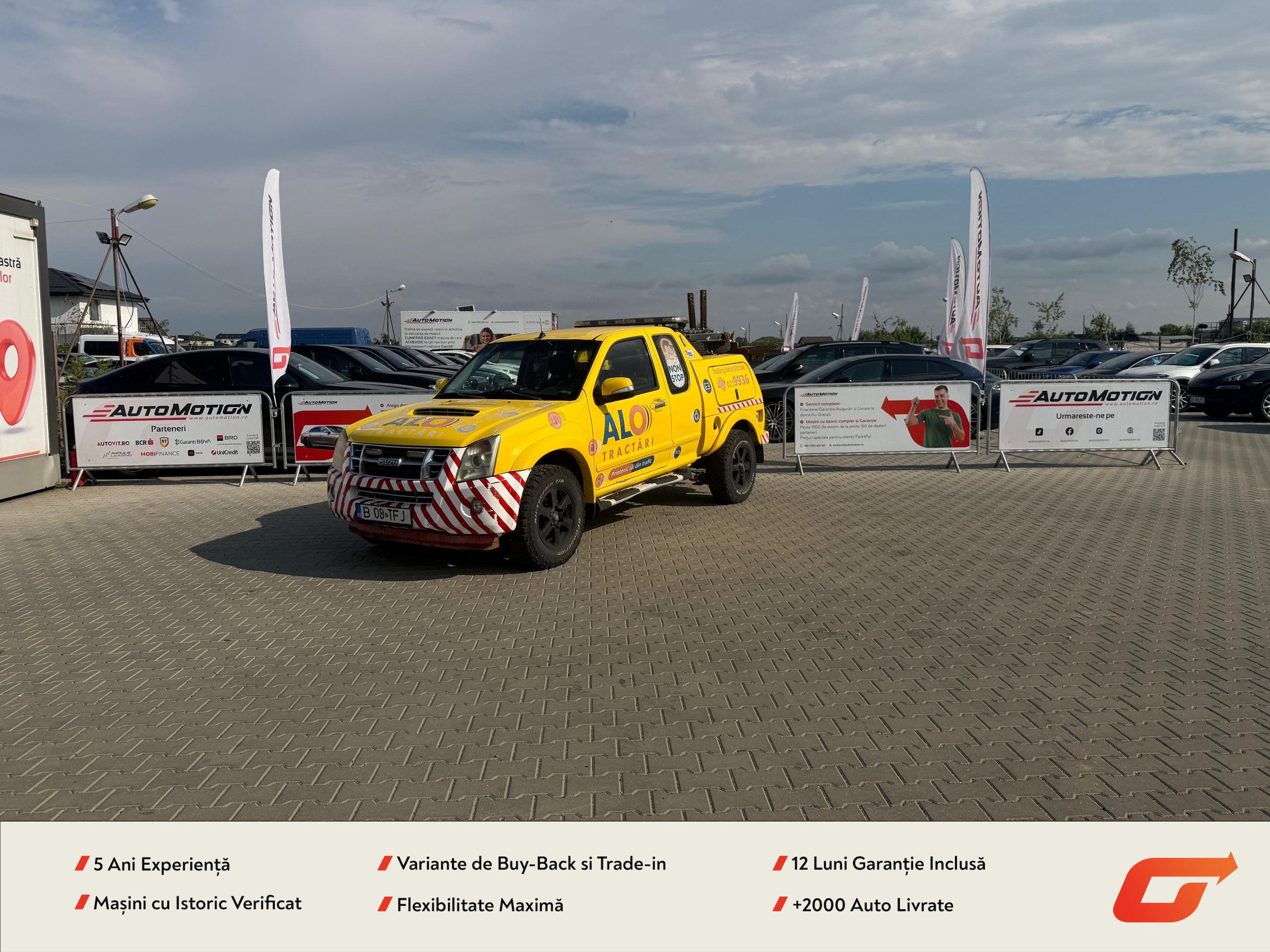
2020, diesel, automatic, 159K km, SUV, 1,898 cm3, 163 hp, white, 1.9 Extended Cab X-Country, Used condition, Europa, In stock, sale date 28.10.2026 06:15

CarOutlet.eu
 Netherlands
Auction starts
28 Oct, 06:15






















 NetherlandsNetherlandsNetherlandsSweden
 Romania
 Oraş Otopeni, Romania
 Greece, Attica
If you are looking at an Isuzu D-Max in the European market, the smartest move is to slow the search down before you speed it up. With only a small number of listings available at any one time, buyers often talk themselves into a long trip too early, or excuse a weak ad just because the model is hard to find. That is exactly how average pickups become expensive projects. A better approach is to treat every Isuzu D-Max listing as a filtered lead: first decide whether the ad deserves your time, then decide whether the truck deserves your money.
The Isuzu D-Max usually attracts buyers who want something more work-minded than lifestyle-led. That changes how you should read offers. Glamour photos matter less than clarity. A seller who shows the bed, tow-related wear, underbody, tyres, and cabin condition is often more useful than one who only posts shiny exterior angles. On a pickup, honest evidence of use is not the problem; vague evidence is. If the ad says little beyond mileage and year, ask why the seller has not shown the areas that matter most on a working vehicle.
Before you contact anyone, compare the basics side by side: body style, drivetrain wording, visible condition, mileage consistency, commercial or private use hints, and whether the seller actually explains maintenance. With an Isuzu D-Max, equipment is worth checking, but history is usually the bigger separator between two similar offers. A simple ad with good records can be the better buy than a prettier truck with almost no story behind it.
Buying an Isuzu D-Max in Europe is often a travel decision as much as a vehicle decision. One decent-looking listing in your own country can be tempting, but so can a cleaner offer a border or two away. That sounds efficient on screen and less efficient at 6 a.m. when you are boarding a train or planning a long drive just to inspect a pickup that may already feel wrong in the first five minutes.
This is where disciplined buyers save money. Ask for extra photos and a cold-start video before you commit to travel. Request images of the load bed, arches, sills, dashboard with ignition on, steering wheel wear, seat bolsters, and whatever service documents exist. If the Isuzu D-Max is being advertised as ready for work, ask what kind of work. If it is presented as lightly used, ask what supports that claim apart from the odometer. Cross-border shopping inside the EU can widen your choice, but it should also raise your standards for proof, because every wasted inspection trip costs real time and real money.
A less obvious point: distance can make buyers too polite. When you have invested in travel, you start negotiating against yourself. You overlook a warning light, excuse rough trim, or accept a weak answer because you do not want the trip to feel wasted. With an Isuzu D-Max, especially one bought from far away, give yourself permission to walk away quickly if the truck is materially different from the ad.
You do not need to interrogate the seller, but you do need to move beyond, "Is everything okay with it?" Ask what the pickup has been used for, how long the current owner has had it, and what has been done recently in terms of servicing or repairs. Ask whether the seller can confirm regular maintenance with invoices, stamps, or parts records. Ask whether there are any known issues that a buyer would notice on a first drive.
For any Isuzu D-Max, useful seller questions include:
These questions are not about catching the seller out. They are about hearing whether the answers come quickly, clearly, and consistently. A confident owner of a well-kept Isuzu D-Max usually knows its recent maintenance story. A vague seller often signals either poor ownership or poor preparation for sale.
Pickup ads often create a false sense of toughness. Mud, accessories, and aggressive tyres can make an Isuzu D-Max look convincing even when the listing itself is weak. Try to ignore the image style and read the details instead. Does the bed look heavily used but unexplained? Do interior wear points match the stated mileage? Does the steering wheel, driver's seat, and switchgear suggest harder use than the ad admits? Are there mismatched tyres, missing trim pieces, or suspiciously selective photo angles?
Also watch for the opposite problem: a very clean truck with almost no underside, bed, or close-up detail. Cleanliness is welcome; absence of evidence is not. On a vehicle like the Isuzu D-Max, buyers should want to see the practical bits, not just the flattering ones.
A good Isuzu D-Max listing is not necessarily the cheapest or the nearest. It is the one where the paper trail, seller behaviour, and visible condition line up well enough to justify an inspection. The best offers usually feel calm. The description is specific. The photos answer normal questions before you ask them. The seller can explain ownership, use, and maintenance without sounding defensive or improvisational.
Once you do go to see the vehicle, keep the test drive simple and focused. Check how it starts, idles, steers, brakes, shifts, and settles over rougher surfaces. Make sure the condition on the ground matches the tone of the listing. If the seller promised records, read them before you emotionally commit. If the Isuzu D-Max still makes sense after that, then negotiate from evidence, not from scarcity.
The final trick with this model in the EU market is to remember that rarity can distort judgment. A hard-to-find Isuzu D-Max is not automatically better value than a more common alternative, and a long-distance lead is not automatically more serious than a local one. Compare, ask for proof, and let the listing earn the trip. That is usually how buyers avoid weak offers and find the Isuzu D-Max they actually wanted, not just the one that happened to be available first.
 Add as preferred sourceSee more from zvelta in Google Search Add as preferred source