 EN
ENDEALER
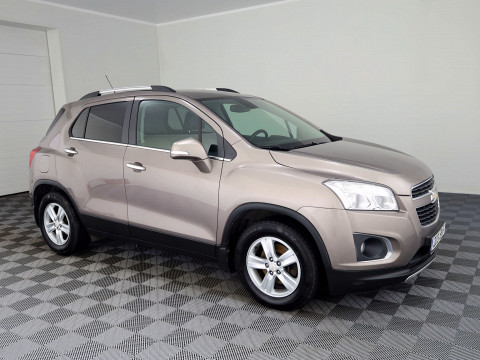
2.458 US$

BaltiCar.com
 Estonia, Harjumaa
16 September 2026






















 Estonia, HarjumaaRomania, Bistriţa-Năsăud
A good Chevrolet Trax listing should make your next step obvious: either book a viewing, or move on quickly. On a model like this, that matters more than romantic descriptions. In the EU market, you may only see a few Chevrolet Trax cars for sale at any given moment, so the real skill is not endless choice; it is knowing how to judge a thin market without talking yourself into a weak offer just because it is available.
When people shop for a Chevrolet Trax, they are often not chasing drama. They want a small crossover that should fit daily life without asking for constant attention. That is why the tone of the listing matters. A trustworthy seller usually describes the car in practical terms: service history, recent maintenance, mileage, visible flaws, equipment that actually changes daily use, and clear photos of the cabin, body panels, wheels, and luggage area. A weak listing leans on vague phrases, cropped images, and very little ownership story.
That ownership story is more useful than many buyers think. Ask yourself: does the ad help you imagine how this Chevrolet Trax has been used? School runs, short urban trips, mixed commuting, weekend family duty, longer motorway use? None of those is automatically good or bad, but they suggest different wear patterns. A seller who can explain ordinary life with the car often sounds more credible than one who only repeats generic selling lines.
With limited Chevrolet Trax availability in the EU, it is easy to start comparing fantasy against reality. Instead, compare what is actually verifiable. Put each offer next to the others and check four things before you even write a message.
First, look at photo consistency. Does the exterior condition match the mileage and the seller's confidence? Second, read the maintenance section carefully. “Serviced” means very little on its own; invoices, stamped records, dates, and mention of recent wear-item work mean much more. Third, check whether the specification is shown clearly. On a Chevrolet Trax, comfort and convenience details can influence whether the car feels pleasant in everyday ownership, so unclear equipment is worth clarifying early. Fourth, check whether the listing admits imperfections. Honest sellers usually do.
A less obvious point: on slower-moving model pages, weak ads often survive longer than good ones. That can create the illusion that a thin market is a bad market. Sometimes it simply means the best Chevrolet Trax offers were the most complete and sold faster, while the vague ones stayed visible. So do not mistake persistence for quality.
Your first message should help you qualify the seller, not just the car. Ask short, useful questions that a genuine owner or well-prepared dealer can answer without performing theater.
Try questions like:
Notice what happens next. Strong sellers answer directly and add detail. Weak sellers often reply with soft reassurance instead of information. If someone avoids basic questions about history, documents, or condition, that is already useful data.
With a Chevrolet Trax, the seller's attitude can tell you as much as the spec sheet. A realistic owner tends to know the car's habits: what was replaced, what still works well, what cosmetic flaws were never worth fixing, and why they are selling now. That kind of calm, specific honesty is often a better sign than a polished promise that the car needs “nothing at all.” Used cars almost always need something eventually; serious sellers know this.
One of the best signals is when the ad and the conversation match each other. If the listing looks careful, the mileage story makes sense, and the seller can talk through maintenance without sounding defensive, the Chevrolet Trax is worth viewing. If the photos look rushed, the description is thin, and every question gets a one-line answer, be careful even if the car seems attractively presented at first glance.
At viewing, do not only search for defects. Try to understand what life with that exact Chevrolet Trax will feel like on an ordinary Tuesday. Sit in it longer than usual. Check seat comfort, visibility, ease of entry, luggage access, rear-seat practicality, and whether the cabin feels merely used or genuinely neglected. Buyers often focus on bodywork first, then later discover that the interior tells the truer ownership story.
During the drive, pay attention to small things: steering feel, brake response, engine smoothness from cold if possible, transmission behavior, unusual noises over rough surfaces, and whether anything distracts you from relaxed driving. You are not trying to prove the model good or bad in theory. You are checking whether this specific Chevrolet Trax feels coherent, maintained, and honest.
Walk away from missing documents, inconsistent mileage stories, pressure to decide fast, refusal to allow normal checks, or listings where the seller seems to know almost nothing about the car. In a limited market, buyers sometimes excuse these problems because they fear there will not be another Chevrolet Trax soon. That is exactly how weak offers win.
But an imperfect car is not automatically a bad one. A Chevrolet Trax with a few clearly photographed scratches, a plain but complete equipment list, and a believable maintenance file can be a smarter buy than a shinier ad full of gaps. In practice, confidence comes from transparency. If the seller helps you build a believable picture of ownership, condition, and upkeep, the car deserves your time. If the story never settles, keep scrolling.
 Add as preferred source