 EN
ENDEALER
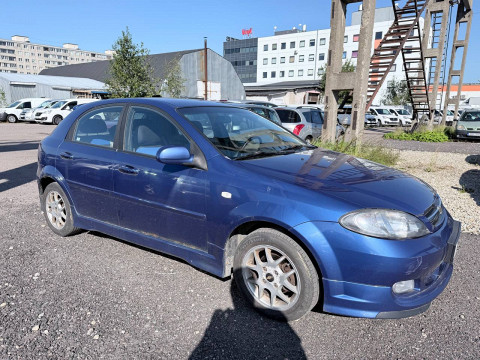
670 US$

BaltiCar.com
 Estonia, Harjumaa
07 October 2026






















 Estonia, Harjumaa
If you are shopping for a Chevrolet Lacetti in the EU market, the first useful truth is simple: the best-looking listing is not automatically the best car. Supply can be thin, cars may be far apart, and seller transparency varies a lot. That changes how you should search. With a model like the Chevrolet Lacetti, patience usually saves more money than rushing toward the first tidy photos and a short description.
A thin market creates a very specific buyer trap. When there are only a few Chevrolet Lacetti cars for sale, people start excusing weak details: missing service records, vague mileage history, poor interior photos, or a seller who avoids direct answers. That is exactly when you should become more selective, not less. If you may need to cross a border or travel several hours to inspect one, do more work before the trip. Ask for the registration documents, VIN, cold-start video, dashboard photos with the engine running, and close shots of body gaps, lower door edges, and the trunk opening. A seller who is honest about an older Lacetti usually understands why you are asking.
The Chevrolet Lacetti often attracts buyers who want straightforward transport without paying for something fashionable. That can be a sensible reason to shortlist one. But practical cars are also the ones most likely to have lived hard, ordinary lives: city errands, family use, light commercial-style duty, long gaps between washes, and maintenance done only when necessary. None of that means a specific Chevrolet Lacetti is bad. It means two examples that look similar in a listing can feel completely different in person.
When comparing used Chevrolet Lacetti offers, do not begin with equipment or color. Start with the basics that determine whether the car is worth your time: how complete the photos are, whether the seller explains ownership history clearly, whether mileage is supported by records, and whether the car looks consistently cared for inside and out. A clean steering wheel, matching seat wear, tidy switchgear, and a believable service story often tell you more than a polished exterior. If the ad shows very little of the cabin, very little of the engine bay, and nothing underneath the car, assume you still know almost nothing.
Weak listings have patterns. A Chevrolet Lacetti ad that uses broad claims such as “perfect condition” or “needs nothing” but avoids specifics should slow you down. So should mismatched tires, one bright new body panel in otherwise dull paint, or photos taken when the car is wet, tightly framed, or parked in poor light. These are not proof of a bad car, but they are reasons to ask better questions before you commit to a viewing.
Try sending a short, focused message instead of a generic “is it available?” Ask: How long have you owned this Chevrolet Lacetti? Why are you selling it? When was it last serviced? Are there warning lights on the dashboard? Has any bodywork been done, and if so, where? Does the seller have invoices or inspection paperwork? Is the mileage documented? Can they show a cold start and a walkaround video? Sellers with nothing to hide usually answer in full sentences. Sellers with weak cars often answer only one question out of six.
There is also a less obvious market signal worth noticing. On older everyday models, the most convincing ad is often not the most polished one. A private seller who uploads ordinary photos, mentions small flaws unprompted, and can explain the last few maintenance jobs may be offering a better Chevrolet Lacetti than a shinier listing full of empty adjectives. Real ownership detail is more valuable than sales language.
Many buyers waste time because they never define a minimum standard before calling. For a used Chevrolet Lacetti, set a few non-negotiables. For example: documents must be in order, the seller must confirm the mileage basis, visible rust-prone areas must be shown clearly, and the engine should start cleanly from cold. You may add your own priorities, such as transmission behavior, air conditioning function, or evidence of recent maintenance. The point is not to build a fantasy checklist; it is to stop yourself from rationalizing a weak offer.
If the seller says, “everything is fine, just come and see,” that is not a real answer when distance is involved. In the EU market, where the right Chevrolet Lacetti may not be close to you, each trip has a cost. A serious seller should help you decide whether the journey is justified. If they refuse simple photos or basic document confirmation, move on. Scarcity is frustrating, but buying the wrong car because supply is limited is usually more expensive than waiting.
Start with consistency. Does the condition of the cabin match the mileage claim? Do the pedals, driver’s seat, gear knob, and steering wheel tell the same story as the odometer? Look at panel alignment, paint shade changes, glass markings, and the condition of the luggage area. Check whether wear appears even and believable or strangely selective. During the test drive, listen for noises over rough surfaces, feel how the car tracks in a straight line, and pay attention to clutch take-up, gearbox feel, braking confidence, and idle behavior after the drive.
Do not treat a calm test drive as the final proof. Stay still for a moment after parking. Watch for smoke, smells, fan behavior, fluid traces, or a seller trying to end the inspection too quickly. Open and close everything you reasonably can. On a car in this part of the market, small details often reveal the ownership standard more clearly than a polished sales pitch does.
A smart way to judge any Chevrolet Lacetti listing is to compare it not only against other Lacetti offers, but against the alternatives you nearly bought instead. If another model at similar money comes with clearer history, better photos, and a more cooperative seller, the Chevrolet Lacetti needs to justify itself through condition, honesty, and overall sense. Buyers sometimes become too loyal to the first model they searched for. That is how average cars get sold as “rare opportunities.”
The right Chevrolet Lacetti in Europe is usually the one that feels easy to verify. Not exciting on paper, not dressed up by marketing language, just coherent. The documents make sense, the seller answers directly, the condition matches the story, and your doubts get smaller rather than larger as you inspect it. That is the offer worth viewing first, and often the one worth buying.
 Add as preferred source